Films · Developmental Neuroscience
Count Across Time
Read the transcript of “Count Across Time”
Film transcript: Count Across Time
A count comes out low. Were the missing neurons never made, or made and then lost? In 1934, Viktor Hamburger removed one wing bud from chick embryos about three days old. Days later, the operated side had fewer motor neurons than the intact side, its control. Hamburger read this as the limb setting how many neurons the cord makes. That reading fits the count. So do others. Think of a bakery whose shelf ends the day half empty. It might have baked fewer, sent some away, or baked some as rolls. Or it baked a full batch and threw half away. The shelf looks the same every time.
A low neuron count is that shelf. A count made only at the end cannot tell the histories apart. Pause, and predict. What would you count, and when, to tell never made from made and then lost? Count at closely spaced stages, on both sides. Count healthy neurons, and count dying ones. A dying neuron often has a small, dark, condensed nucleus. It is called pyknotic. Never made: the operated side never catches up, and no extra dying cells appear. But dying cells are cleared fast. So count often, and birthdate the cells, before trusting a missing hump. Made, then lost: the sides start equal. Then dying cells appear, and the count falls behind.
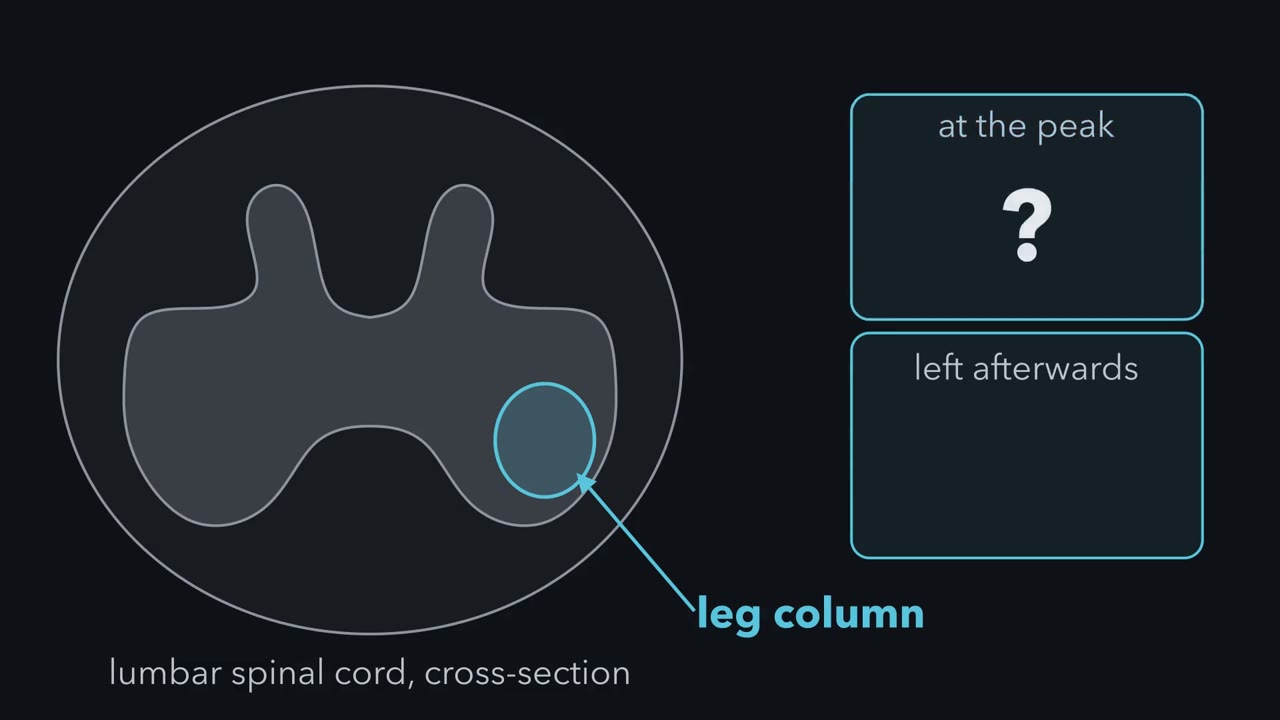
In wartime Italy, Rita Levi-Montalcini and Giuseppe Levi studied staged sections like these, in a laboratory at home. They found neurons that had already formed, and were now degenerating. The missing neurons had been made. In 1949, her joint paper with Hamburger, on the sensory neurons of chick spinal ganglia, supported that reading. The target's main job was not to call neurons into existence. It was to keep them alive. In 1975, Hamburger counted the death itself, in normal embryos with all their limbs. The leg's motor neurons peaked near day 6. Then about two in five of them died, most within three days.
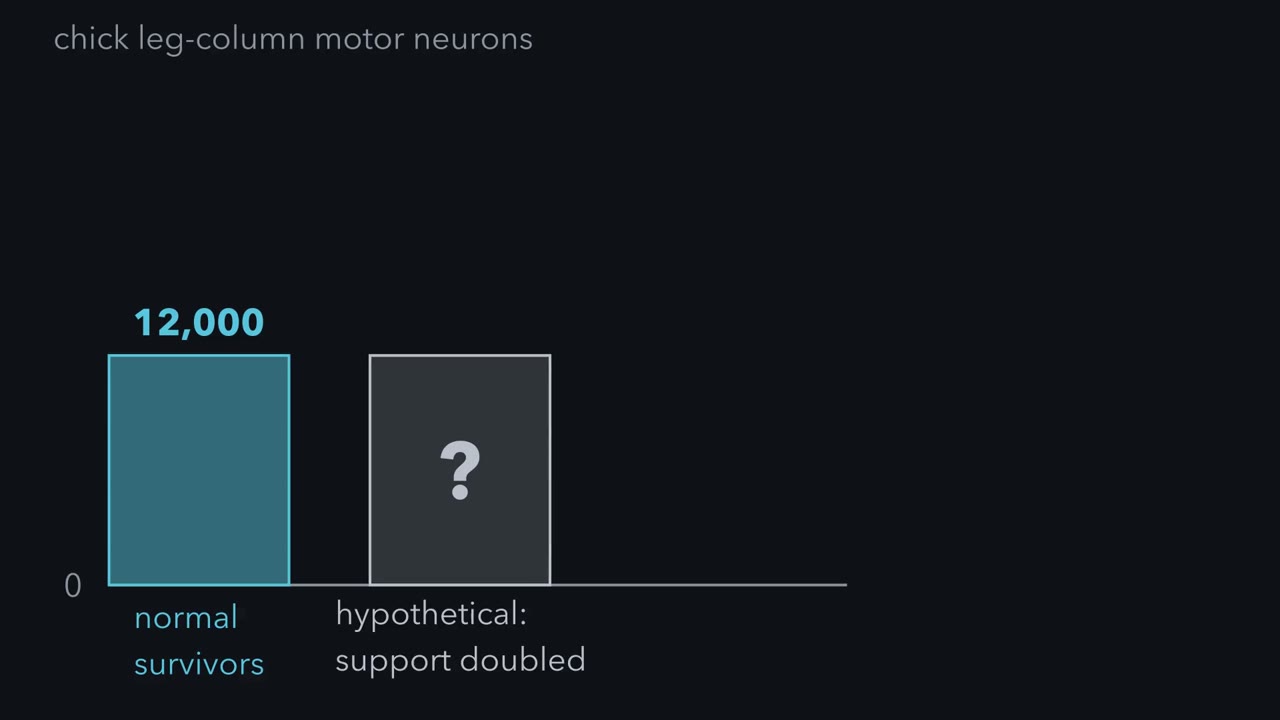
In 1976, Margaret Hollyday and Hamburger grafted an extra leg beside the normal one. Predict. If more target meant more births, where would the grafted side's count be at day 6? At day 6, before the normal loss, the grafted side had no more motor neurons than the control. Later, in embryos whose grafts moved vigorously, it had more. About a tenth to over a quarter more.
More target did not mean more births. It meant fewer deaths. Takeaway: a count tells you a history only if you also counted along the way.
In Hamburger's raw counts, a chick embryo has just over 20,000 motor neurons in the column that serves its leg at the peak, and about 40% of them die over the next three days. Nothing is wrong with the embryo. How could anyone tell those neurons died, and what decides how many stay?
Continue in the lesson: Too Many Neurons: Naturally Occurring Cell Death →
3:24 · Free, with captions and a transcript. The lesson has the full text, the questions and the sources.
More films from this lesson
How this film was made. Narration: an AI narrator voice (Kokoro, af_heart) reading narration written from this lesson's text. Animation: AI-generated in code (Manim) by Claude, a schematic with no drawn molecular structures. Captions come from the narration script. See something wrong? Report it.