Films · Developmental Neuroscience
The Map and the Question
Read the transcript of “The Map and the Question”
Film transcript: The Map and the Question
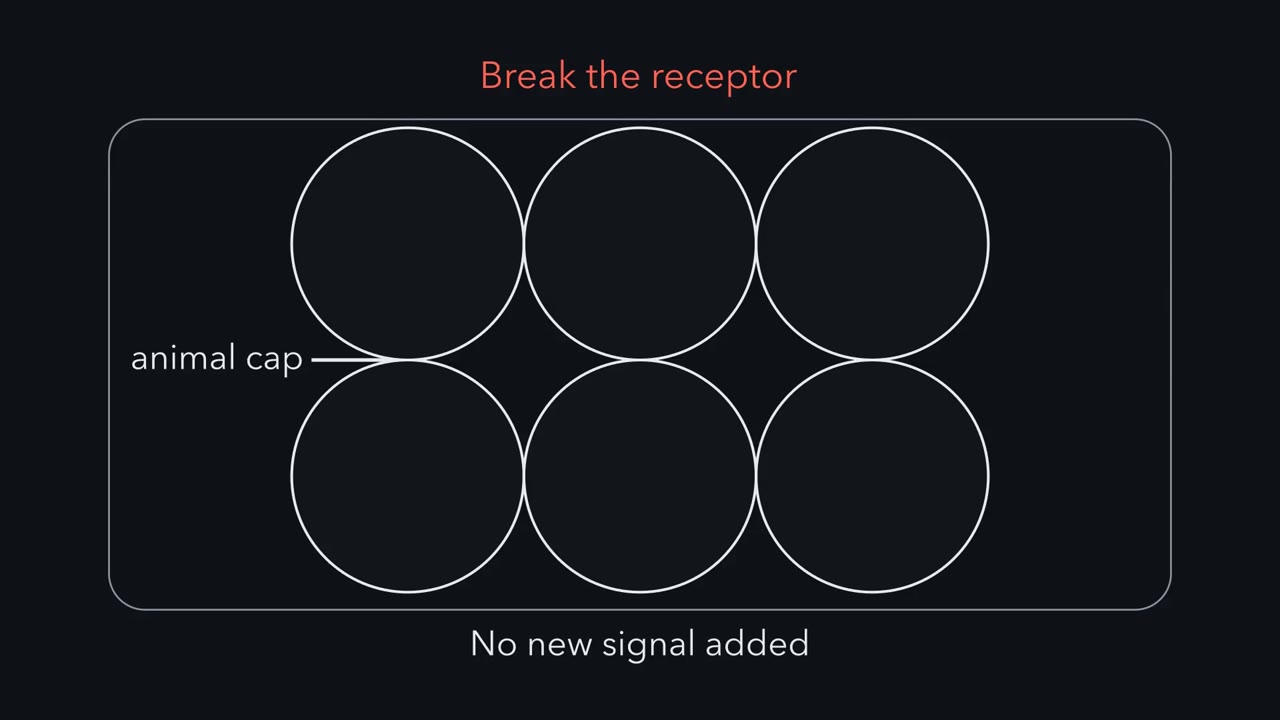
Ectoderm can become skin or nervous system. What decides which one it becomes? Start with the map. A blastula is the early frog embryo, a hollow ball of cells. Inside is a fluid-filled cavity, the blastocoel. The roof of that cavity is the animal cap. The cap is ectoderm, the outer germ layer. It gives rise to both the skin and the nervous system.
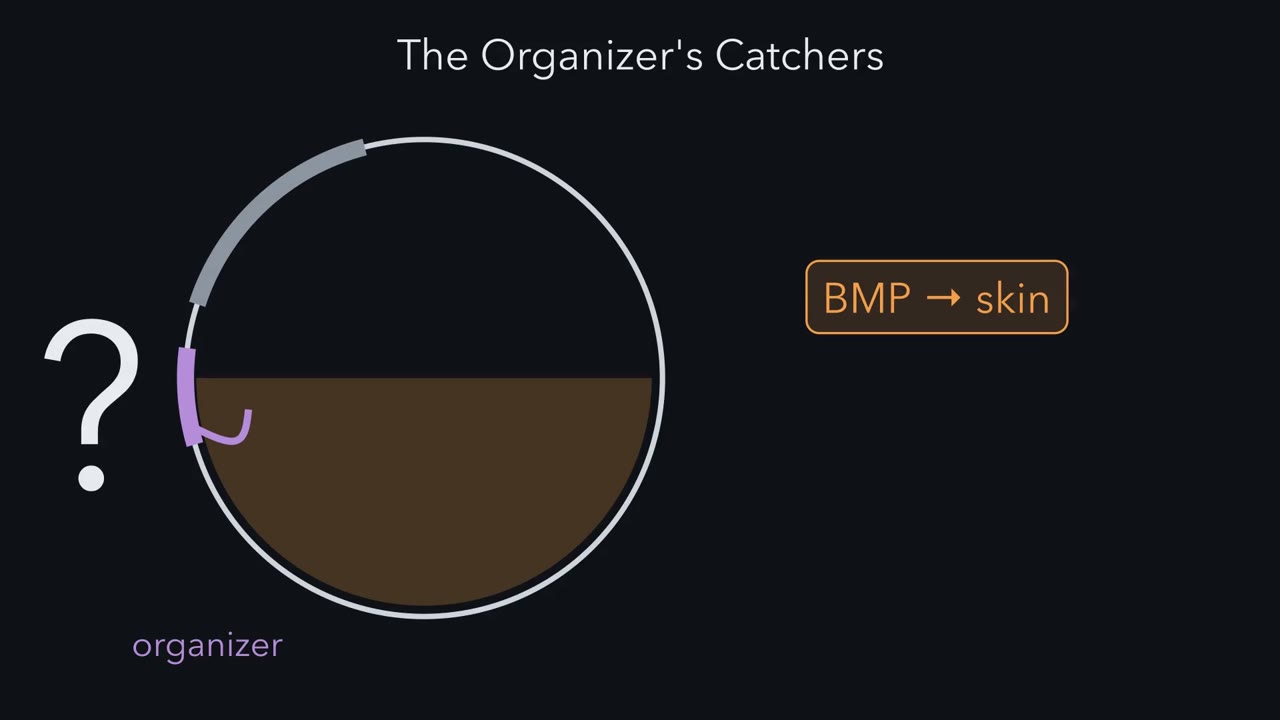
The outer layer of skin is the epidermis. Keep that word; it is one of the two answers. Gastrulation is the set of cell movements that form the germ layers. It begins at the blastopore, a groove on the lower half of the embryo, where cells start to move inside. The tissue at the blastopore's dorsal lip is the organizer. Dorsal is the side where the back and the neural plate will form. Ventral is the belly side. In the 1920s, Hilde Mangold and Hans Spemann grafted an organizer into another embryo. The host formed a second body axis. The organizer could change what nearby ectoderm became. For decades, the question was what positive signal the organizer sends to make ectoderm neural.
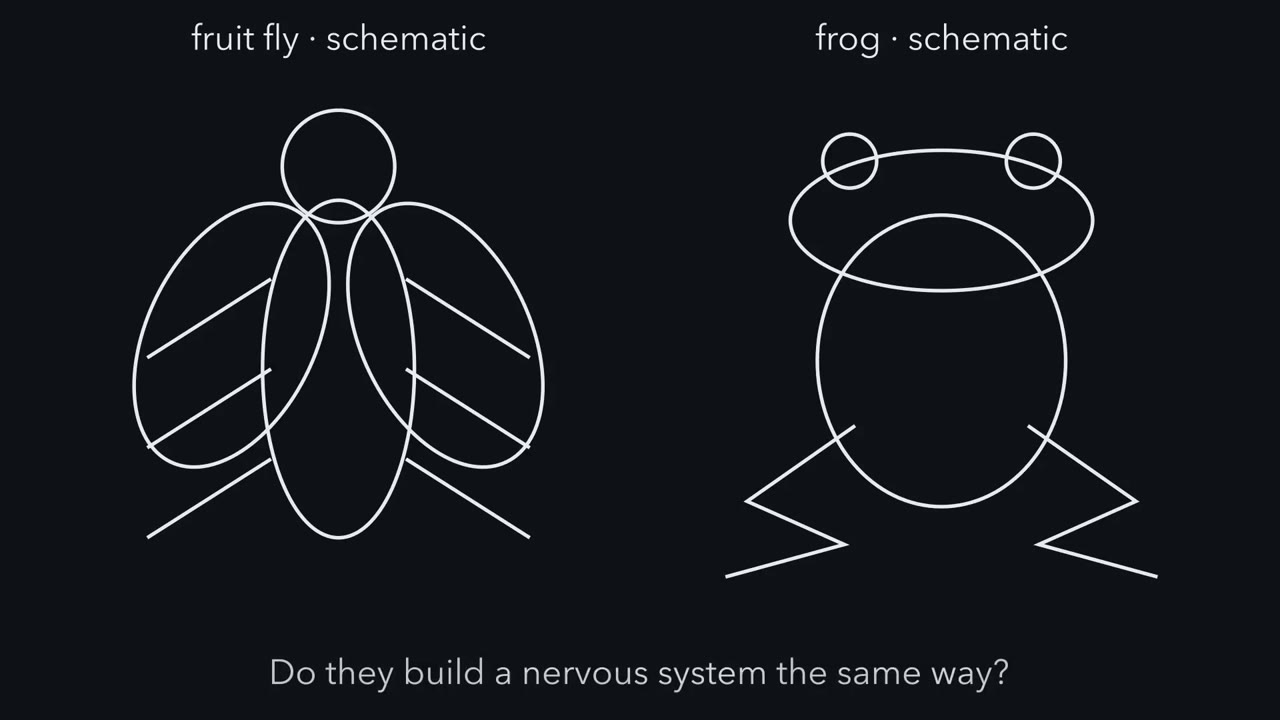
Now the dish. Cut out the animal cap and culture it alone in salt solution. Left alone, what should a piece of skin-to-be become? Make a guess. It becomes epidermis. No organizer tissue is attached to it. One more pair of names. BMPs, bone morphogenetic proteins, are secreted signals of the TGF-beta family. Inside a cell, their signal is carried to the nucleus by Smad1, Smad5 and Smad8. The map raises three puzzles. First, what holds an intact cap as skin? Second, what does the organizer send, and how does it change the ectoderm's fate? Third, does the answer hold outside the frog cap: in the whole embryo, in a fly, in a chick?
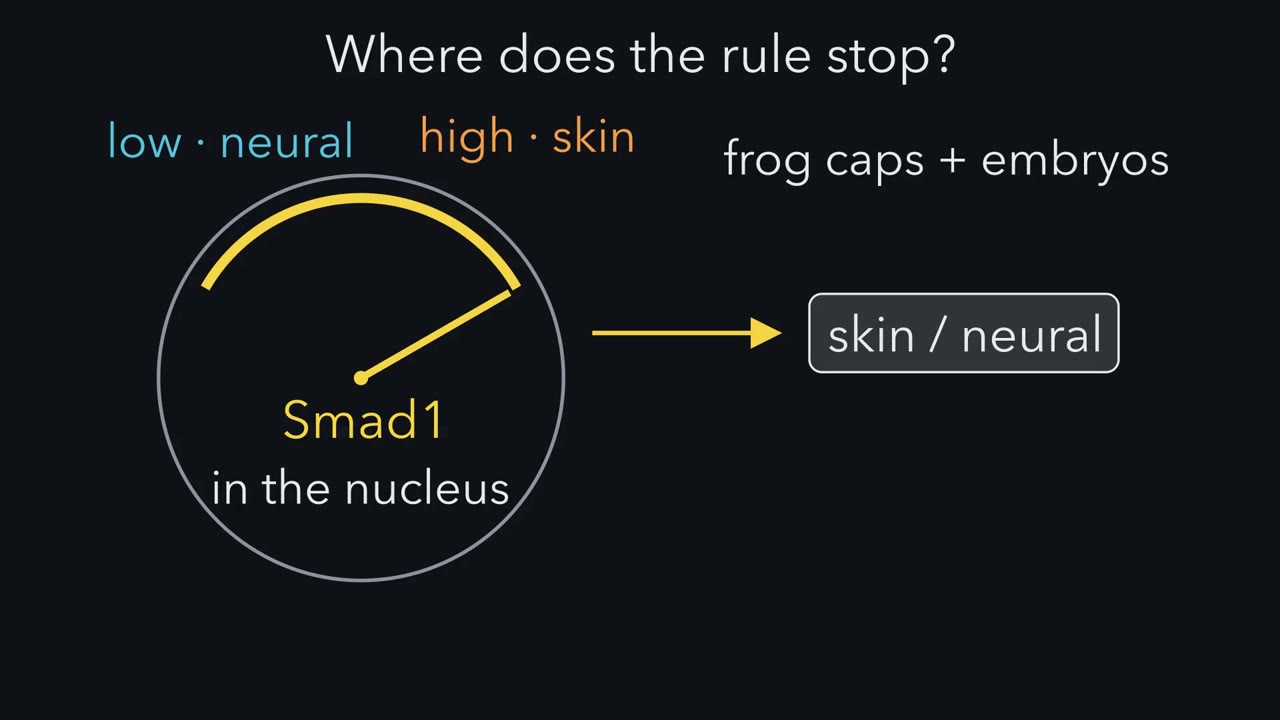
Here is the idea to carry through every chapter. BMP says skin. In early frog animal caps, turn its signal down far enough, and the cells become neural, as long as they can still respond and their other needed inputs, such as FGF, are intact. BMP's effect comes down to one dial, Smad1 activity in the nucleus. The next chapters show three hands that turn it down.
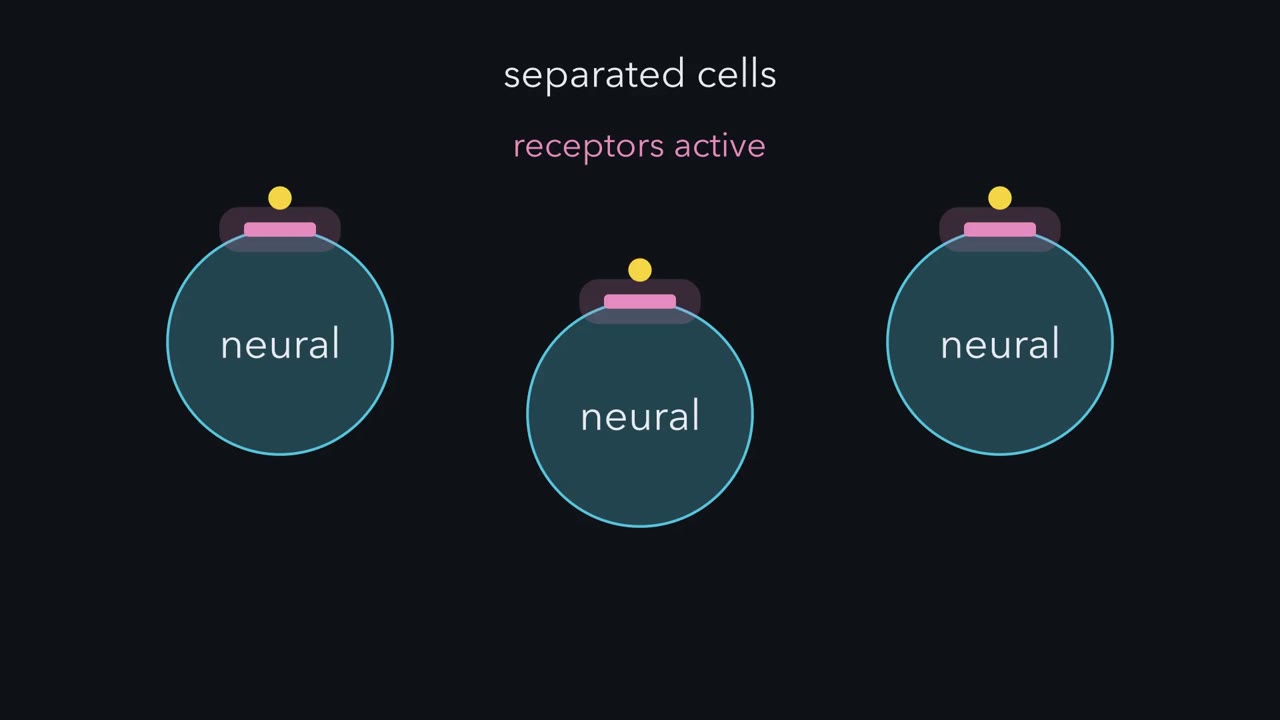
Pull a square of frog skin-to-be apart into single cells, and it becomes neural. Why? Because BMP signaling, which makes skin, falls in those cells. In the embryo, the organizer's secreted proteins make it fall.
Continue in the lesson: Neural Induction: The Default Model →
2:54 · Free, with captions and a transcript. The lesson has the full text, the questions and the sources.
More films from this lesson
How this film was made. Narration: an AI narrator voice (Kokoro, af_heart) reading narration written from this lesson's text. Animation: AI-generated in code (Manim) by Claude, a schematic with no drawn molecular structures. Captions come from the narration script. See something wrong? Report it.