Tension Pays for Area
Read the transcript of “Tension Pays for Area”
Film transcript: Tension Pays for Area
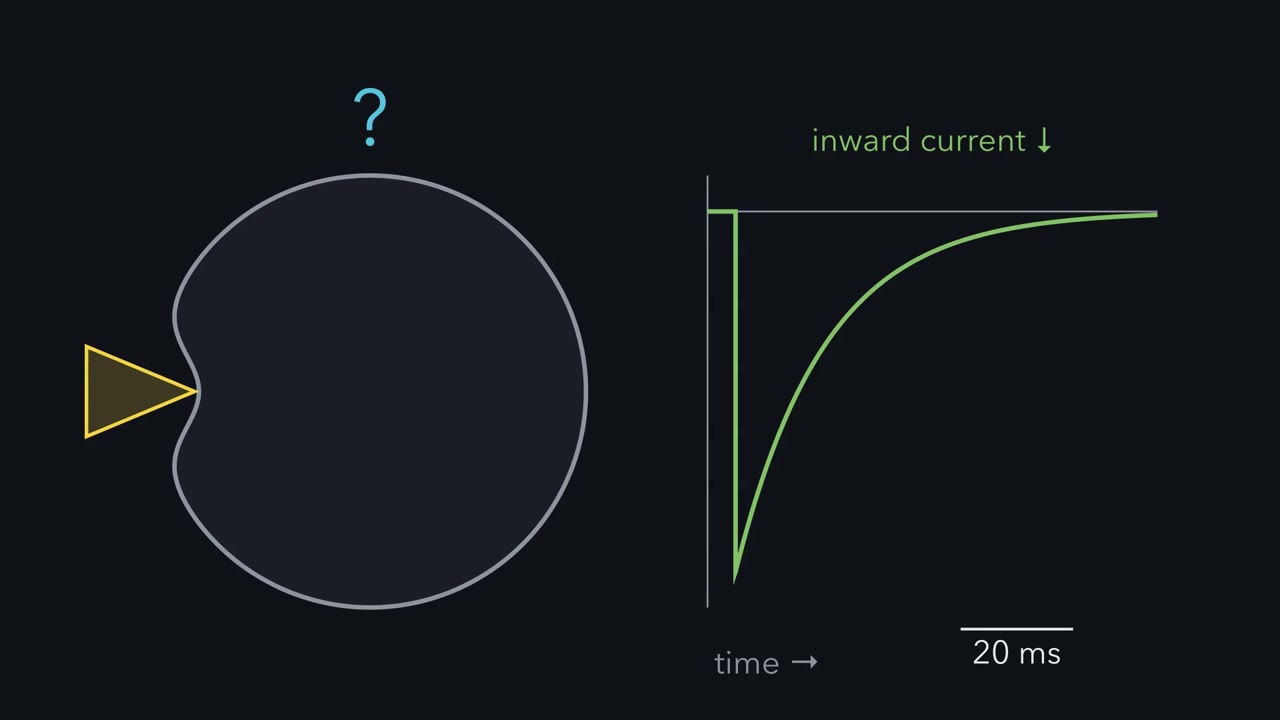
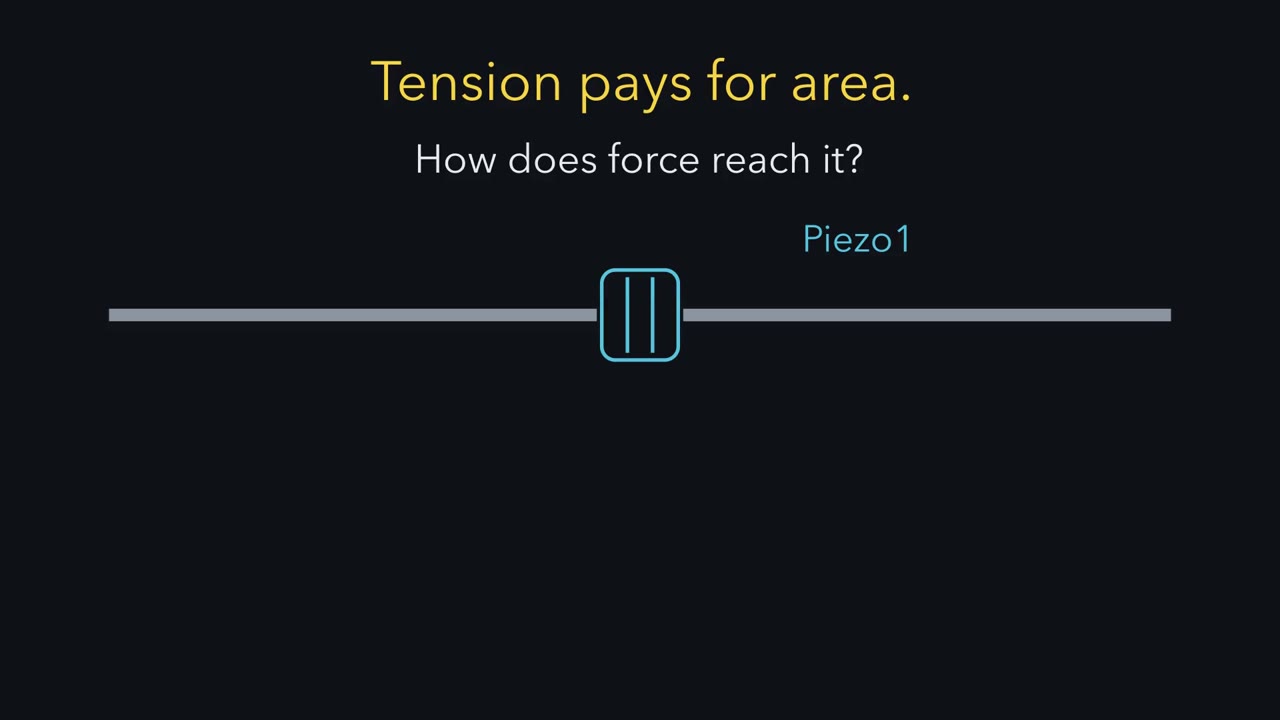
Why should stretching a membrane open a channel at all? Start with the simplest picture that could work. The channel is either closed or open. The open state takes up more room in the plane of the membrane. Call the extra amount the area gained. Membrane tension is an in-plane stretch. It is force per unit length of membrane. Stretching a membrane does work on anything in it that gets wider. That work is tension times the area gained. So tension lowers the energy of the open state, relative to the closed one. Write it out. The energy difference equals the resting preference for closed, minus tension times the area gained. In a slack membrane, the channel prefers to be closed.
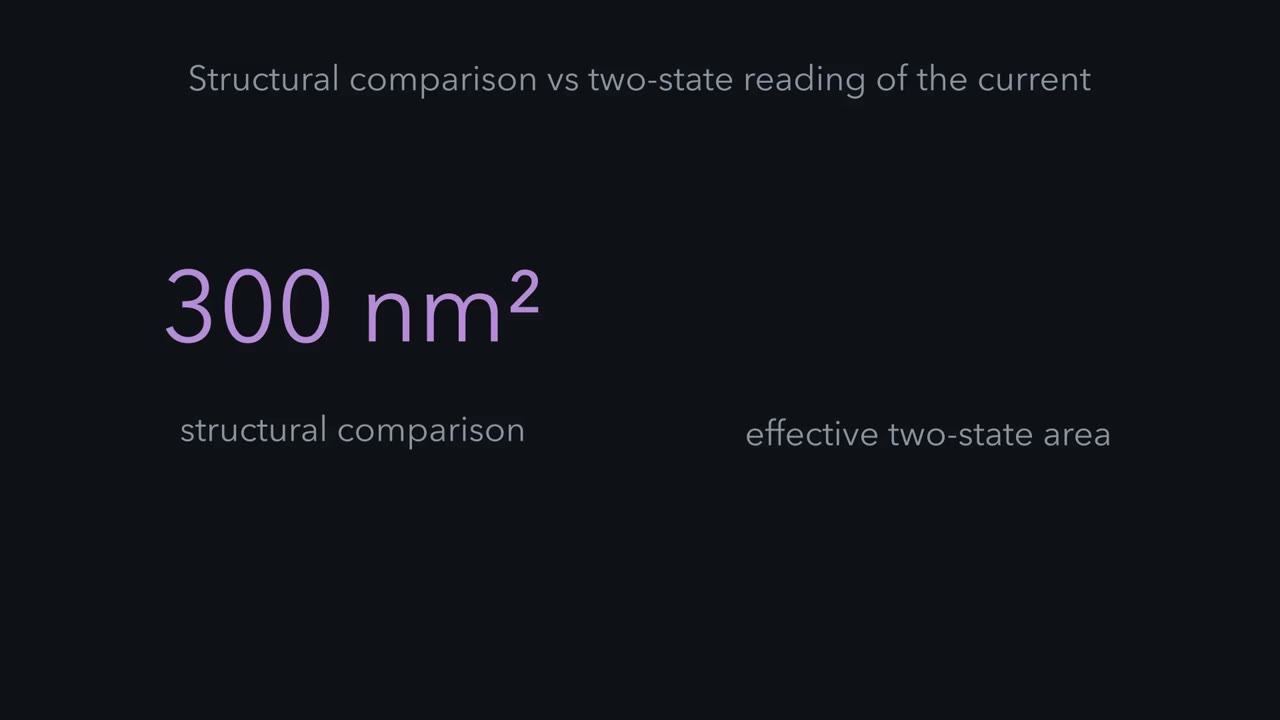
As tension rises, that preference shrinks. At one particular tension, the preference disappears. Above it, the open state wins. Two channels are each open half the time at the same tension. One gains five square nanometres on opening. The other gains three hundred. Which one goes from mostly closed to mostly open over the narrower range of tension?
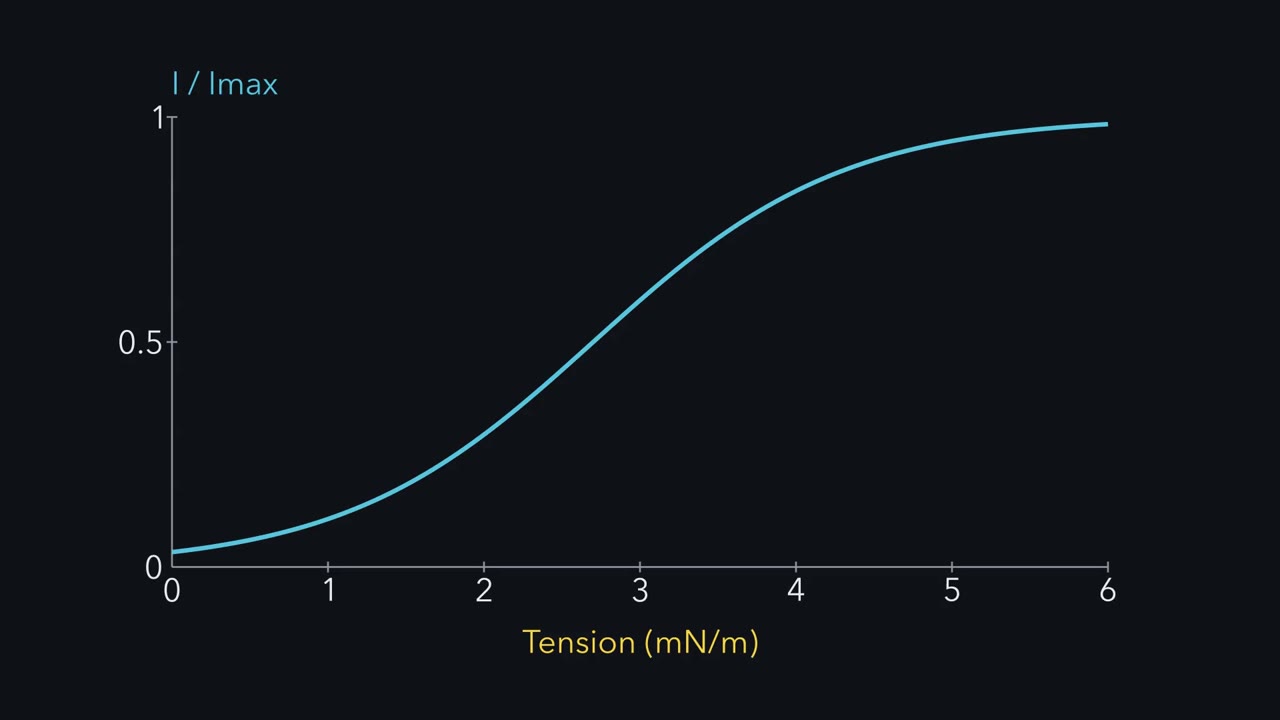
The three hundred channel. Each small rise in tension gives it sixty times the energy advantage. So a small change in tension swings it all the way from closed to open. To turn the energy into a curve, use the Boltzmann relation from statistical physics. For a two-state channel, the ratio of open to closed depends on the energy difference, compared with thermal energy. For a two-state channel at equilibrium, this gives the fraction of channels open. Patch papers fit the same curve to current. That reading assumes current tracks the fraction open. The curve has two fitted numbers: a half-activation tension and a slope factor. Match the two forms, and each number gets a meaning.
The half-activation tension is the resting preference for closed, divided by the area gained. The slope factor is thermal energy, divided by the area gained. More area means a smaller slope factor, and a steeper switch. One unit note. Piconewtons per nanometre and millinewtons per metre are the same quantity. That is the one idea. Tension pays for area. In a two-state model, the area sets the steepness.
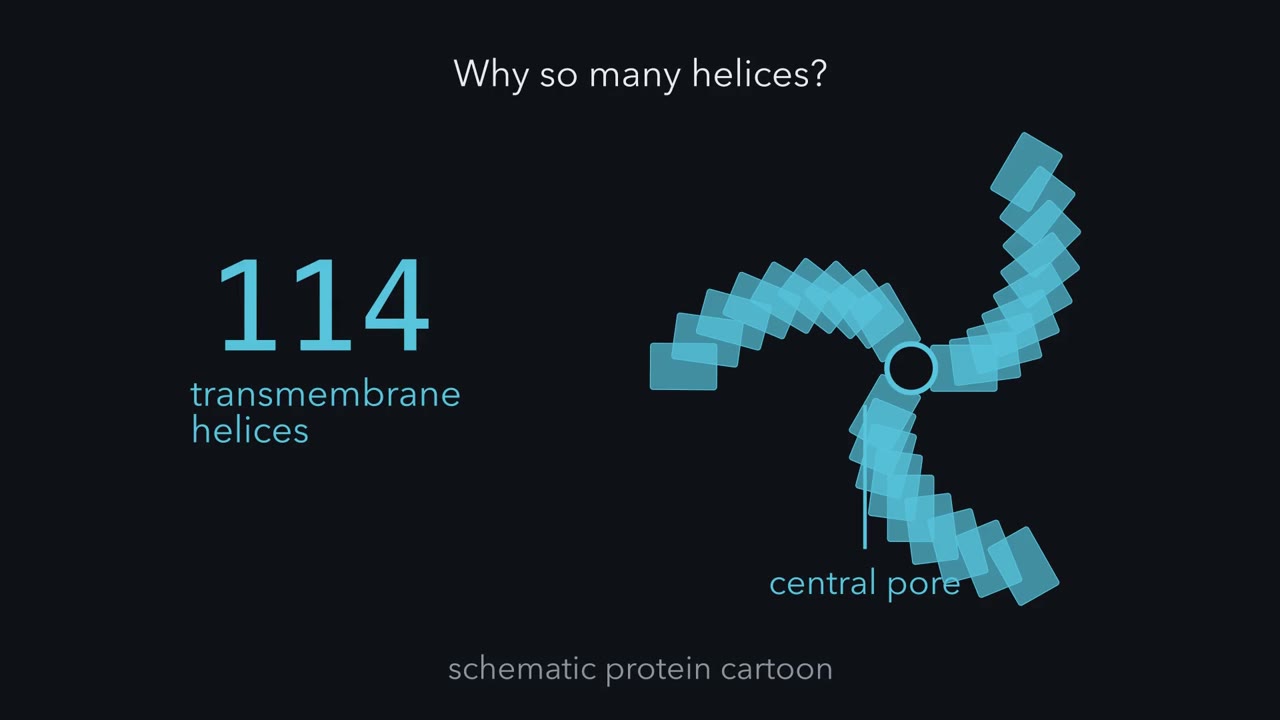
Mouse PIEZO2 threads 114 transmembrane helices through the membrane to build one ion channel, and its pore sits at the centre. Why would a channel need so much protein around one pore?
Continue in the lesson: Piezo Channels and the Physics of Force →
2:49 · Free, with captions and a transcript. The lesson has the full text, the questions and the sources.
More films from this lesson
How this film was made. Narration: an AI narrator voice (Kokoro, af_heart) reading narration written from this lesson's text. Animation: AI-generated in code (Manim) by Claude, a schematic with no drawn molecular structures. Captions come from the narration script. See something wrong? Report it.