Films · Developmental Neuroscience
The Gap, Seen
Read the transcript of “The Gap, Seen”
Film transcript: The Gap, Seen
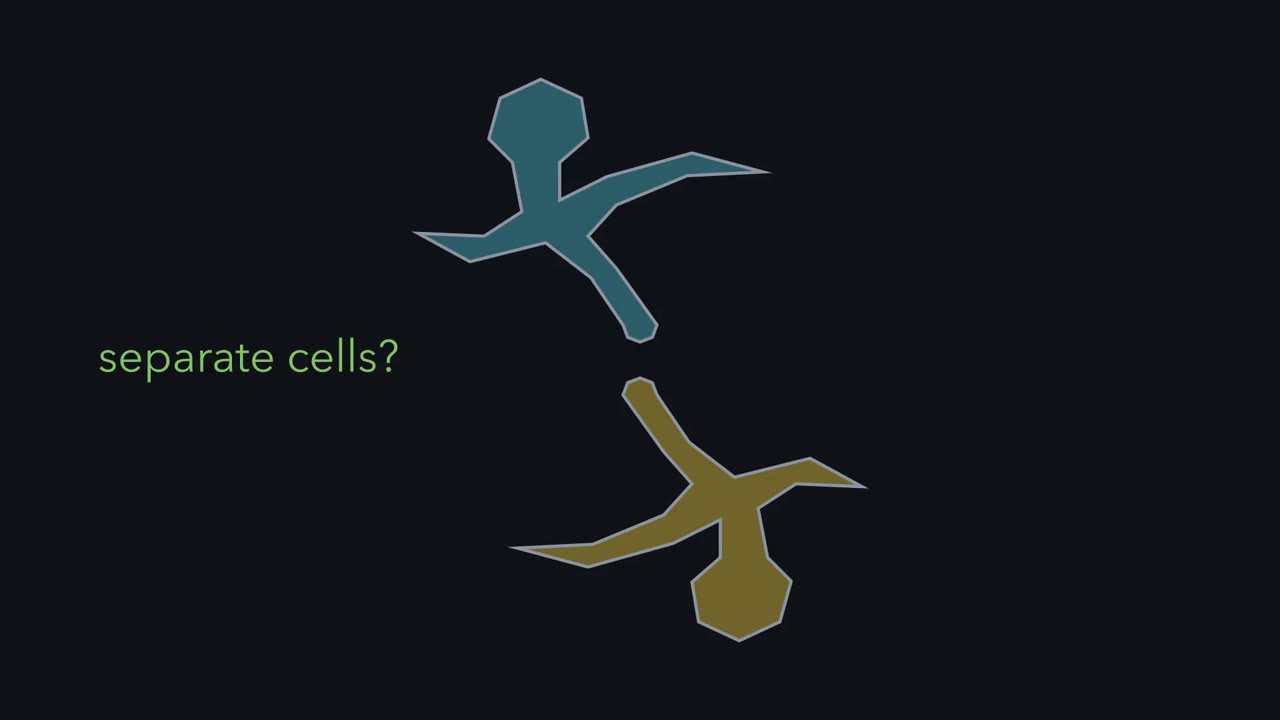
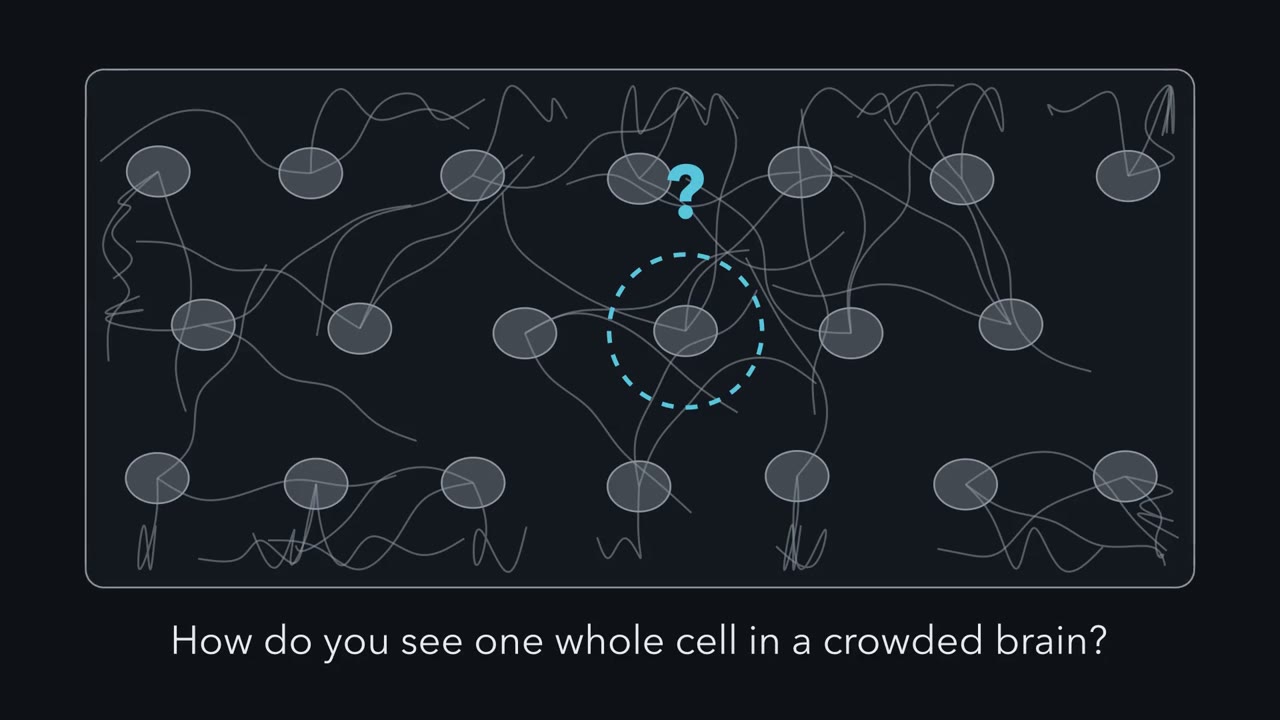
Every clue so far favoured separate cells. None reached the membrane. What would it take? Suppose you could see the membrane at a contact. What would you see if Golgi were right? And if Cajal were right? If the branches are fused, the outer membrane runs on around both, and no membrane crosses the junction. If the cells are separate, two membranes face each other across a gap. Each cytoplasm stops at its own membrane.
The electron microscope could show it, in thin sections of nervous tissue. In 1955, De Robertis and Bennett examined synapses in frog and earthworm. In 1956, Sanford Palay examined the rat brain. At the chemical synapses they examined, they saw the second sketch. Two membranes stayed separate across a cleft 10 to 20 nanometres wide. Small vesicles crowded the terminal. In such images, the receiving membrane also looks thickened. Under light, that whole cleft sits inside one blur. The electron microscope replaced the blur with two membranes. The question was settled, about eighty years after the black reaction. Some neurons are joined more closely.
At an electrical synapse, channels called gap junctions cross both membranes. Ions and small molecules pass straight from one cell into the next. Does this bring back Golgi's network? What would you inject into one cell to find out?
A small tracer such as Neurobiotin passes through to coupled neighbours. A 10-kilodalton dextran, nearly 5 nanometres across, stays in the injected cell. In one shared cytoplasm, the dextran would spread too, given time. The electron microscope then confirms two membranes.
In vertebrates, Golgi's network does not exist. Coupling through pores that can close does. There are exceptions outside vertebrates. The squid giant axon forms from fused fibres. A comb jelly's nerve net shares one membrane. A touch is not a fusion, and neither is a pore. Separate cells, joined at specialized contacts, are what development has to wire.
Are neurons separate cells that touch, or one fused network? The neuron doctrine says separate, and it took a new stain, a lot of embryos and the electron microscope to show it. Two men looked at the same stained brain and saw two different organs. Who was right, and how could anyone tell?
Continue in the lesson: Seeing Neurons: Golgi, Cajal and the Neuron Doctrine →
2:46 · Free, with captions and a transcript. The lesson has the full text, the questions and the sources.
More films from this lesson
How this film was made. Narration: an AI narrator voice (Kokoro, af_heart) reading narration written from this lesson's text. Animation: AI-generated in code (Manim) by Claude, a schematic with no drawn molecular structures. Captions come from the narration script. See something wrong? Report it.