What the Choice Buys: a Pocket
Read the transcript of “What the Choice Buys: a Pocket”
Film transcript: What the Choice Buys: a Pocket
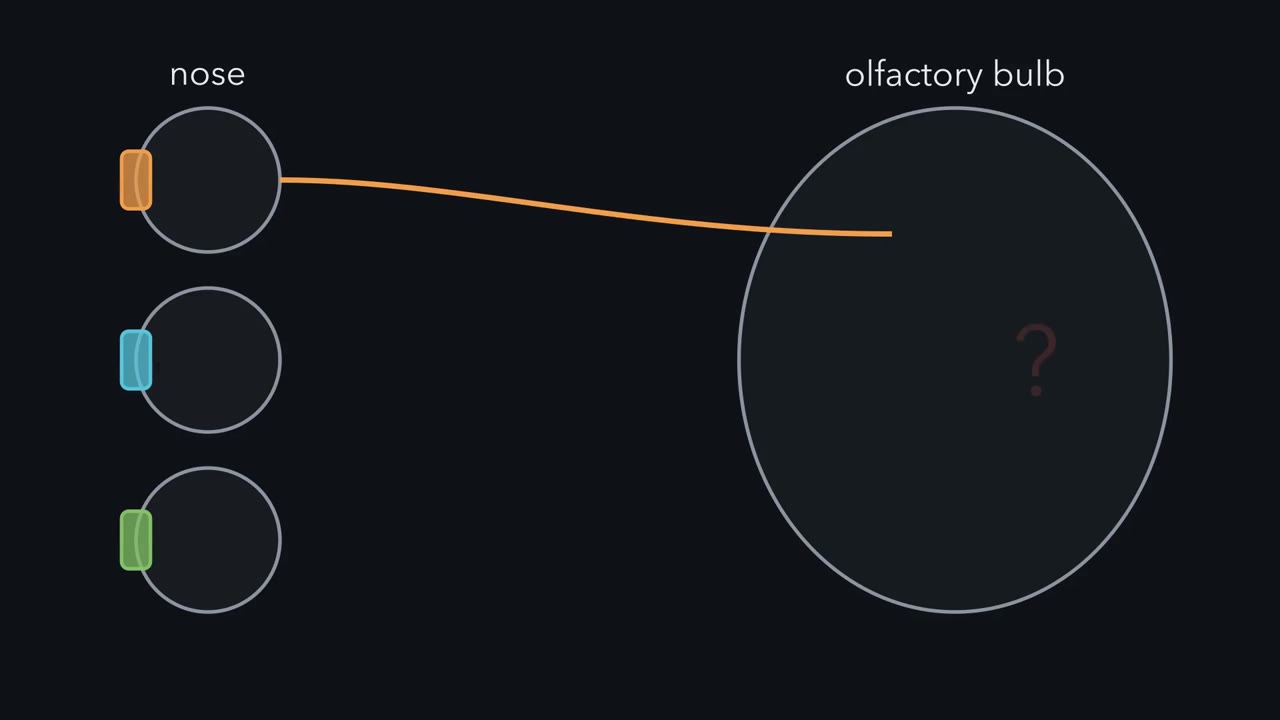
Each neuron ends up with one kind of receptor. Does that mean it responds to only one odour? The choice gives the neuron one kind of receptor. That receptor's binding pocket sets which molecules it responds to. But one pocket does not mean one odour. Del Mármol, Yedlin and Ruta solved structures of an insect receptor from the bristletail, called MhOR5. It is built of four identical subunits, and it is itself an odorant-gated ion channel. The plant compound eugenol and the repellent DEET sat in the same pocket. They are chemically unrelated. This insect channel is a contrast, not a template. Mammals use G-protein-coupled receptors. Billesbølle and colleagues solved the active human receptor OR51E2, bound to propionate.
It was a purified, engineered complex with a mini G protein. Humans carry about four hundred odorant receptors of this type. Mice carry about a thousand. In a cAMP assay, two pocket mutants gained responses to longer-chain fatty acids. So is the mutant simply a better receptor? Take the mutant F155A, and give it propionate. The EC50 is the dose giving half the maximum. At the wild-type EC50, what fraction does the mutant give?
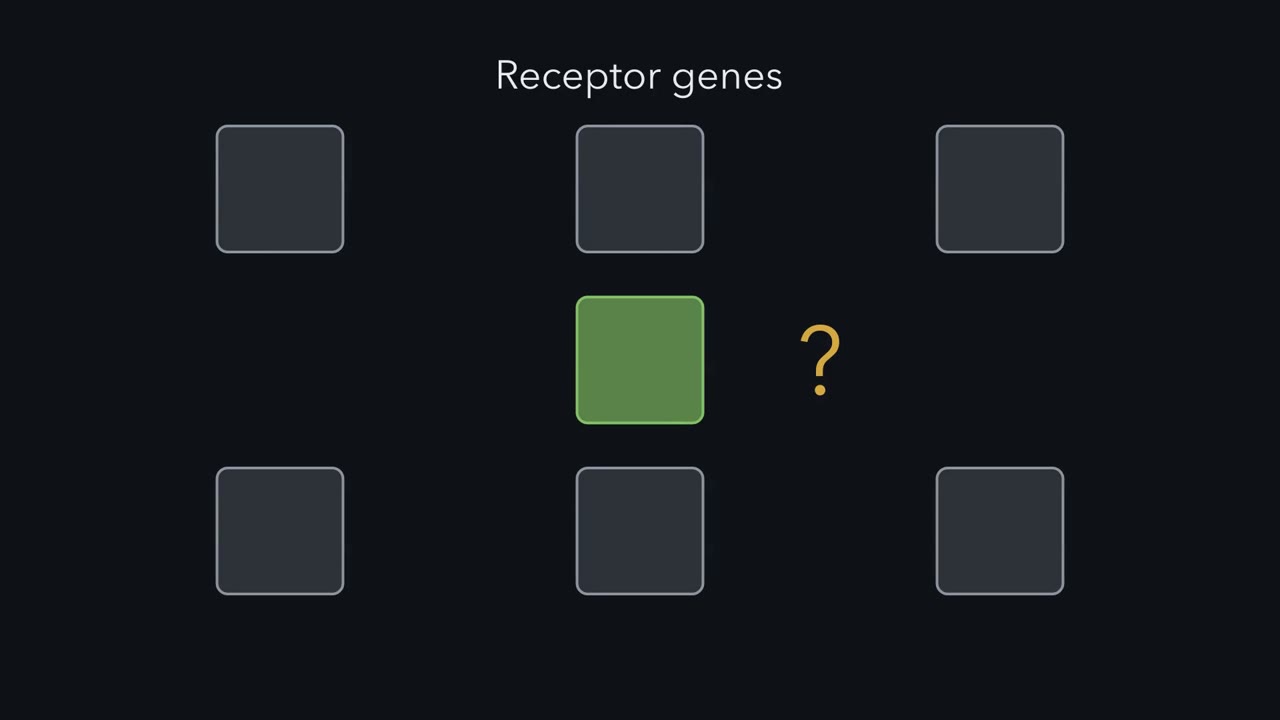
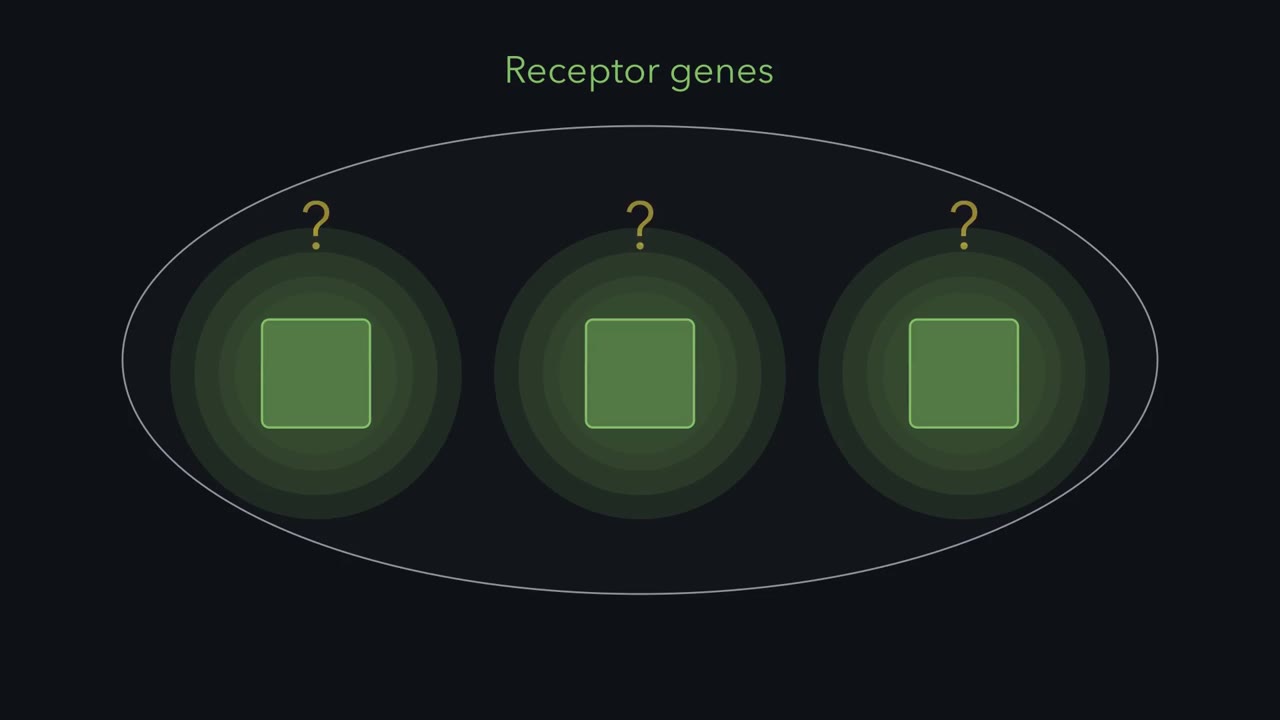
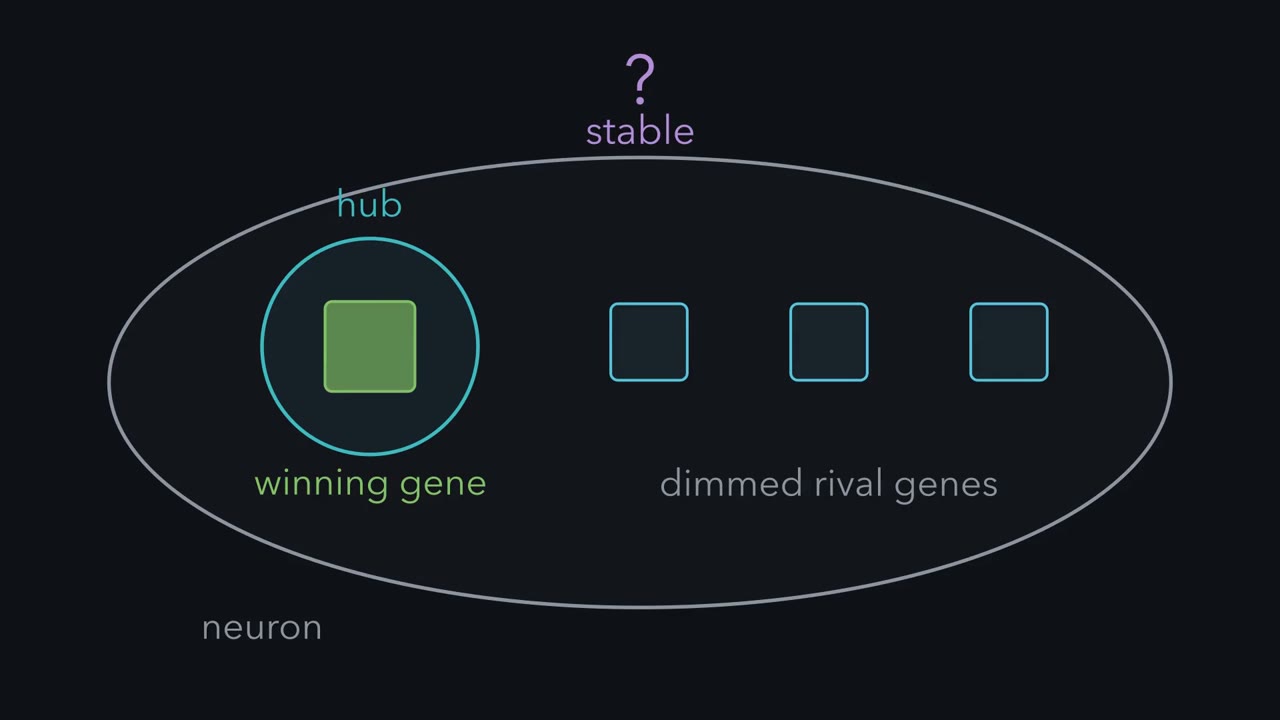
In this model, about 6 percent of its own maximum. Its EC50 is about 15 times higher. So the mutant is not simply better. It lost potency for propionate and gained responses to longer chains. Its selectivity shifted. The size of the shift is uncertain. A second table in the paper gives a smaller one. These are functional values from cultured cells. They are not binding constants. And a flat response would not prove a ligand cannot bind. Coupling, trafficking or the assay could be failing instead. Now look back at the three phases. Silence every gene. Let a few compete. Lock in the winner. The lock holds one receptor in place. That receptor's pocket decides which molecules the neuron responds to.
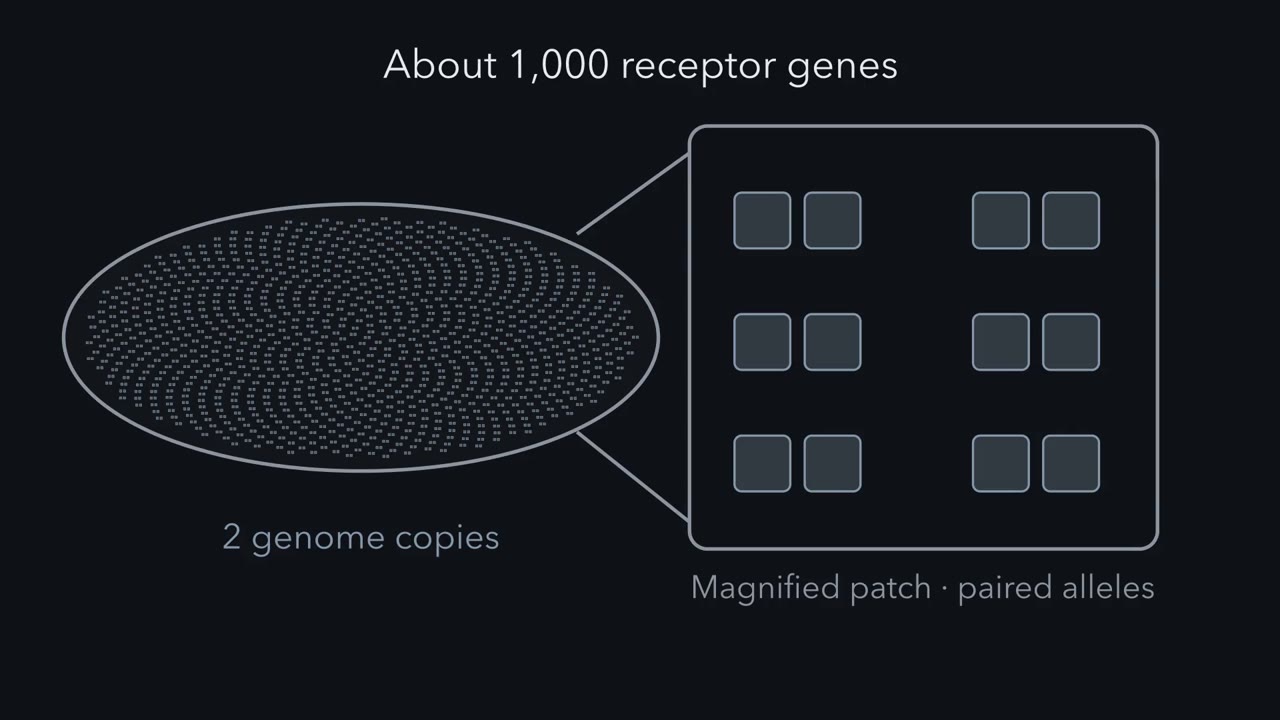
A mouse olfactory neuron holds about a thousand receptor genes and uses one copy of one. How does it choose, and what keeps it from changing its mind?
Continue in the lesson: One Receptor per Neuron: How Olfactory Neurons Choose →
2:39 · Free, with captions and a transcript. The lesson has the full text, the questions and the sources.
More films from this lesson
How this film was made. Narration: an AI narrator voice (Kokoro, af_heart) reading narration written from this lesson's text. Animation: AI-generated in code (Manim) by Claude, a schematic with no drawn molecular structures. Captions come from the narration script. See something wrong? Report it.