Where the Gain Sits, and What It Costs
Read the transcript of “Where the Gain Sits, and What It Costs”
Film transcript: Where the Gain Sits, and What It Costs
Where exactly does a cascade get its gain? Follow one photon down the rod's ladder. Step one. Activated rhodopsin switches on transducin, which switches on PDE6. Yue and colleagues counted each active unit as one effective complex. Step two. Each effective complex breaks down cyclic GMP, many molecules each. Step three. The fall in cyclic GMP closes cyclic-nucleotide-gated channels. In mouse rods, about 2,000 cyclic GMP molecules are hydrolysed for each absorbed photon. In a separate study, Yue and colleagues estimated about 12 to 14 effective complexes per activated rhodopsin. Predict. If these two estimates can be combined, which step multiplies the signal more?
If they combine, step two. Each complex would break down roughly 150 molecules. That is an illustration, not a measured yield. But other analyses put step one several times higher. On those, the two factors could be comparable. Either way, both steps amplify. The gain belongs to particular enzymes, not to the receptor being a G protein coupled receptor. A receptor step need not amplify at all. In frog olfactory neurons, one bound receptor rarely activates even one G protein. There, the gain is thought to come at later steps. Adenylyl cyclase makes cyclic AMP, which opens channels. The calcium that enters opens a chloride current. Now the price. Every rung is an encounter between molecules, or an enzyme turning over. So the current rises only after several steps have run.
In mouse olfactory neurons, the earliest first spikes came about 25 to 40 milliseconds after a strong odour pulse. That is a latency to a spike, which includes more than transduction. It is not a channel time constant. Spontaneous receptor activity can also enter the cascade. Neurons with different odorant receptors showed different levels of spontaneous activity. Inverse agonist odorants could quiet it. A cascade that multiplies a receptor event multiplies a spontaneous one too. So enzymes between stimulus and pore can buy gain. They often pay in time, and they can amplify spontaneous activity too.
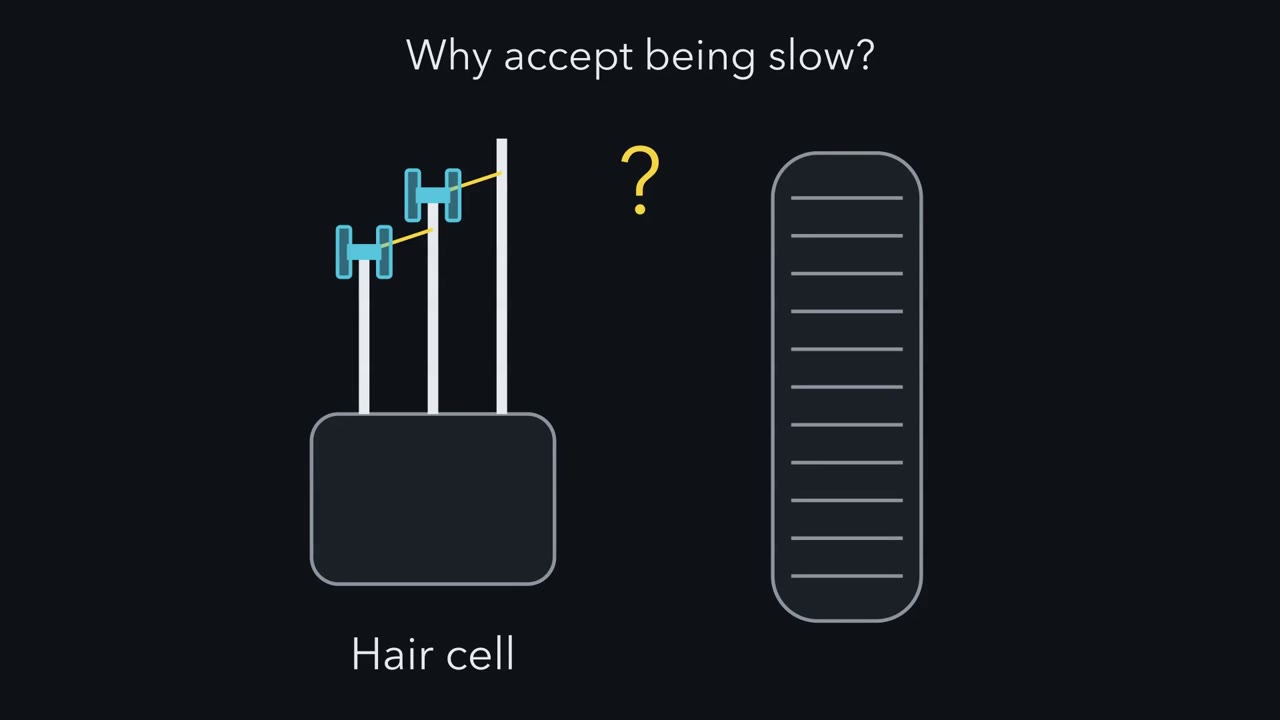
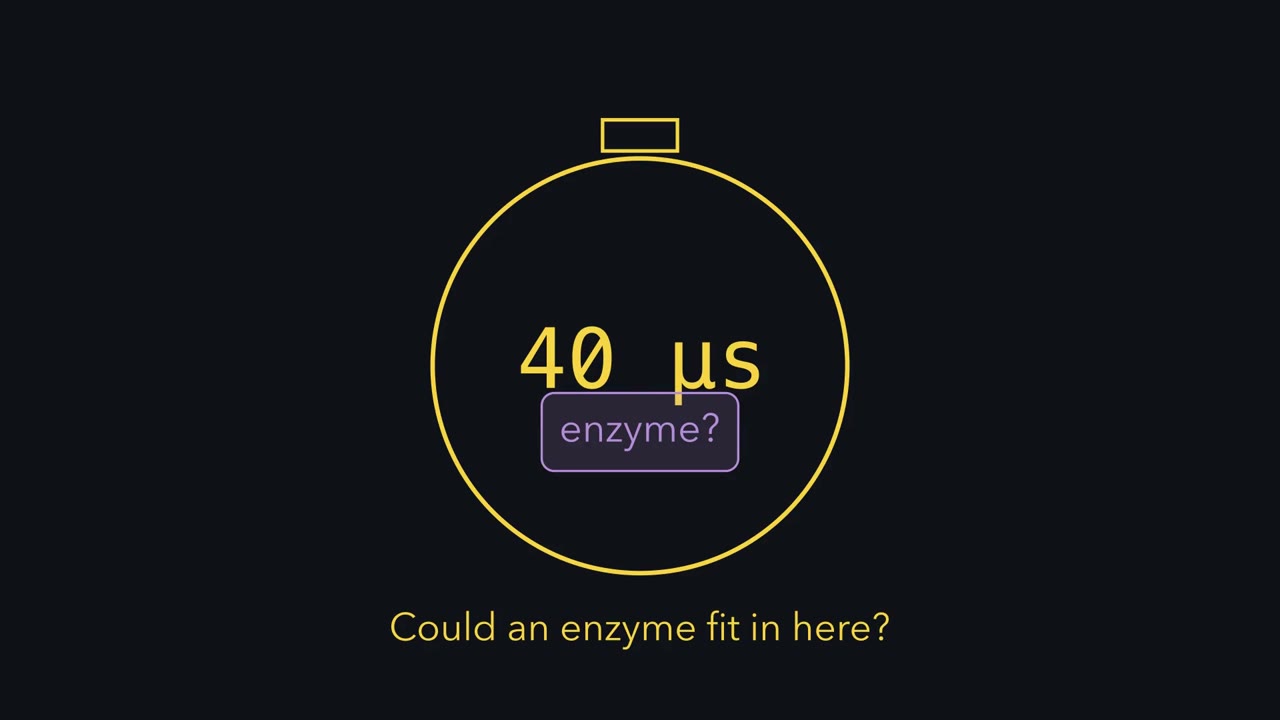
In turtle hair cells, transduction channels can activate with a time constant as short as about 50 microseconds. A rod's response to one photon takes of order a tenth of a second or more to peak, yet the rod can report that single photon. Why would a sensory cell accept being slow, and what exactly does a quoted speed measure?
Continue in the lesson: Five Ways to Turn a Stimulus into a Current →
2:53 · Free, with captions and a transcript. The lesson has the full text, the questions and the sources.
More films from this lesson
How this film was made. Narration: an AI narrator voice (Kokoro, af_heart) reading narration written from this lesson's text. Animation: AI-generated in code (Manim) by Claude, a schematic with no drawn molecular structures. Captions come from the narration script. See something wrong? Report it.