Films · Developmental Neuroscience
Break the Receptor, Add the Ligand
Read the transcript of “Break the Receptor, Add the Ligand”
Film transcript: Break the Receptor, Add the Ligand
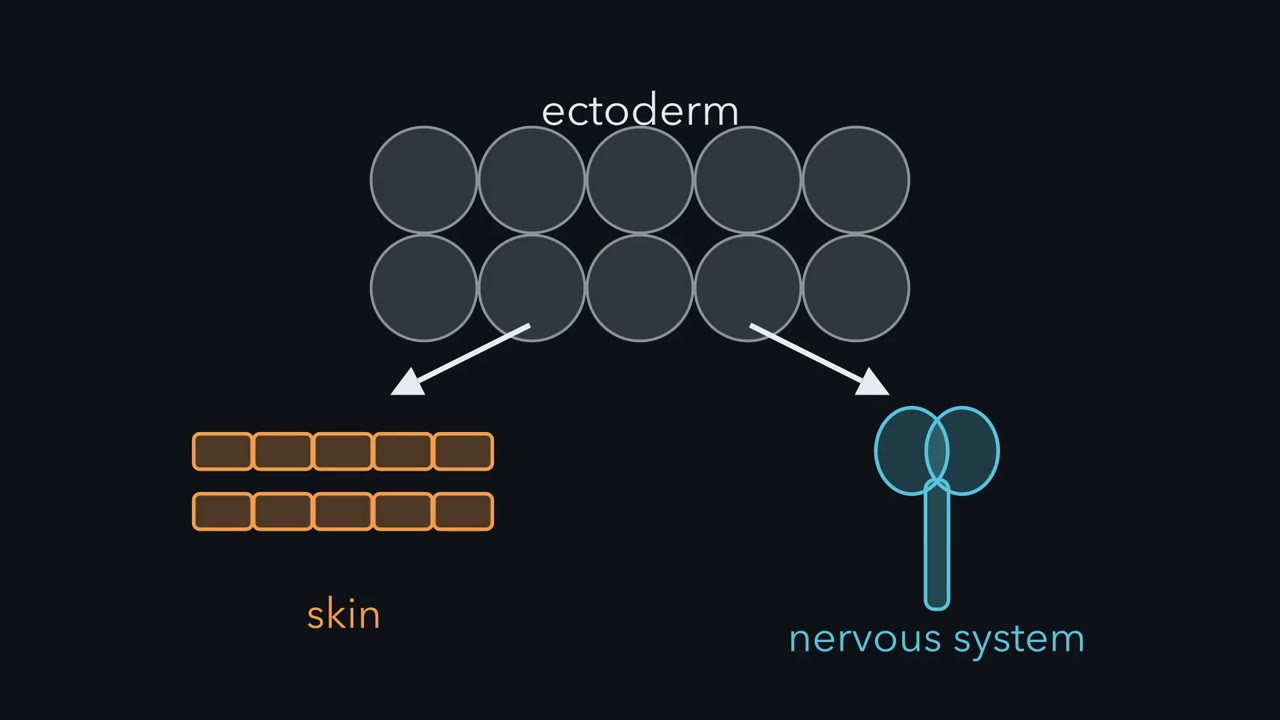
Break one signaling receptor in a frog cell, without adding anything new. What will an animal cap become? Every experiment here uses the same tissue, the animal cap, cultured in salt solution. Left intact, it becomes epidermis and makes epidermal keratin. That is the control. BMPs signal through pairs of receptor kinases, a type II and a type I. The type I receptor phosphorylates Smad1, 5 or 8. It moves to the nucleus with Smad4. Now remove one receptor's kinase domain. It still binds ligand and still pairs with normal partners. But it cannot pass the signal on, so it jams the complexes it joins. This is a dominant negative: a broken copy that blocks the working copies.
In 1994, Ali Hemmati-Brivanlou and Douglas Melton injected eggs with RNA for such a receptor. It was built from an activin receptor. But it also blocks signaling by related ligands. Cut caps from the injected embryos and culture them alone. What do they become?
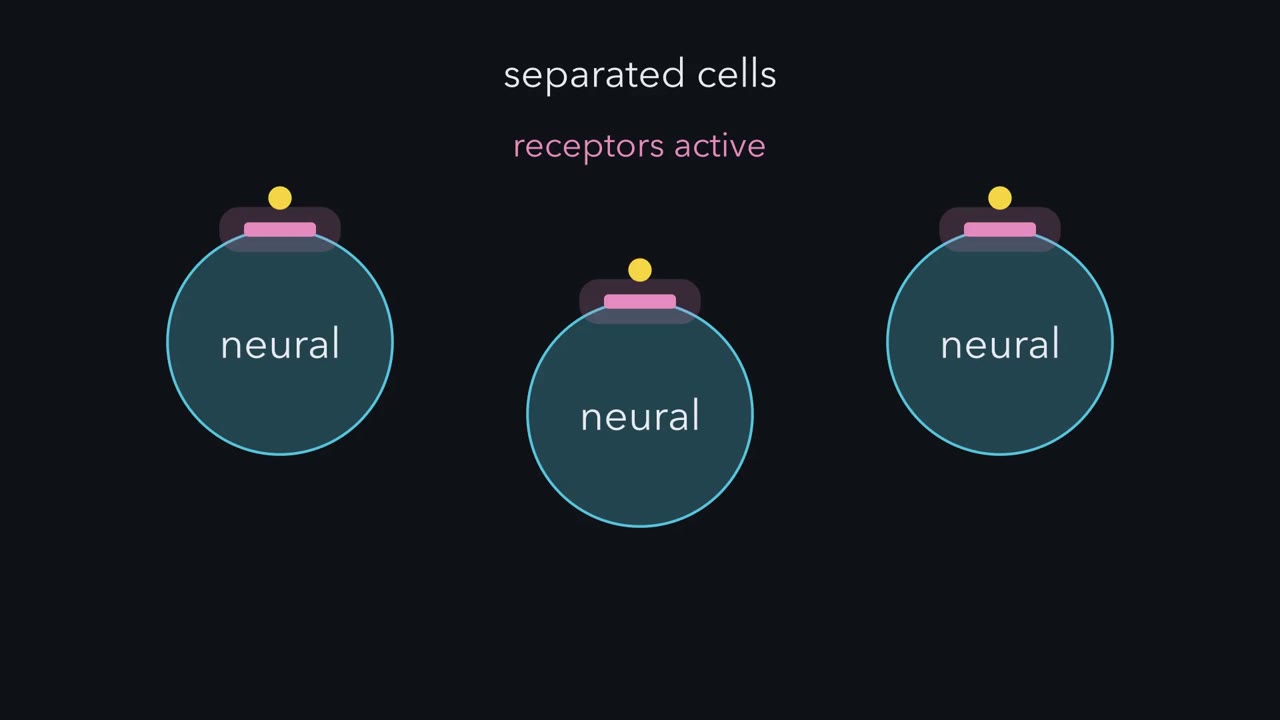
Neural tissue, with no mesoderm detected that could have induced it. Blocking a receptor, not adding a signal, made neural tissue. Which blocked signal normally keeps ectoderm as skin? The receptor blocks activin, and related signals too. But activin added to caps makes mesoderm, not skin. A relative fit better: BMP4. Its RNA is in the ectoderm early. And it is cleared from the dorsal side as the neural plate appears. To test BMP4 directly, you need cap cells that would otherwise turn neural. In 1989, Horst Grunz and Lothar Tacke had found them. They separated cap cells in medium lacking the calcium and magnesium the cells need to stick together.
They kept the cells apart for hours, then let them clump again. The cells made neural tissue. In 1995, Paul Wilson and Hemmati-Brivanlou separated cap cells the same way and added BMP4 protein. What do these cells become?
Epidermis. Their neural genes stayed off. The ligand alone was enough to restore skin. The takeaway: jam the receptor and a cap turns neural. Add BMP4 back and separated cells return to skin.
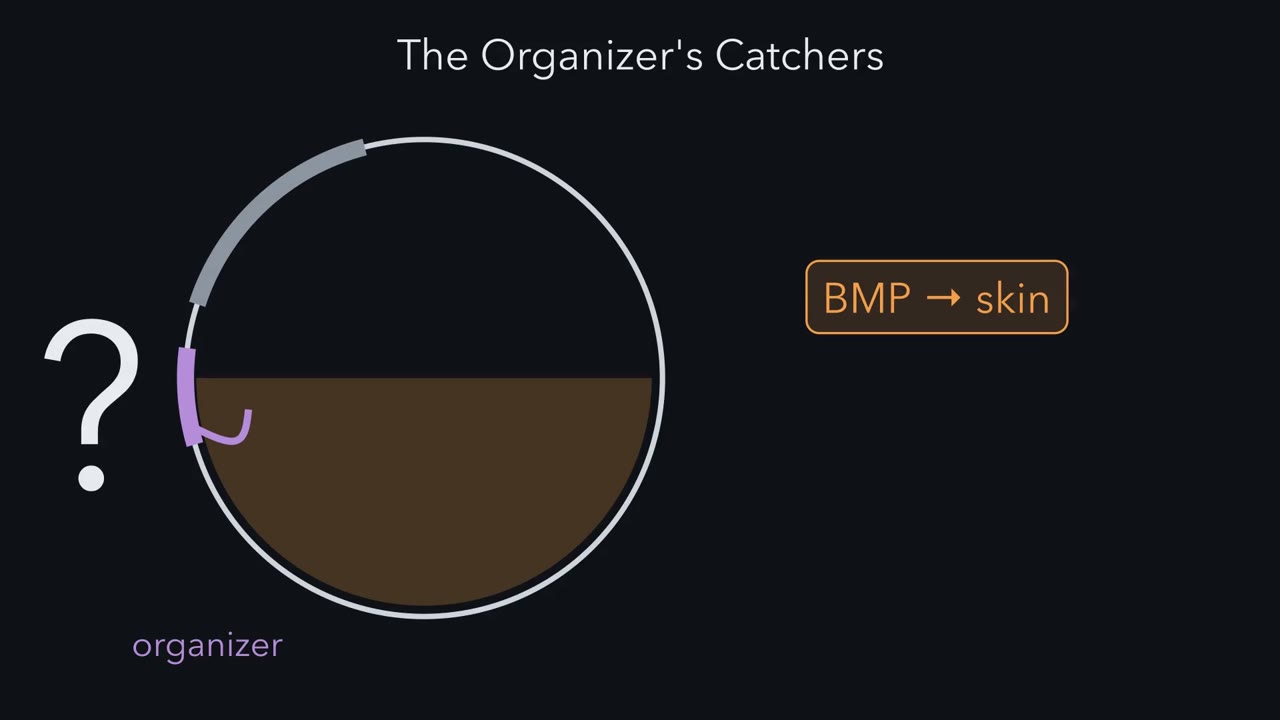
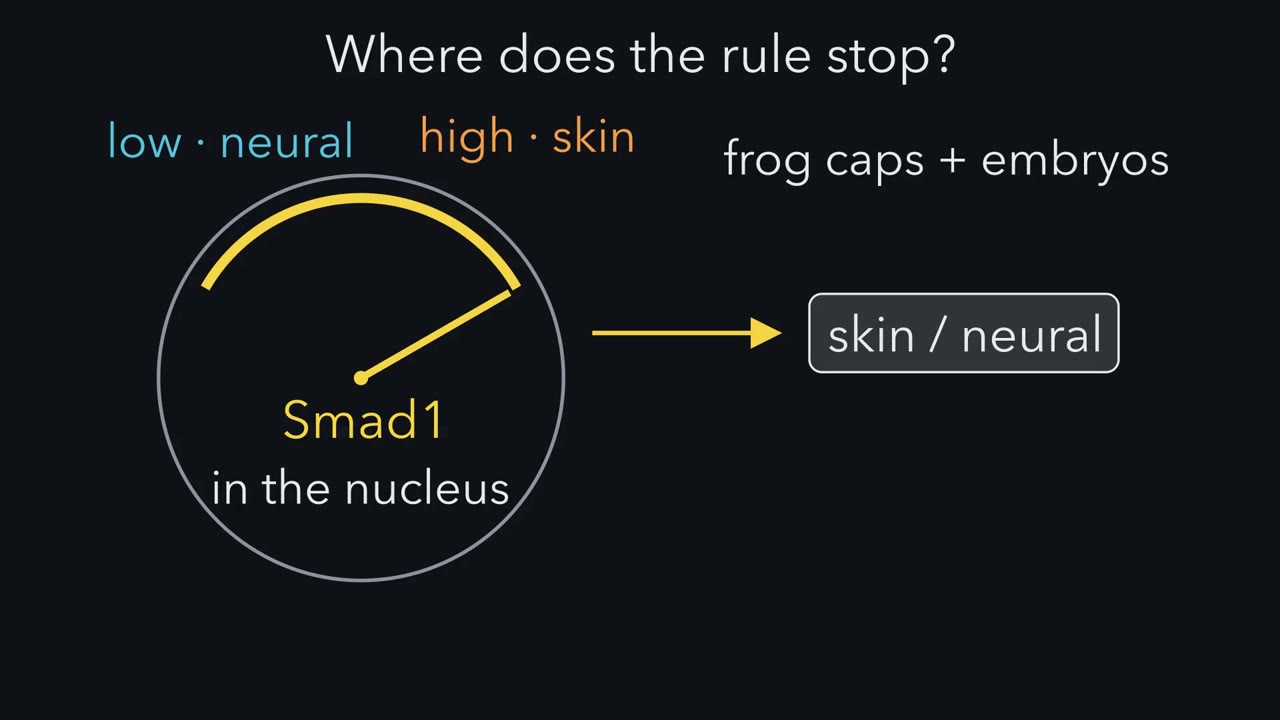
Pull a square of frog skin-to-be apart into single cells, and it becomes neural. Why? Because BMP signaling, which makes skin, falls in those cells. In the embryo, the organizer's secreted proteins make it fall.
Continue in the lesson: Neural Induction: The Default Model →
3:00 · Free, with captions and a transcript. The lesson has the full text, the questions and the sources.
More films from this lesson
How this film was made. Narration: an AI narrator voice (Kokoro, af_heart) reading narration written from this lesson's text. Animation: AI-generated in code (Manim) by Claude, a schematic with no drawn molecular structures. Captions come from the narration script. See something wrong? Report it.