A Channel Shaped Like a Dome
Read the transcript of “A Channel Shaped Like a Dome”
Film transcript: A Channel Shaped Like a Dome
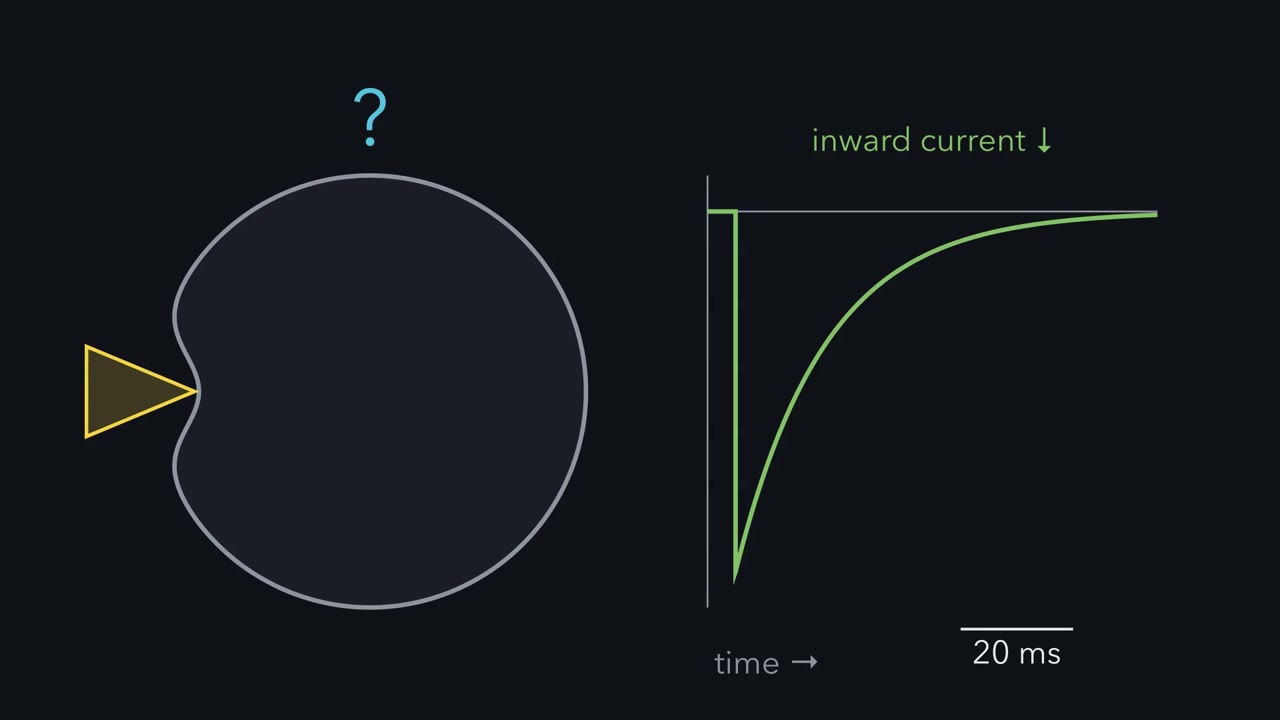
Why would one ion channel need 114 transmembrane helices? The first map came in 2015, from Ge and colleagues. It showed a trimer with three propeller-like arms. Zhao and colleagues resolved each arm into repeating units of four helices. Those units form curved blades around a central pore. They also mutated single residues of a long beam inside the cell. Mechanical activation was impaired. So that part of the structure matters for gating, not just for building the channel. By 2019, a structure of mouse Piezo2 was sharp enough to count the helices. Each subunit holds 38 transmembrane helices. The three-subunit channel holds 114.
Keep the two numbers apart. Thirty-eight describes one subunit. One hundred and fourteen describes one channel. Those helices do something unusual. The curved blades bow the membrane into a dome. In purified mouse Piezo2, the dome is reported as about twenty-eight nanometres across and ten deep.
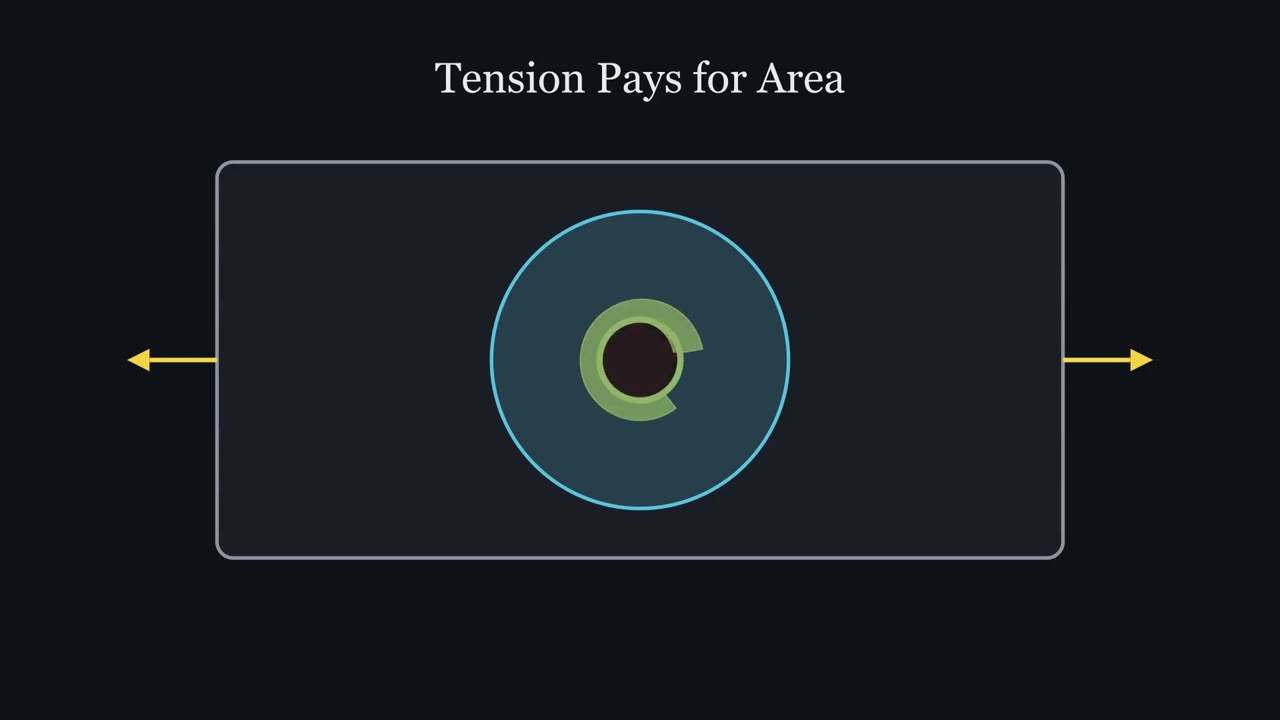
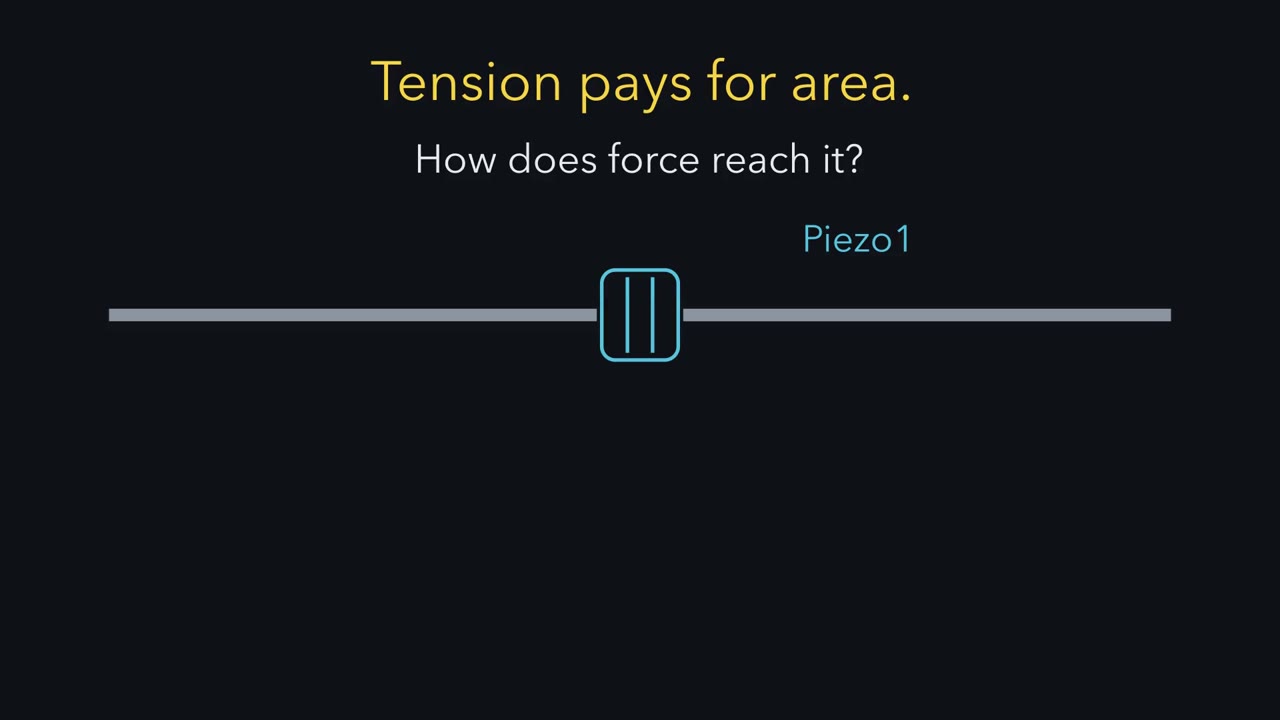
A dome has two areas. Its surface area is the membrane actually in it. Its projected area is its shadow on the flat plane around it. That is the area it occupies, seen from above. Treat the dome as a smooth cap. Flatten it without stretching it. Does its shadow grow or shrink? By roughly how much?
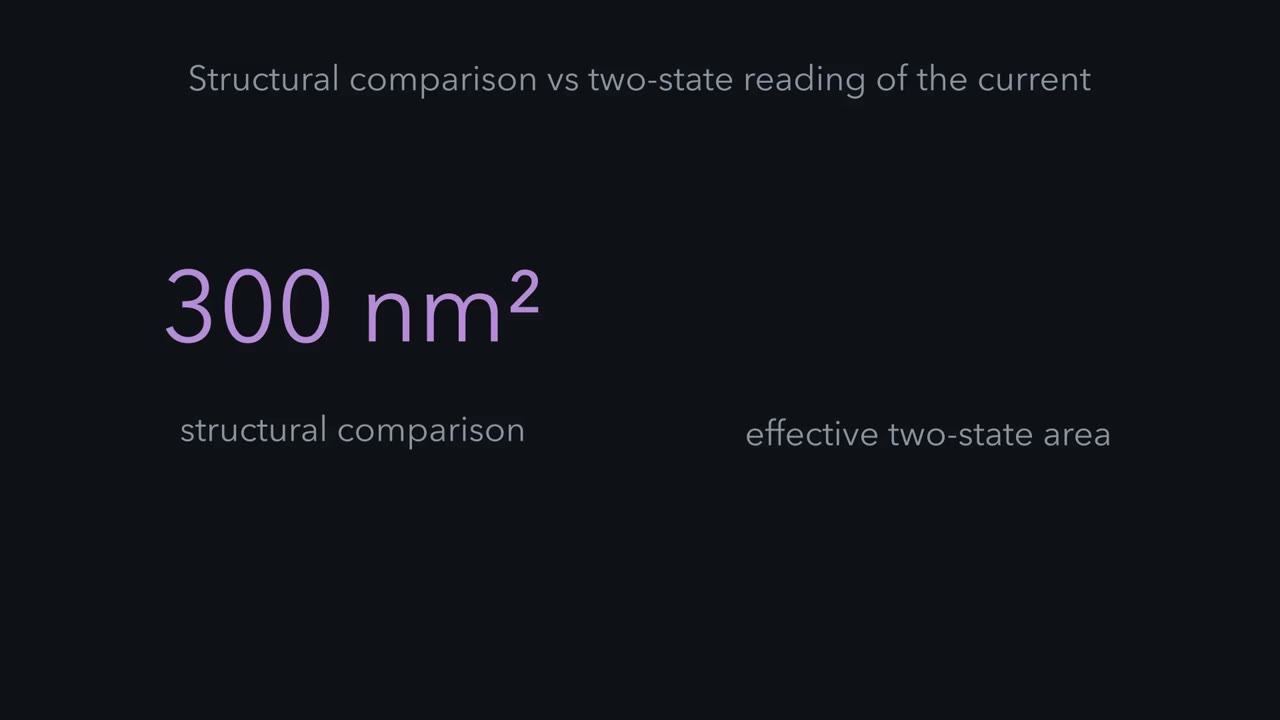
It grows. The curved cap casts a shadow of about six hundred and sixteen square nanometres. Flattened, its whole surface lies in the plane, about nine hundred and thirty. The gain is about three hundred and ten square nanometres.
The gain depends on how deep the dome is, not on how wide. This is idealized geometry, not a measurement. The real dome is protein blades and bent lipid, not a smooth cap. So flattening increases projected area. Anything that favours more projected area favours the flat state. In the leading model, still debated, flattening is thought to help open the pore. In the leading model, a dome is a device for gaining area.
Mouse PIEZO2 threads 114 transmembrane helices through the membrane to build one ion channel, and its pore sits at the centre. Why would a channel need so much protein around one pore?
Continue in the lesson: Piezo Channels and the Physics of Force →
2:38 · Free, with captions and a transcript. The lesson has the full text, the questions and the sources.
More films from this lesson
How this film was made. Narration: an AI narrator voice (Kokoro, af_heart) reading narration written from this lesson's text. Animation: AI-generated in code (Manim) by Claude, a schematic with no drawn molecular structures. Captions come from the narration script. See something wrong? Report it.