Films · Developmental Neuroscience
A Receptor That Is Also an Address
Read the transcript of “A Receptor That Is Also an Address”
Film transcript: A Receptor That Is Also an Address
Can the protein that detects a smell also tell its axon where to go? In 1991, Linda Buck and Richard Axel found the odorant receptor genes. In the nose, the rule is one neuron, one receptor, with rare exceptions. Neurons with the same receptor are scattered within a zone of the nose.
Yet their axons gather in a few glomeruli in the olfactory bulb. A glomerulus is a ball of neuropil, where sensory axons meet bulb neurons. In 1996, Peter Mombaerts and colleagues marked axons from neurons using the P2 promoter.
They converged on two glomeruli in each bulb, one medial, one lateral. One receptor, about two glomeruli. The receptor protein also reaches the axon terminals. Could it be part of the address? Predict. Delete the P2 receptor, but keep the marker. Where do the axons go?
They wandered, and failed to form a P2 glomerulus. So the receptor is needed. A caveat: neurons without a working receptor often switch on a second receptor gene. Predict. Put the M12 receptor in place of P2. Where do the axons go now?
They converged near the P2 glomerulus, and far from M12's own. So the receptor helps choose, and other features of the neuron count too. Here the shared label is the receptor itself. Unlike Sidekick, it is not known to bind matching receptors on other axons.
In layers and in self-avoidance, a match says same, and the cell decides what same means. Smell shares the logic of a shared label, but no receptor-to-receptor match is known; how the receptor sorts axons is still being worked out.
Takeaway: in smell, receptor identity helps axons of one channel converge. Other features of the neuron count too.
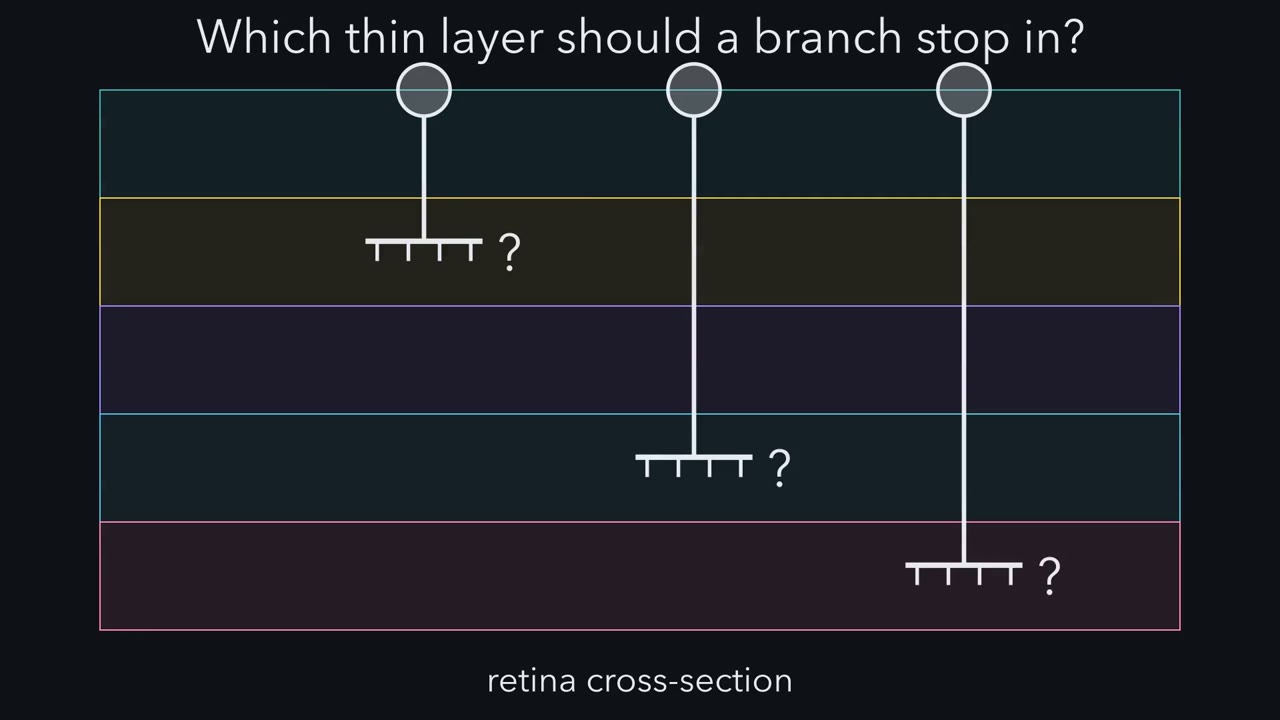
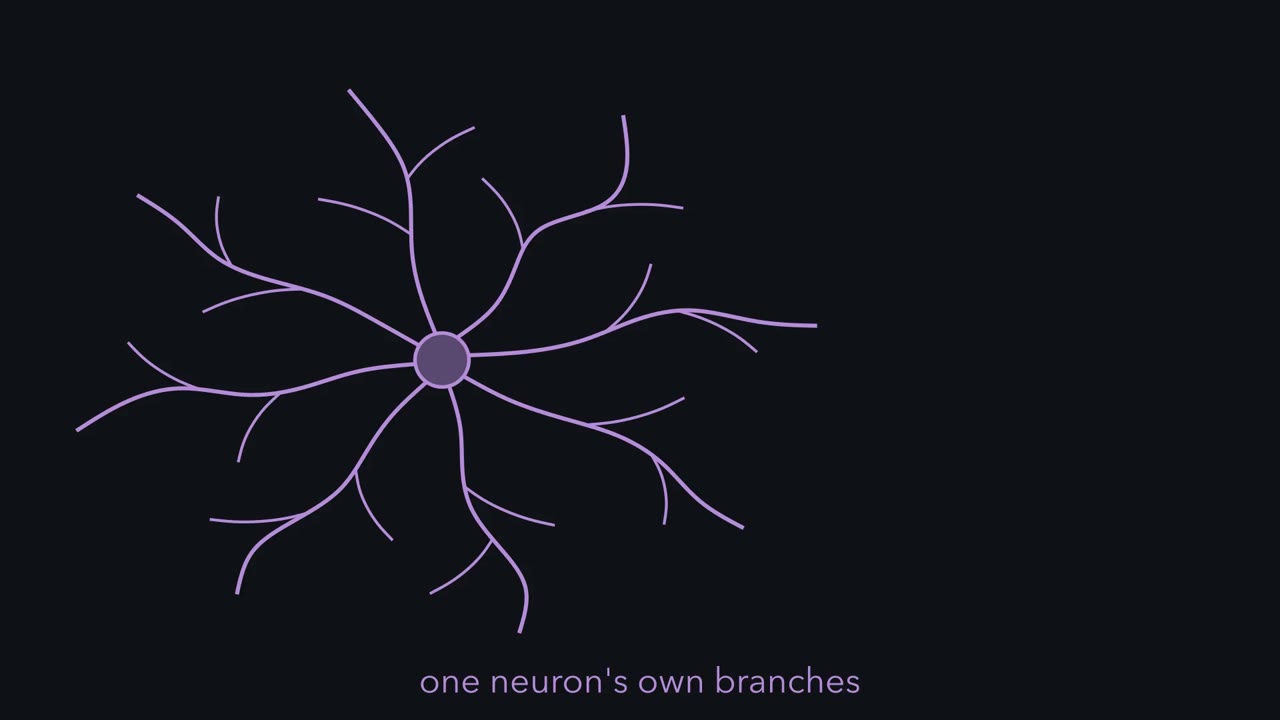
How does a neuron stop in the right layer, find the right partner and keep its own branches from tangling? One fly gene that can make tens of thousands of different surface proteins is part of the answer.
Continue in the lesson: Choosing a Partner: Layers, Self-Avoidance and Smell →
2:48 · Free, with captions and a transcript. The lesson has the full text, the questions and the sources.
More films from this lesson
How this film was made. Narration: an AI narrator voice (Kokoro, af_heart) reading narration written from this lesson's text. Animation: AI-generated in code (Manim) by Claude, a schematic with no drawn molecular structures. Captions come from the narration script. See something wrong? Report it.