Films · Developmental Neuroscience
There, but Not Working
Read the transcript of “There, but Not Working”
Film transcript: There, but Not Working
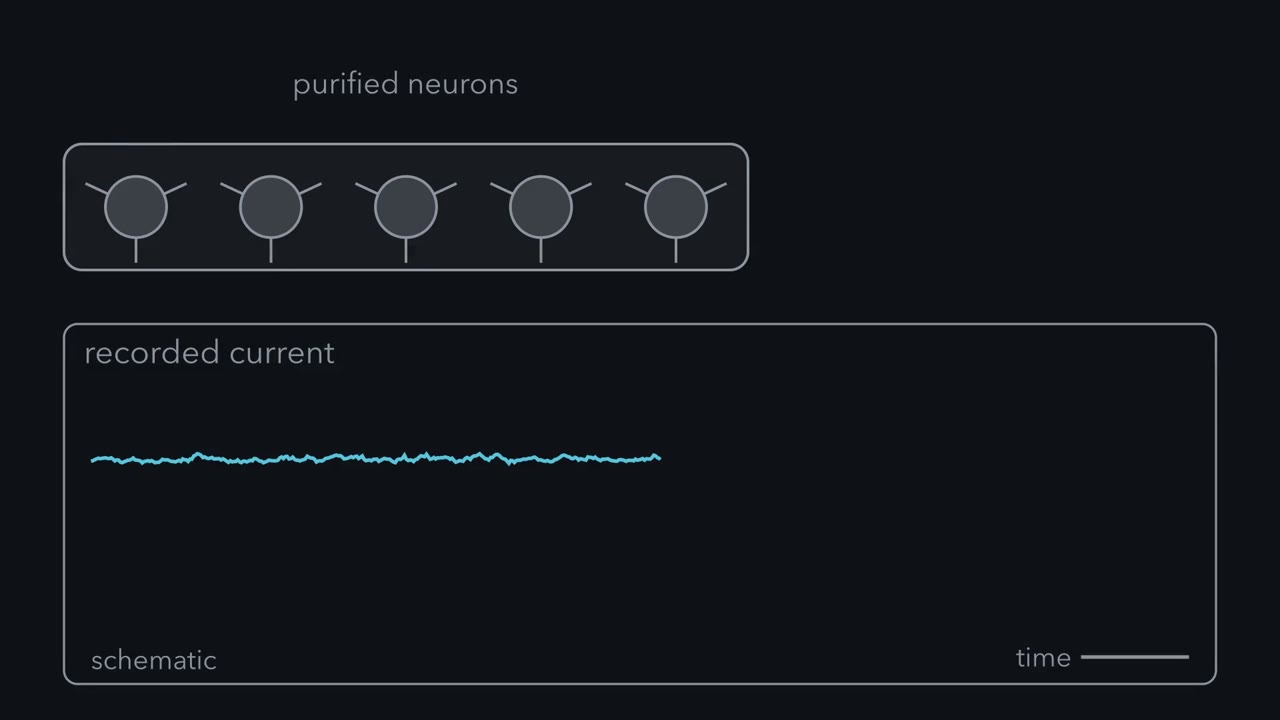
When is a synapse finished? When it is there, when it releases, or when the other side responds? A mature muscle fiber is usually contacted by one motor axon, at one site, using one transmitter. A neuron in the brain receives thousands of synapses. Excitatory and inhibitory synapses share one dendrite, so each contact must specify its kind. A finished synapse does three things. It is there. It releases transmitter. And the other side responds. They can come apart, and each needs its own measurement. A microscope shows it is there. A dye taken up by recycling vesicles shows release. A recording shows the response.
Take stargazer, a mouse that tosses its head upward and has seizures. In its cerebellum, granule cells receive synapses from mossy fibers. AMPA receptors carry most fast excitatory current. NMDA receptors open when glutamate and a co-agonist are bound. Near rest, magnesium from outside blocks most of their current.
In stargazer, these synapses give NMDA responses but no AMPA responses. Predict: which property failed? Not being there. The synapses are present. Not release either. An NMDA response needs glutamate, so transmitter is being released. What failed is one kind of response. The same synapse responds through one receptor and not the other.
The gene encodes stargazin, a small membrane protein. It brings AMPA receptors to the cell surface. Its tail binds PSD-95, a scaffold under the synapse, and that holds the receptors there. A count would miss this defect. A recording shows it, and so does labeling the receptors. So carry one idea through this lesson. A synapse that is there is not yet a synapse that works. Takeaway: each experiment sees only the properties it measures.
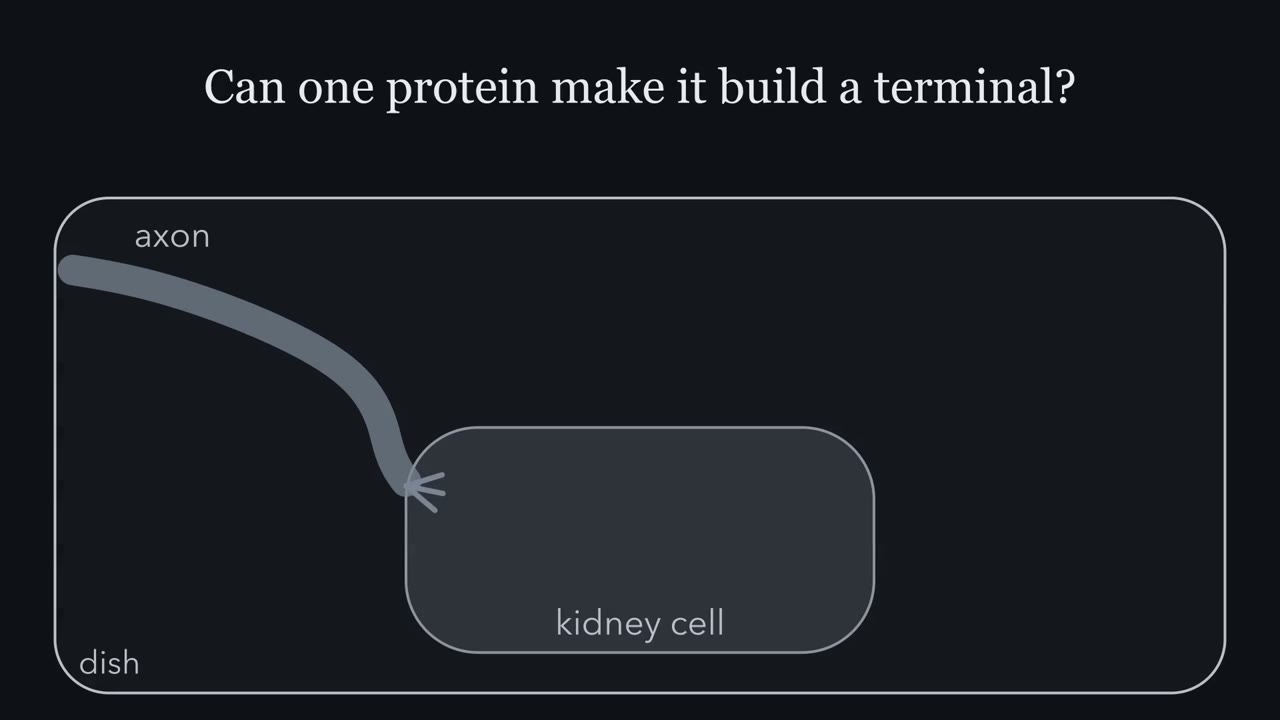
A kidney cell that makes one neuronal protein, neuroligin, can persuade an axon to build a nerve terminal on it. So what happens to the synapses of a mouse that lacks neuroligins 1, 2 and 3?
Continue in the lesson: Synapses in the Brain: Adhesion, Scaffolds and Astrocytes →
2:34 · Free, with captions and a transcript. The lesson has the full text, the questions and the sources.
More films from this lesson
How this film was made. Narration: an AI narrator voice (Kokoro, af_heart) reading narration written from this lesson's text. Animation: AI-generated in code (Manim) by Claude, a schematic with no drawn molecular structures. Captions come from the narration script. See something wrong? Report it.