Films · Developmental Neuroscience
One Sheet, Two Fates
Read the transcript of “One Sheet, Two Fates”
Film transcript: One Sheet, Two Fates
How can a small graft make its host build a second spinal cord, from cells meant for skin? First, a little embryology. The egg divides into a ball of smaller cells. In amphibians, the ball becomes a blastula, a sphere of cells around a fluid-filled cavity. Then, in gastrulation, cells move inside, and the embryo sorts into three layers. The outer layer, the ectoderm, makes the outer skin and the nervous system. The middle layer, the mesoderm, makes muscle, bone and the notochord, a stiff rod along the back. The inner layer lines the gut.
Cells move inside through a slit, the blastopore. Its edge on the future back is the dorsal lip. Now watch the ectoderm. It looks like one sheet. Along the back, a strip becomes the neural plate. It rolls up into the neural tube, the future brain and spinal cord. On the belly, the same sheet stays flat and becomes skin. So why does the back strip become neural, while the belly strip becomes skin?
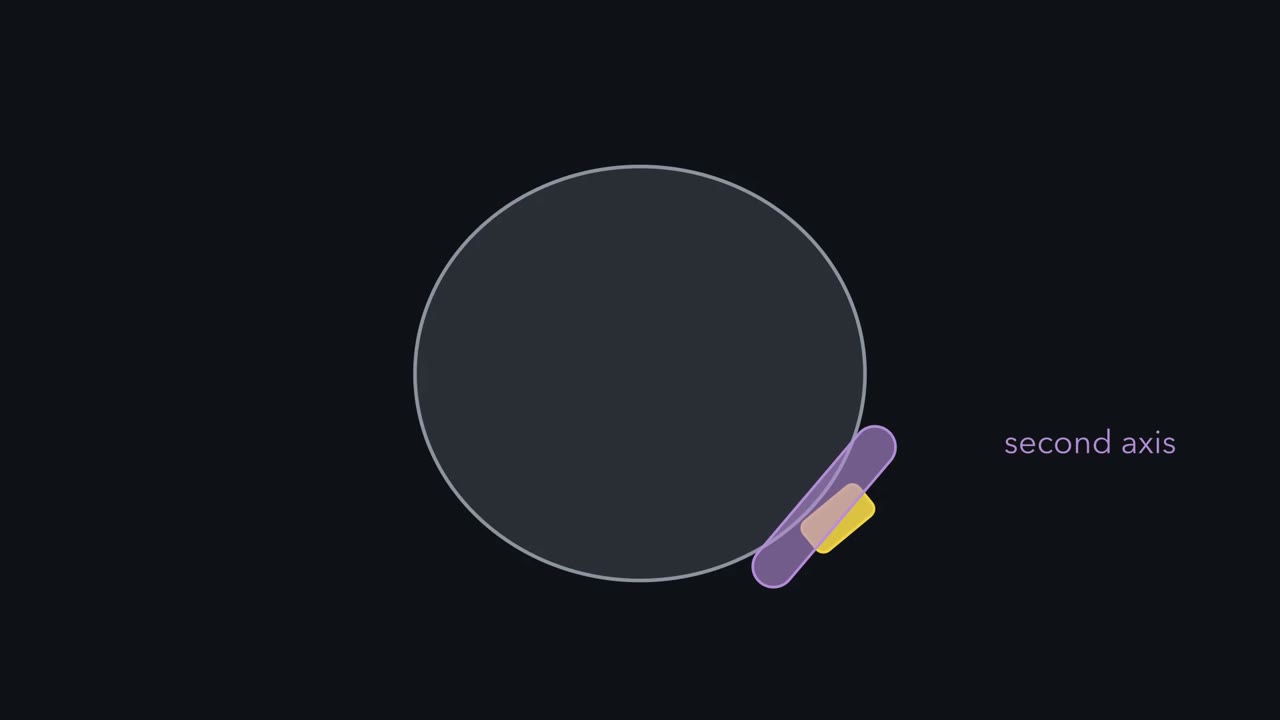
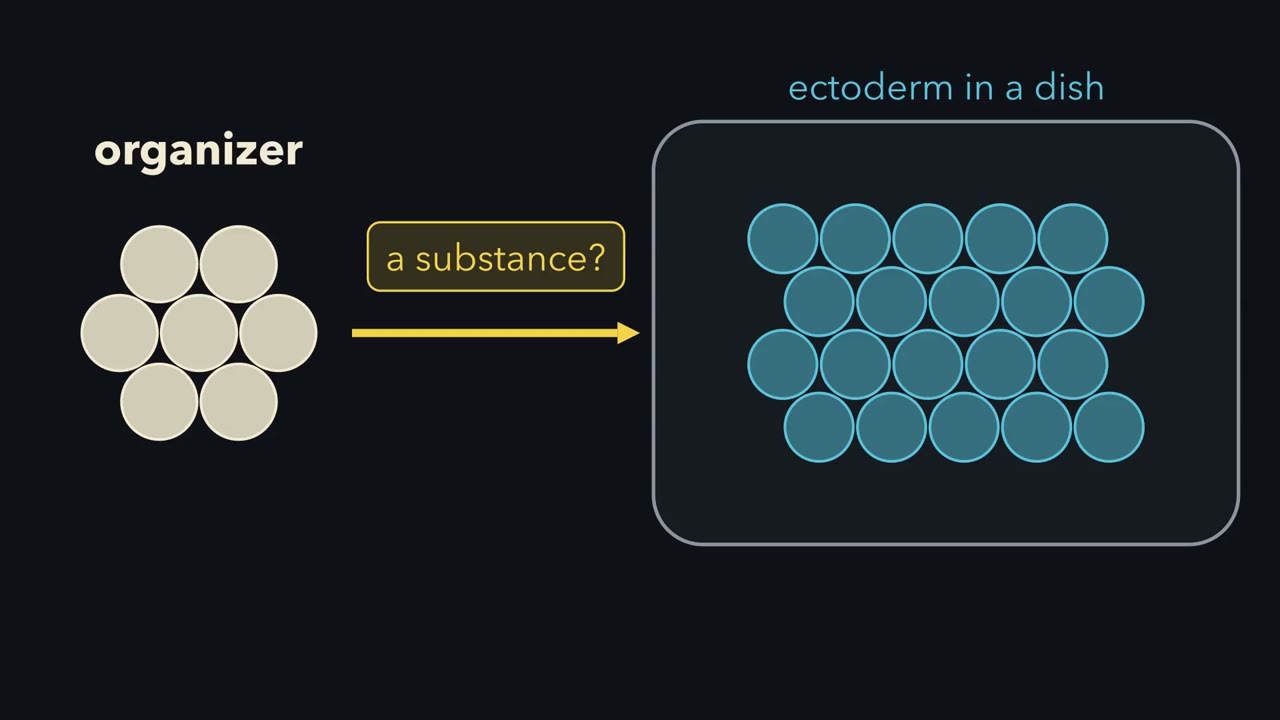
There are two kinds of answer. Perhaps the belly cells are already fixed as skin. Or they can still change, and something nearby tells the back strip what to become. Moving tissue tests the first answer. Put dorsal-lip tissue next to belly ectoderm, and watch. The graft worked. The belly cells built a second neural tube. Chapter two shows whose cells they were. That experiment gives this lesson its one idea. A cell's fate can be set by its neighbours. Move the organizer somewhere new, and host cells there build much of a second back around it. The graft itself becomes notochord. But only while they are still competent, that is, able to answer.
Notice one limit. The idea says who changed fate, and where. Not what the signal is. One sheet, two fates, and neighbours can decide which. Next: whose cells built the second back?
How can a small graft make its host build a second spinal cord from cells meant for skin?
Continue in the lesson: The Organizer: Spemann and Mangold →
2:28 · Free, with captions and a transcript. The lesson has the full text, the questions and the sources.
More films from this lesson
How this film was made. Narration: an AI narrator voice (Kokoro, af_heart) reading narration written from this lesson's text. Animation: AI-generated in code (Manim) by Claude, a schematic with no drawn molecular structures. Captions come from the narration script. See something wrong? Report it.