Films · Developmental Neuroscience
The Map and the Puzzle
Read the transcript of “The Map and the Puzzle”
Film transcript: The Map and the Puzzle
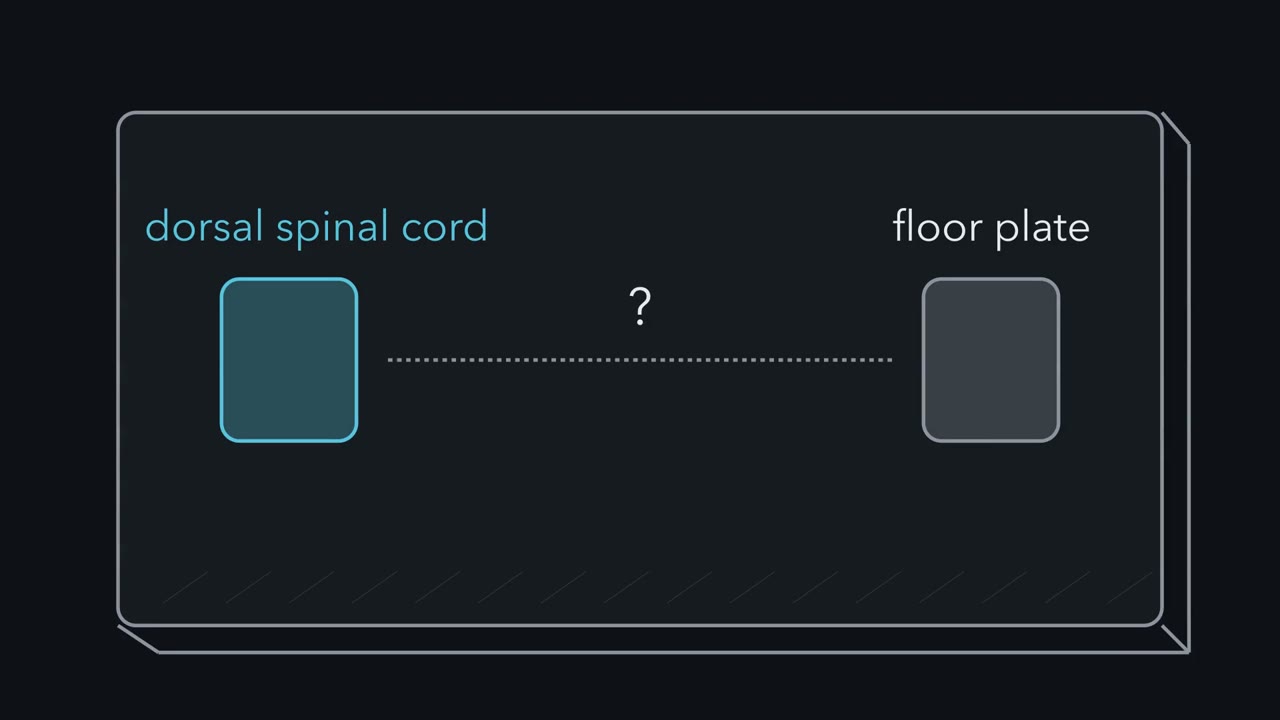
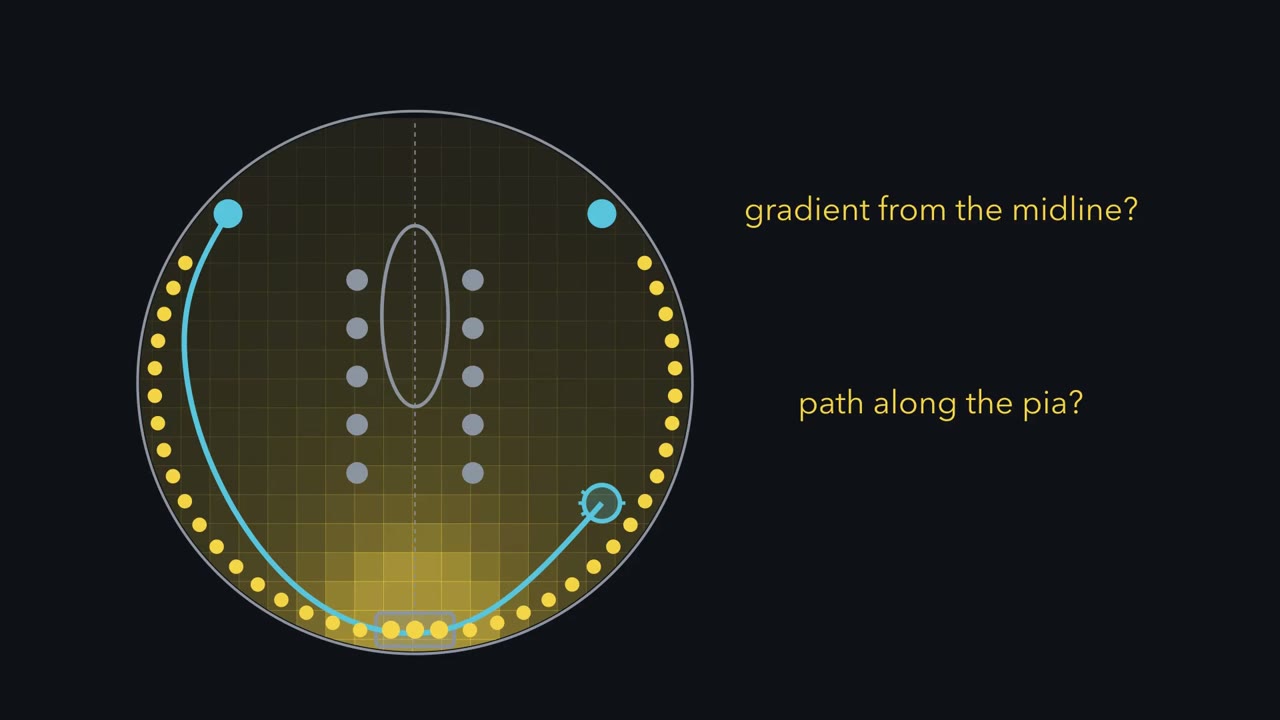
One protein pulls some growing axons toward the midline of the spinal cord. It pushes others away. What decides? A growing axon is led by its growth cone, the moving, sensing tip at its end. Now the map. Picture the embryonic spinal cord cut crosswise, like a slice through a tube. the bottom sits the floor plate. It is a strip of cells along the ventral midline. The ventricular zone lines the central canal. Its cells are progenitors, dividing cells that make neurons and glia. Each progenitor sends a long fibre outward to the edge of the cord. That outer edge is the pial surface. A basement membrane covers it, a thin sheet of extracellular matrix.
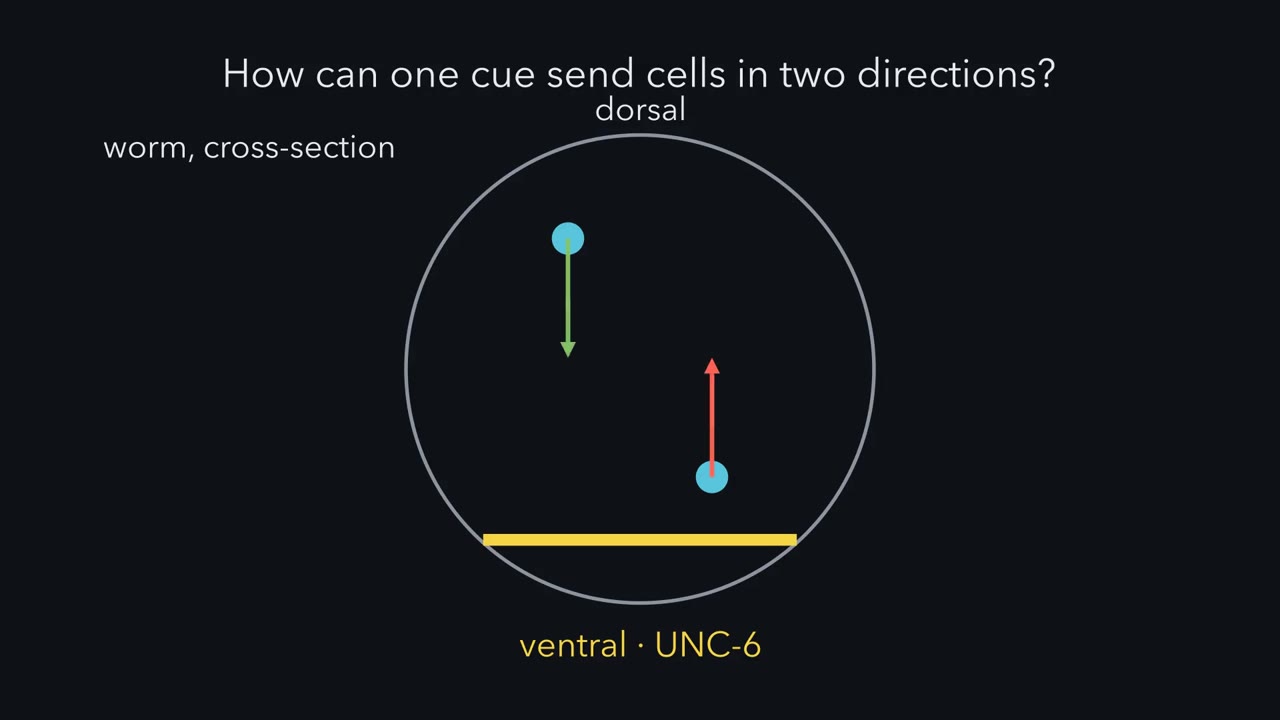
Many commissural neurons sit in the dorsal cord. Their axons grow ventrally, close to the pial surface. Then they turn inward to the floor plate and cross it to the other side. Add a second traveller, on its own map. This is the neural tube where midbrain meets hindbrain. There, trochlear motor axons start near the ventral midline and grow dorsally, away from the floor plate. Add a third. In the worm C. elegans, cells and pioneer axons migrate between the ventral and dorsal sides. The worm's netrin, called UNC-6, is made on the ventral side. The map raises three puzzles. First, a floor plate in a gel draws axons from dorsal cord without touching it.
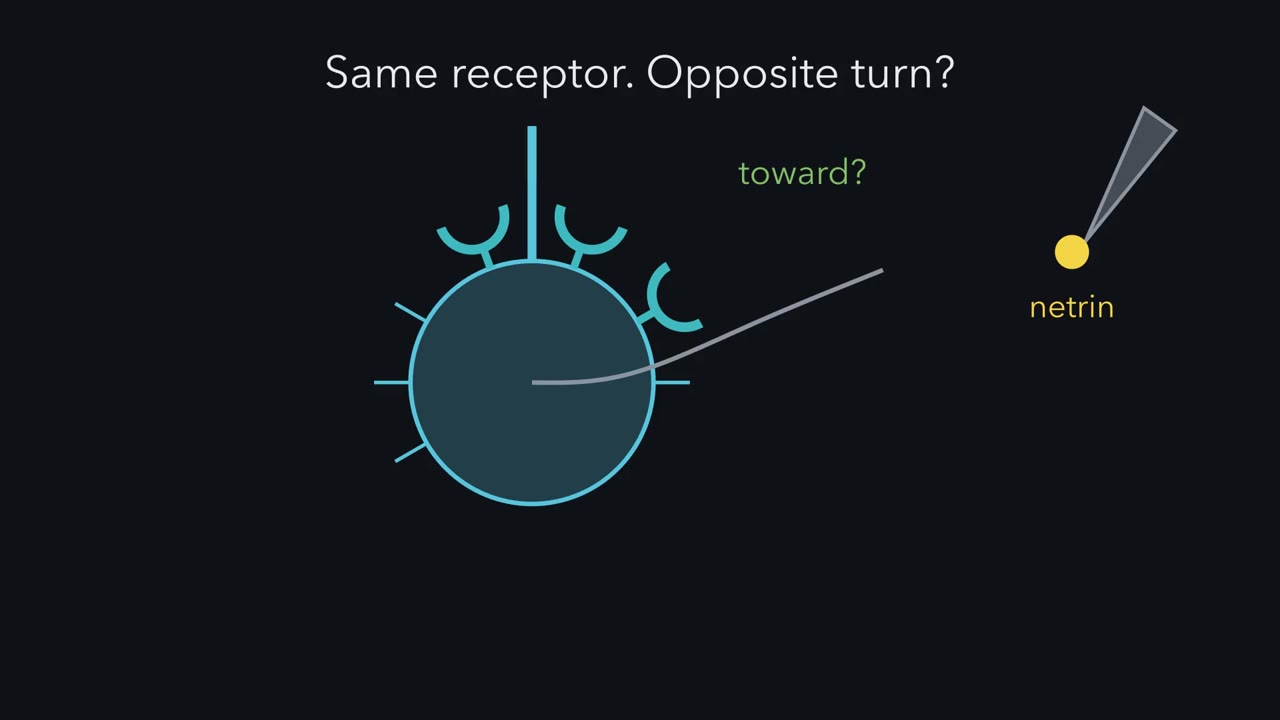
What crosses? Second, how can one cue pull commissural axons toward the ventral midline, and push trochlear axons away? Third, is the cue a gradient from the midline, or laid along the axons' path? Make a guess. Is the direction written into the cue? Or does the cell that reads it decide?
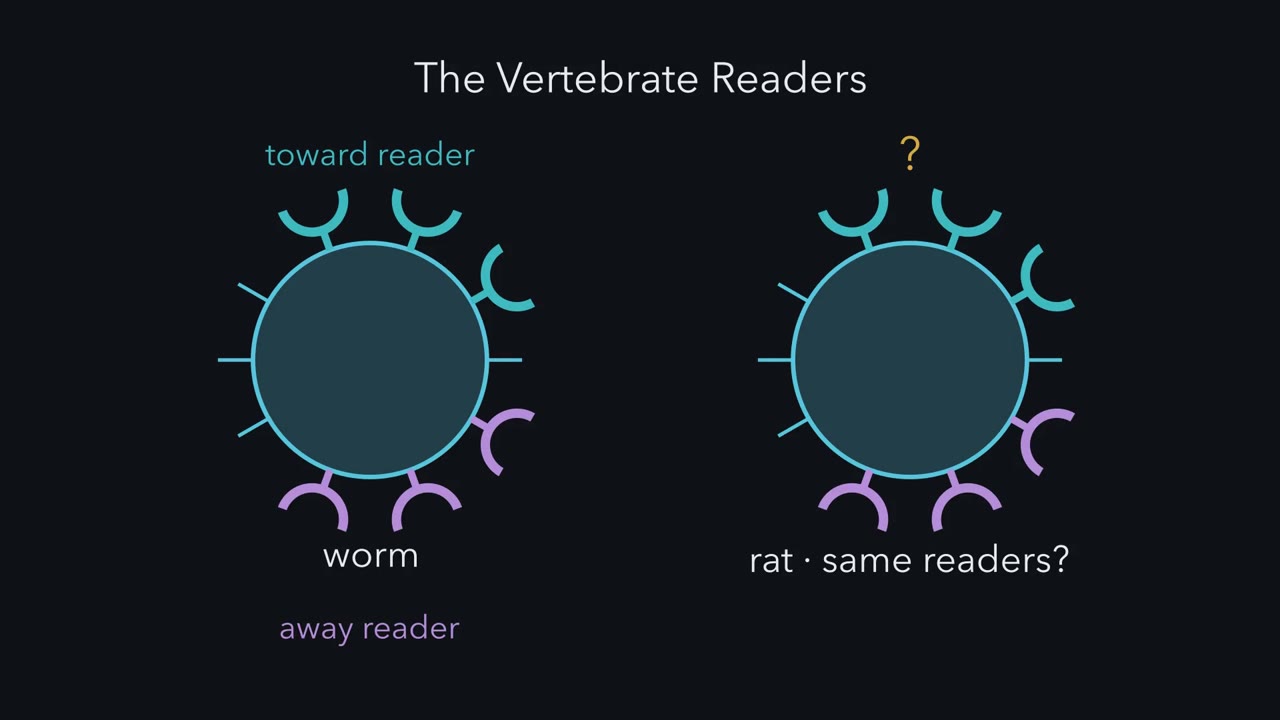
This lesson argues for the second. Netrin marks a place. The growth cone decides what to do there. Where netrin is supplies the where: its source, its slope, the surface it lies on. The growth cone supplies the sign. Its receptors come first. DCC usually draws it in. UNC5 receptors add repulsion, sometimes with DCC. In some cells, its internal signalling state counts too, such as cAMP or calcium. Laminin, a matrix protein outside the cell, can change that state. The rule has limits. Netrin is not always a long-range gradient. And it does more than steer.
Keep this map in view. Each chapter fills one of the three boxes.
The same protein pulls one axon toward the midline of the embryonic spinal cord and pushes another away. What decides?
Continue in the lesson: Netrin and DCC: One Cue, Two Answers →
2:58 · Free, with captions and a transcript. The lesson has the full text, the questions and the sources.
More films from this lesson
How this film was made. Narration: an AI narrator voice (Kokoro, af_heart) reading narration written from this lesson's text. Animation: AI-generated in code (Manim) by Claude, a schematic with no drawn molecular structures. Captions come from the narration script. See something wrong? Report it.