Films · Developmental Neuroscience
The Axon Sets the Dose
Read the transcript of “The Axon Sets the Dose”
Film transcript: The Axon Sets the Dose
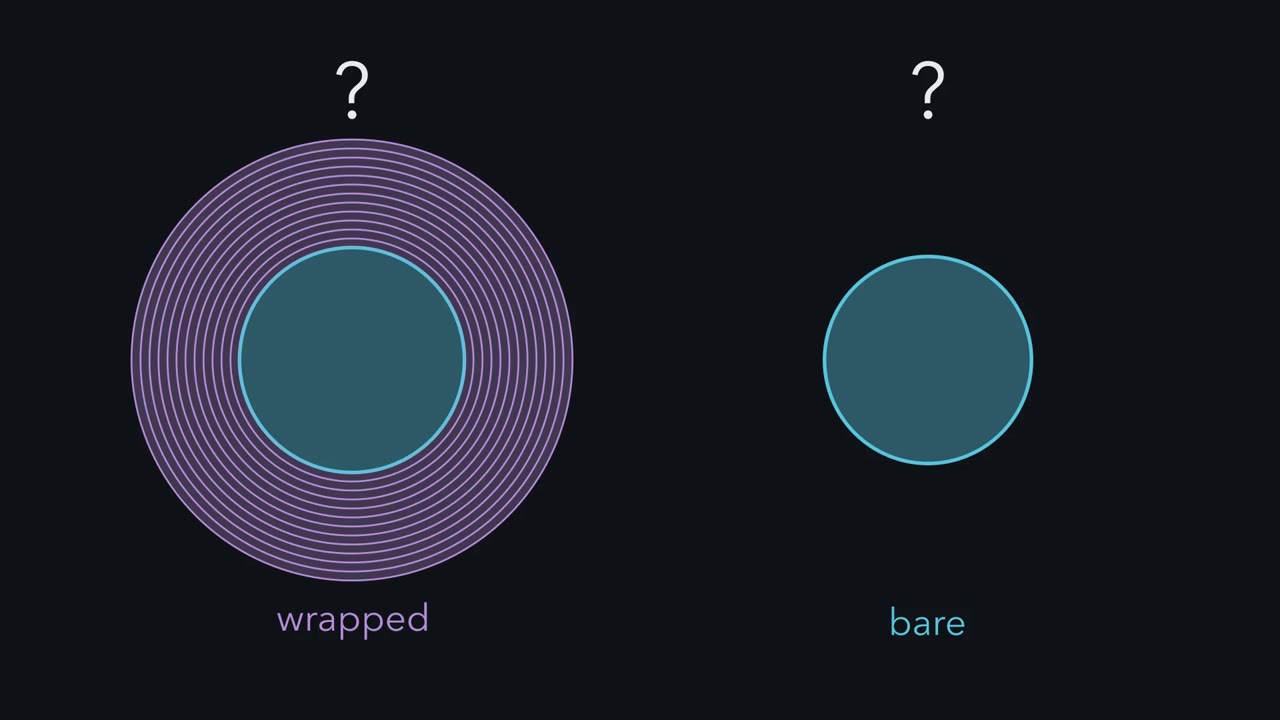
A Schwann cell meets a large axon and wraps it in dozens of turns. Beside a thin axon, it wraps nothing. Who decides? In the 1970s, two laboratories swapped Schwann cells between nerves. Schwann cells from a nerve with bare axons now meet axons that are normally myelinated. What do they do?
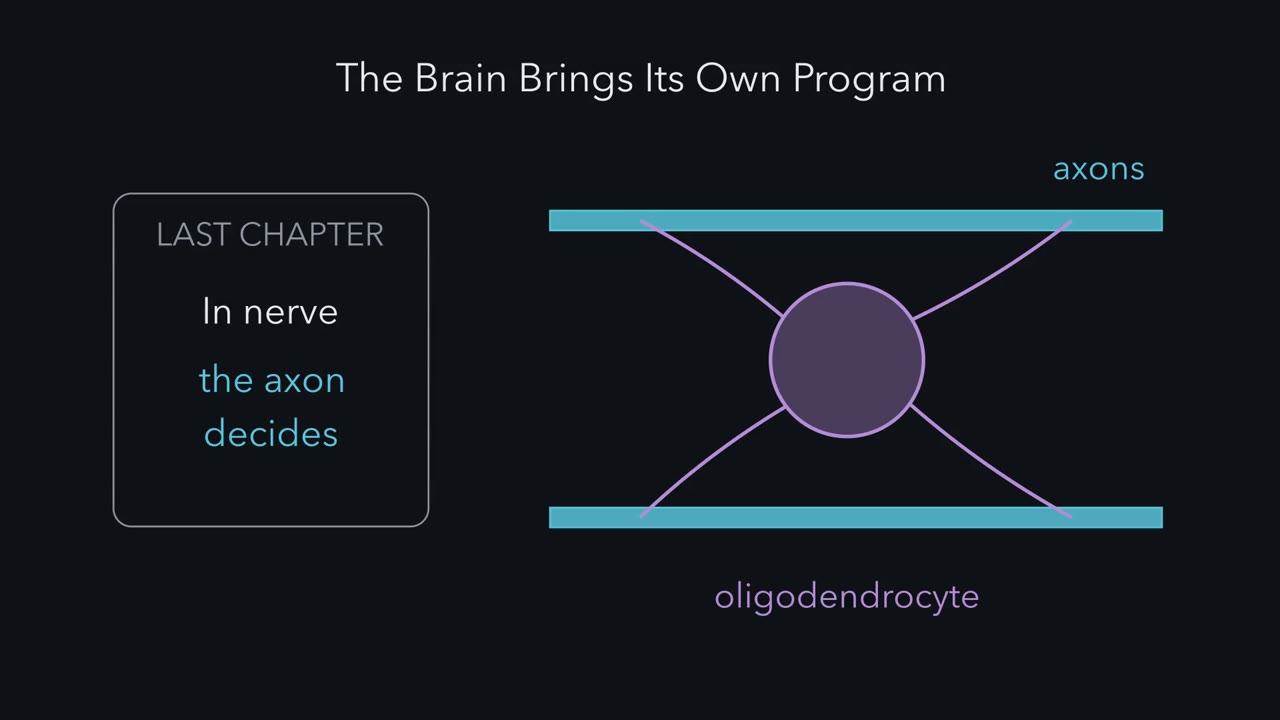
They myelinated their new axons. The reverse swap gave the reverse result. In peripheral nerve, the axon decides. So the axon must carry a signal. The main one is neuregulin-1 type III, a protein on the axon's surface. It stays tethered near the axon membrane, so a Schwann cell reads it mainly by touch. Two receptors on the Schwann cell read it, ErbB3 and ErbB2. Paired, they signal. A large axon has more membrane per unit length. If the density is similar, it carries more type III. Could the amount be the message? Give mice half the normal type III. What happens to the sheath, and to the g ratio?
The sheaths were thinner for the axon's size, so the g ratio went up. Now let neurons make extra type III. Predict the sheath. Thicker myelin, and a lower g ratio. The dose changed in both directions, and the sheath followed both times.
Sympathetic axons normally stay bare. Make their neurons produce extra type III, and add Schwann cells. What then? The Schwann cells myelinated them. Giving extra signal to axons that would stay bare changed what the glia did. The outcome followed the delivery. That makes type III instructive. It is the same permissive-versus-instructive test as in the neurotrophic hypothesis lesson. Below a threshold of type III, an axon stays bare. Above it, more type III helps thicken the sheath. If big axons carry more of it, one readout could match the wrap to the axon. That is a proposal, not yet shown. The signal is decisive, but not enough alone. The Schwann cell also needs its basal lamina, and its own receptor, Gpr126.
Both are required, and not mere on-switches. The basal lamina also tunes the response to neuregulin. In nerve, the axon sets the dose, and the dose is the main signal for the wrap.
Wrap an axon in tight layers of glial membrane, leave short bare gaps, and its signal jumps from gap to gap instead of creeping.
Continue in the lesson: Myelination: Wrapping the Axon So the Signal Jumps →
3:11 · Free, with captions and a transcript. The lesson has the full text, the questions and the sources.
More films from this lesson
How this film was made. Narration: an AI narrator voice (Kokoro, af_heart) reading narration written from this lesson's text. Animation: AI-generated in code (Manim) by Claude, a schematic with no drawn molecular structures. Captions come from the narration script. See something wrong? Report it.