Films · Developmental Neuroscience
Reading One Factor Two Ways
Read the transcript of “Reading One Factor Two Ways”
Film transcript: Reading One Factor Two Ways
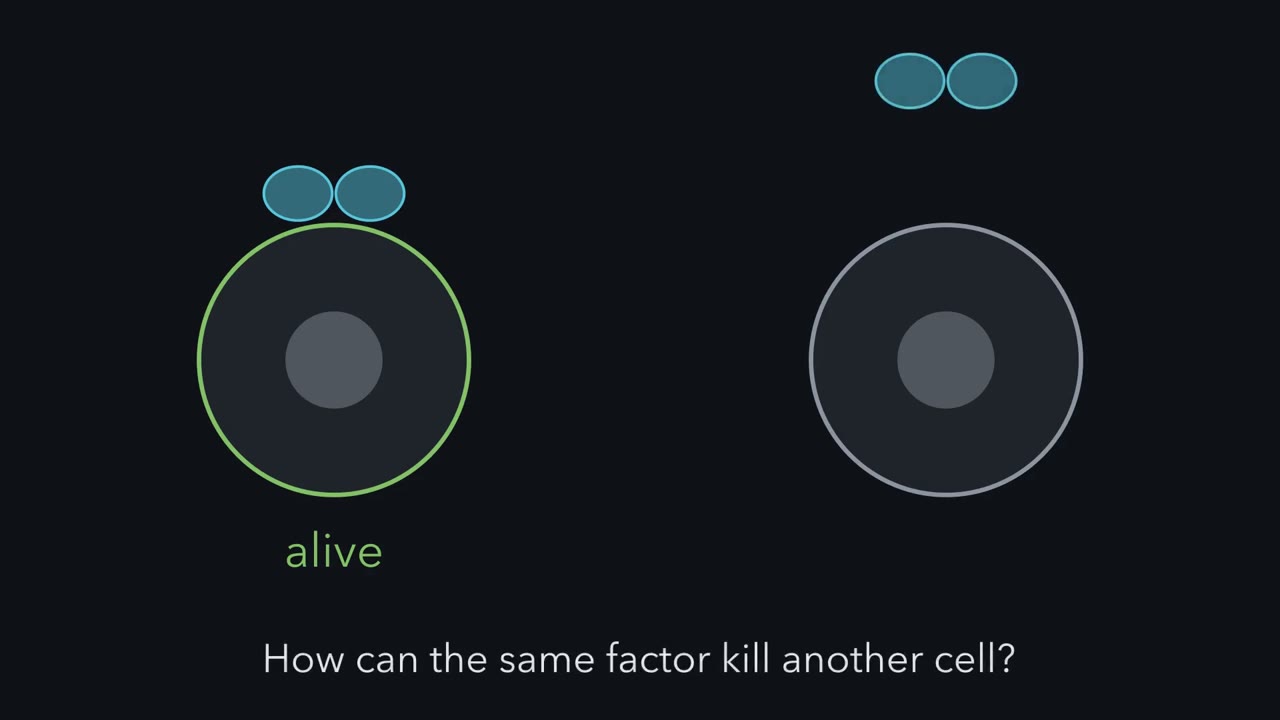
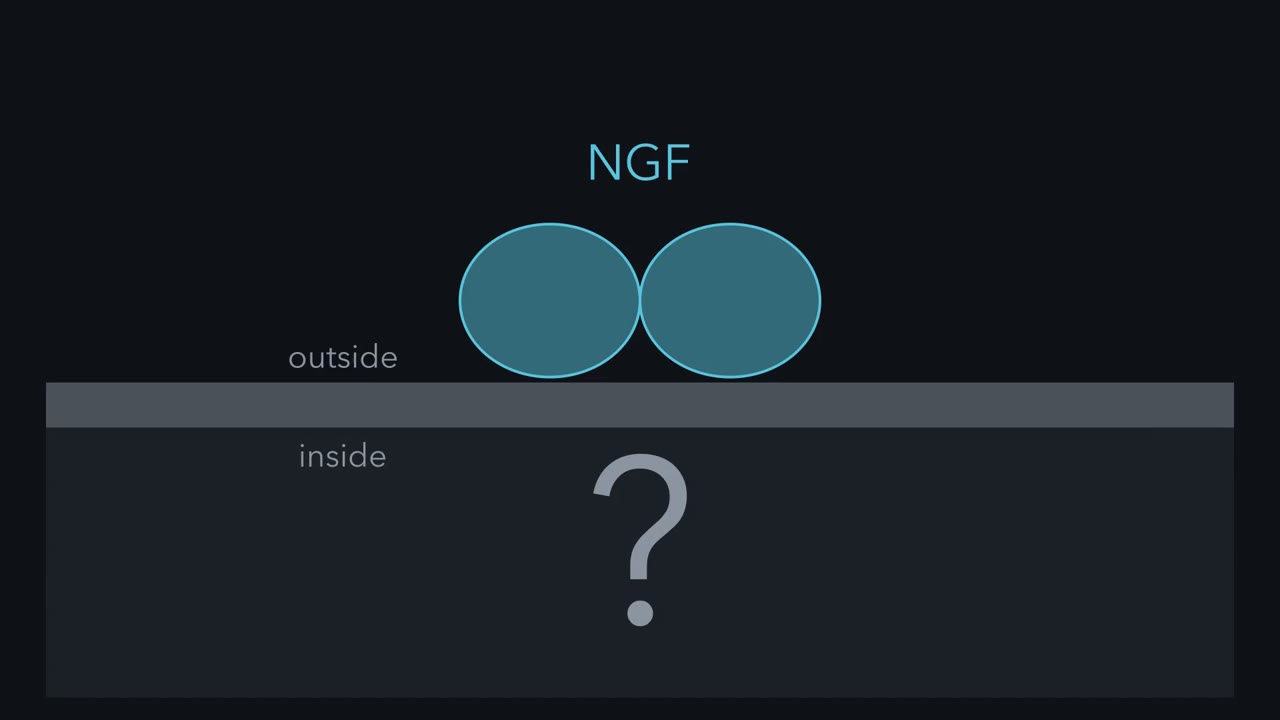
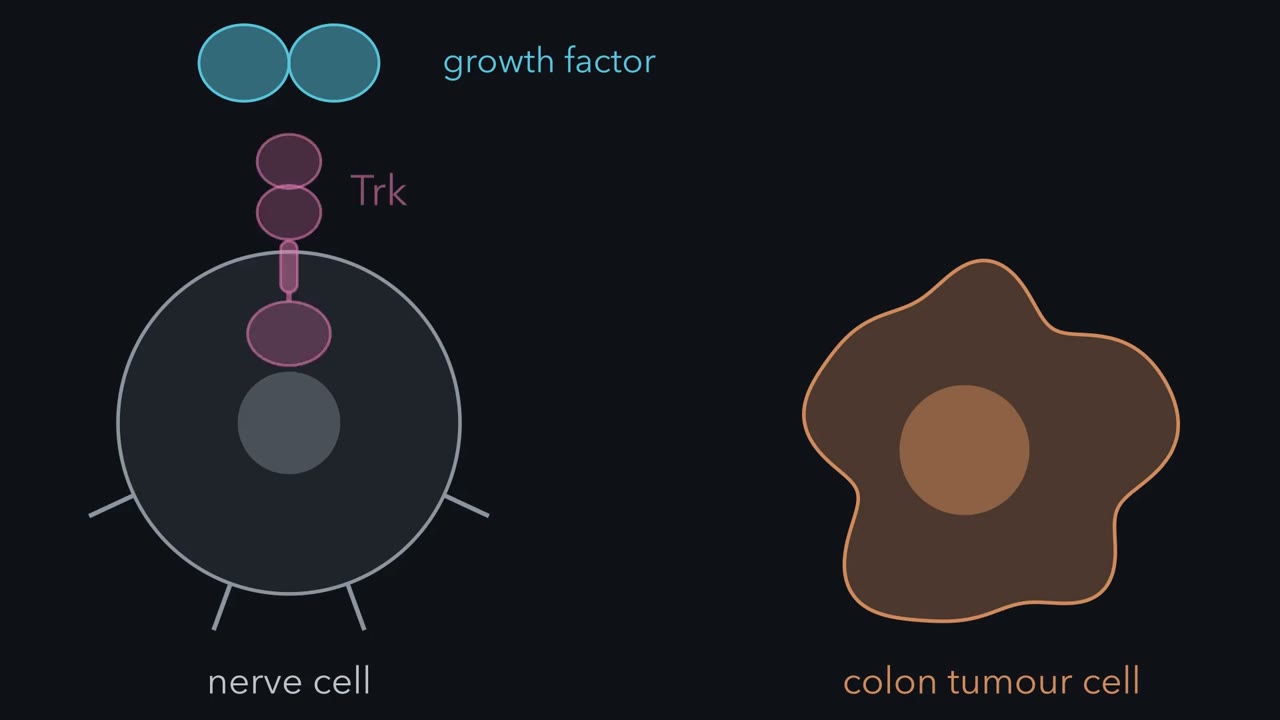
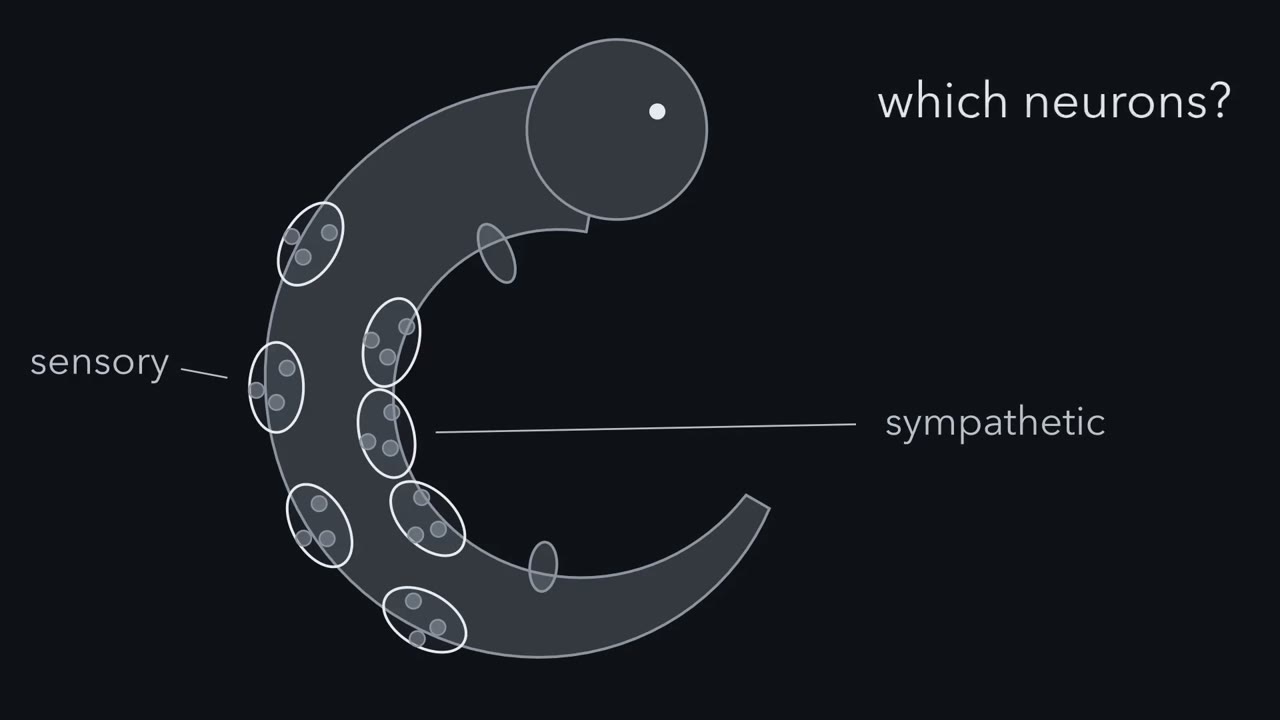
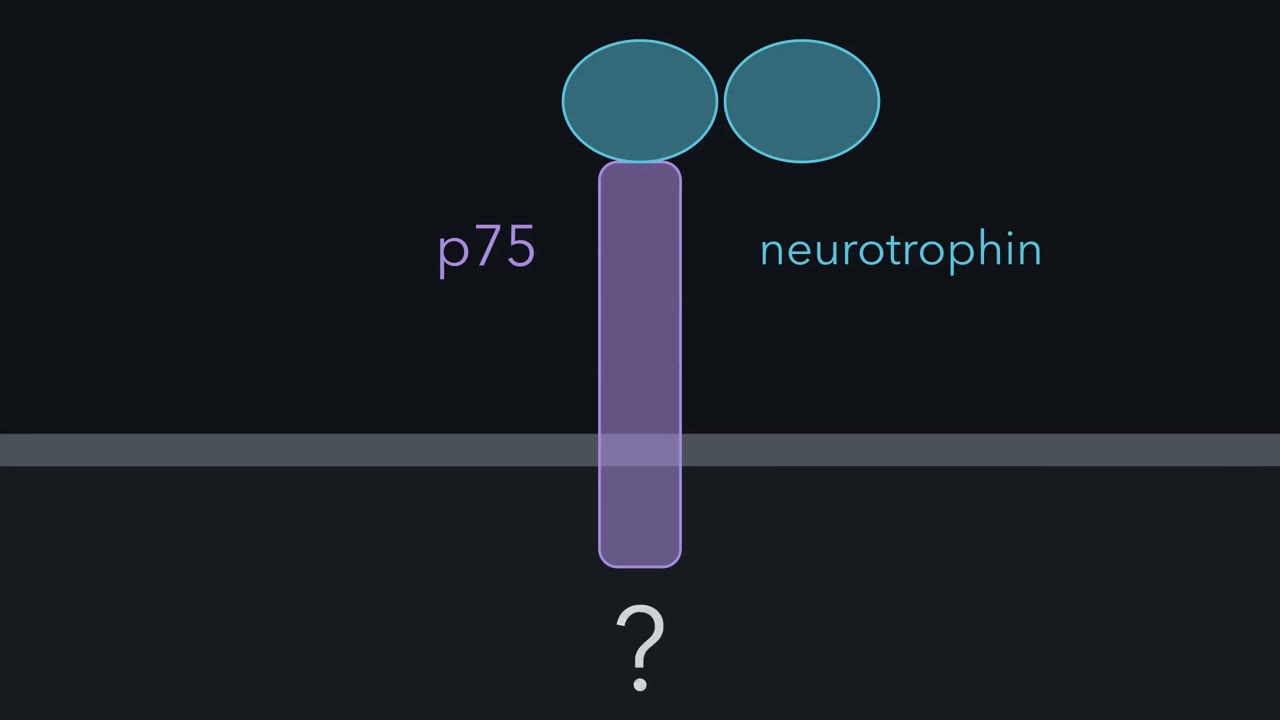
Mature NGF keeps neurons alive. So how could it kill cells that lack TrkA? And why did the precursor kill neurons in one lab, but keep them weakly alive in another? Simple binding arithmetic helps with the first question. The precursor needs its pro-domain. Binding studies on chick sensory neurons found two classes of NGF site. Their dissociation constants were about 20 pM and 2 nM. Treat these as orders of magnitude, about ten picomolar and one nanomolar. The two kinds of site are a hundredfold apart. A dissociation constant, K d, is the free concentration that fills half the sites. Below it, fewer than half fill. Pick a low level for illustration, ten picomolar of mature NGF.
Which sites fill? About half of the Trk sites fill. Only about one percent of the p75 sites do. So at low levels, a much larger fraction of the high-affinity sites fills than of the p75 sites. Survival depends on signals this count leaves out. Now turn the dial to about 2 nM. Culture experiments often add NGF in this range. The Trk sites are nearly full. And roughly half to two thirds of the p75 sites fill too. So in a dish, mature NGF fills many p75 sites. That fits it killing TrkA-lacking cells there. But filling a site is not the same as signaling. The model has no threshold for survival or death. Nor can it explain the precursor. At a low dose where mature NGF added no death, the precursor killed.
What the precursor adds is the pro-domain. Sortilin grips it, and in the cells tested, the precursor's death signal needed sortilin. This lesson puts no binding numbers on proNGF. Its effects are compared by experiment instead. So the cut shifts the balance. It does not flip a switch. Why did the precursor kill in one lab, and support weak survival in another? That is still open. The dose, the receptor balance, and how much precursor was cut during the experiment could each matter. Three variables now go a long way. First, whether the factor has been cut. Second, which receptors the cell makes. Third, how much of each. Change any one, and the same factor can mean something else.
Remember the rule. The target supplies the factor. The receptors decide what it means. Next, see how competing neurons use p75 against each other. The takeaway: dose changes which sites fill. The cut changes which receptors the factor works through best.
Many developing neurons live only if their target supplies enough of the right neurotrophin. How does the neuron read that factor, and how can the same factor sometimes kill?
Continue in the lesson: Neurotrophins, Trk Receptors and p75 →
3:13 · Free, with captions and a transcript. The lesson has the full text, the questions and the sources.
More films from this lesson
How this film was made. Narration: an AI narrator voice (Kokoro, af_heart) reading narration written from this lesson's text. Animation: AI-generated in code (Manim) by Claude, a schematic with no drawn molecular structures. Captions come from the narration script. See something wrong? Report it.