Teaching an Arbitrary Ensemble, and a Code That Drifts
Read the transcript of “Teaching an Arbitrary Ensemble, and a Code That Drifts”
Film transcript: Teaching an Arbitrary Ensemble, and a Code That Drifts
If an odour is an ensemble of neurons, what happens if you make one without any odour? Choi and colleagues expressed channelrhodopsin in subsets of piriform neurons in awake mice. Channelrhodopsin is a light-gated channel. Light drives those neurons, whatever the nose is doing. In one group, the light was paired with a reward. In another, with a shock. Pause and predict. What will each group learn? Would that show the mice smelled something?
Paired with water, the light came to trigger licking. Paired with shock, it came to trigger flight. Small ensembles were enough, though they gave a weaker response than larger ones. Mice could also learn to tell different activated groups of neurons apart. So activity in these neurons is sufficient as a learned cue. Paired with an outcome, it was enough to learn an association. It does not show that the mice smelled anything. The authors withheld that claim. Nor does it test where the association is stored, in piriform or in the areas it feeds. Now the last puzzle. Does an odour's pattern stay put? Schoonover and colleagues recorded single piriform neurons over days to weeks.
They used a decoder. It is a program trained to guess which odour was given, from the recorded activity. Its score is compared with chance, the score of random guessing. Pause and predict. Train the decoder on the first day. How well will it do a month later?
It approached chance. The odour responses had drifted. Daily exposure to an odour slowed the drift. Drift does not mean the animal's smell changed. A decoder is a tool the experimenter holds. A downstream circuit may read a moving population consistently. If decoders retrained each day still work, the information is there, but the mapping changed. That reading needs checks that the same cells were tracked. So an odour does not always light the same set of cortical neurons, at least not in these recordings. What stays stable on top of a moving code is still an open question. A scattered pattern can be taught meaning, and the pattern itself moves over weeks.
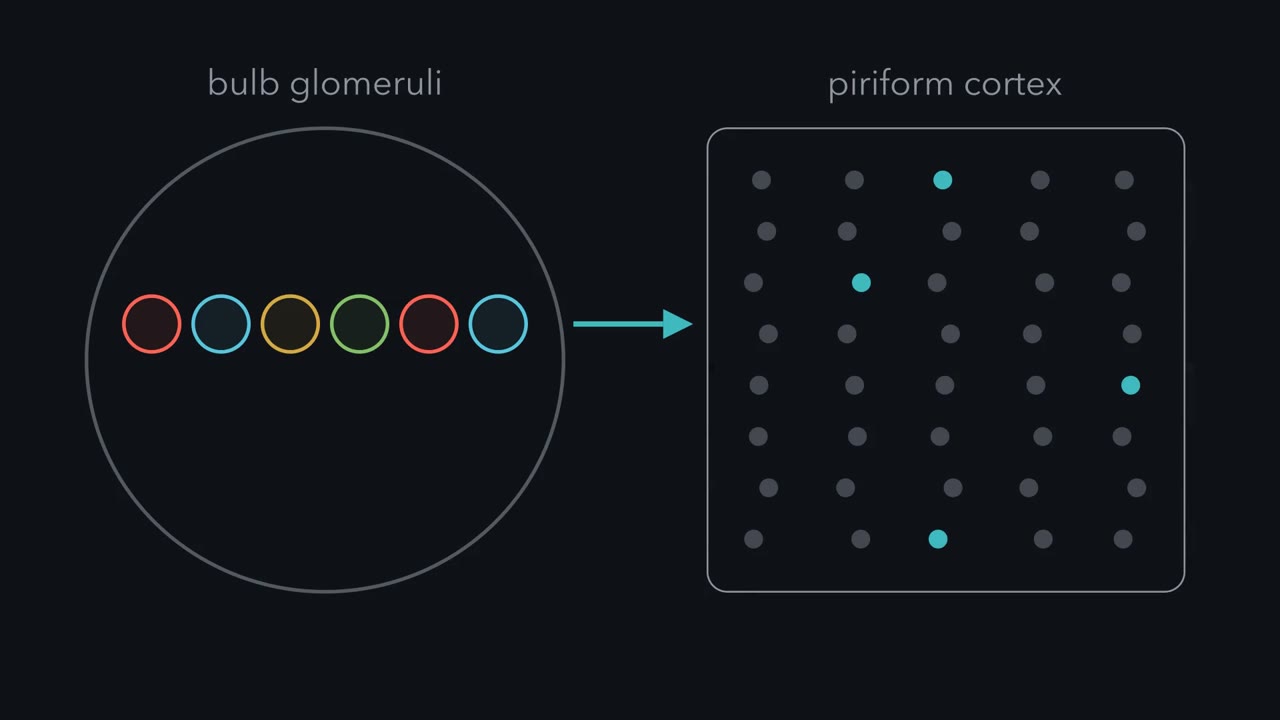
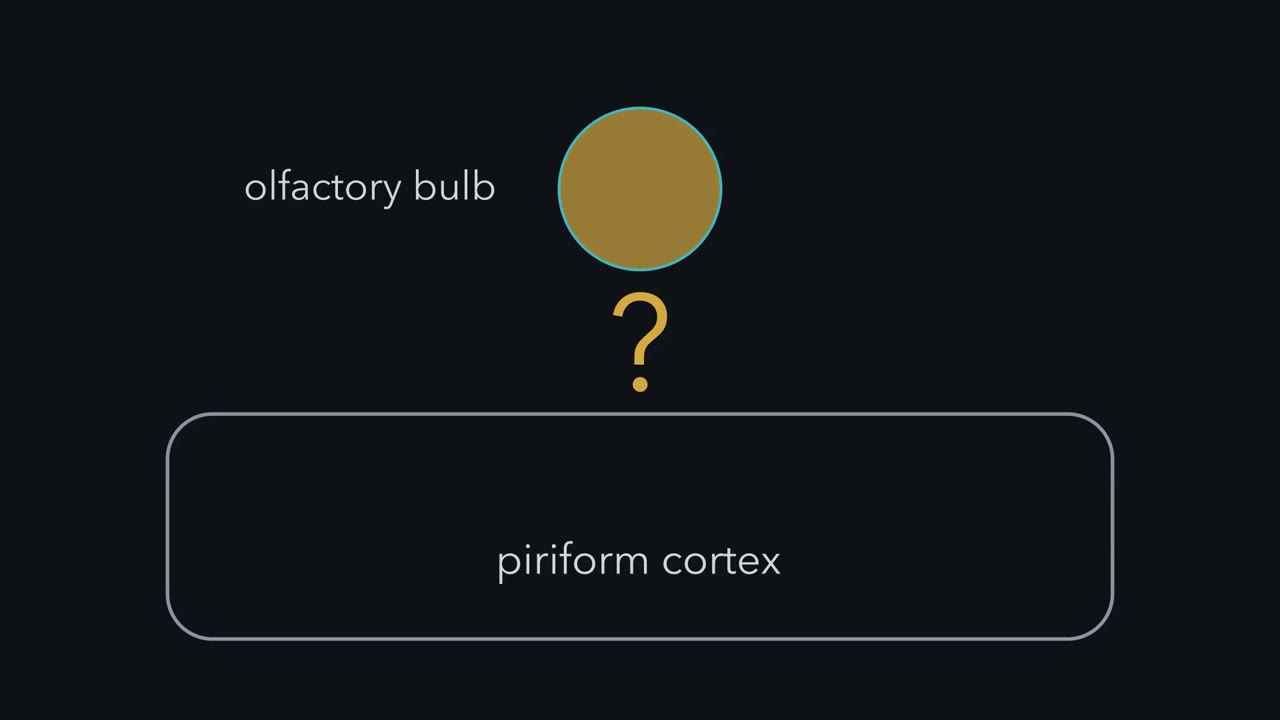
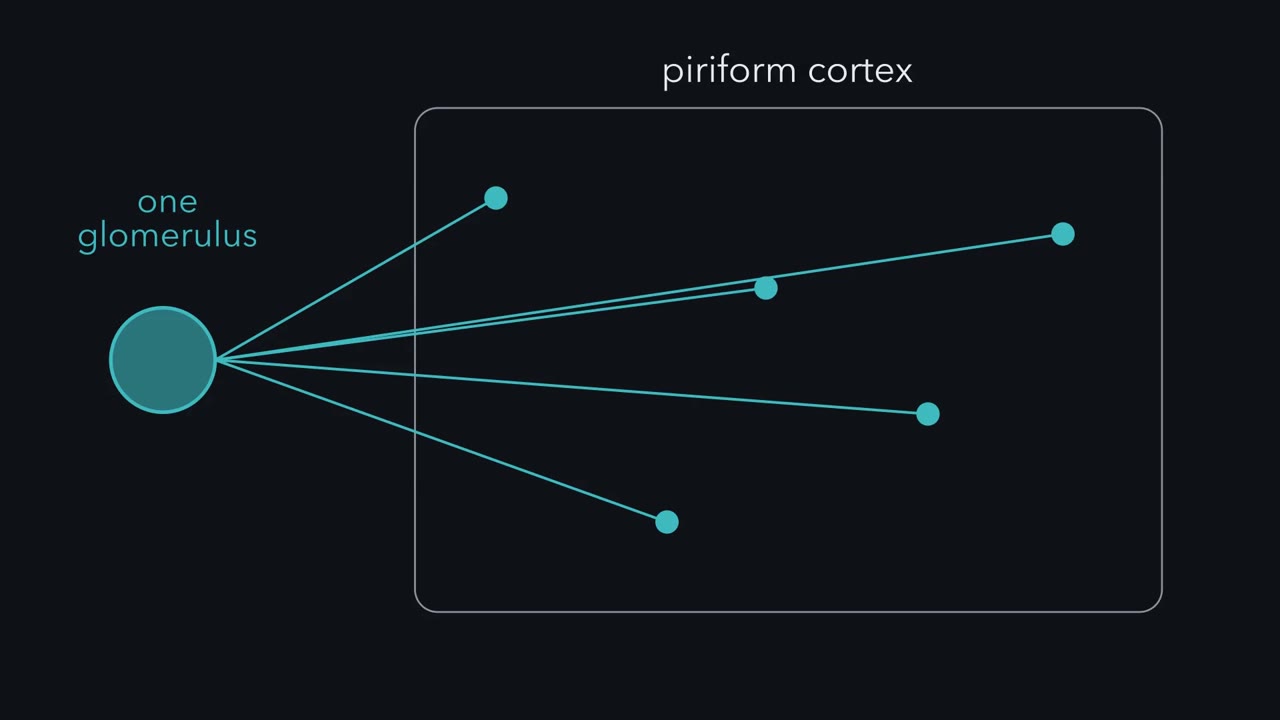
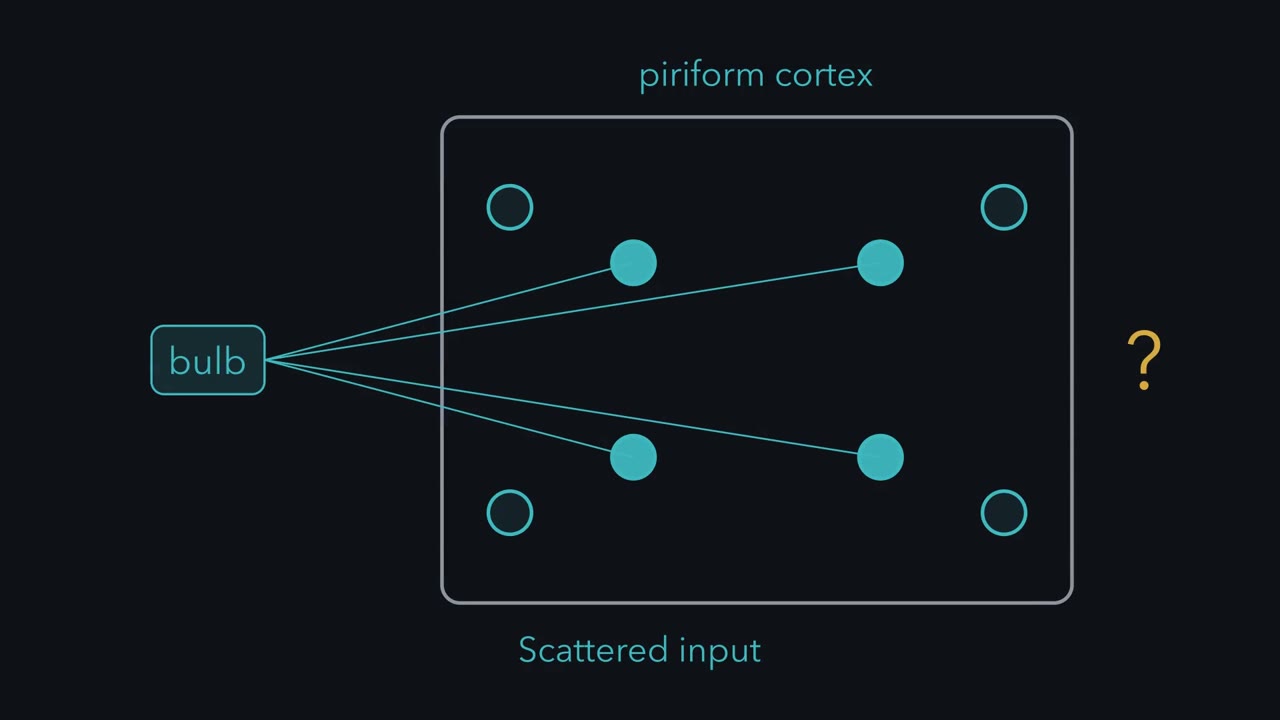
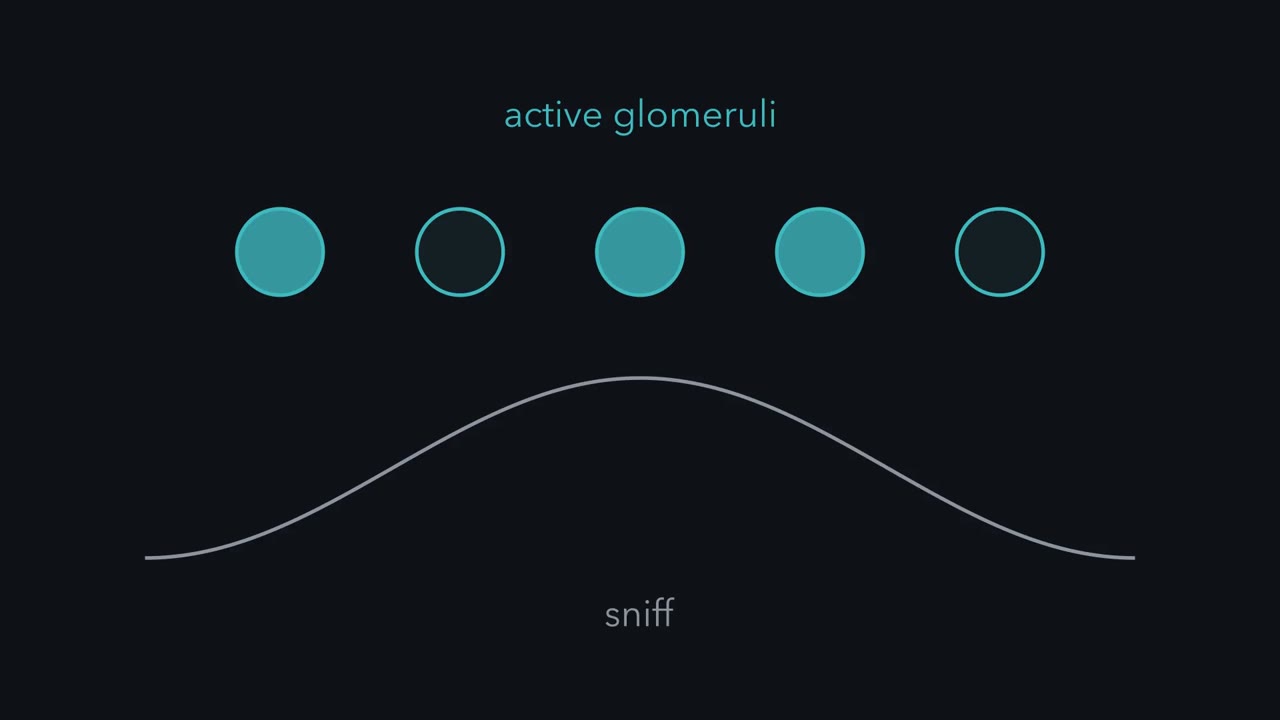
The bulb hands piriform cortex a tidy map of receptor identity, and the cortex scatters it. How can a scattered pattern still carry which odours are alike, and come to mean something?
Continue in the lesson: From Glomeruli to Piriform Cortex →
2:43 · Free, with captions and a transcript. The lesson has the full text, the questions and the sources.
More films from this lesson
How this film was made. Narration: an AI narrator voice (Kokoro, af_heart) reading narration written from this lesson's text. Animation: AI-generated in code (Manim) by Claude, a schematic with no drawn molecular structures. Captions come from the narration script. See something wrong? Report it.