Writing Touch: Addresses, Then Patterns
Read the transcript of “Writing Touch: Addresses, Then Patterns”
Film transcript: Writing Touch: Addresses, Then Patterns
Can stimulating the brain create touch in a hand a person cannot feel? And does it help? In one man with a spinal cord injury, electrodes in sensory cortex evoked sensations felt in the hand. A responsive electrode evokes touch in a region of the hand, its projected field. Fields can overlap and change with stimulation. So each electrode is an approximate address. Does feedback help a task? The same man moved a robotic arm, decoded from his motor cortex. With touch feedback, his median task time fell from 20.9 seconds to 10.2. Predict. By what percentage did his task time fall? Choose your baseline first.
About 51 percent, measured against the time without feedback. The working is on screen. But these are one person's medians. They show feedback helped him, not a population effect. Patterns across addresses can write features. In two people, several electrodes stimulated together evoked a tactile edge. Sequences evoked apparent motion. This is the second half of the idea. Send each group of neurons the right pattern. One strategy is biomimicry, copying features of the natural code. Here the scheme imitates cortical touch responses, strongest at contact onset and offset. In three people, biomimetic stimulation felt more like a real press on some electrodes. It also needed less charge for the same felt intensity.
That supports a strategy with evidence. It is not a law that closer copying always works better. So map where each electrode's touch is felt, and test what the person can tell apart. Then send each group a pattern it can read.
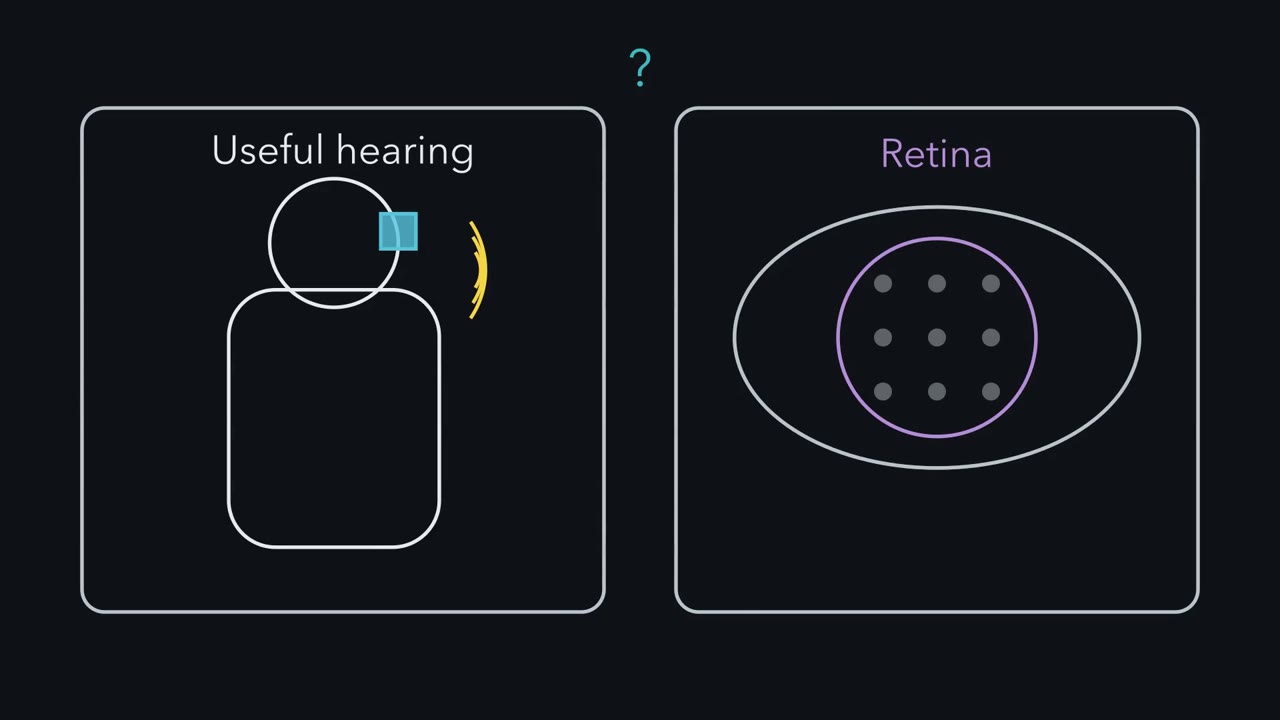
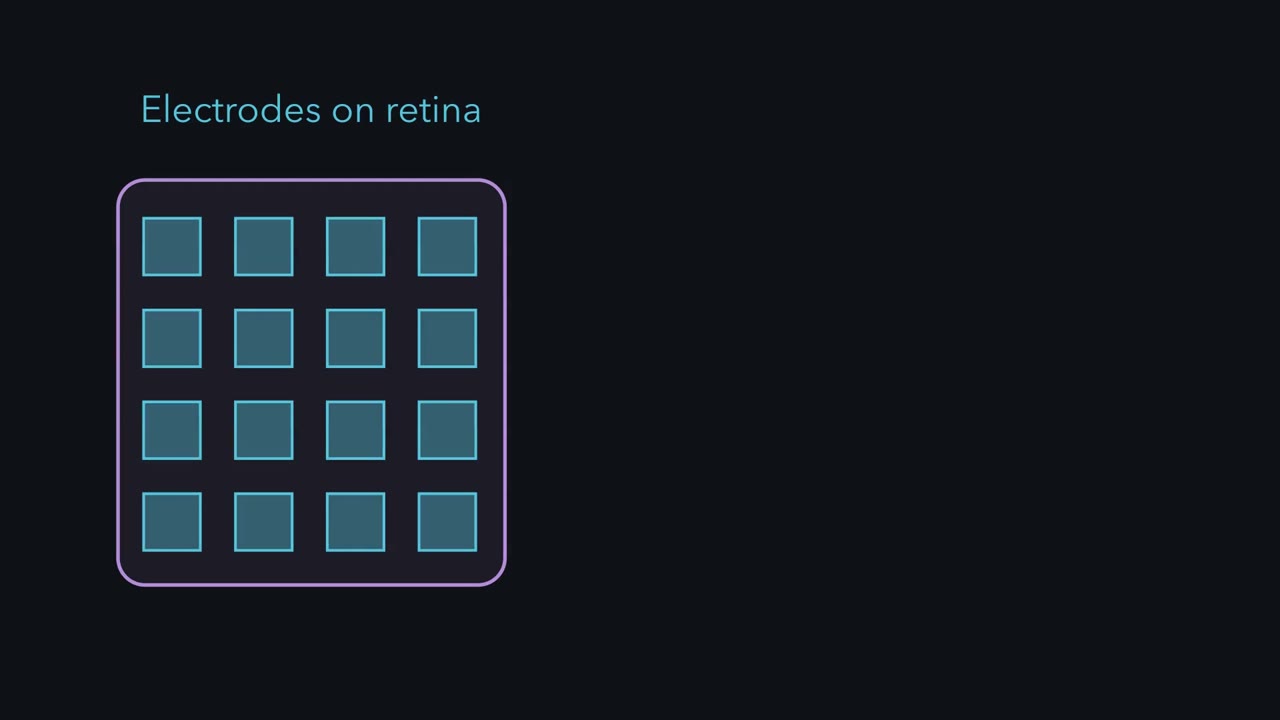
A cochlear implant skips the damaged hair cells and talks to the auditory nerve, and it gives many deaf adults useful hearing. The same idea in an epiretinal implant often gives streaks, not pixels. What decides how much detail a prosthesis can deliver?
Continue in the lesson: Restoring Senses: Implants, Prostheses and Optogenetic Vision →
2:08 · Free, with captions and a transcript. The lesson has the full text, the questions and the sources.
More films from this lesson
How this film was made. Narration: an AI narrator voice (Kokoro, af_heart) reading narration written from this lesson's text. Animation: AI-generated in code (Manim) by Claude, a schematic with no drawn molecular structures. Captions come from the narration script. See something wrong? Report it.