Films · Developmental Neuroscience
A Neuron Must Work to Die
Read the transcript of “A Neuron Must Work to Die”
Film transcript: A Neuron Must Work to Die
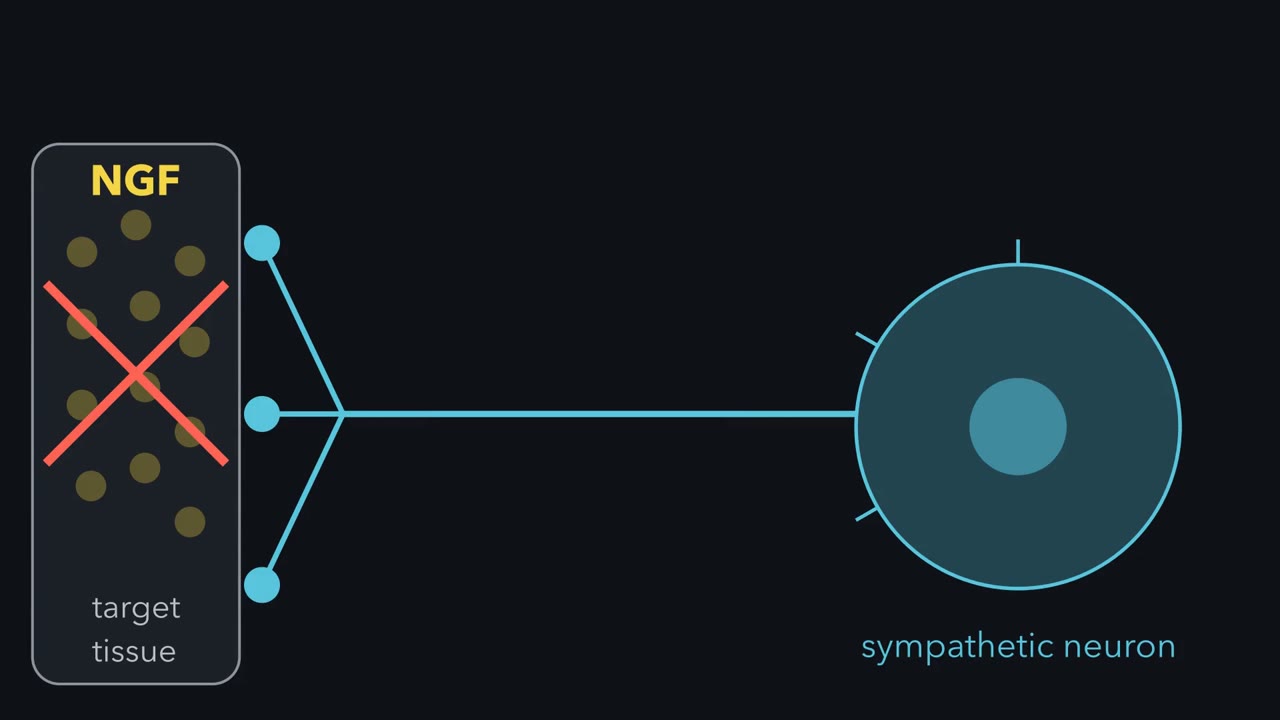
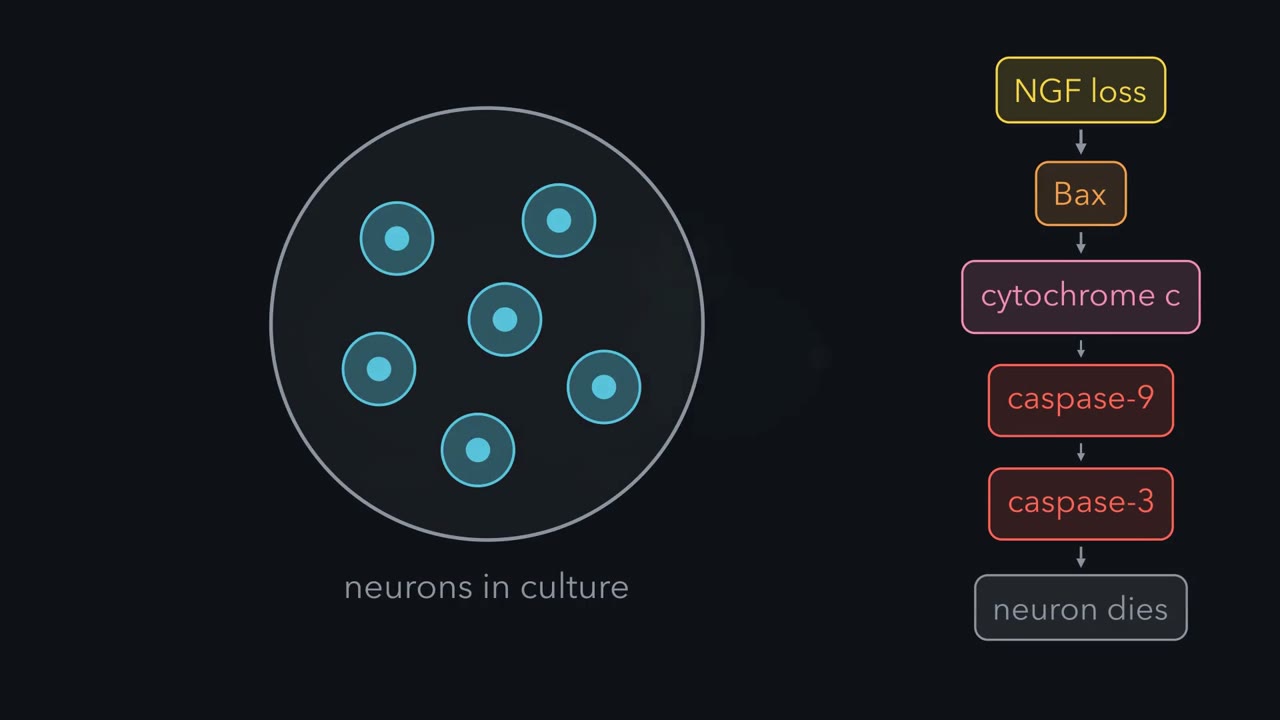
When a young neuron loses its survival signal, does it simply run down? Or does it do something? Picture three wells of young rat sympathetic neurons. These neurons depend on nerve growth factor, NGF. The first well keeps its NGF. Those neurons live. The second well loses its NGF. Most of those neurons die within a day or two. The third well loses its NGF too. It also gets a drug that stops protein synthesis. What will that drug do? Will these neurons die sooner, later, or on the same schedule?
Later. The death is delayed. In 1988, Johnson's laboratory reported this result. Inhibitors of RNA synthesis, or of protein synthesis, kept deprived neurons alive. Why is that strange? A cell starved of what it needs should simply run down. Stopping protein synthesis should, if anything, make it run down faster. Instead, the neuron has to make something in order to die. Its death is something the cell does. It is a program. Pathologists describe two broad ways that cells die. The first is necrosis. In necrosis, after trauma or loss of blood supply, the cell swells. Its membranes fail. Its contents spill out, and the tissue around it becomes inflamed.
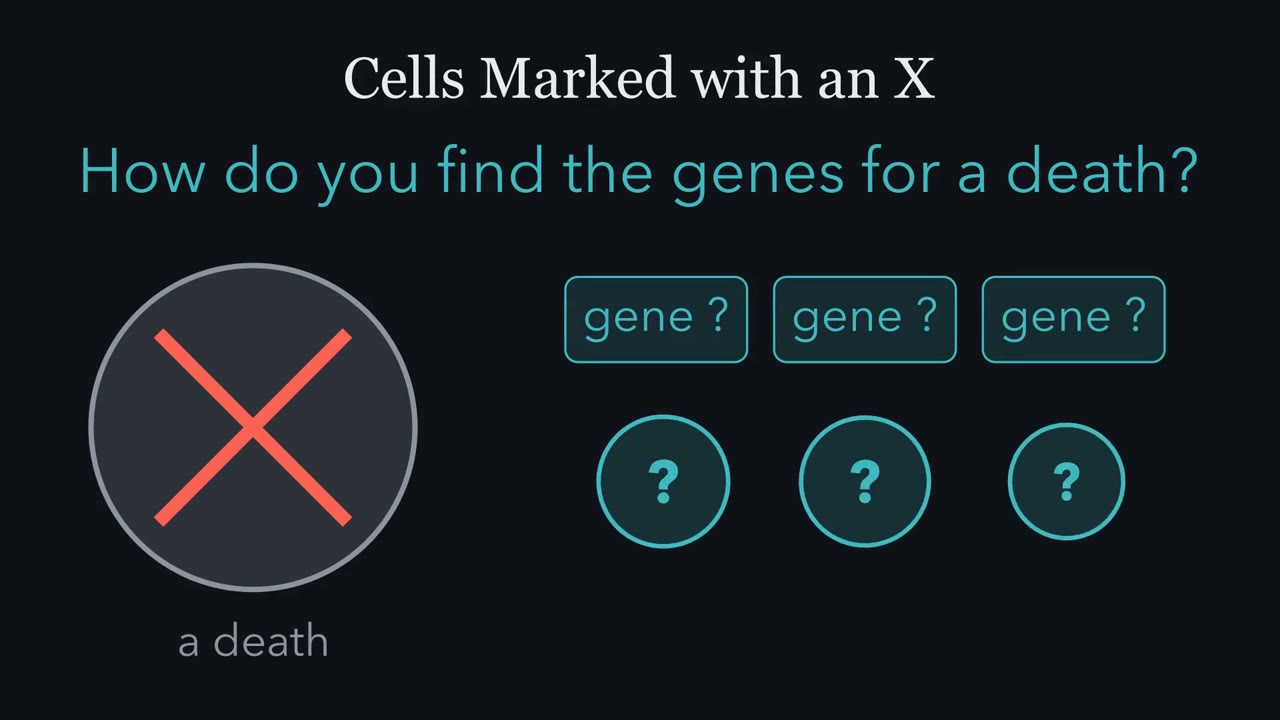
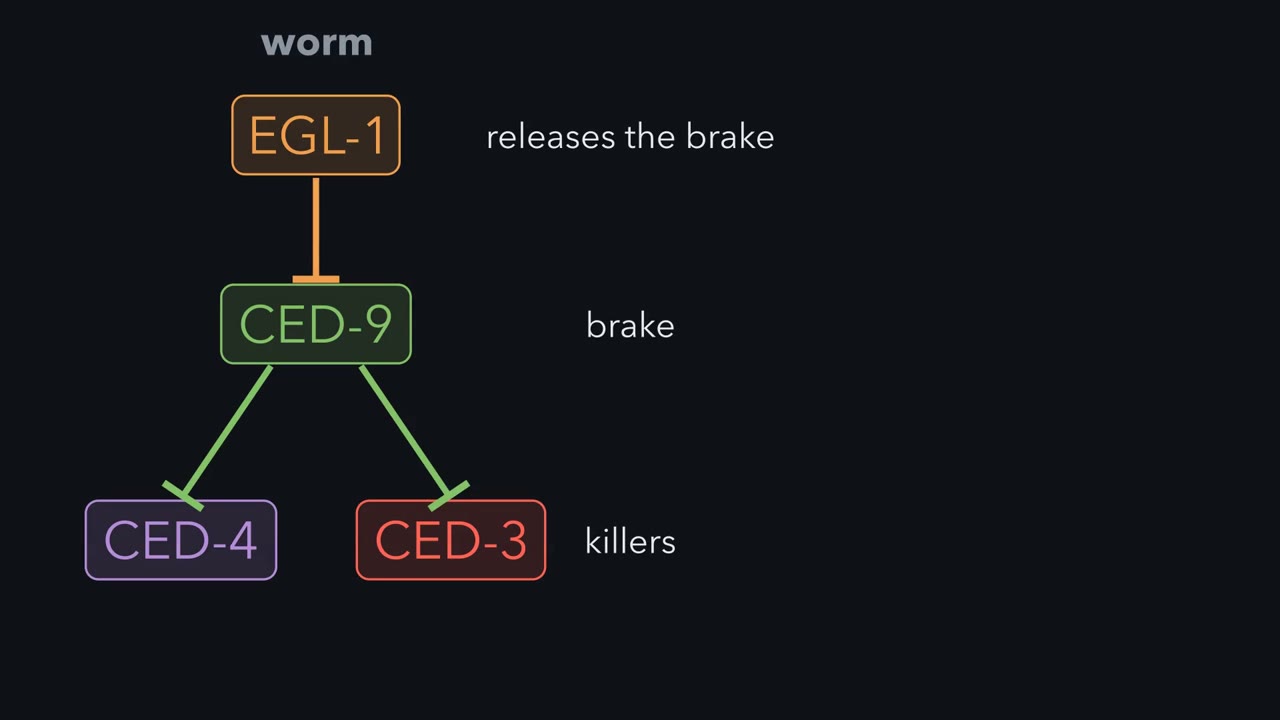
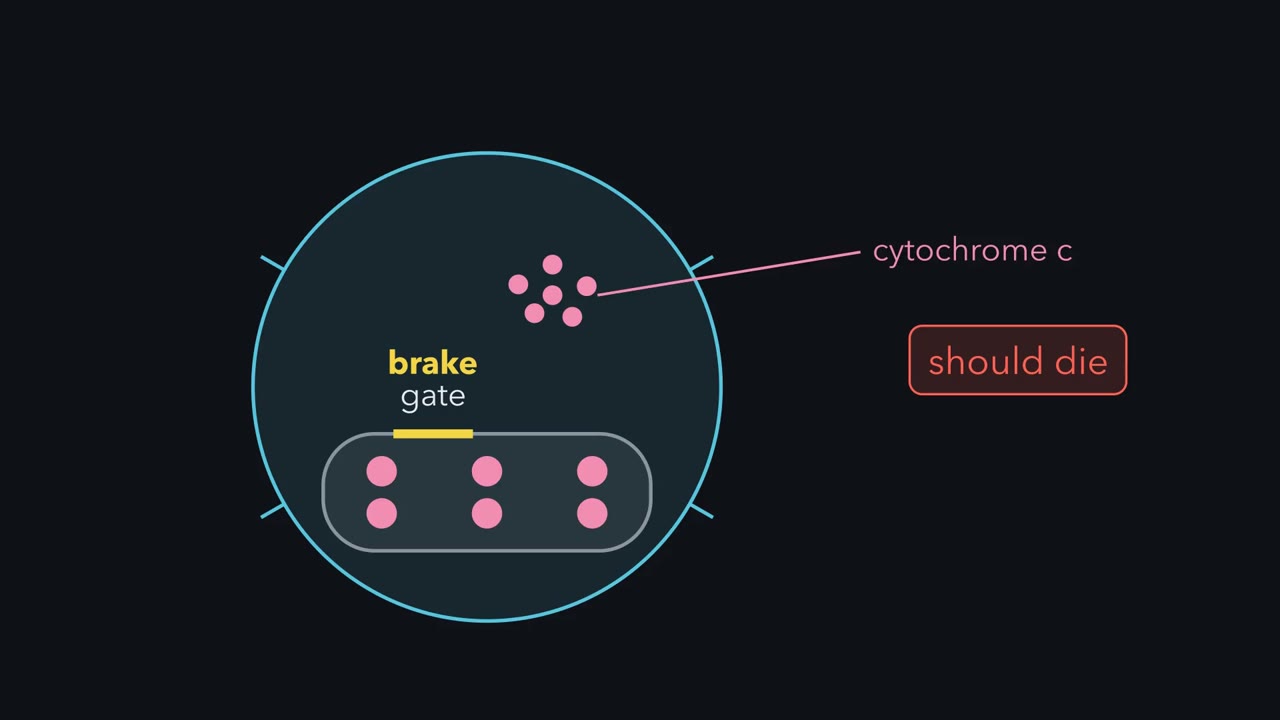
The second is apoptosis. In apoptosis, the cell shrinks. Its chromatin condenses into dense clumps. It breaks into membrane-wrapped pieces, and other cells swallow them. A nucleus condensed this way is called pyknotic. Early studies of neuron death in embryos counted these pyknotic nuclei. The neuron's program raises three puzzles. First, what must a deprived neuron make, in order to die? Second, which proteins carry out the death? Third, what keeps those proteins off while NGF is present? So hold on to one fact. A deprived young sympathetic neuron in culture does not just fade. It runs a program that needs new RNA and protein.
Stop a starving neuron from making new proteins, and it lives longer. Why?
Continue in the lesson: The Death Machinery in Neurons →
2:34 · Free, with captions and a transcript. The lesson has the full text, the questions and the sources.
More films from this lesson
How this film was made. Narration: an AI narrator voice (Kokoro, af_heart) reading narration written from this lesson's text. Animation: AI-generated in code (Manim) by Claude, a schematic with no drawn molecular structures. Captions come from the narration script. See something wrong? Report it.