How a Scatter Keeps Similarity
Read the transcript of “How a Scatter Keeps Similarity”
Film transcript: How a Scatter Keeps Similarity
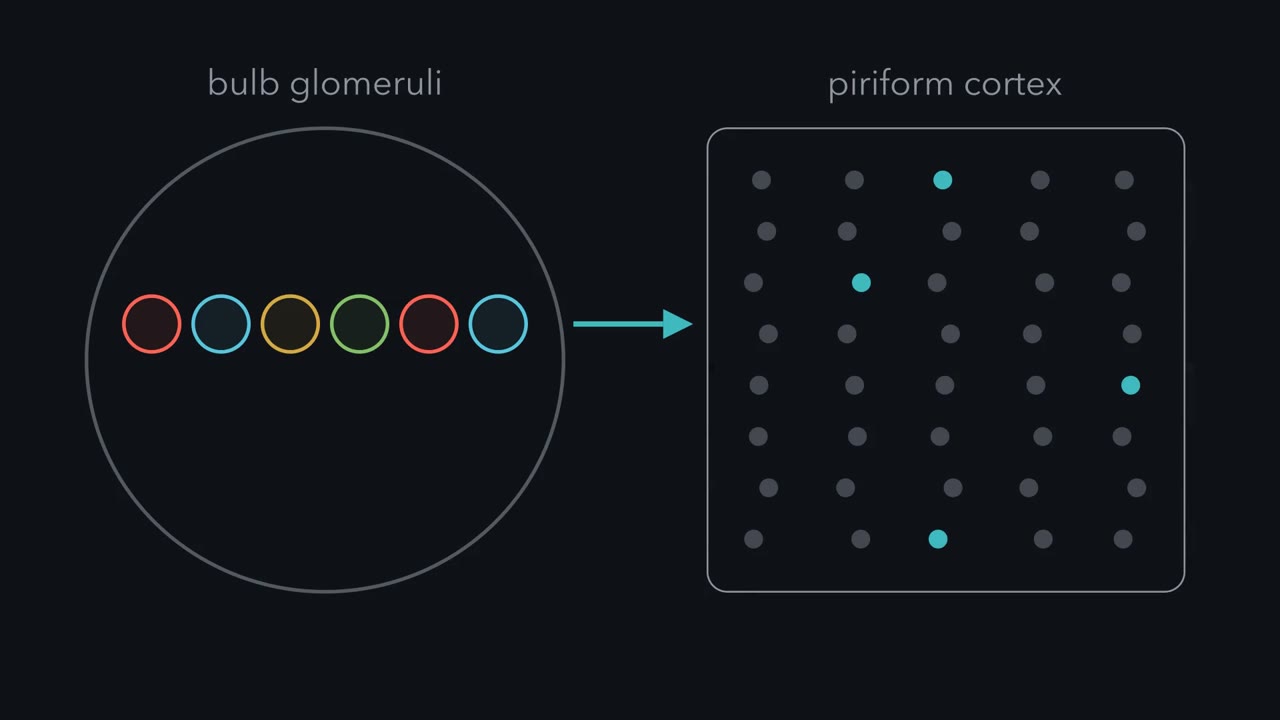
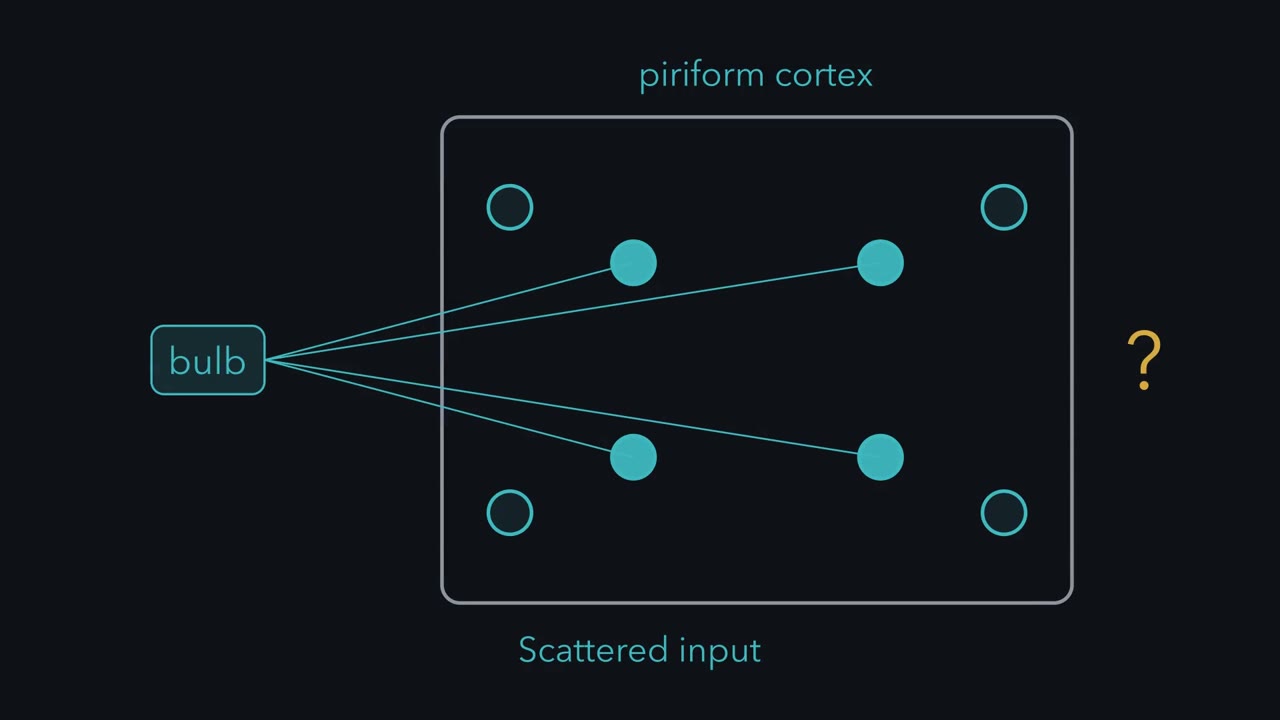
If one glomerulus spreads its output all over the cortex, is the chemistry lost? First, what does similar mean for a whole population of neurons? Record many piriform neurons while a mouse smells odour A. Write down each neuron's response. This one fired. That one did not. A third fired a little. That list is A's population pattern. Do the same for odour B. Two odours are represented similarly if many of the same neurons respond to both. Real analyses correlate the responses of many neurons. That is a related measure, but not the same number. Now the wiring. Tracing found that each piriform neuron gets input from several glomeruli spread across the bulb.
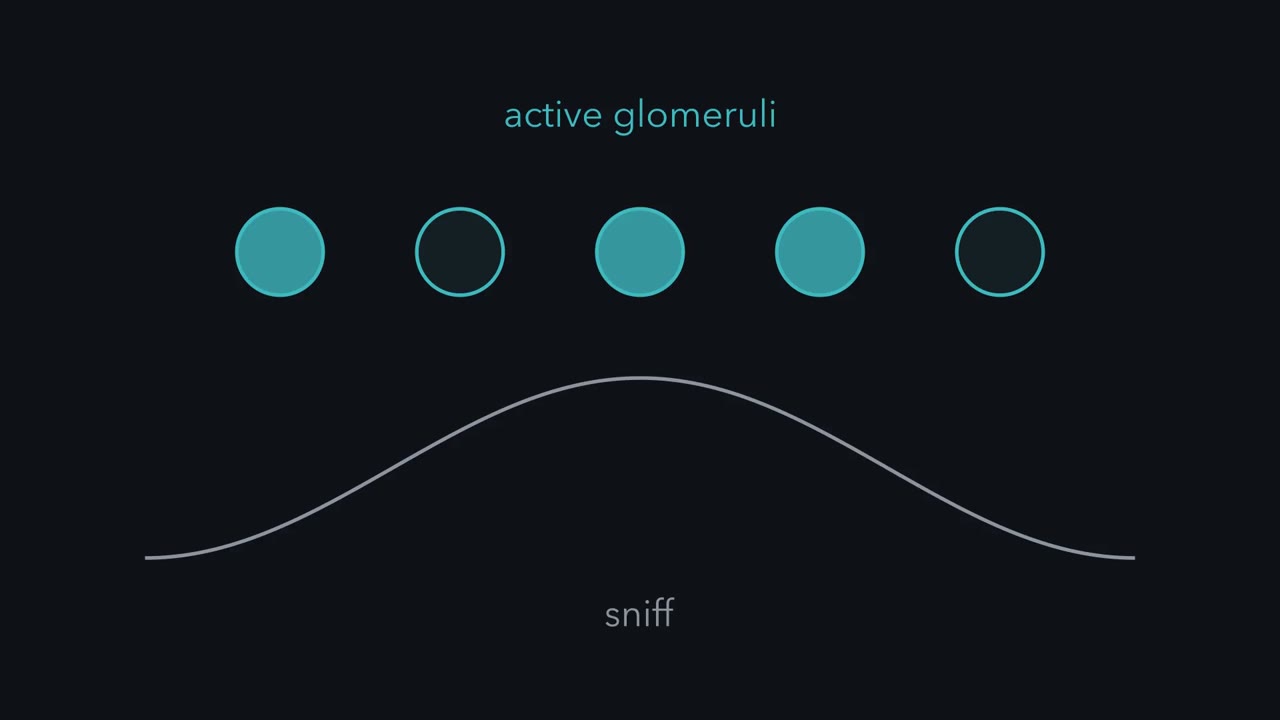
Driving one glomerulus did not make the cells fire. In this simple model, a neuron fires only when enough inputs are active together. Nothing about the neuron's position enters the model. Here is a toy. Each neuron listens to two glomeruli and fires only if both are active. Wiring is random. Odour A activates ten glomeruli. A related ester, B, also activates ten, and shares six with A. An unrelated amine, C, shares none. Any pair of A's glomeruli can feed a neuron. Those neurons respond to A. The pairs are counted on screen. Which of them also respond to B? Only neurons whose two inputs both sit among the six shared glomeruli. Pause and predict.
The odours share sixty percent of their glomeruli. What share of A's neurons also respond to B? About one third, on average. The odours share most of their glomeruli, but only a third of their responsive neurons. And for C, no A neuron responds at all, because no glomeruli are shared. Two results follow. B is still far more like A than C is. The order of similarity survives. But the overlap has shrunk. Both of a neuron's inputs must be shared, so six tenths times five ninths gives one third.
Where the neurons sit never entered the calculation. A larger toy, with a thousand glomeruli and twenty inputs per neuron, gives the same two results. The order is kept. Related odours become less alike, not more. So in this model, where a neuron sits does not matter. Which glomeruli feed it does.
So here is a test for real data. If piriform worked like this model, related odours should be less alike there, not more. In this model, random wiring keeps the expected order of likeness, but makes related odours less alike. Anything tighter needs more than this model.
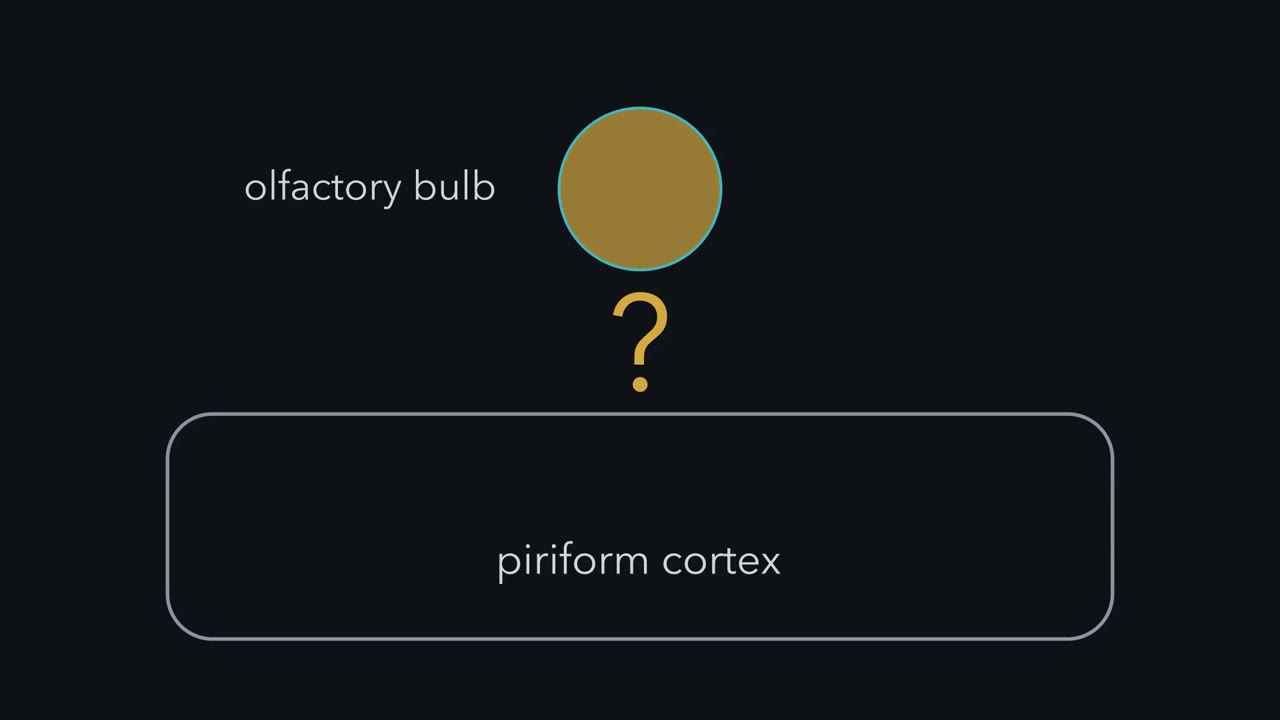
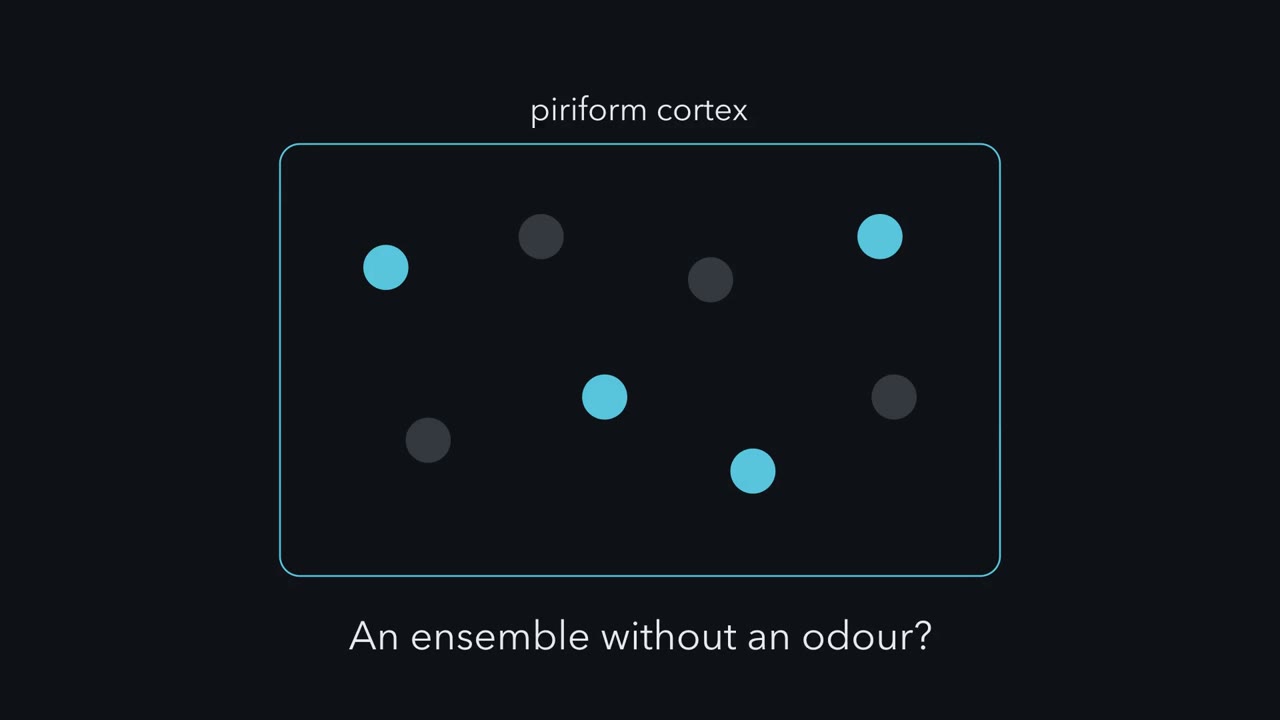
The bulb hands piriform cortex a tidy map of receptor identity, and the cortex scatters it. How can a scattered pattern still carry which odours are alike, and come to mean something?
Continue in the lesson: From Glomeruli to Piriform Cortex →
3:17 · Free, with captions and a transcript. The lesson has the full text, the questions and the sources.
More films from this lesson
How this film was made. Narration: an AI narrator voice (Kokoro, af_heart) reading narration written from this lesson's text. Animation: AI-generated in code (Manim) by Claude, a schematic with no drawn molecular structures. Captions come from the narration script. See something wrong? Report it.