Films · Developmental Neuroscience
The Same Parts in Us
Read the transcript of “The Same Parts in Us”
Film transcript: The Same Parts in Us
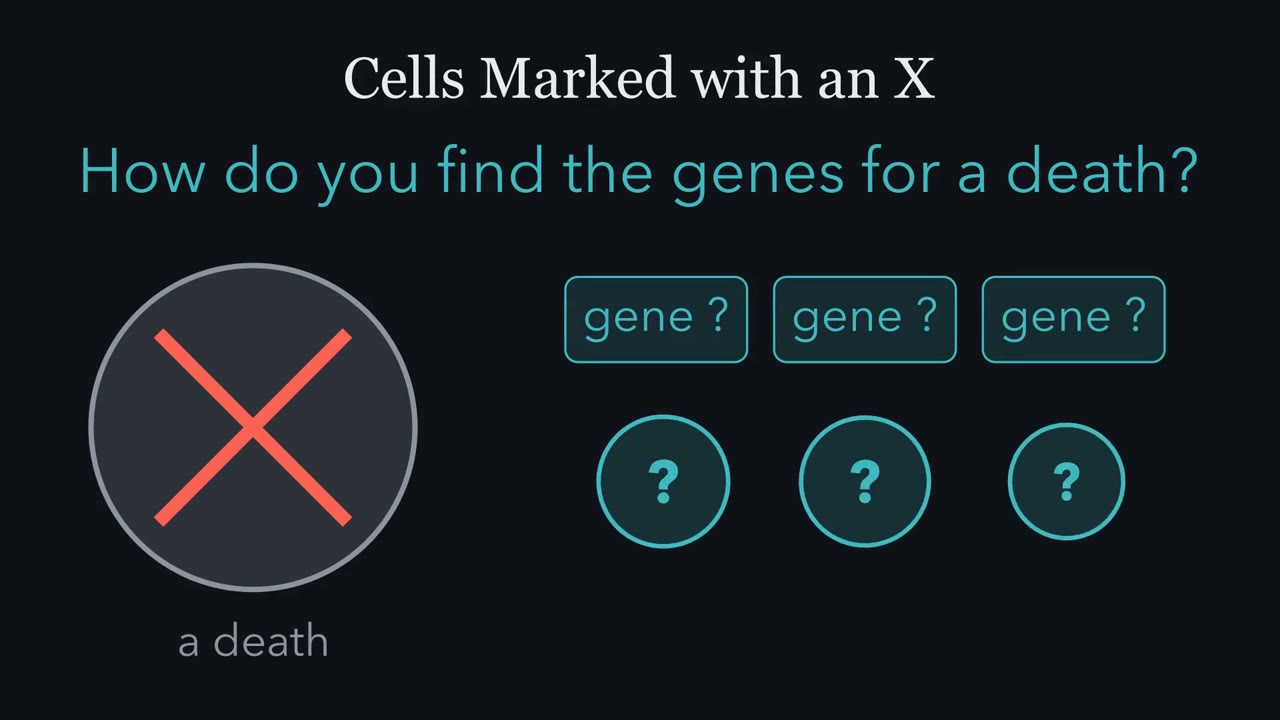
The worm has two killers, a brake, and a protein that releases it. Does a mammal use the same parts? Cloning the worm genes gave the answer. In 1993, ced-3 turned out to resemble a mammalian protease. That protease belongs to a family later named caspases. Caspases cut with a cysteine in their active site. They cut just after an aspartate in their target. Caspases are made as inactive precursors. Initiator caspases switch on when they are gathered onto a platform. They then cut and activate executioner caspases. Executioners cut hundreds of cellular proteins, and take the cell apart. In 1994, ced-9 turned out to be a relative of human Bcl-2.
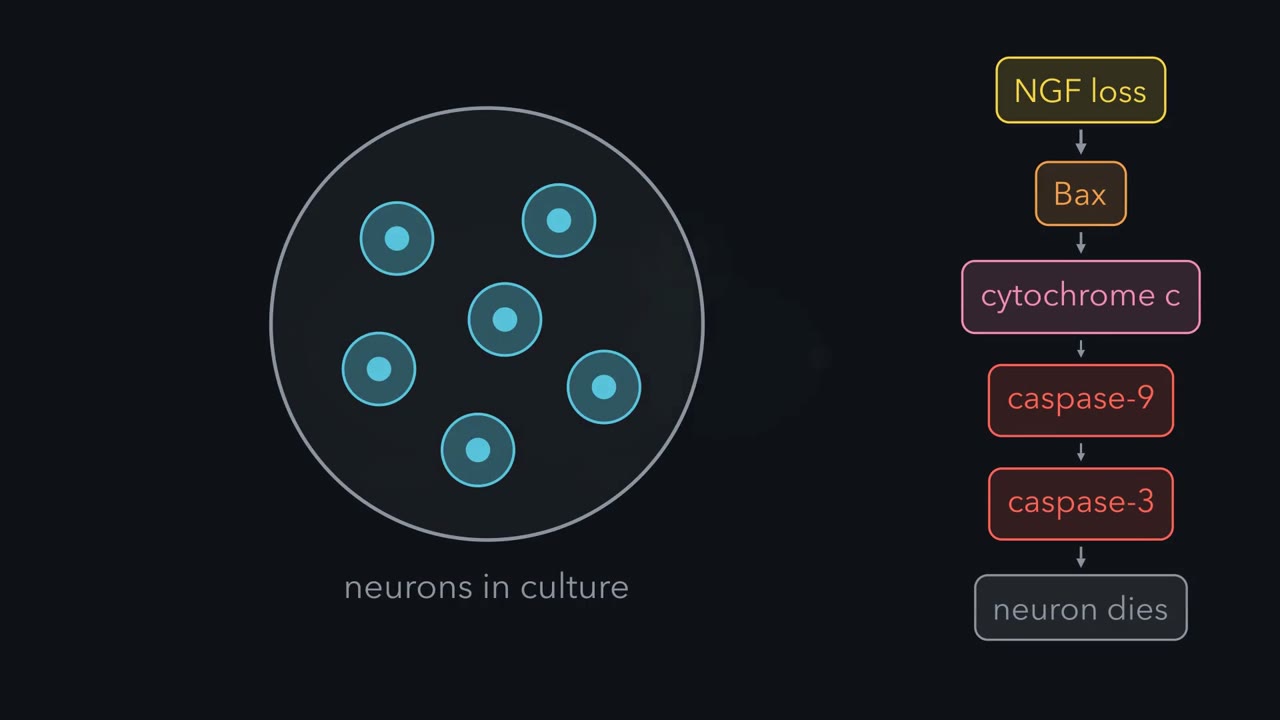
Bcl-2 is a protein that keeps cells alive. It belongs to the BCL-2 family. Its members decide whether mitochondria release cytochrome c. Some members protect. Others, such as Bax, promote death. The BH3-only members, like EGL-1, promote death too. That short domain is their only shared family feature. And ced-4 proved related to a mammalian protein, Apaf-1. So each worm part has a mammalian counterpart. But read where the match fails, too. First, a question. Which mammalian part has no clear counterpart in the worm?
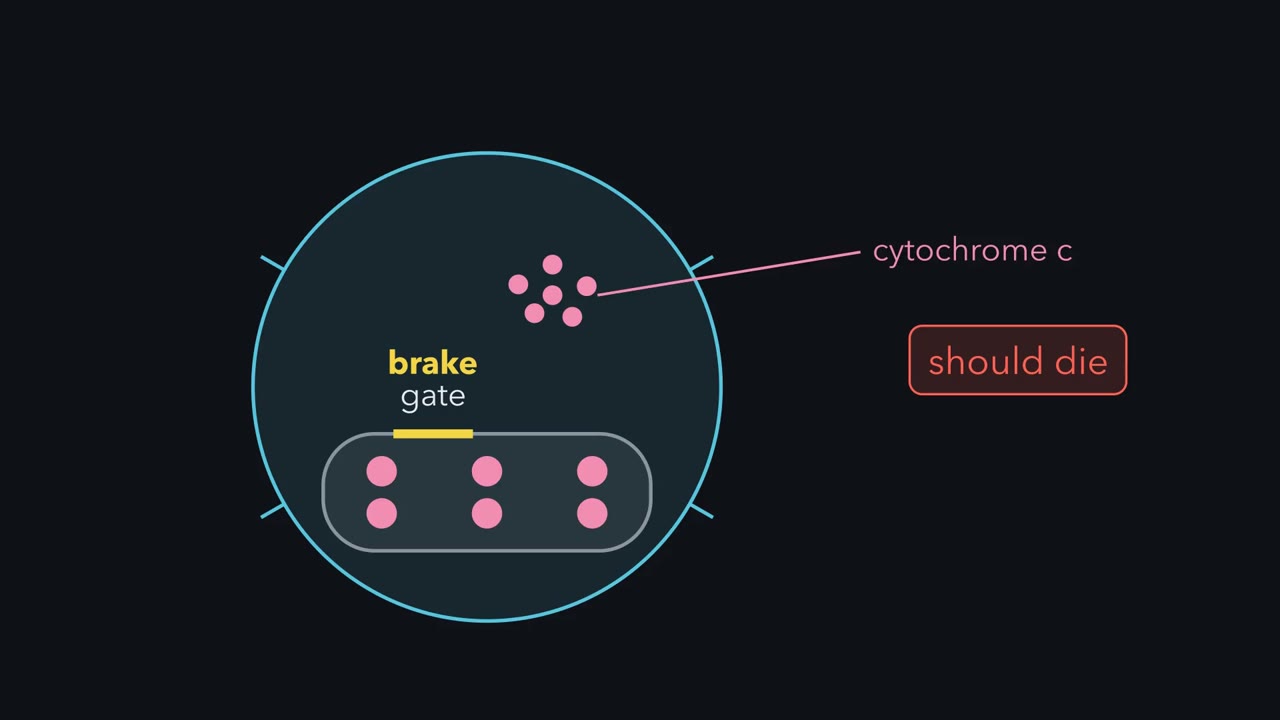
Bax. It is a gate in the outer mitochondrial membrane. The worm has no clear counterpart. Now read where the match fails. The worm brake holds CED-4 directly. The mammalian brake guards the mitochondria. Apaf-1 needs cytochrome c. There is no clear role for cytochrome c in worm apoptosis. EGL-1 resembles BH3-only proteins, such as Bim, only in that domain. So EGL-1 is best called a functional counterpart. And the worm's main caspase, CED-3, maps onto several mammalian caspases. Mammals split the initiator and executioner roles. In 2002, a Nobel Prize honoured discoveries concerning the genetic regulation of organ development and programmed cell death.
Here is the first part of this lesson's one idea. The killers are already built; a survival signal keeps brakes on them.
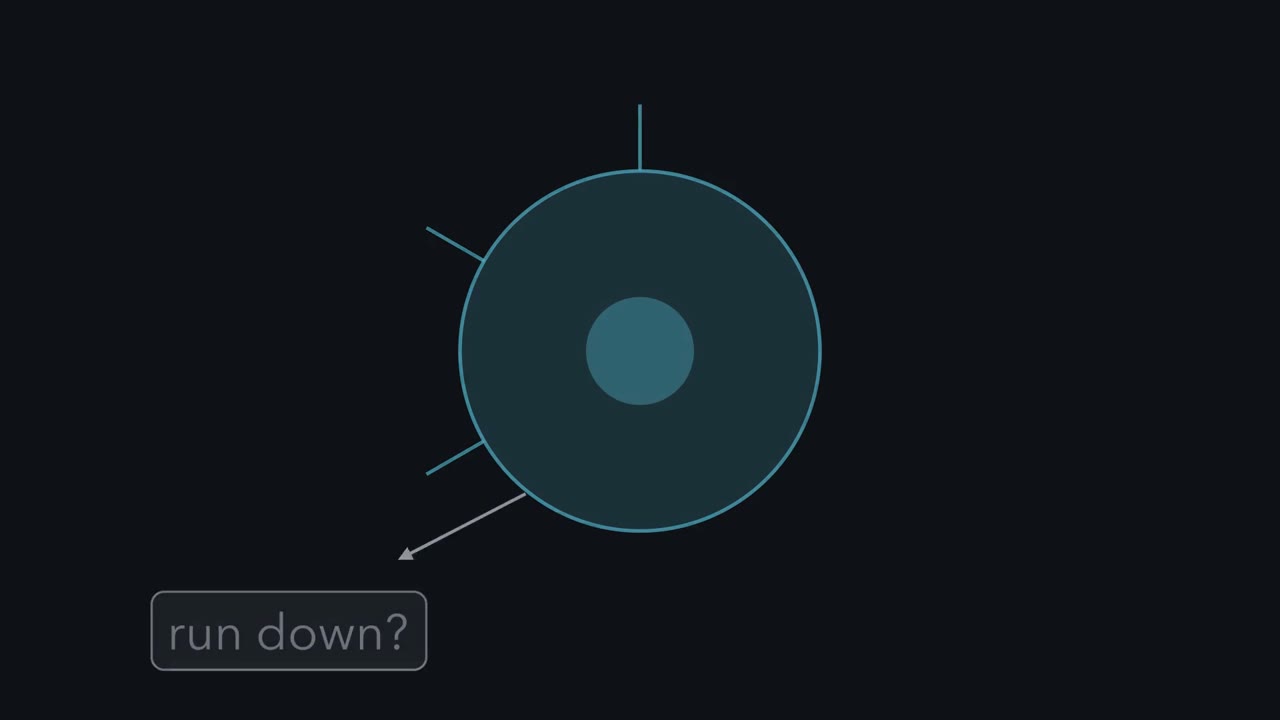
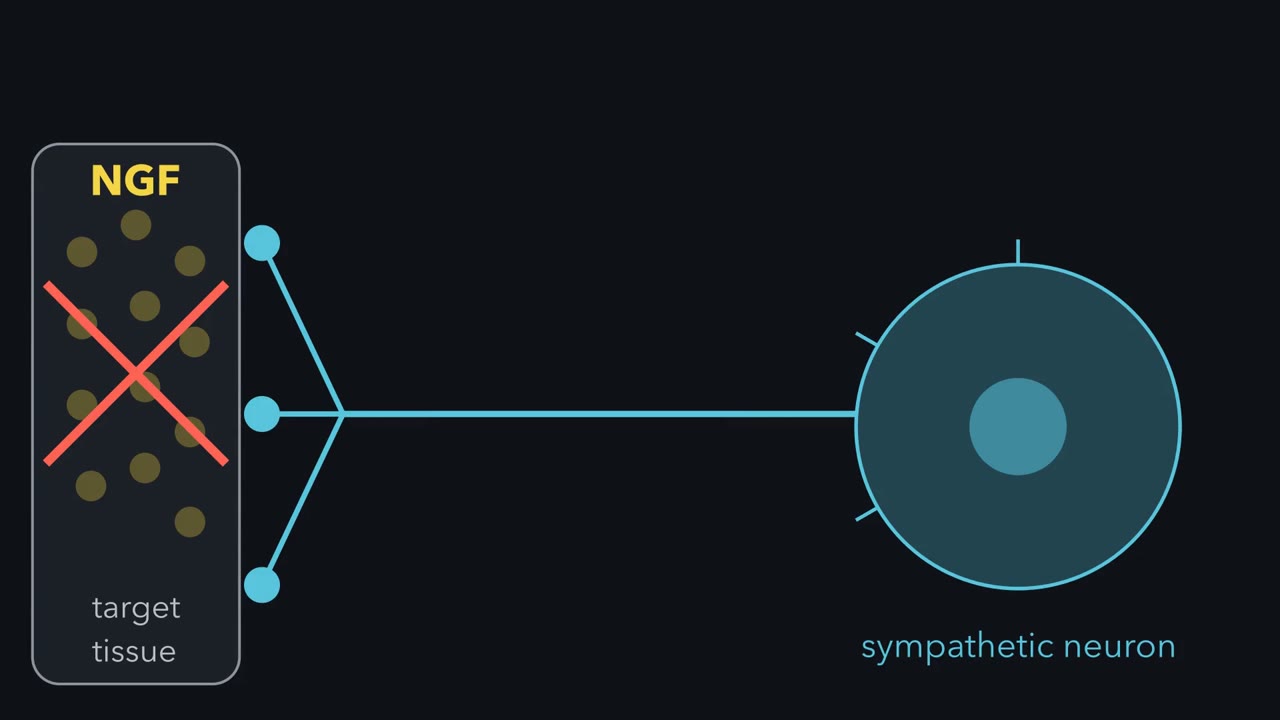
Stop a starving neuron from making new proteins, and it lives longer. Why?
Continue in the lesson: The Death Machinery in Neurons →
2:49 · Free, with captions and a transcript. The lesson has the full text, the questions and the sources.
More films from this lesson
How this film was made. Narration: an AI narrator voice (Kokoro, af_heart) reading narration written from this lesson's text. Animation: AI-generated in code (Manim) by Claude, a schematic with no drawn molecular structures. Captions come from the narration script. See something wrong? Report it.