Films · Developmental Neuroscience
The First Brake: The Mitochondrial Gate
Read the transcript of “The First Brake: The Mitochondrial Gate”
Film transcript: The First Brake: The Mitochondrial Gate
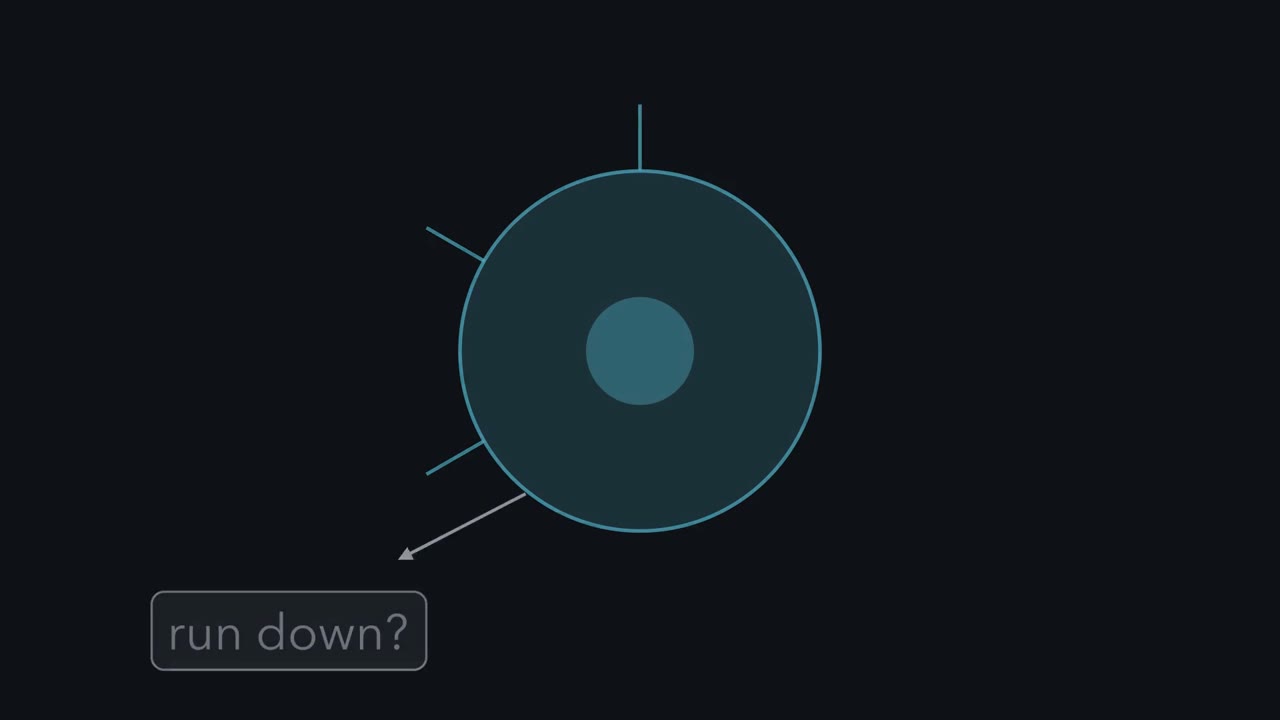
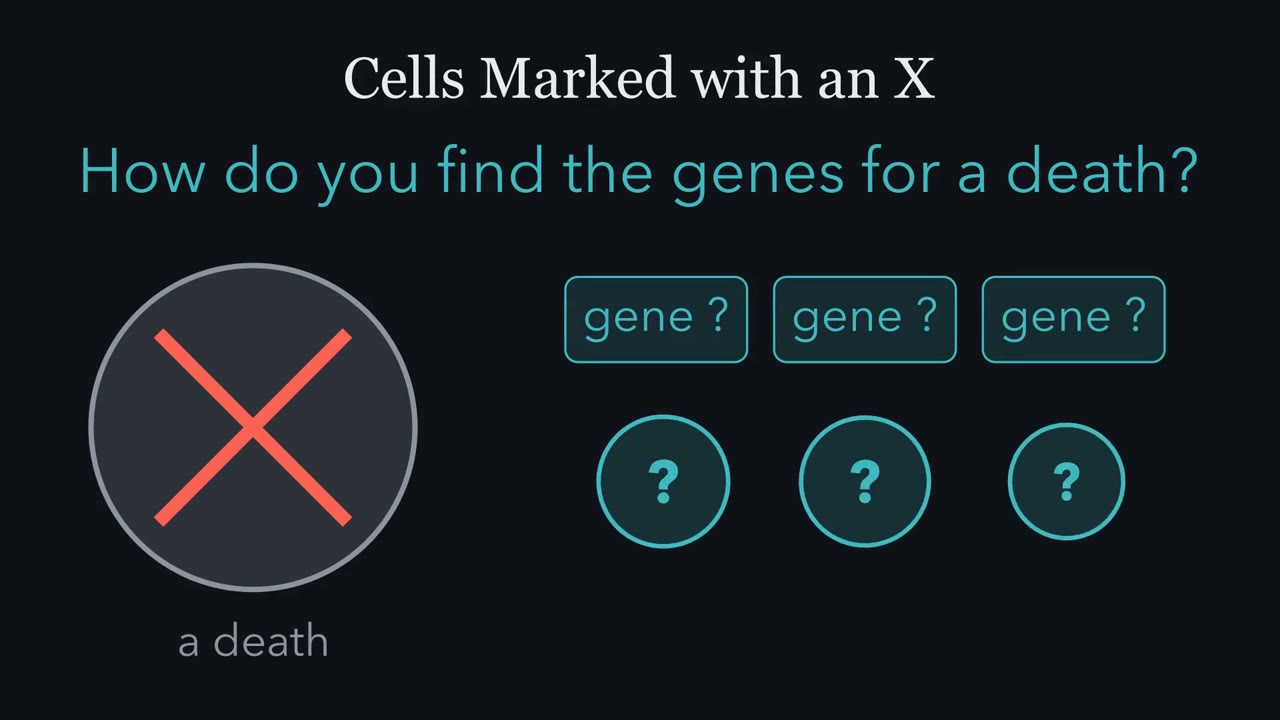
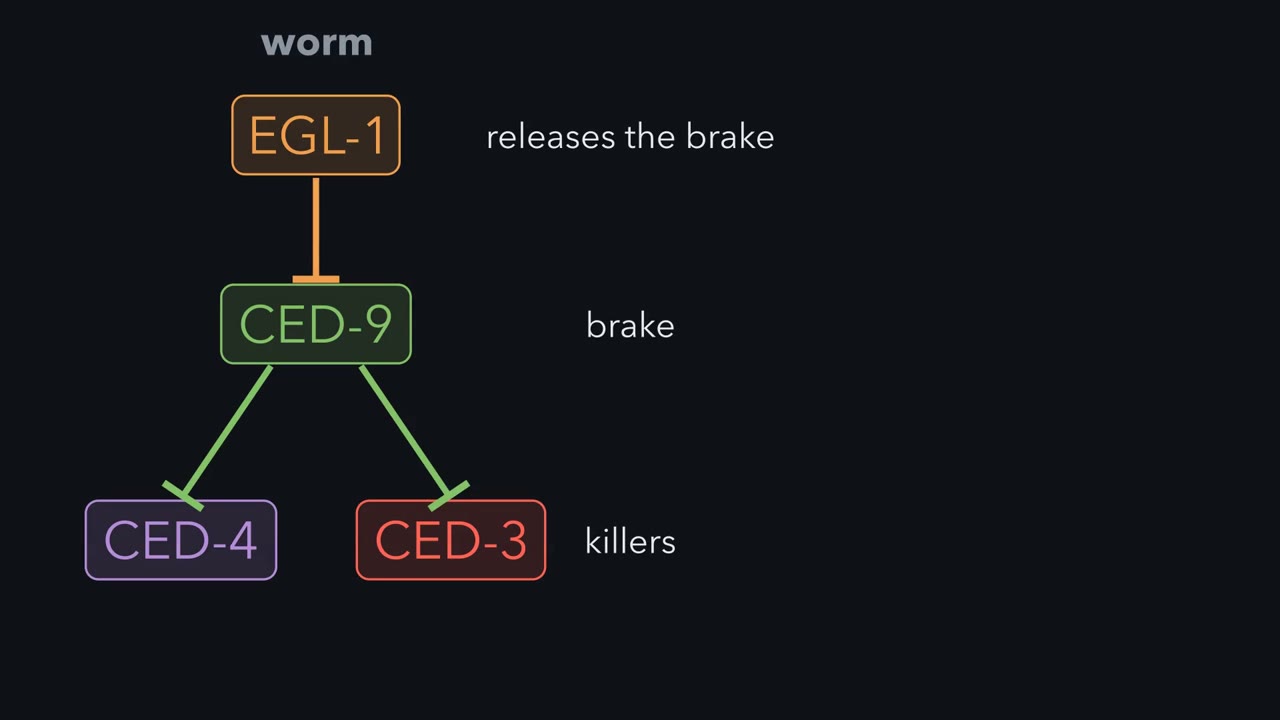
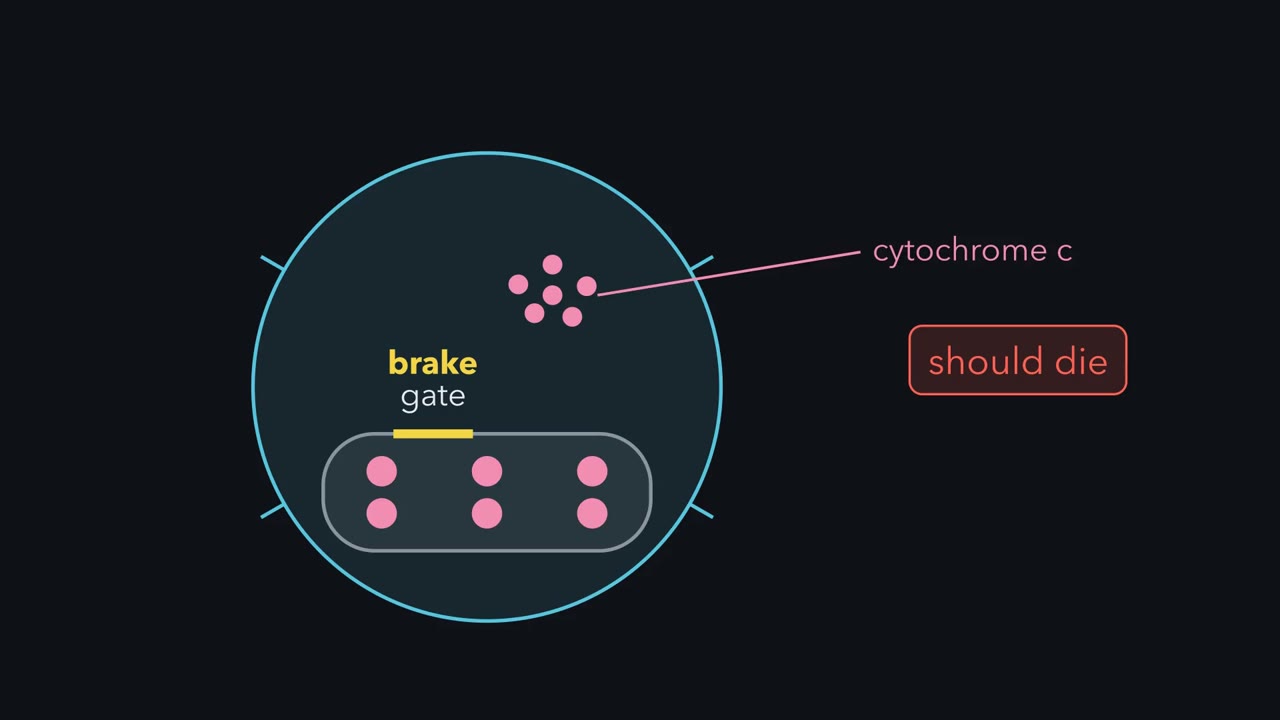
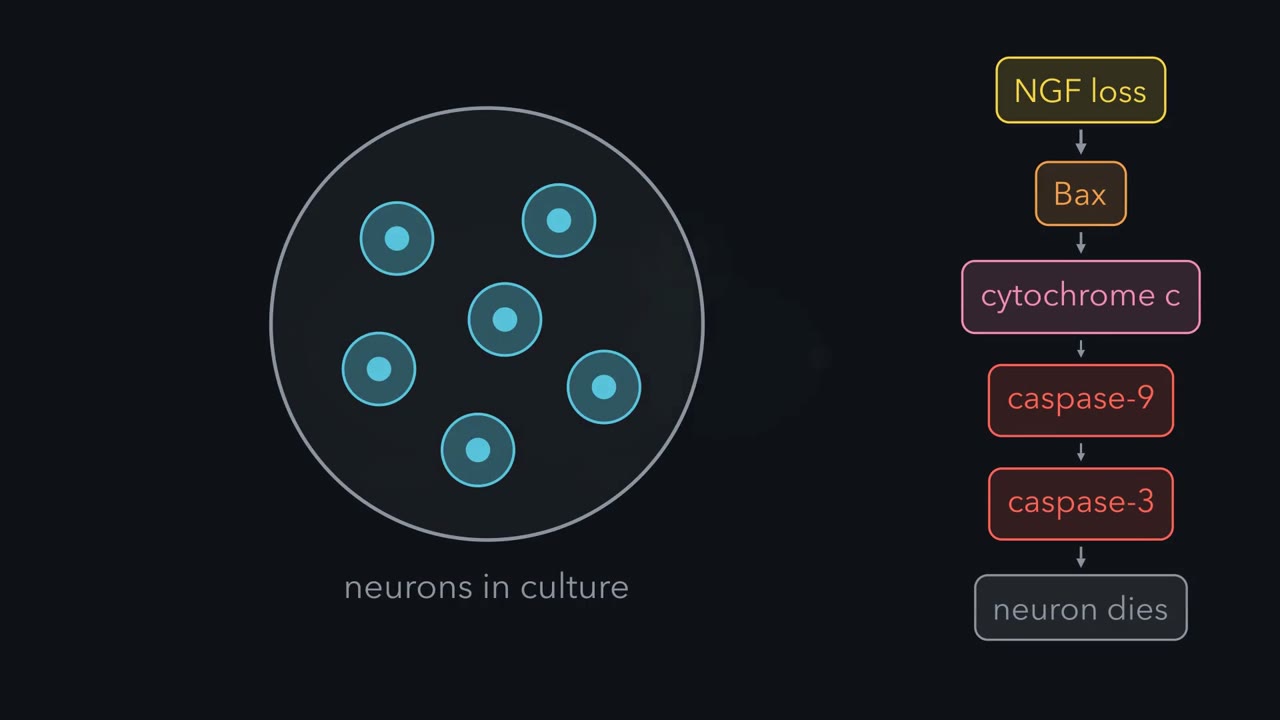
A sympathetic neuron loses its NGF. What happens, step by step, before the killers switch on? Keep the worm in mind. There, EGL-1 takes the brake off the killers. The neuron's brake works one step earlier, as a gate at the mitochondria, which store cytochrome c. Step one. The survival signal falls. NGF from the target acts through its receptor, TrkA, on the axon terminals. The signal keeps kinases such as Akt active. Akt holds back several pro-death proteins. Without NGF, that restraint weakens. Step two. Pro-death genes are switched on. A stress pathway turns on. The kinase JNK becomes active. JNK adds phosphates to a transcription factor called c-Jun.
c-Jun rises in deprived neurons, and blocking its function protects them. Among the genes then induced are BH3-only proteins, such as Bim. This is part of the new gene expression that the 1988 drugs blocked. Step three. The gate opens. A BH3 domain is a short helix. It fits a groove on protective proteins, such as Bcl-2. That is what EGL-1 does to CED-9 in the worm. Protectors with filled grooves can no longer hold Bax back. Bim can also activate Bax directly. Inactive Bax sits in the cytoplasm, with its last helix tucked into its own groove. Active Bax moves to the mitochondria. It inserts that helix into the outer membrane. With other Bax molecules, it makes the membrane leaky.
Cytochrome c escapes into the cytoplasm. Step four. The killers assemble. Cytochrome c binds Apaf-1. Apaf-1 assembles into a wheel, called the apoptosome. The apoptosome activates caspase-9. Caspase-9 cuts and activates caspase-3. Caspase-3 takes the cell apart. Now delete Bax, and take NGF away. Which steps still happen? Does the neuron live?
Steps one and two should still happen. They lie upstream of Bax. Step three cannot happen. The gate stays shut, and cytochrome c stays inside. The neuron survives. But it survives as a shrunken cell, because NGF also supports its growth. That is the first brake. Brake one is the gate. NGF loss opens it through new gene expression.
Stop a starving neuron from making new proteins, and it lives longer. Why?
Continue in the lesson: The Death Machinery in Neurons →
3:02 · Free, with captions and a transcript. The lesson has the full text, the questions and the sources.
More films from this lesson
How this film was made. Narration: an AI narrator voice (Kokoro, af_heart) reading narration written from this lesson's text. Animation: AI-generated in code (Manim) by Claude, a schematic with no drawn molecular structures. Captions come from the narration script. See something wrong? Report it.