Films · Developmental Neuroscience
One Rule, and Where It Stops
Read the transcript of “One Rule, and Where It Stops”
Film transcript: One Rule, and Where It Stops
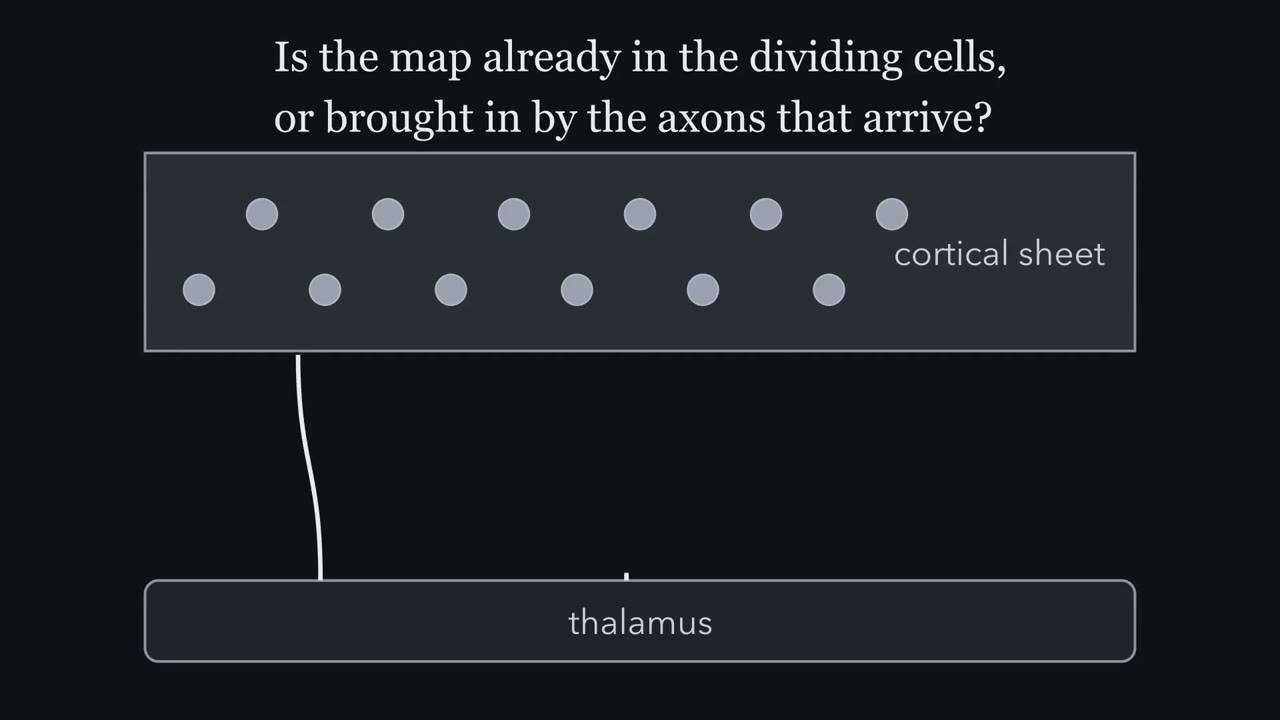
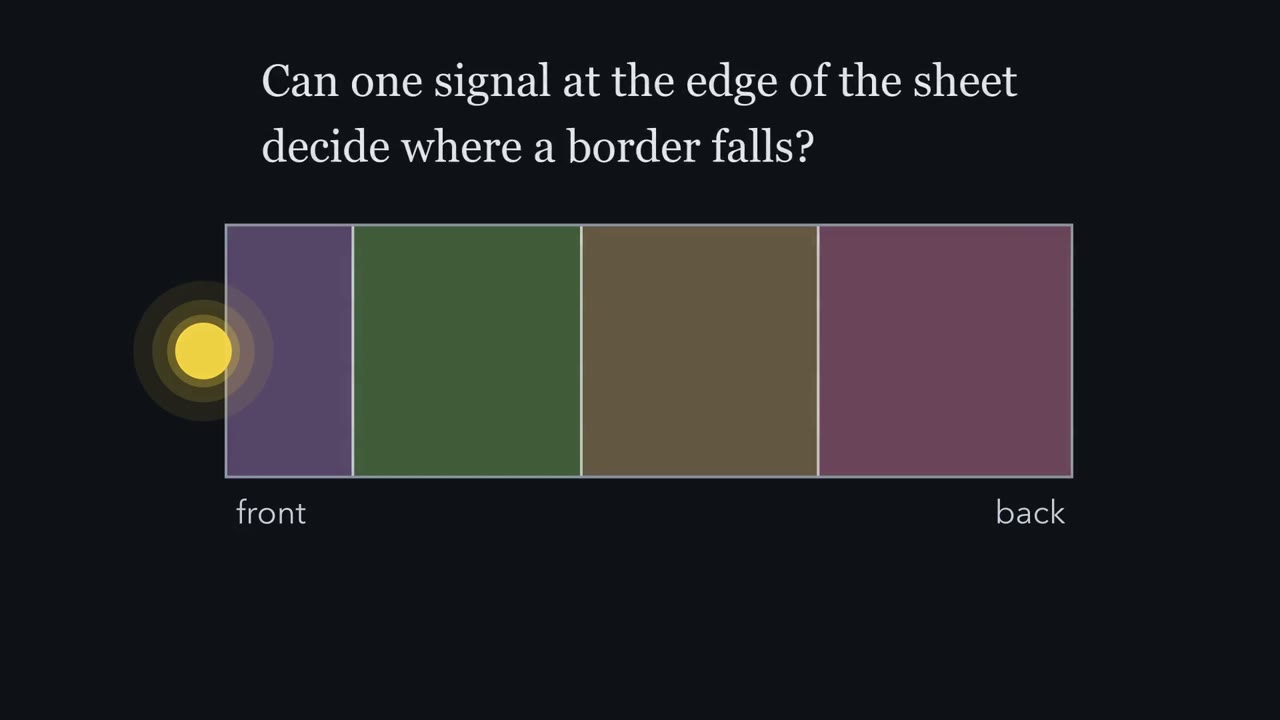
We have moved borders many ways. Can one idea tie the results together? More FGF8 at the front: the barrel field moved back. FGF8 blocked: it moved forward. A new source at the back: a partial second barrel field. No Emx2: the front-and-middle areas grew back, and the visual area shrank. More Emx2, same slope: the visual area grew, with total size unchanged. No thalamic axons: marker borders in place at birth. New input: barrels in grafted visual tissue, and an orientation map in auditory cortex. Which factor's loss and gain results did not mirror each other?
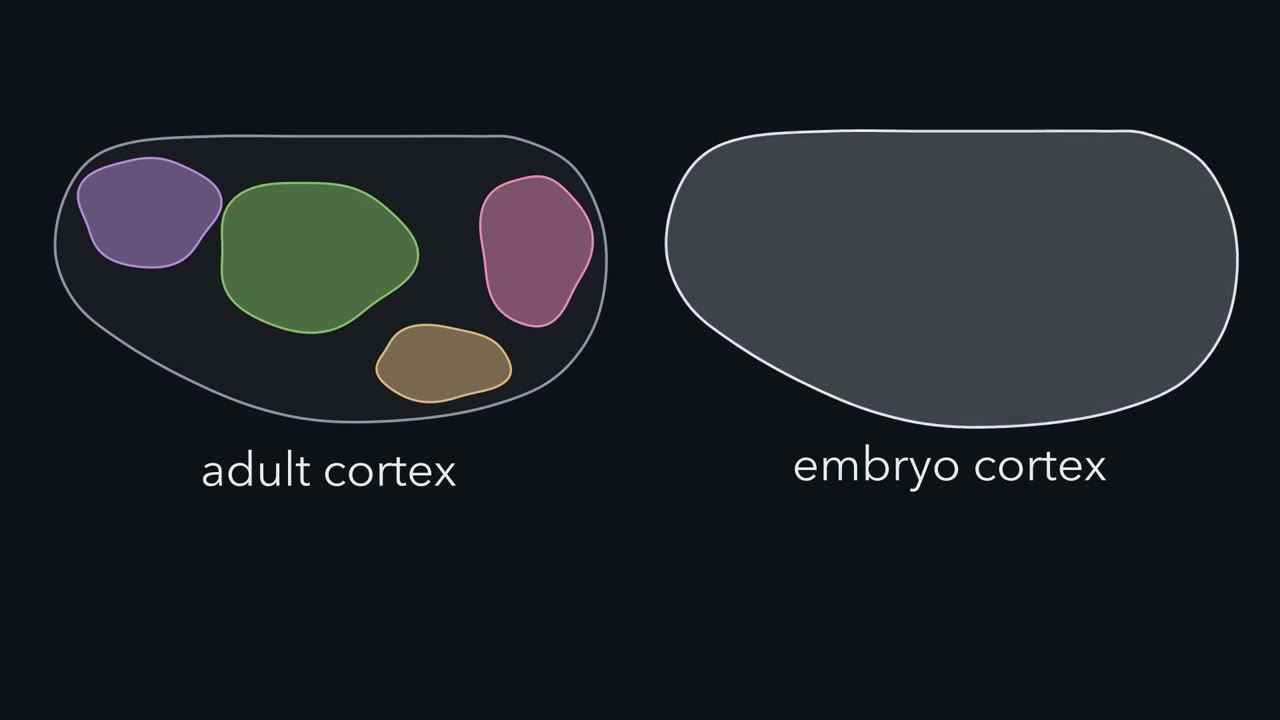
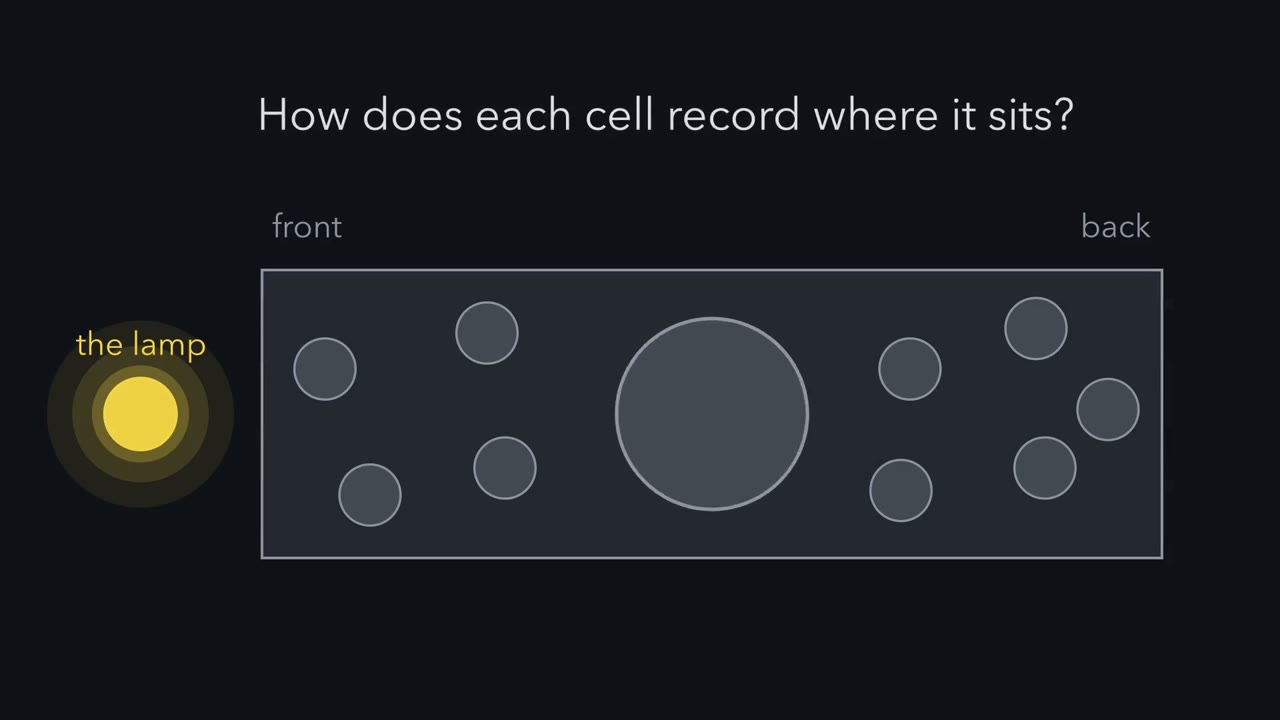
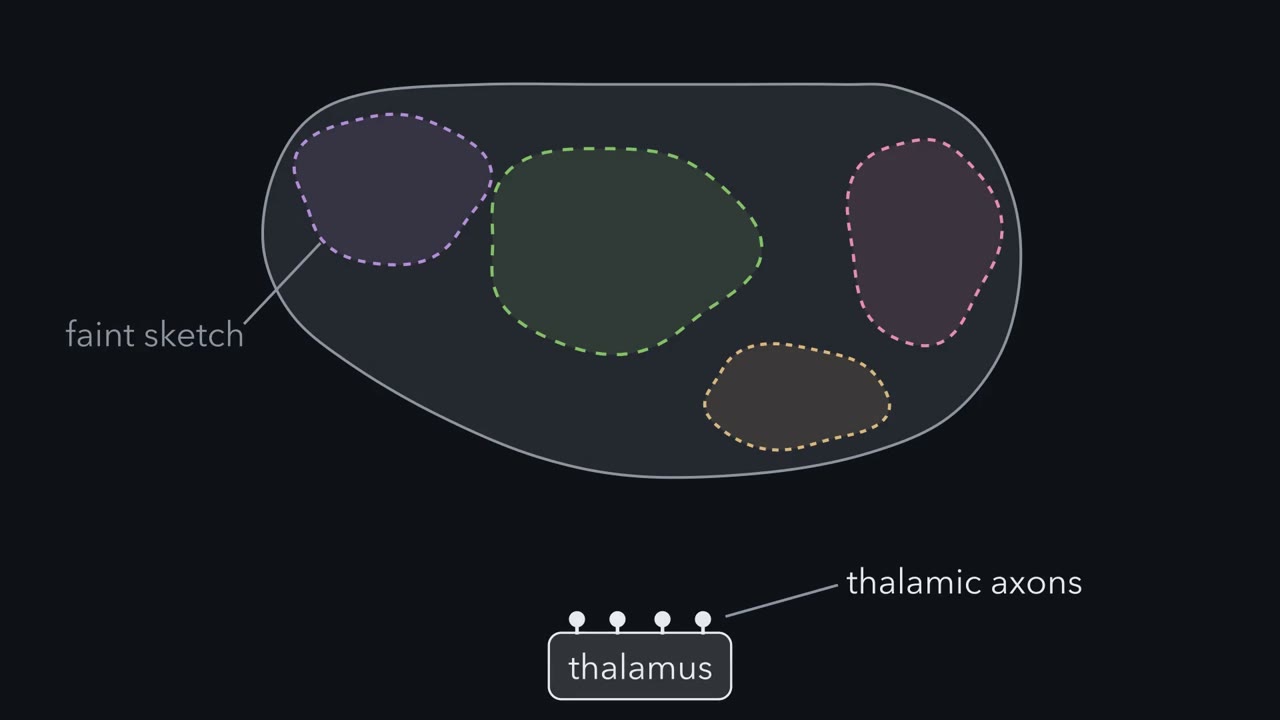
Pax6. Losing it shifted the markers, but raising it barely moved the map. Here is the idea that ties them together. Position draws the sketch; input finishes it. Each progenitor's position is recorded as levels of graded signals and transcription factors. In our working model, a border falls where a level crosses a threshold. Change the dose, and the border slides. Add a second source, and part of the pattern can repeat. Thalamic input then sharpens the sketch, tells primary areas from higher-order ones, and helps shape the maps inside. And the strongest evidence for a factor: loss and gain that move borders in opposite directions. A missing converse result does not rule a factor out.
The rule has limits. It covers where the primary area borders sit, front to back, in the mouse. It does not cover total cortical growth, which some of these factors also change. Its threshold model does not explain the maps inside an area. Input and activity build those with the cortex's own cells. it is drawn from mice. It does not claim to explain area sizes in primates or humans. One question stays open. A gradient is smooth, yet mature borders are sharp. How does the smooth gradient become a sharp border? And how much happens in progenitors, and how much in neurons under input? The takeaway: position draws the sketch, and input finishes it.
How the sketch becomes a sharp line is not yet fully understood.
Add one secreted protein to the back of a mouse embryo's cortex and a second, partial whisker map can appear there.
Continue in the lesson: Mapping the Cortex: Areas and Arealization →
2:42 · Free, with captions and a transcript. The lesson has the full text, the questions and the sources.
More films from this lesson
How this film was made. Narration: an AI narrator voice (Kokoro, af_heart) reading narration written from this lesson's text. Animation: AI-generated in code (Manim) by Claude, a schematic with no drawn molecular structures. Captions come from the narration script. See something wrong? Report it.