One in Two Thousand
Read the transcript of “One in Two Thousand”
Film transcript: One in Two Thousand
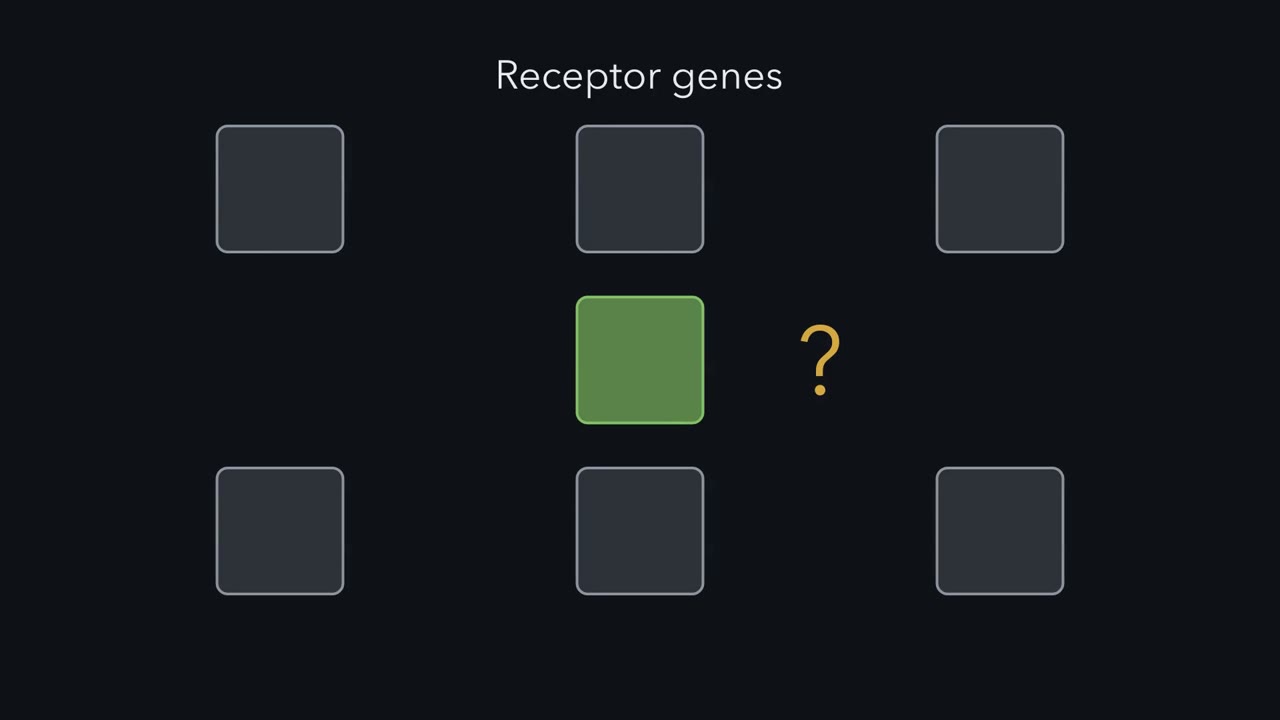
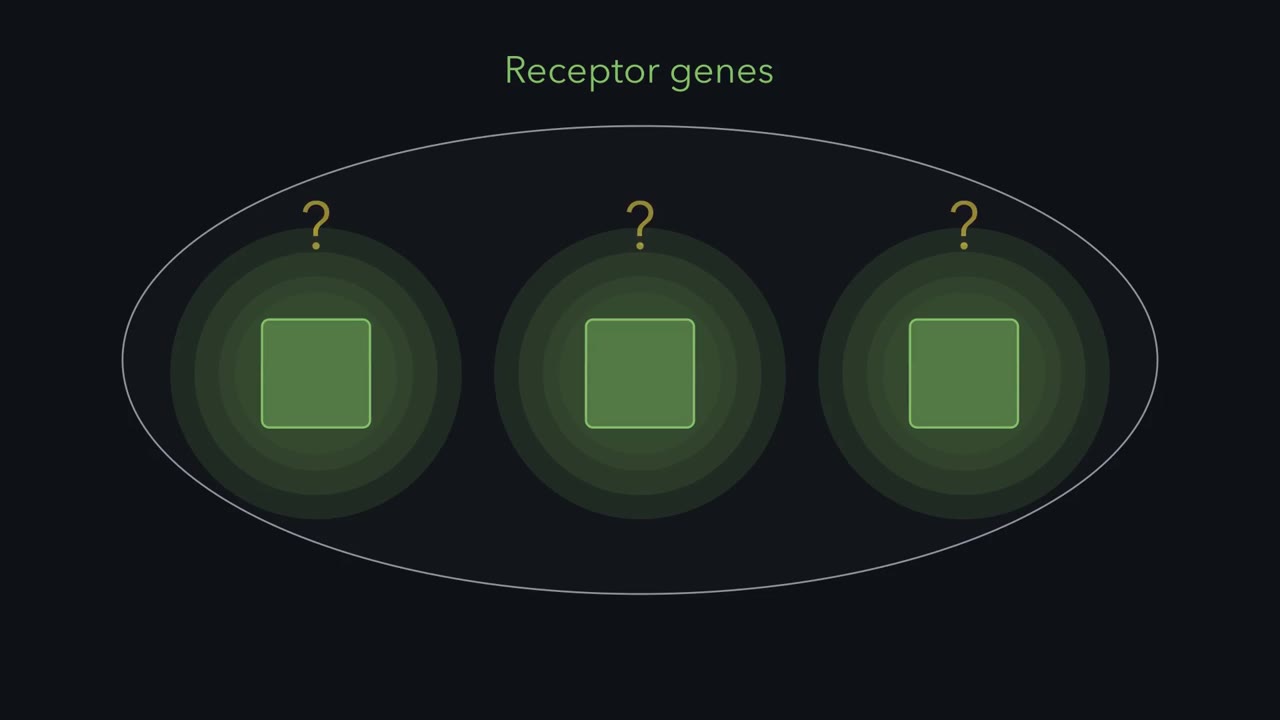
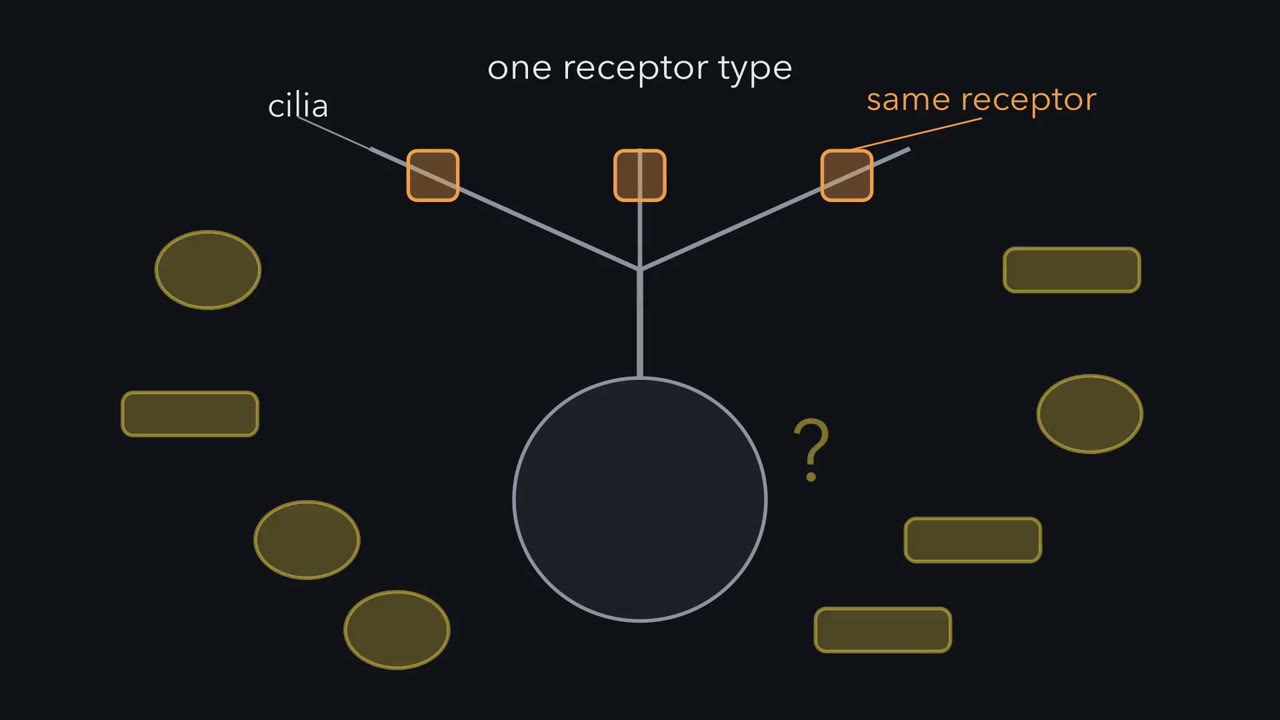
A mouse olfactory neuron carries about a thousand receptor genes, in each of its two genome copies. It uses one copy of one gene. In 1994, Chess and colleagues, in Richard Axel's laboratory, made the puzzle sharp. A neuron's receptor transcript comes from just one of its two alleles. So the neuron faces about two thousand candidates. A mature neuron uses one, and keeps using it. This is called singular choice. One gene, from one allele, in nearly every mature mouse neuron. It describes where development ends, not every stage on the way. Picture three broad phases. In early progenitors, the receptor genes are silenced, and little or no receptor RNA is detected.
From late precursors into immature neurons, several receptors are transcribed weakly. Single-cell data infer competing enhancer hubs. In mature neurons, one gene from one allele is expressed, and feedback helps hold the choice. Why is this hard? Suppose each gene had a small chance of escaping silence, independent of every other gene. And suppose nothing afterwards shuts off extra genes or removes any neurons, and every neuron is counted at the same time. Then the number of escapes per neuron is close to a Poisson distribution. You can set the average to anything. What is the largest fraction of neurons that can have exactly one receptor?
In this model, about 37 percent at most. The exactly-one bar peaks at an average of one escape per neuron. Make escapes much rarer, and most neurons express nothing. Make them much more common, and most express two or more. Yet mature mouse neurons nearly all express exactly one. So this simple, unregulated model is insufficient.
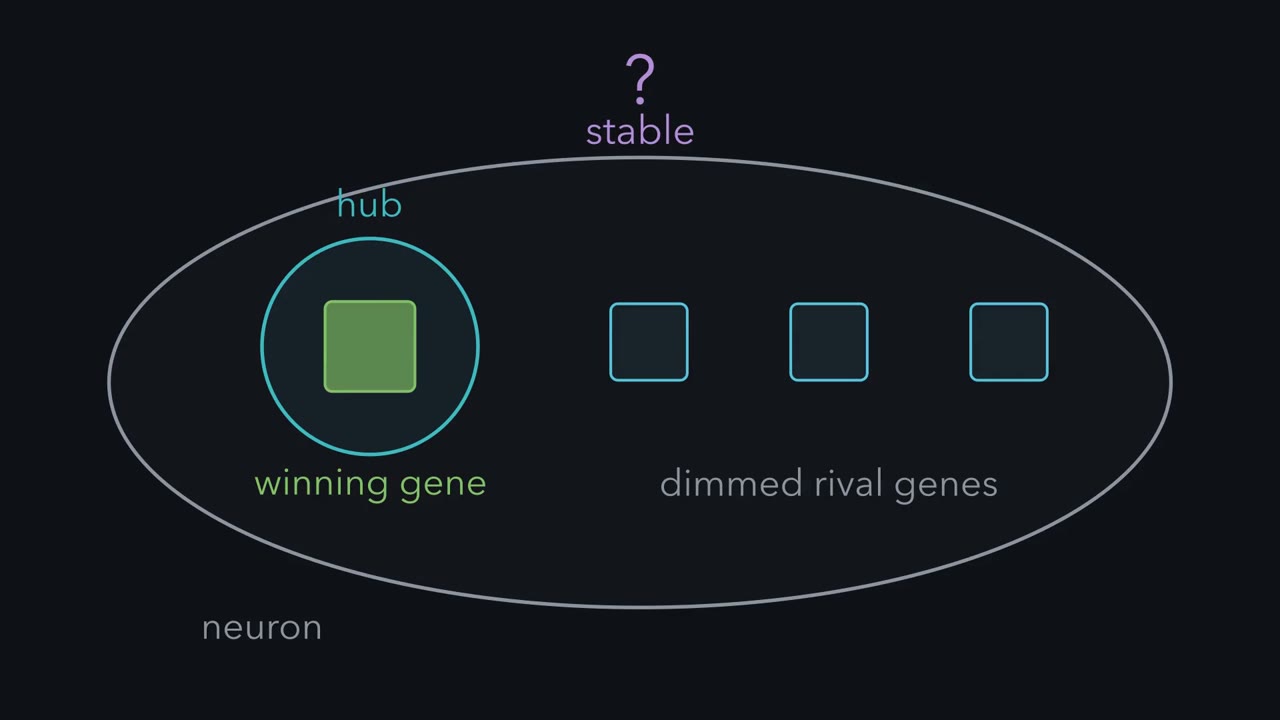
Mouse experiments support competition and receptor-dependent stabilization, but the arithmetic alone does not identify the mechanism. Here is the one idea for this lesson. Silence every gene, let a few compete, and lock in the winner. Repressive chromatin covers the receptor genes first. A few are transcribed weakly and compete at enhancer hubs. The leading gene's RNA helps quiet its rivals. Then its receptor protein sets off a stress signal. That signal turns down Lsd1, an enzyme that new receptor expression depends on. Further escapes become rare. Picture a library where every book is chained shut. A key frees a few, and they compete to be read.
The loudest reader drowns out the others. Then a bell rings and the key is taken away, so new books rarely open. In the mouse, the chains are repressive chromatin. The key is a step that depends on Lsd1. The bell is a stress pathway. The chapters ahead follow each step: the silence, the competing hubs, and the lock.
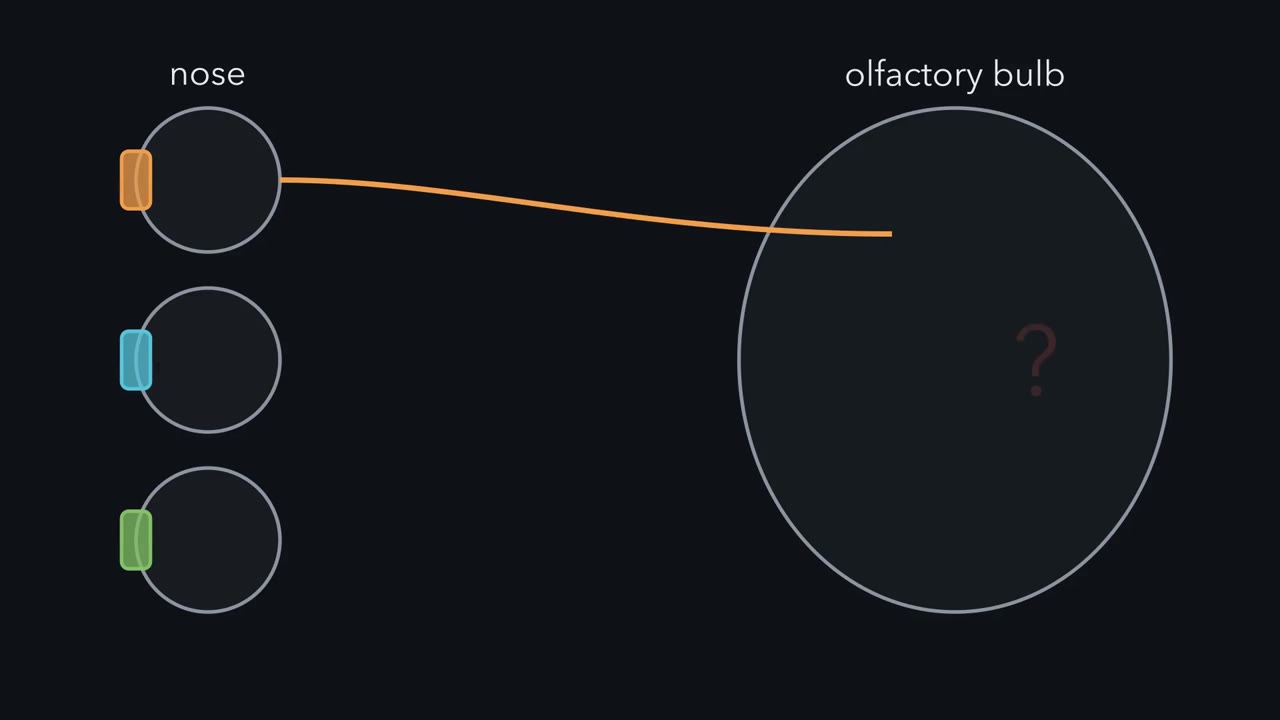
A mouse olfactory neuron holds about a thousand receptor genes and uses one copy of one. How does it choose, and what keeps it from changing its mind?
Continue in the lesson: One Receptor per Neuron: How Olfactory Neurons Choose →
3:29 · Free, with captions and a transcript. The lesson has the full text, the questions and the sources.
More films from this lesson
How this film was made. Narration: an AI narrator voice (Kokoro, af_heart) reading narration written from this lesson's text. Animation: AI-generated in code (Manim) by Claude, a schematic with no drawn molecular structures. Captions come from the narration script. See something wrong? Report it.