Where More Current Breaks
Read the transcript of “Where More Current Breaks”
Film transcript: Where More Current Breaks
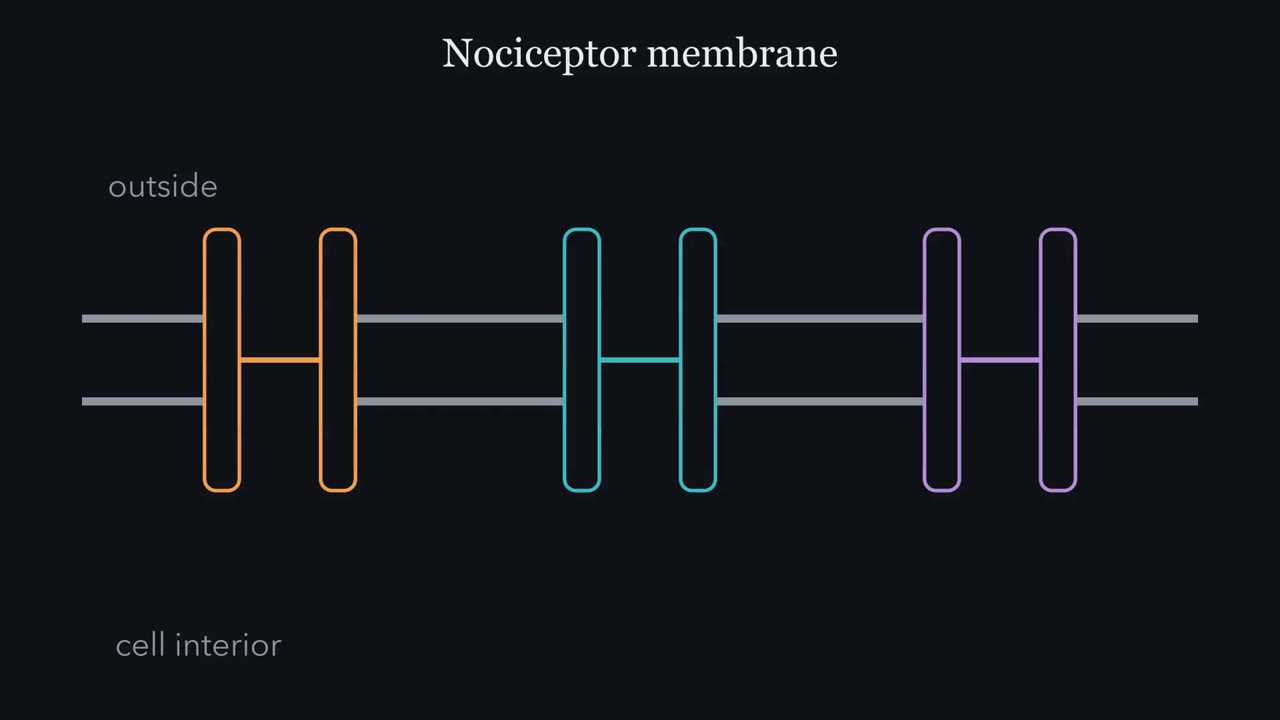
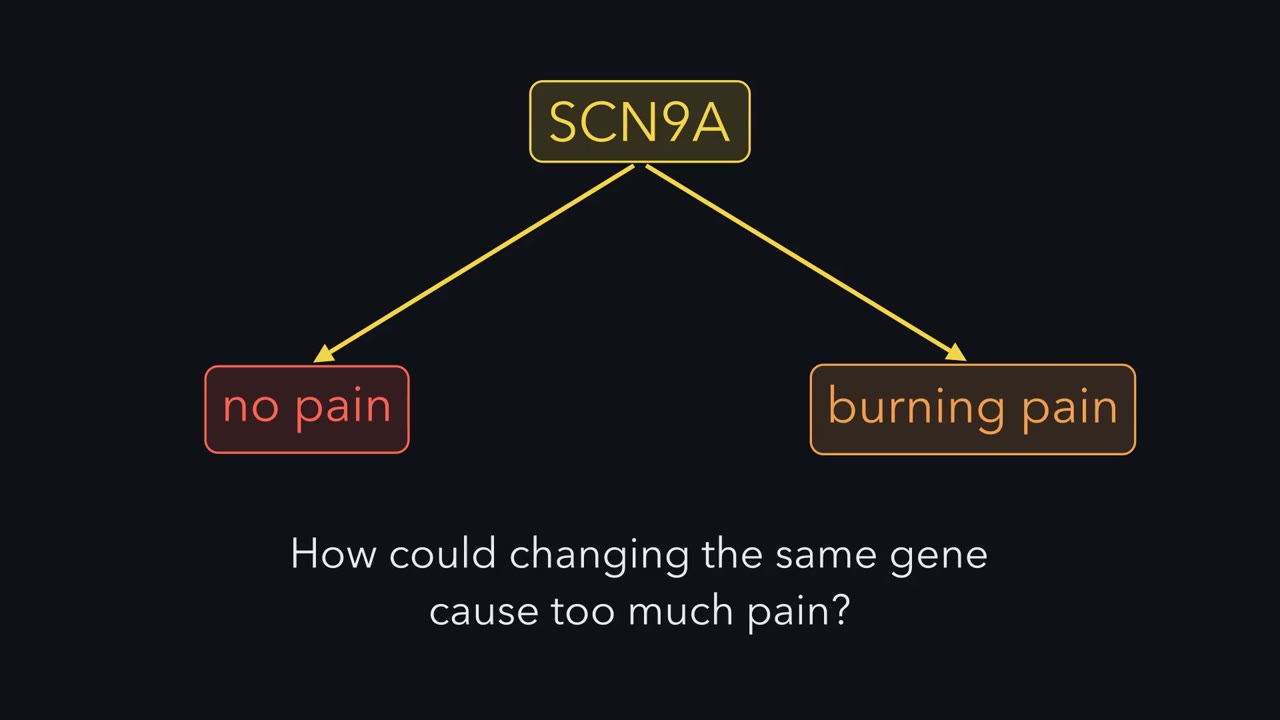
Two variants both increase one channel's current. Can the neurons do opposite things? The tempting rule is simple. More sodium current means more pain. Nav1.9 breaks it. Its activation and inactivation curves overlap near rest. Near rest, activation and availability overlap, so some channels are open at any moment. The population carries a standing inward current. It is not a spike. It is a steady depolarizing pull on the resting potential. Okuda and colleagues made knock-in mice carrying the variant R222S. That variant is found in familial episodic pain, and their sensory neurons showed increased evoked firing. Huang and colleagues expressed two human variants in small rat sensory neurons.
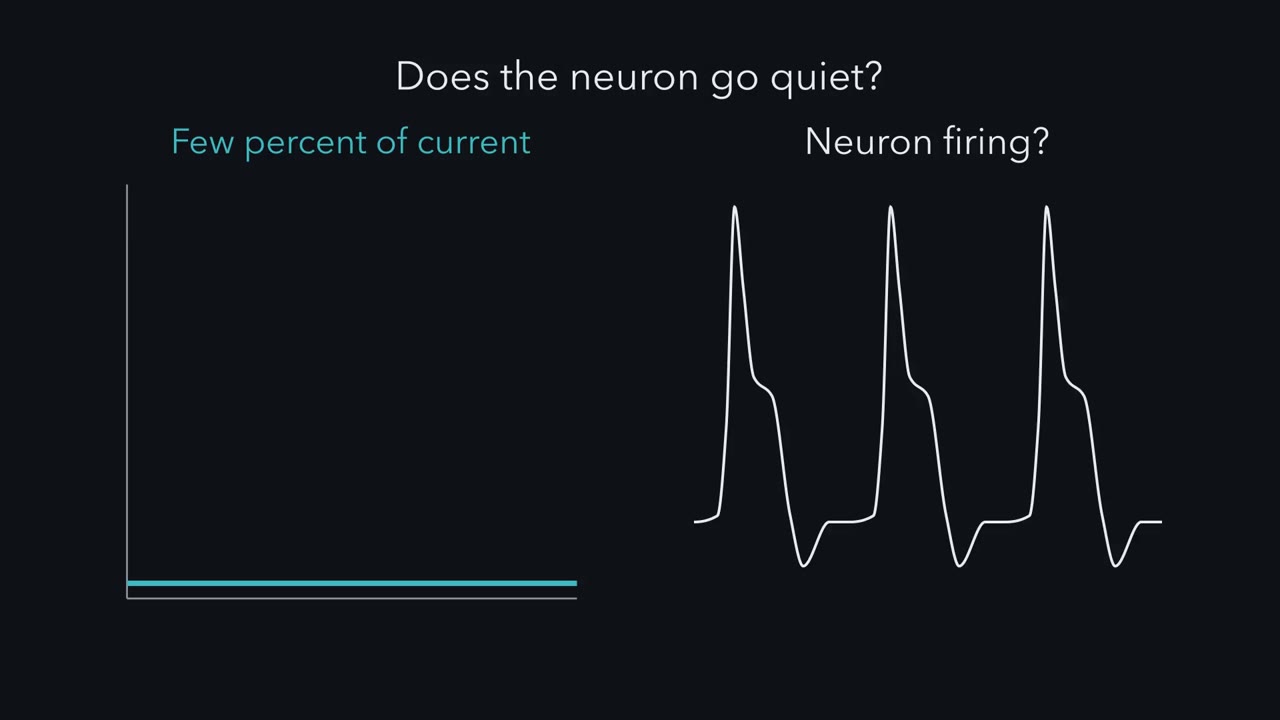
Those two variants are associated with insensitivity to pain. Both depolarized the neurons and impaired action-potential generation. One of them shifted the average resting potential by about eleven and a half millivolts. Both are gain of channel function. One raises firing. The other impairs it, and in a minority of the most depolarized cells abolishes it. Which should you expect?
You cannot answer from the current alone. You need the availability of the neuron's Nav1.7-like channels. Put the shift on the curve, and the cost shows. Availability falls roughly four-fold. The size depends on the midpoint assumed. The direction does not. Nav1.8 sits on its own curve, far more depolarized. So treat this as a rough, back-of-envelope argument rather than a measurement. A small depolarization brings the membrane closer to threshold. With availability to spare, the neuron can fire more. A larger one takes away the current the upstroke is built from. Only a minority, the cells that depolarized furthest, stopped firing altogether.
So what decides the outcome in the neuron? The outcome depends jointly on the size and time course of the depolarization, subtype-specific availability, channel densities, the other conductances and the stimulation. The channel gains, and the neuron can lose.
Starting availability was not measured and matched between these two preparations. So read this as an account that reconciles two results, not as a measured crossover. Keep the shape of this argument. A channel measurement identifies a channel effect; the neuronal context determines its effect on firing.
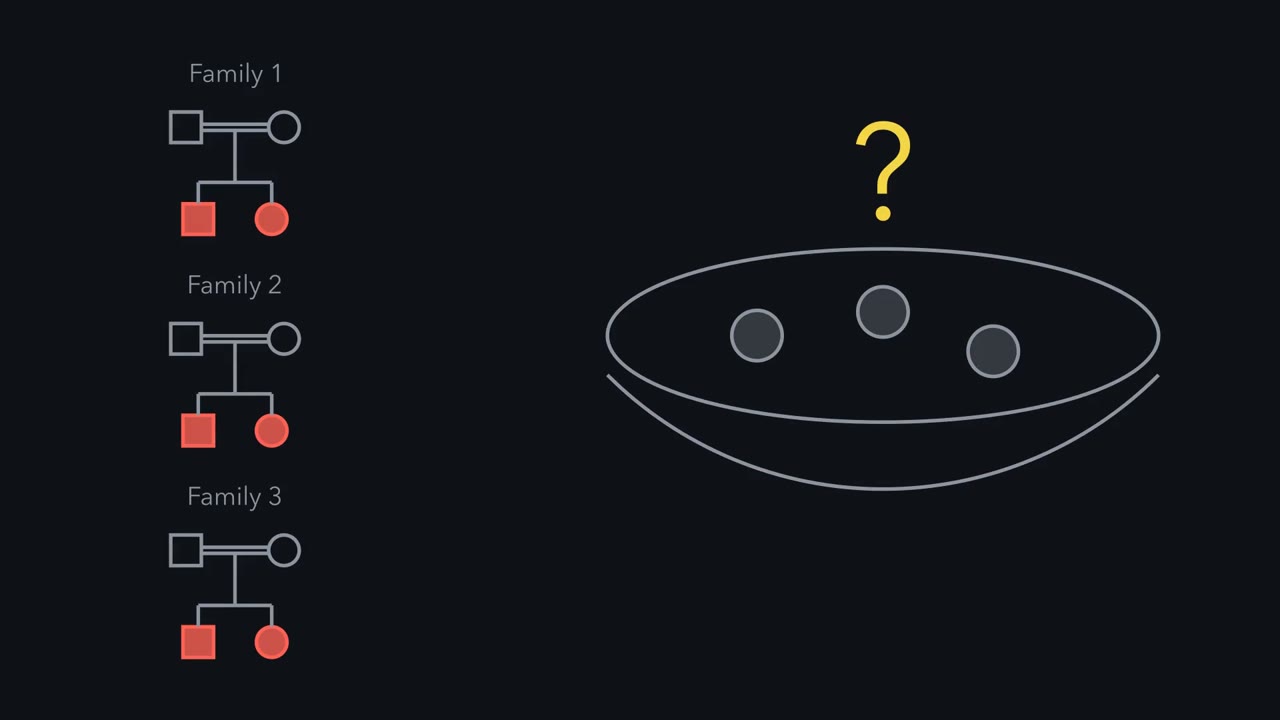
Three families in which nobody could feel pain pointed to one sodium channel. Twenty years later, the drug that reached patients blocks a different one.
Continue in the lesson: Nociceptors and the Sodium Channels of Pain →
3:13 · Free, with captions and a transcript. The lesson has the full text, the questions and the sources.
More films from this lesson
How this film was made. Narration: an AI narrator voice (Kokoro, af_heart) reading narration written from this lesson's text. Animation: AI-generated in code (Manim) by Claude, a schematic with no drawn molecular structures. Captions come from the narration script. See something wrong? Report it.