Silence First
Read the transcript of “Silence First”
Film transcript: Silence First
If one gene wins, does the winner silence the others? Or was the silence already there? Heterochromatin is tightly packed, silenced chromatin. Certain chemical marks on histones flag it. Magklara and colleagues sorted olfactory neurons from mice aged six to ten weeks. They pulled down the DNA wrapped around histones carrying a chosen mark. This is chromatin immunoprecipitation. Receptor genes were enriched for two repressive marks. Their data suggested silencing comes before detectable receptor expression. Then they compared the two alleles of one receptor gene, called P2. The active allele carried less of the repressive marks than its inactive partner.
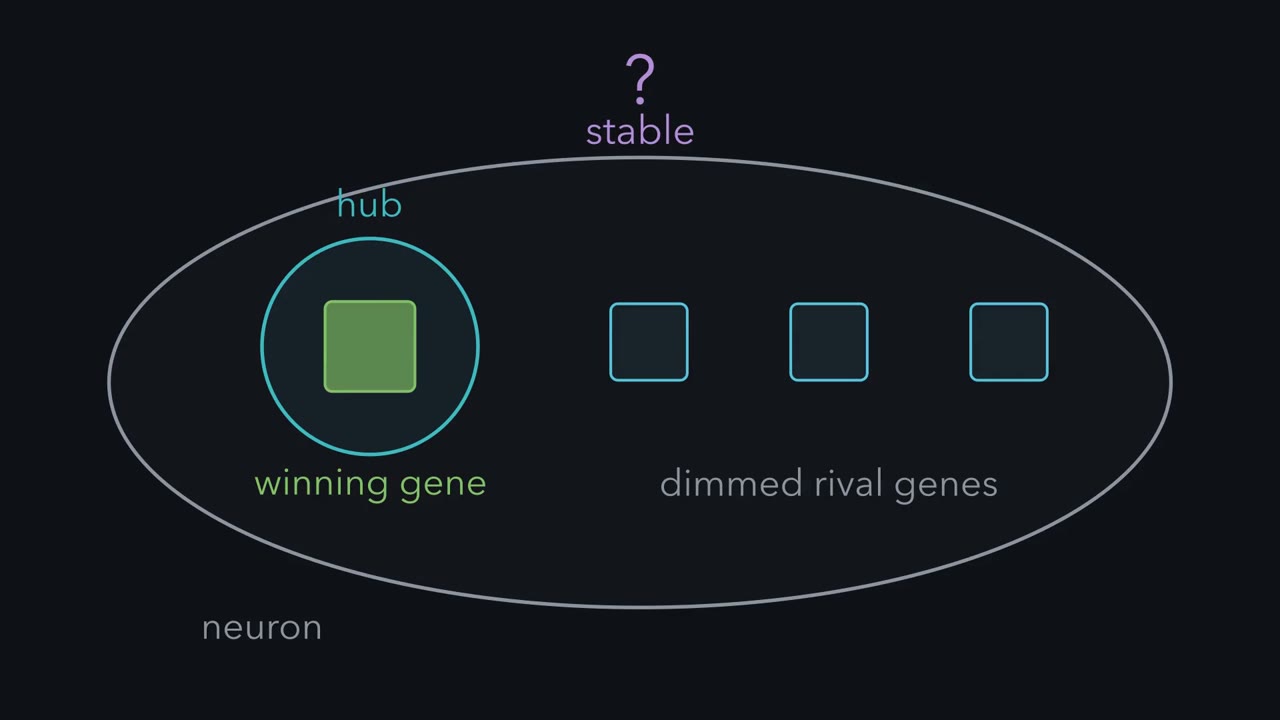
A common picture says the chosen gene silences the others. If the winner caused the first silencing, when should the marks appear? Only after a receptor was expressed. Instead, the silence seems to come first. So the winner did not start the broad silence by itself.
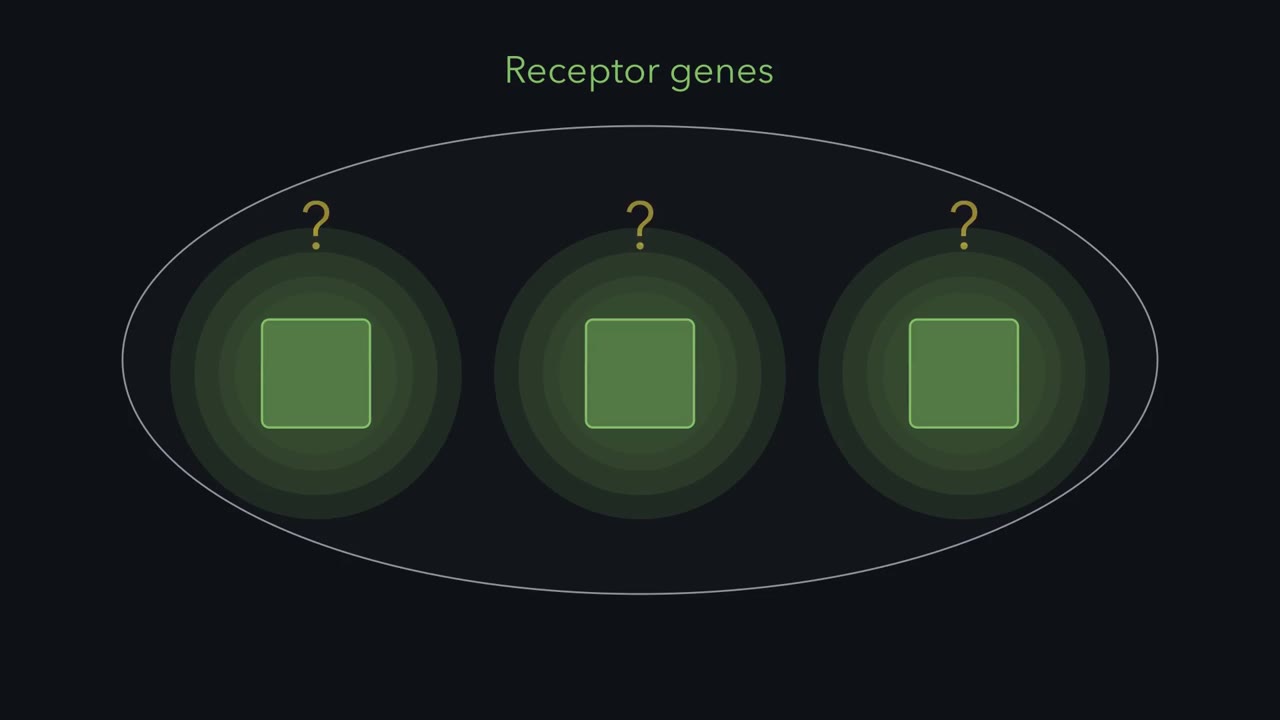
And the P2 comparison cannot settle the question. Comparing two alleles is an association. It shows the chosen allele is less repressed. It does not say which change starts the choice. A second, separate line of evidence shows the silent genes gathered together. Clowney and colleagues found receptor genes from different chromosomes collecting in a few dense foci as neurons mature. That happens in step with the loss of the lamin B receptor. Forcing the lamin B receptor back broke up the foci, and singular expression was disrupted. If every gene starts silent, something must let one out. In the model, the candidate key is the enzyme Lsd1. Lyons and colleagues deleted it early in the mouse epithelium, then read the RNA of the whole tissue.
The knockout tissue detected about a third as many receptor genes. Early loss impaired the start of receptor expression. But this is dependence, not mechanism. The enzyme's chemistry gives a reason for care. Lsd1 can remove one or two methyl groups from a lysine. It cannot remove a third. So on its own it cannot strip a trimethyl mark. That would need another demethylase or an intermediate step. And a count from bulk tissue depends on the assay and on which cells were in the sample. So the key is shorthand for an Lsd1-dependent step. So the broad silence comes first, and a key is needed to escape it. The winner acts later, quieting rivals and holding its place.
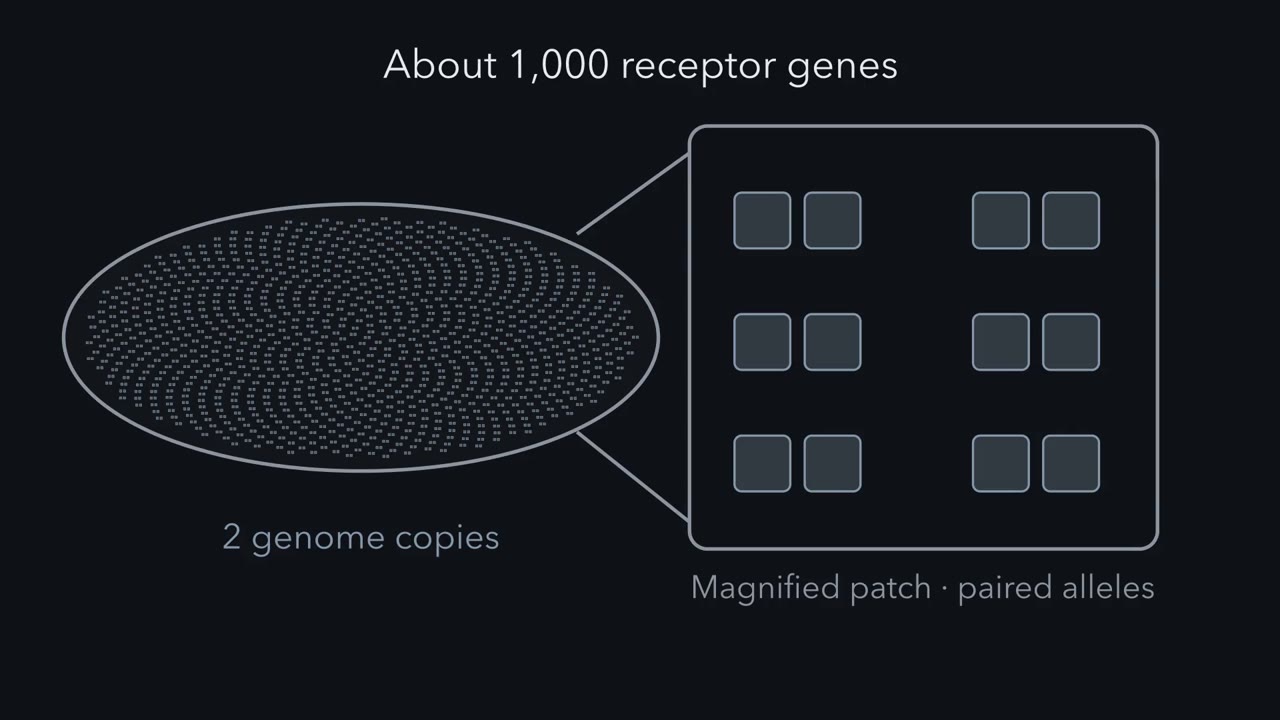
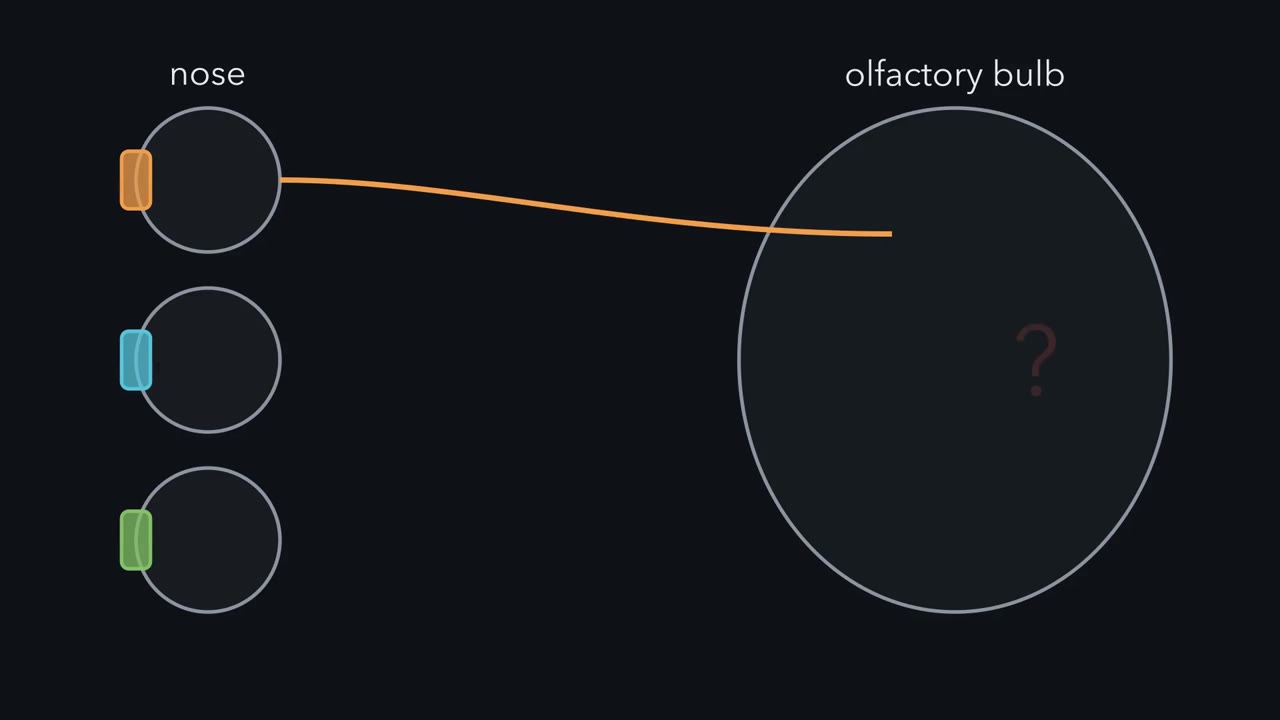
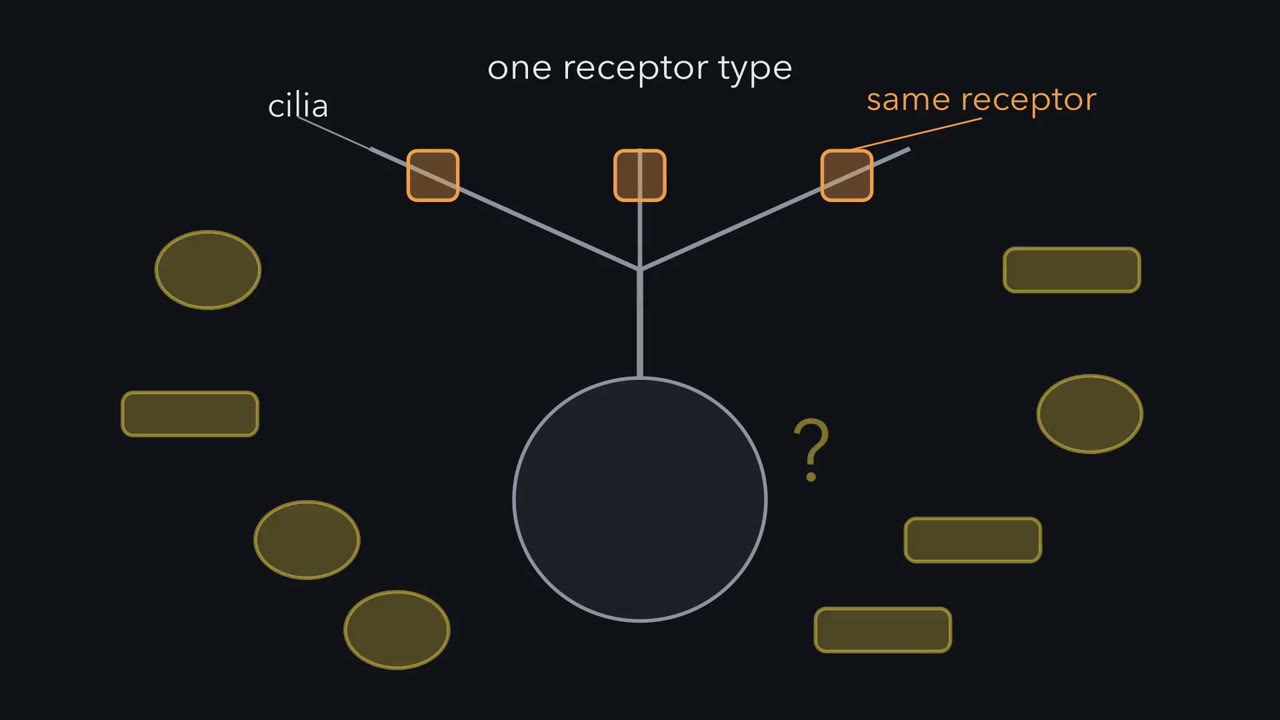
A mouse olfactory neuron holds about a thousand receptor genes and uses one copy of one. How does it choose, and what keeps it from changing its mind?
Continue in the lesson: One Receptor per Neuron: How Olfactory Neurons Choose →
3:03 · Free, with captions and a transcript. The lesson has the full text, the questions and the sources.
More films from this lesson
How this film was made. Narration: an AI narrator voice (Kokoro, af_heart) reading narration written from this lesson's text. Animation: AI-generated in code (Manim) by Claude, a schematic with no drawn molecular structures. Captions come from the narration script. See something wrong? Report it.