Peel the Onion
Read the transcript of “Peel the Onion”
Film transcript: Peel the Onion
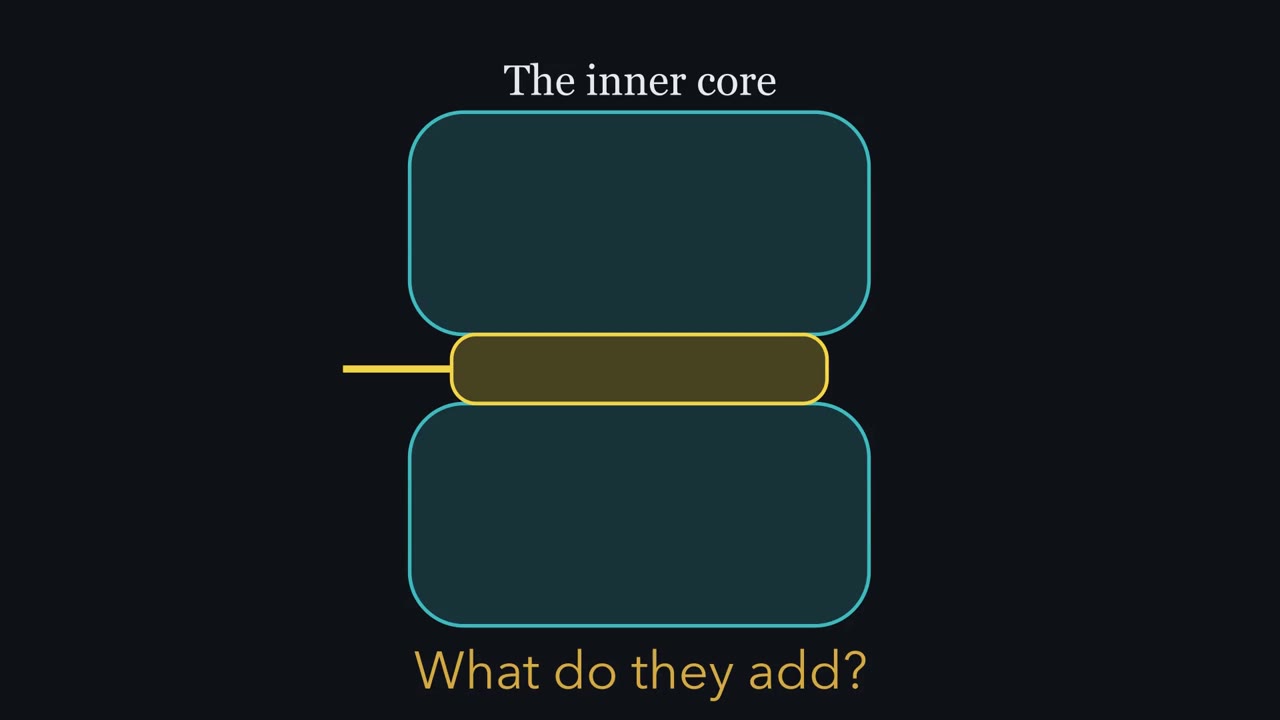
A Pacinian fibre typically fires at the press and at the release. In between, it is silent. Where does that brevity come from? There are three suspects. First, the capsule. Its onion of layers could absorb a held press before it reaches the ending. Second, the ending's channels. They could open at the press, then close while the press is still held. Third, the spike generator. It could stop firing even while the ending stays depolarized. Two terms. The generator potential is the ending's graded depolarization, driven by the transduction current. Impulses are the all-or-none action potentials it triggers further along the axon. The classic suspect was the capsule.
In 1966, Loewenstein and Skalak modelled it as fluid between elastic layers. Follow one press. At the instant of the press, the fluid cannot move fast enough. The ending is squeezed. During the hold, the fluid flows and the stretched layers take up the load. The core relaxes. At the release, the layers spring back and jolt the core a second time. So, in this model, the capsule strongly damps steady pressure and passes quick change. That is a high-pass filter. A year earlier, in 1965, Loewenstein and Mendelson peeled most layers from cat corpuscles. Then they pressed and held. Predict. If the capsule did all the work, what should now last through the hold?
Only half of it. The generator potential decayed much more slowly, mainly under intense compression. But the impulses did not persist. The ending typically still fired a single spike. So brevity had two stages. One is the mechanics around the ending. The other is the spike-generating membrane. In 2025, researchers recorded at the ending itself. They used bill skin from duck embryos. They removed the onion, and kept the inner cells that hug the ending. Predict. If the onion sets the brief response, what should happen to the ending's current?
It stayed fast. And the fibre's frequency tuning did not change significantly. The current did grow larger. So the onion may still damp the force that arrives. How do the two results fit? In the duck, currents slowed only as stripped endings deteriorated. So a damaged, dying ending can look like one that has lost its filter. That is one reading. Keep this. In this duck preparation, the ending stayed fast without the outer core. So fast adaptation does not need the onion there.
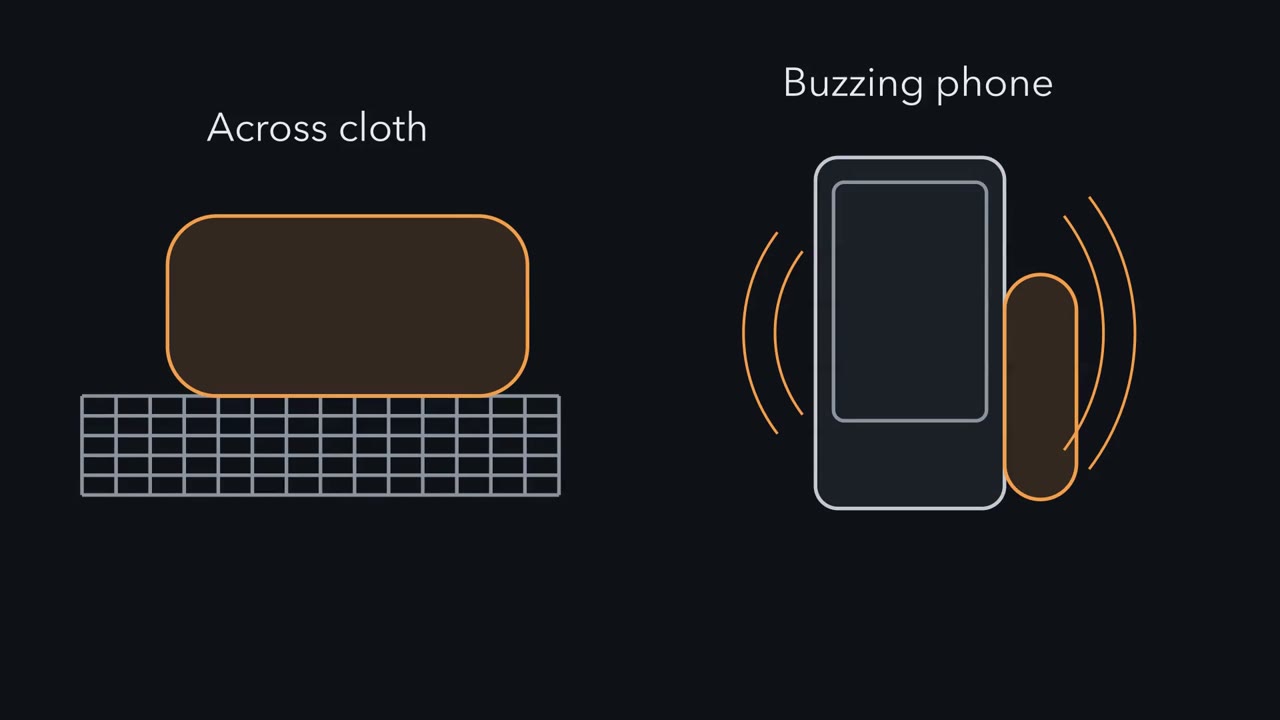
Slide a fingertip across cloth and Meissner corpuscles report the movement; hold a buzzing phone and Pacinian corpuscles report the hum. Each is a nerve ending wrapped in cells that help it feel. How do the two split the work of sensing change?
Continue in the lesson: Meissner and Pacinian Corpuscles: Flutter and Vibration →
3:20 · Free, with captions and a transcript. The lesson has the full text, the questions and the sources.
More films from this lesson
How this film was made. Narration: an AI narrator voice (Kokoro, af_heart) reading narration written from this lesson's text. Animation: AI-generated in code (Manim) by Claude, a schematic with no drawn molecular structures. Captions come from the narration script. See something wrong? Report it.