Films · Developmental Neuroscience
Too Few: the Spindle and a Virus
Read the transcript of “Too Few: the Spindle and a Virus”
Film transcript: Too Few: the Spindle and a Virus
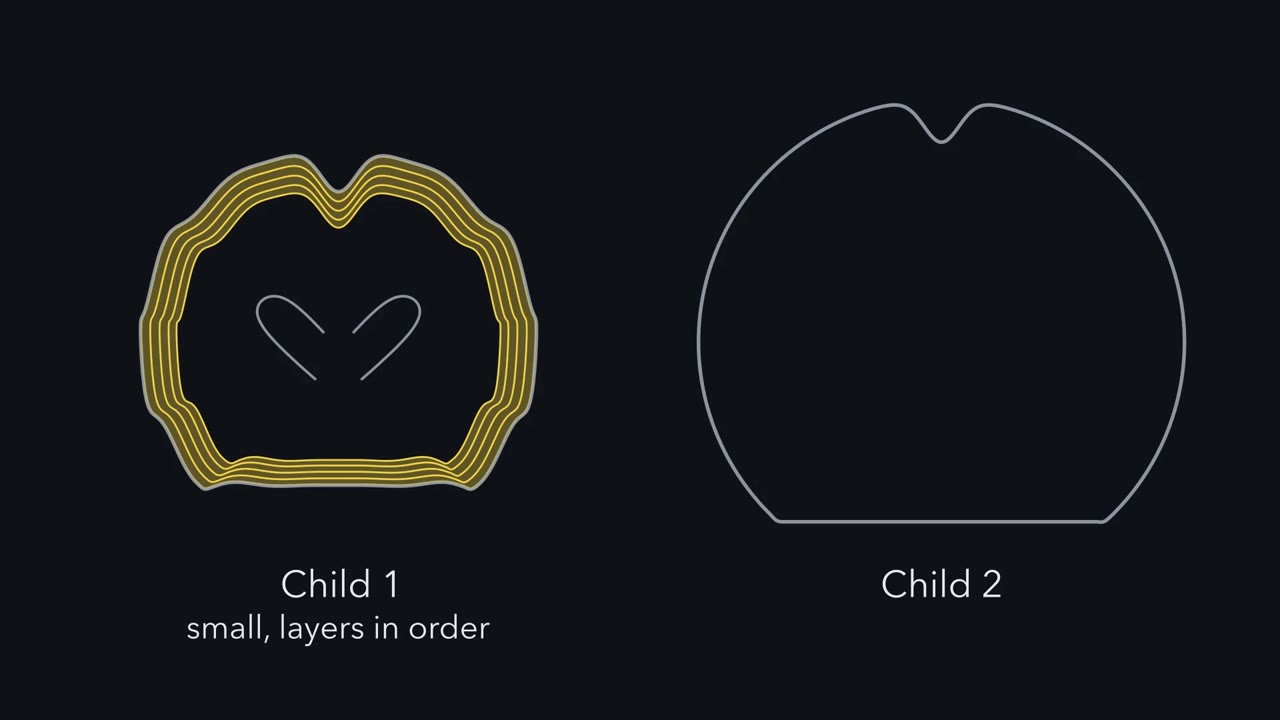
Why would a protein of the cell's spindle shrink the brain more than other organs? Primary microcephaly is recessive. The brain is small, and its layers are usually broadly in order. Most of its genes, such as ASPM, make proteins of the spindle pole. Radial glial progenitors are tall and thin, with a small patch facing the ventricle. In early divisions, the cleavage plane affects how that patch is shared. Tilt the spindle, and one daughter can get it all. That can change what the daughters become. But a daughter without the patch can still divide, as a progenitor away from the ventricle. In mouse embryos, knocking down Aspm tilted the division plane, and shifted divisions away from making progenitors.
In mouse progenitors, delayed mitosis can also trigger a death that depends on p53, a sensor of cell stress. And if a fault recurs round after round, it compounds. Predict. A child with no working ASPM has a markedly small brain, but mice lacking the gene have only a mild reduction. Ferrets have a folded cortex, rich in outer radial glia. Those are progenitors that have left the ventricle but keep dividing. Knock the gene out in a ferret. Less shrinkage, the same, or more?
Much more. The authors traced it to radial glia leaving the ventricle too early. A second reading, still a hypothesis, is that more rounds mean more compounding. Now Zika. How do you show a virus causes a birth defect, without testing it in pregnant women? Epidemiology. Microcephaly rose after the virus, in time and place. That shows association, not cause or mechanism. Pathology. Virus was found inside a damaged fetal brain. On its own, that cannot show the virus did the damage. The laboratory. The virus infected human cortical progenitors most readily, killing some and slowing the rest. A dish cannot show the risk in a pregnancy. Predict. The first study used an old Ugandan strain, kept for decades in the lab.
What would a skeptic say? That it might not act like the epidemic virus. Later work with epidemic strains agreed. In 2016, a review against formal criteria concluded that Zika causes microcephaly. Two cautions. Most infections in pregnancy do not produce microcephaly. And the virus also damages tissue already built.
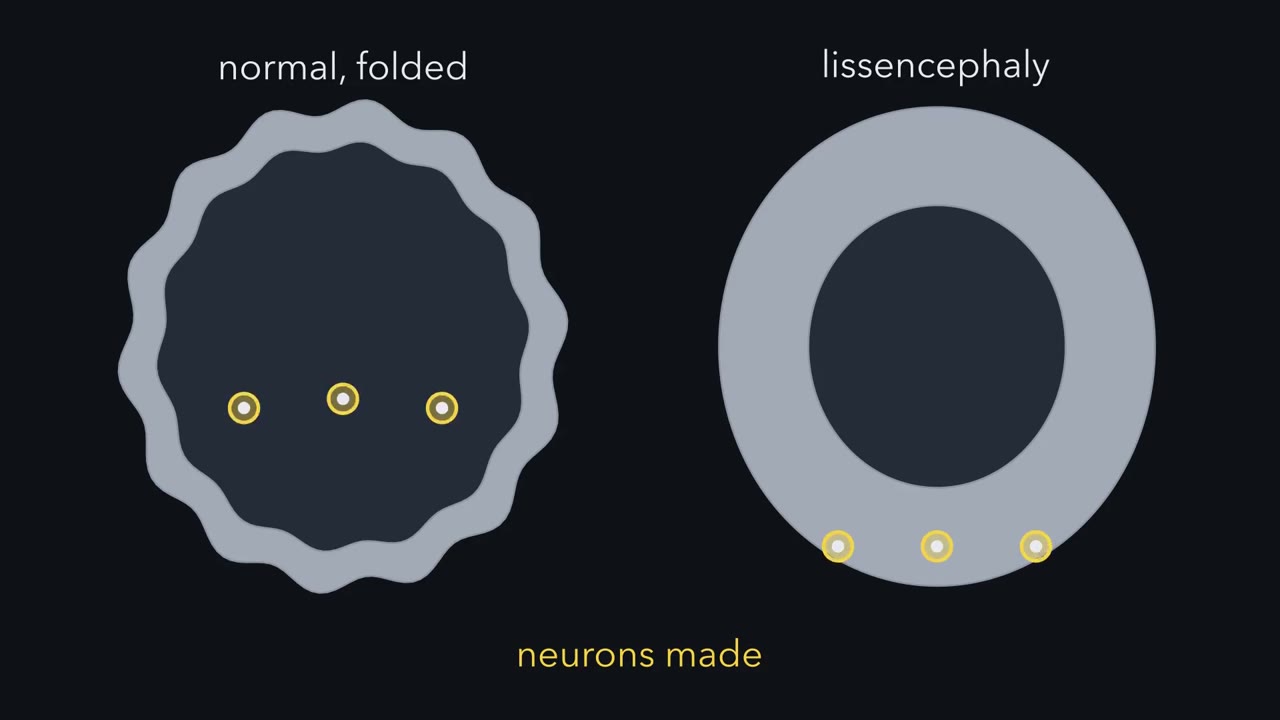
So a spindle-pole gene, or a virus that finds the same cells, can leave too few neurons.
Why does the same doublecortin mutation give a boy a smooth brain and his mother a second band of cortex?
Continue in the lesson: When Building Goes Wrong: Microcephaly, Zika and Lissencephaly →
3:14 · Free, with captions and a transcript. The lesson has the full text, the questions and the sources.
More films from this lesson
How this film was made. Narration: an AI narrator voice (Kokoro, af_heart) reading narration written from this lesson's text. Animation: AI-generated in code (Manim) by Claude, a schematic with no drawn molecular structures. Captions come from the narration script. See something wrong? Report it.