Films · Developmental Neuroscience
Neighbours Compare
Read the transcript of “Neighbours Compare”
Film transcript: Neighbours Compare
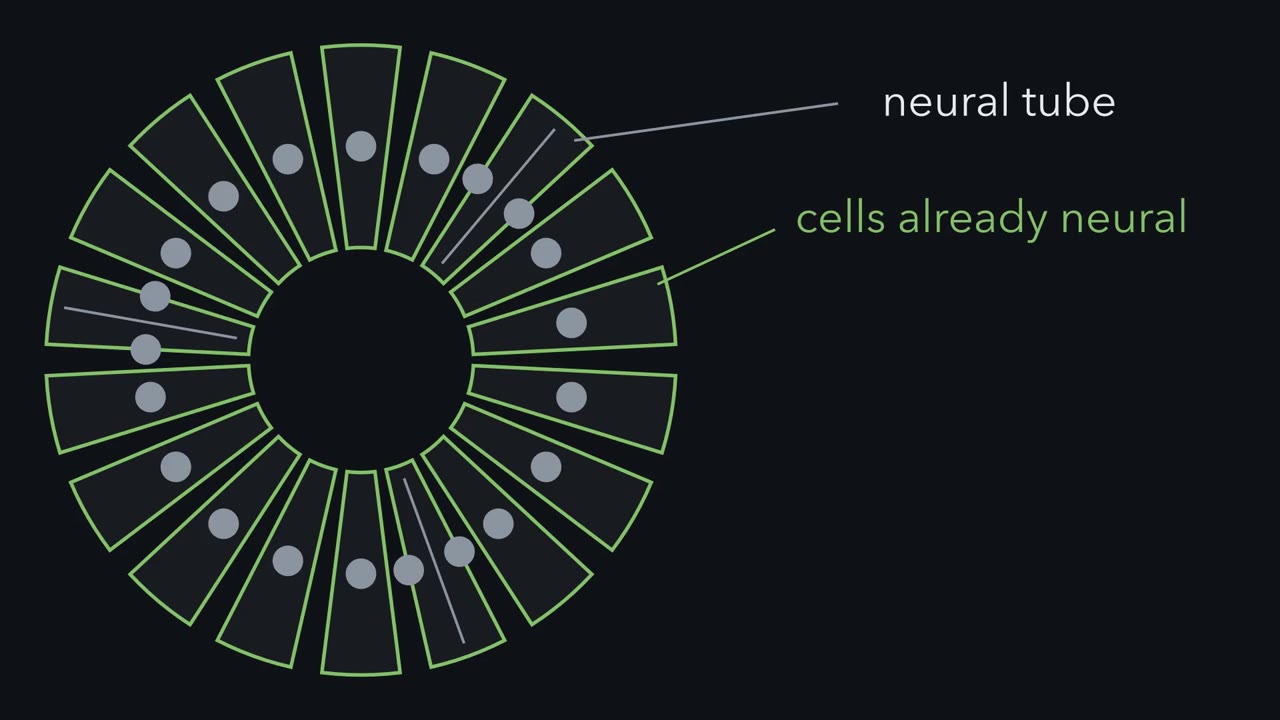
The model says cells compare their signals. How do we know real cells do? By the late 1980s, one thing was clear. Embryos lacking Notch or Delta make too many neural cells. What was not clear was how two neighbours, both carrying the receptor and the ligand, make the choice. Start on the embryo map. Fly embryos lacking Notch or Delta make far too many neuroblasts. They also make too little epidermis on their underside. Genes like these are called neurogenic. Without the receptor, no cell can be told, not you. Now the notum. In 1991, Pascal Heitzler and Pat Simpson made fly mosaics. Patches of mutant cells, or cells with a different level of Notch activity, lay beside normal cells.
Then they asked which cells at the patch borders became precursors. Cells mutant for Notch became neural on their own. Predict. What about cells mutant for Delta, beside normal cells? They did not become neural on their own. They still had Notch, so normal neighbours could still say, not you. Losing the receptor and losing the ligand are not the same. Predict again. A normal cell sits beside cells with less Notch activity than its own. What does it become?
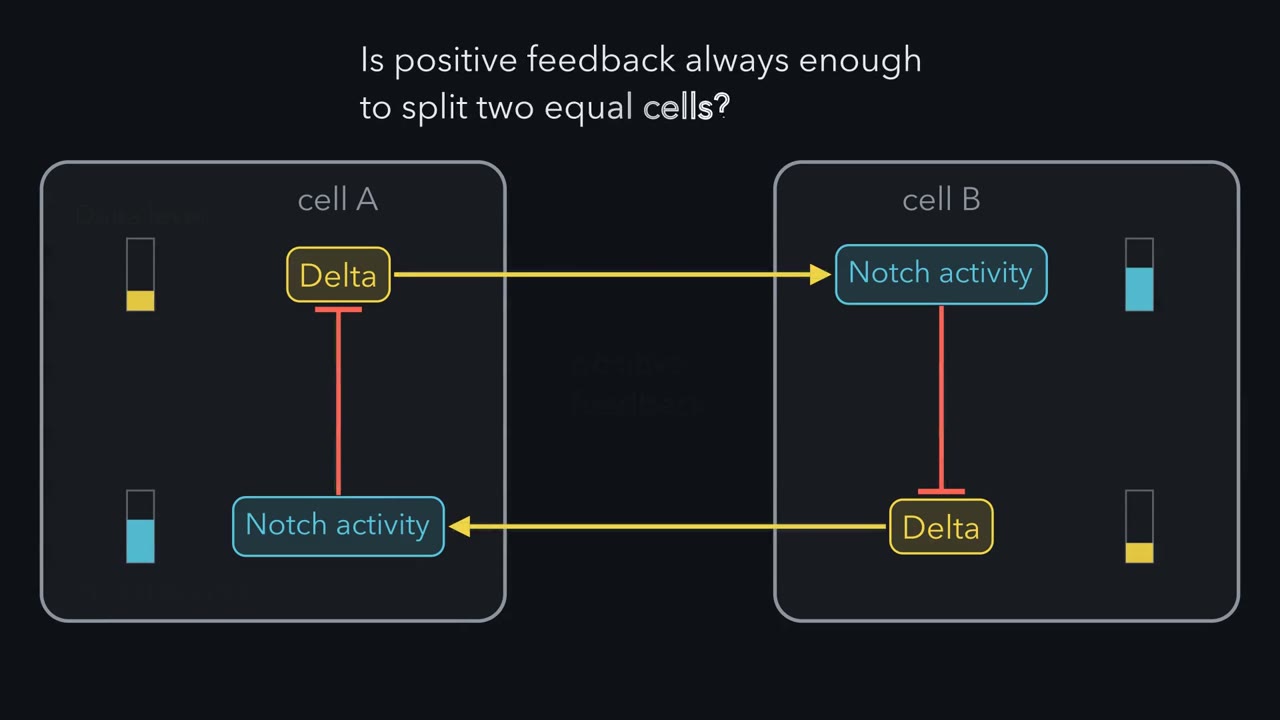
It became epidermis. Beside cells with more Notch activity than its own, the same cell became a neural precursor. In these mosaics, a cell's fate depended on its Notch activity relative to the cells beside it. Take the pair from chapter three, and give cell A half the normal Notch. hears its neighbour less, keeps more proneural factor, and wins. That is the logic of the mosaics, in miniature. Heitzler and Simpson argued that the cells compete, and that Notch receives an inhibitory signal from the precursors. That picture of lateral inhibition with feedback was later written as a mathematical model. That answers the second puzzle, with one qualification.
In a sheet, the loop alone gives spaced winners. Neighbours compare their Notch signals, and the comparison helps decide which cell wins.
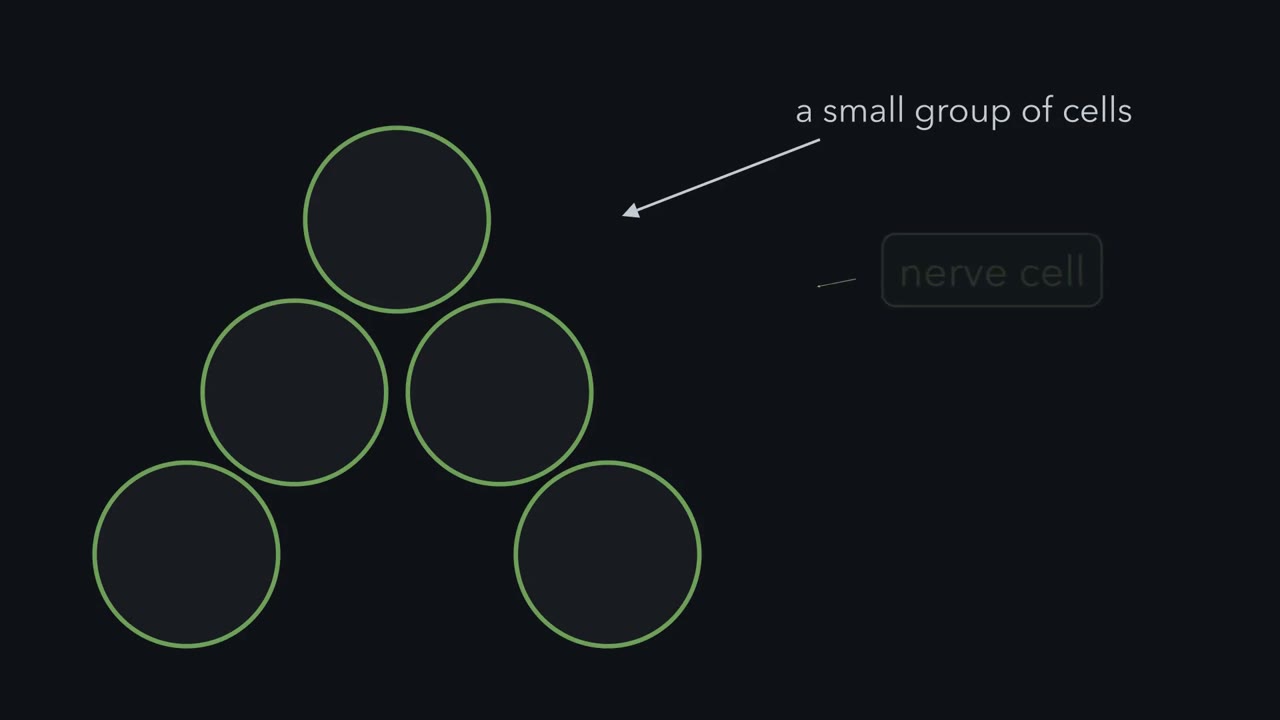
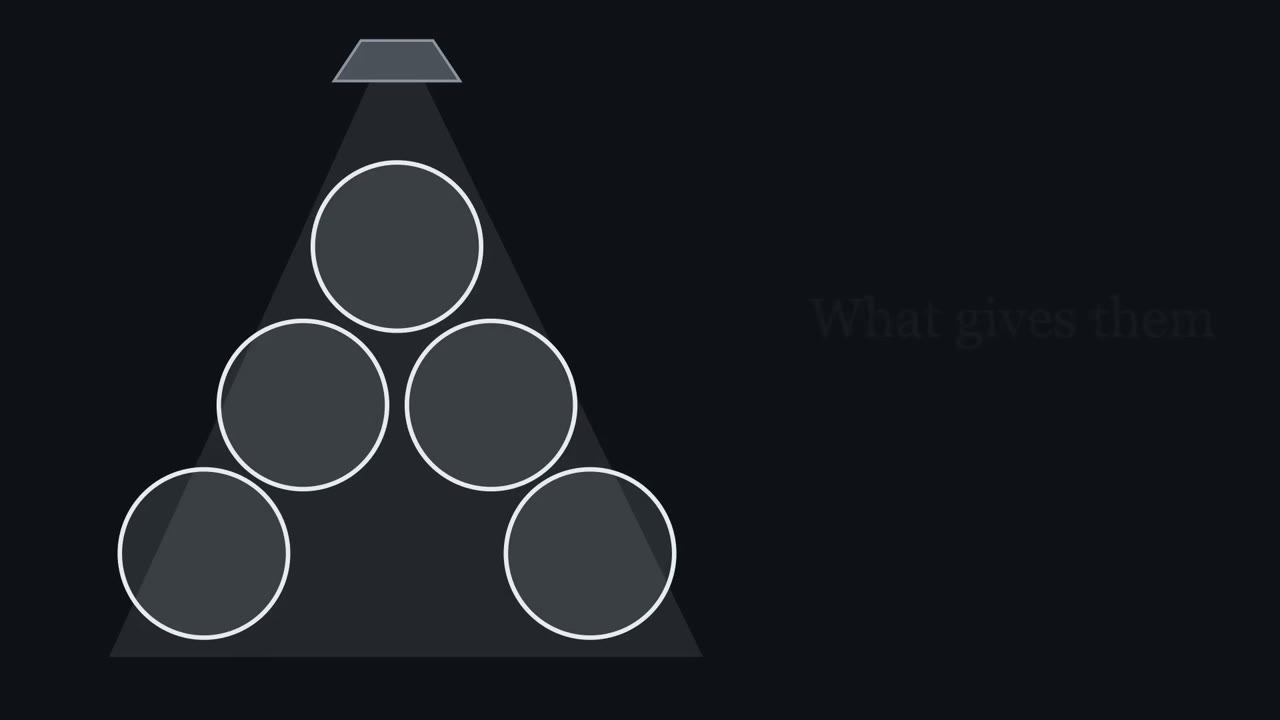
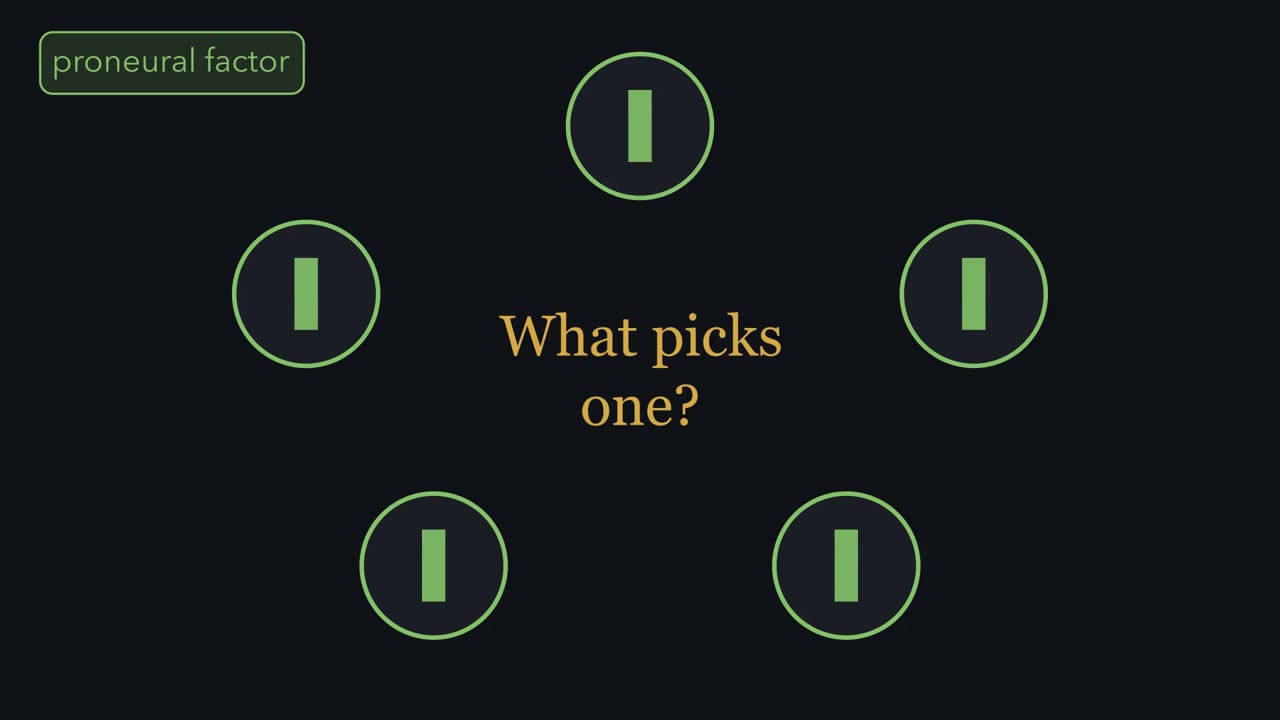
Every cell in the cluster could become the neuron. Why does only one?
Continue in the lesson: Proneural Genes and Lateral Inhibition →
2:39 · Free, with captions and a transcript. The lesson has the full text, the questions and the sources.
More films from this lesson
How this film was made. Narration: an AI narrator voice (Kokoro, af_heart) reading narration written from this lesson's text. Animation: AI-generated in code (Manim) by Claude, a schematic with no drawn molecular structures. Captions come from the narration script. See something wrong? Report it.