Which Taste, and How Good?
Read the transcript of “Which Taste, and How Good?”
Film transcript: Which Taste, and How Good?
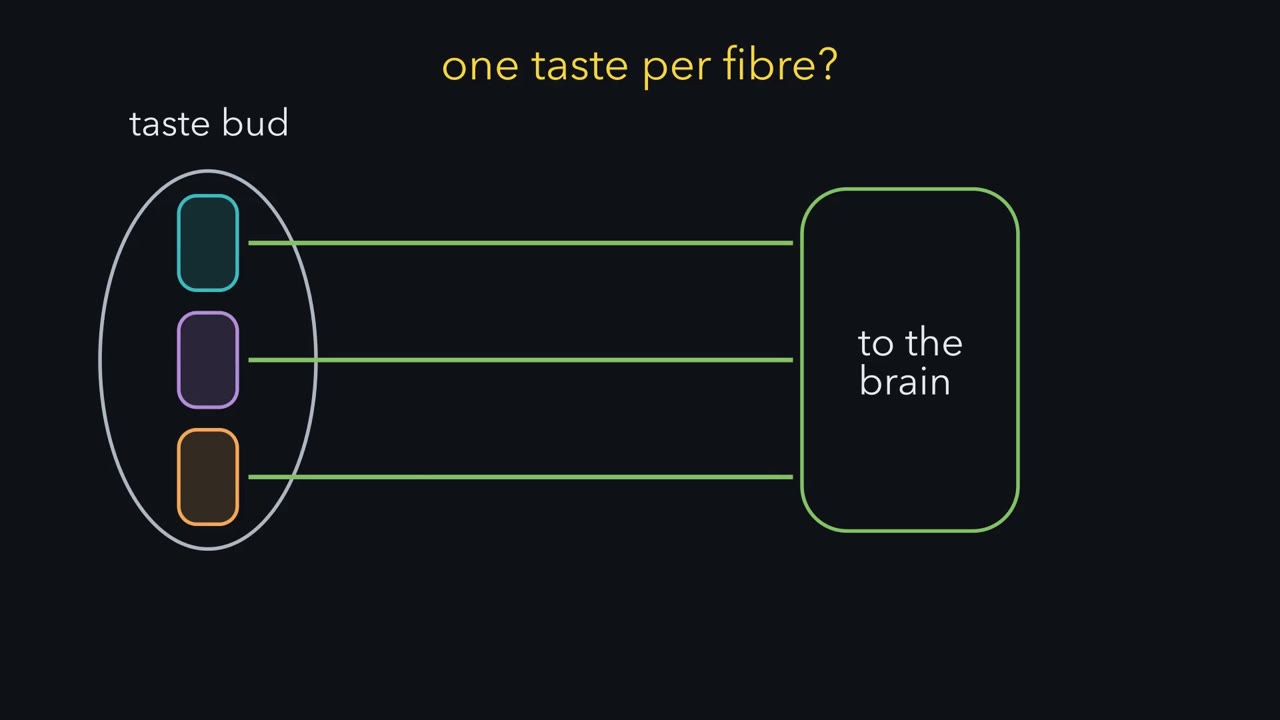
A mouse licks sugar water and keeps licking. What has its brain just worked out? Two questions hide in that licking. Which taste does its brain register? And how much does the mouse want it? Are those one signal or two? And where can they be pulled apart? Call the first one identity: which taste it is. Call the second one value: whether the animal is drawn to it or turns away, and how strongly. Its good-or-bad sign is called valence. Taste cells are not neurons. They must hand their news to a fibre. In mice, type II cells include populations that respond mainly to sweet, to bitter or to umami. Some cells respond to more than one. Type III cells sense acid.
They make conventional synapses onto the fibre. Type II cells have no conventional vesicular synapse. They release ATP through a channel. On its own, the main channel subunit opens slowly in cultured cells. Its time constant is over half a second. A type II cell's spike is brief. Can a gate that slow keep up?
Barely. Adding a partner subunit speeds opening to about ten milliseconds. These are cultured-cell times, not delays in a living mouse. in mice lacking that partner, taste buds released no ATP in response to tastes. Fibres from the front of the tongue have their cell bodies in the geniculate ganglion. In rodents, signals then climb through brainstem relays and the thalamus to taste cortex, and on to the amygdala. The experiments here sample three stations: the ganglion, the cortex and the amygdala. Here is the one idea. In the mouse, identity begins with which taste-cell population is driven. Many fibres pass that on selectively at low strength, and more broadly at high strength. Not all of them broaden.
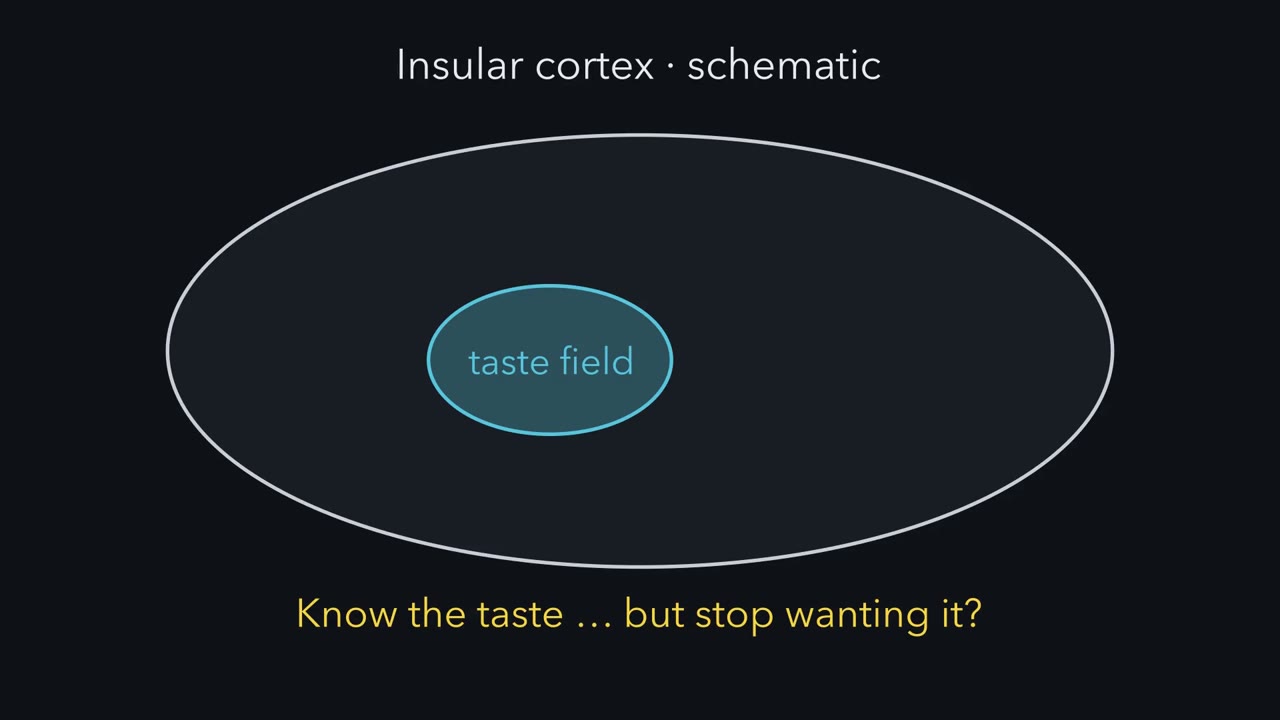
Drive the sweet field of taste cortex, and a mouse is drawn in. Block that field, and trained mice struggle to recognize sweet. Drive the bitter field, and it turns away. Then one manipulation pulled those two readouts apart. Silence the amygdala, and mice still recognize sweet. But driving sweet cortex no longer draws them in. And the pull changes with what the body needs. The experiments here are in mice. None of this is a human map. Which taste, and how good: one cortical field bears on both, and silencing the amygdala separates them in these mouse assays.
A mouse licks sugar water and keeps licking. Which taste does its brain register, and how much does the mouse want it? Are those one signal or two, and where can they be pulled apart?
Continue in the lesson: Taste from Tongue to Cortex →
2:55 · Free, with captions and a transcript. The lesson has the full text, the questions and the sources.
More films from this lesson
How this film was made. Narration: an AI narrator voice (Kokoro, af_heart) reading narration written from this lesson's text. Animation: AI-generated in code (Manim) by Claude, a schematic with no drawn molecular structures. Captions come from the narration script. See something wrong? Report it.