Which Sense Do You Believe?
Read the transcript of “Which Sense Do You Believe?”
Film transcript: Which Sense Do You Believe?
You grip a bar and look at it. Your eyes and your hand disagree about its height. Which do you believe? These numbers are made up. Your eyes say 50 mm. Your hand says 54 Each sense is a ruler that wobbles. Here vision wobbles less. Its standard deviation is 2 mm. Touch wobbles more, with a standard deviation of 4 Predict. Should one combined answer land halfway, or nearer one sense?
It lands much nearer vision, at 50.8 mm. Each weight is set by reliability, one over the variance. Vision gets a weight of 0.8. Read it another way. Start at vision, then move a fifth of the way toward touch. The combined answer is also steadier than either sense alone, if their errors are independent. Now blur the picture, until vision wobbles twice as much as touch.
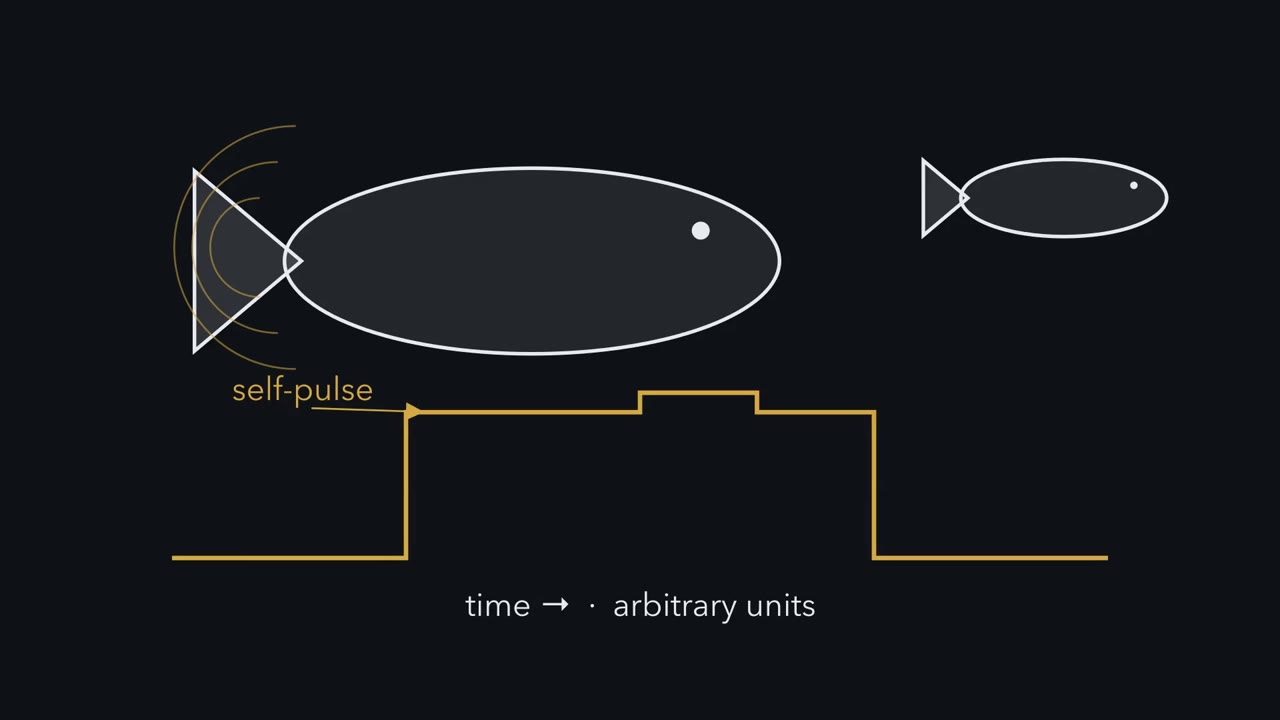
Where does the answer go? The weights swap. The answer moves to 53.2 mm, much nearer touch. Alais and Burr found this reversal for sound and sight. Severe blur let sound capture the perceived location. Ernst and Banks tested the rule in four people, judging bar height by sight and by touch. Predictions built from each person's single-sense judgements closely resembled the combined ones. One task, four people, a behavioural fit. It does not show where in the brain. Now one more fact. Some of what your senses report is caused by you. Here is the one idea. A signal is worth what it tells you about the world. For one event, the more reliable sense counts for more.
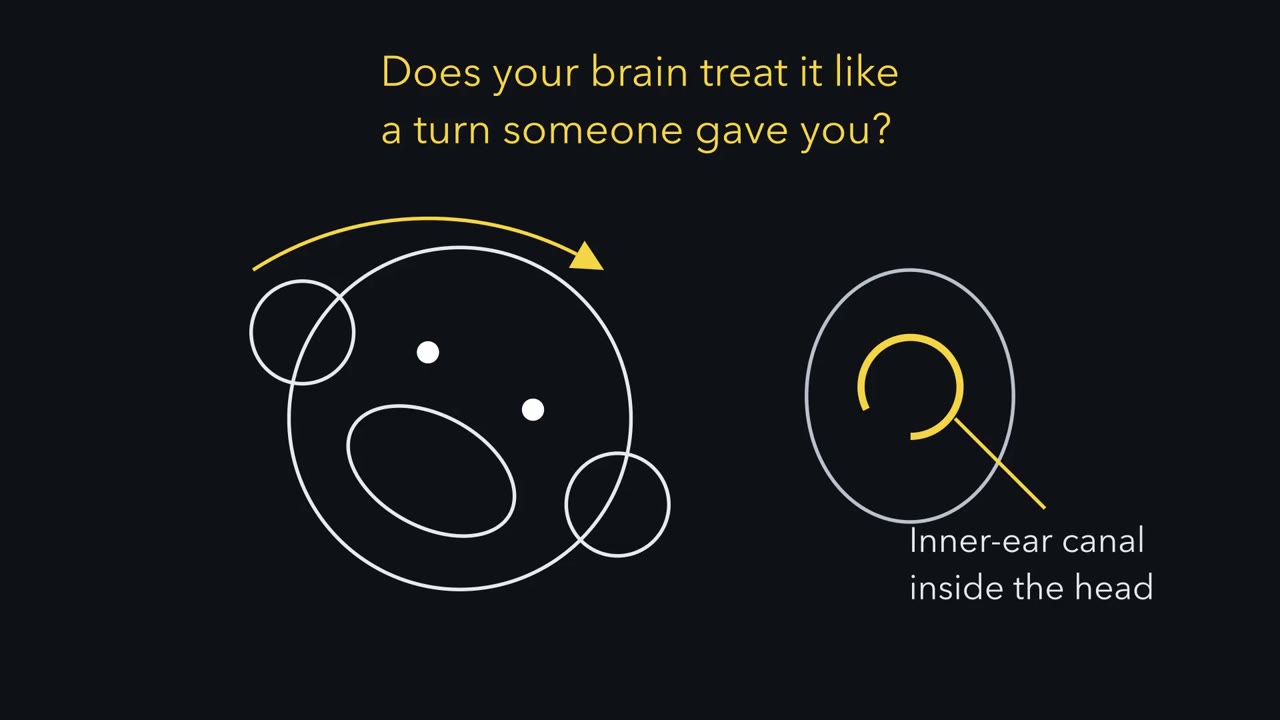
Part of what you sense is the predictable result of your own movement. Some pathways subtract a prediction of it. Take this with you. Weigh each sense by its reliability. Then ask which predictable results of your own movement get subtracted.
Your senses disagree, and some of what they report is only the result of your own movement. How does a nervous system decide which sense to trust, and what to subtract? Subtracting self-generated input is one candidate explanation for why you can hardly tickle yourself, though the full answer is not settled.
Continue in the lesson: Combining Senses and Predicting Them →
2:32 · Free, with captions and a transcript. The lesson has the full text, the questions and the sources.
More films from this lesson
How this film was made. Narration: an AI narrator voice (Kokoro, af_heart) reading narration written from this lesson's text. Animation: AI-generated in code (Manim) by Claude, a schematic with no drawn molecular structures. Captions come from the narration script. See something wrong? Report it.