The Cells That Help It Feel
Read the transcript of “The Cells That Help It Feel”
Film transcript: The Cells That Help It Feel
Peel away the onion, and cells still hug the nerve ending. What do they add? First, the settled step. In mice, force opens a channel called Piezo2, in the sensory axon itself. Delete it from the wrapping cells, and touch responses stay.
But the wrapping cells feel force too. In duck bill corpuscles, they carry their own mechanically activated currents. In duck Grandry corpuscles, the Meissner type, depolarizing one wrapping cell could make its fibre fire, after a variable delay.
In mice, switching Pacinian wrapping cells on with light drove the fibre. Switching them off meant a vibration had to be about five times larger to be detected. So these cells contribute to detection. How they normally do it is not yet known. A 200 Hz vibration repeats every 5 milliseconds. In duck Grandry corpuscles, delays ran from 20 milliseconds to about 9 seconds. Predict. Could those cells be passing on each cycle?
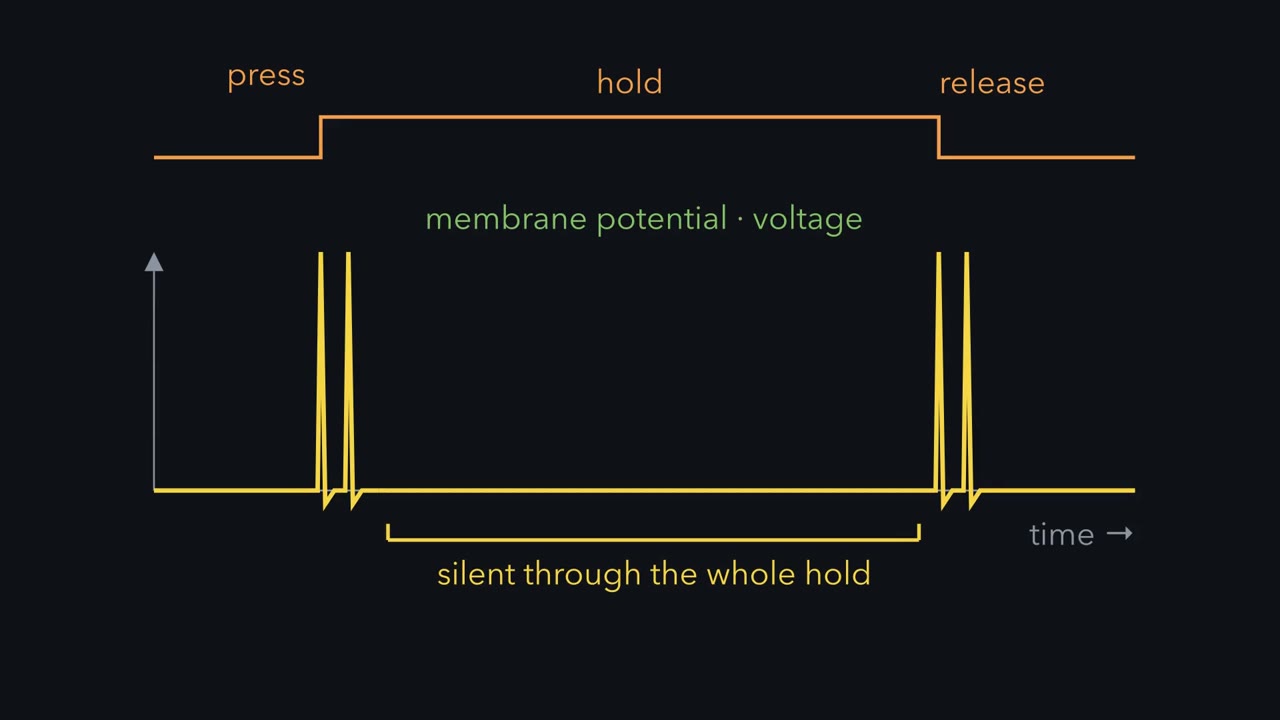
A steady delay could shift every cycle, so delay alone cannot rule it out. But the slow, scattered firing suggests a supporting role. Those delays followed electrical depolarization of a wrapping cell, not vibration. Passing each cycle needs a direct test. For Pacinian wrapping cells, the question is open. Meissner corpuscles hold a surprise too. In mice, most hold two molecularly distinct nerve fibres, told apart by genetic labels. Mice lacking TrkB in sensory neurons from development grew up without Meissner corpuscles. They needed about twice the push to detect a touch. They still detected stronger pushes. So these corpuscles help set sensitivity, but in this experiment detection survived without them.
In freely moving mice, Pacinian neurons fired during the mouse's own movements. The most sensitive also answered vibrations from a tap on the branch 2.5 metres away. Two detectors of change, each a nerve ending and the cells that help it feel.
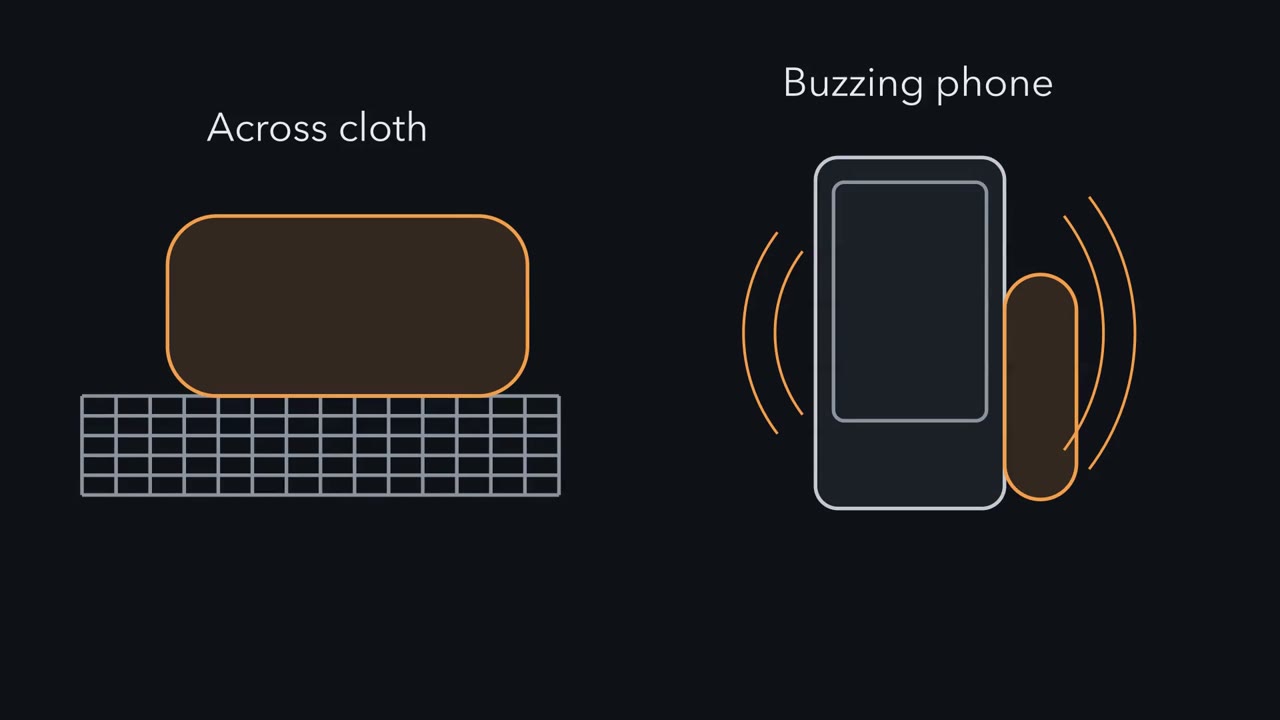
Slide a fingertip across cloth and Meissner corpuscles report the movement; hold a buzzing phone and Pacinian corpuscles report the hum. Each is a nerve ending wrapped in cells that help it feel. How do the two split the work of sensing change?
Continue in the lesson: Meissner and Pacinian Corpuscles: Flutter and Vibration →
2:43 · Free, with captions and a transcript. The lesson has the full text, the questions and the sources.
More films from this lesson
How this film was made. Narration: an AI narrator voice (Kokoro, af_heart) reading narration written from this lesson's text. Animation: AI-generated in code (Manim) by Claude, a schematic with no drawn molecular structures. Captions come from the narration script. See something wrong? Report it.