Films · Developmental Neuroscience
Too Much Protein
Read the transcript of “Too Much Protein”
Film transcript: Too Much Protein
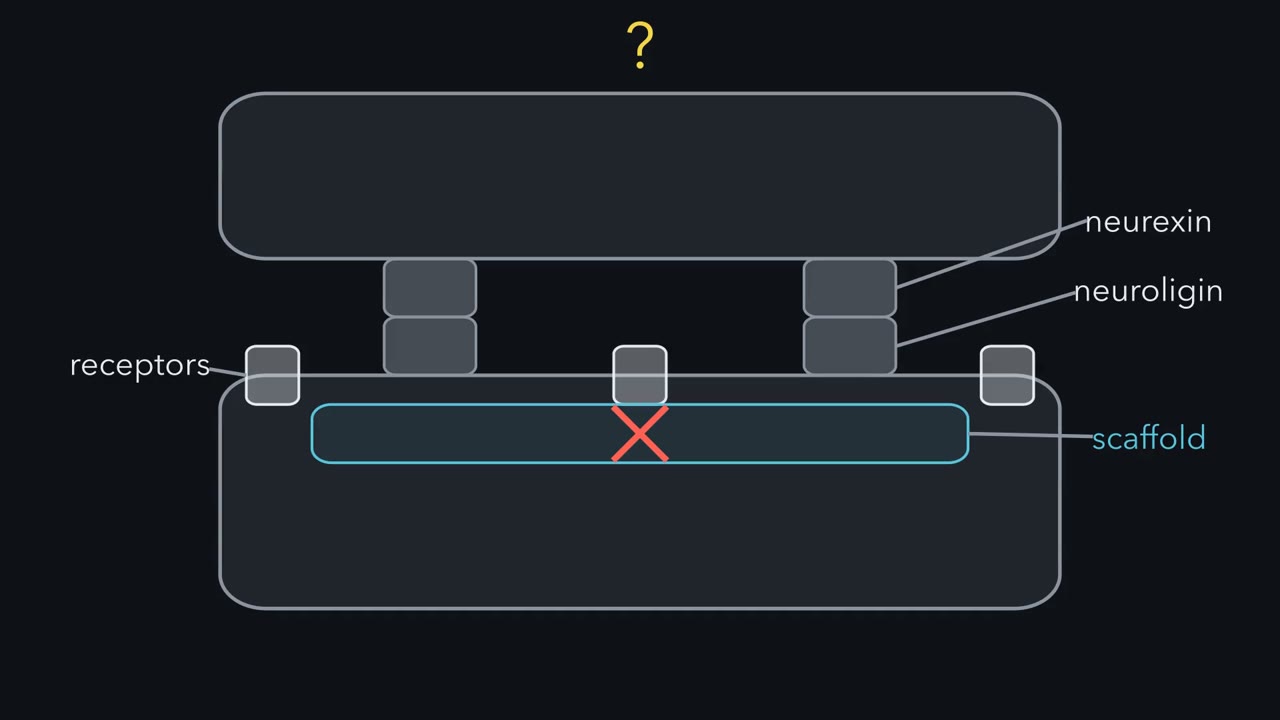
What happens to a synapse when the brake on its own protein making is gone? Fragile X syndrome is the most common inherited cause of intellectual disability. Its cause is a three-base repeat, CGG, near the start of the FMR1 gene. Above about 200 copies, the gene is usually silenced. So little or no FMRP is made. It binds RNA and holds back translation. Dendrites carry their own ribosomes, so synapses can make protein within minutes. FMRP is a brake on that. One signal that releases the brake comes through a glutamate receptor, mGluR5. In hippocampal slices, activating that class of receptor makes synapses weaken for hours. This long-term depression normally needs new protein.
Predict. Take the brake away. What happens to that weakening? And does it still need new protein? In fragile X mice, the weakening is exaggerated. Later work found it no longer needs new protein. Normally, the weakening waits for new protein. Without the brake, the usual reading goes, that protein is already there in excess. In 2004, Bear, Huber and Warren proposed the mGluR theory. Without FMRP, the receptor drives too much protein synthesis, and many features follow. Predict. If too much receptor signalling causes the traits, what should halving the receptor do?
In 2007, Gül Dölen and Bear bred fragile X mice with one working copy of the receptor gene. Protein synthesis, spine density and sound-triggered seizures all moved toward typical. Halving the receptor shows the two genes interact. It may be part of the cause, or it may offset the defect another way. Now a different late test, with a drug. In adult fragile X mice, chronic treatment with a receptor blocker corrected many traits. So in mice, the circuit could still be adjusted after it was built. The drug does not put FMRP back. Drugs like this were already being tested in people. Trials in adolescents and adults showed no benefit over placebo on the main measures.
A later trial in young children also found no benefit over placebo. Takeaway: a mouse rescue tests a mechanism, not a cure.
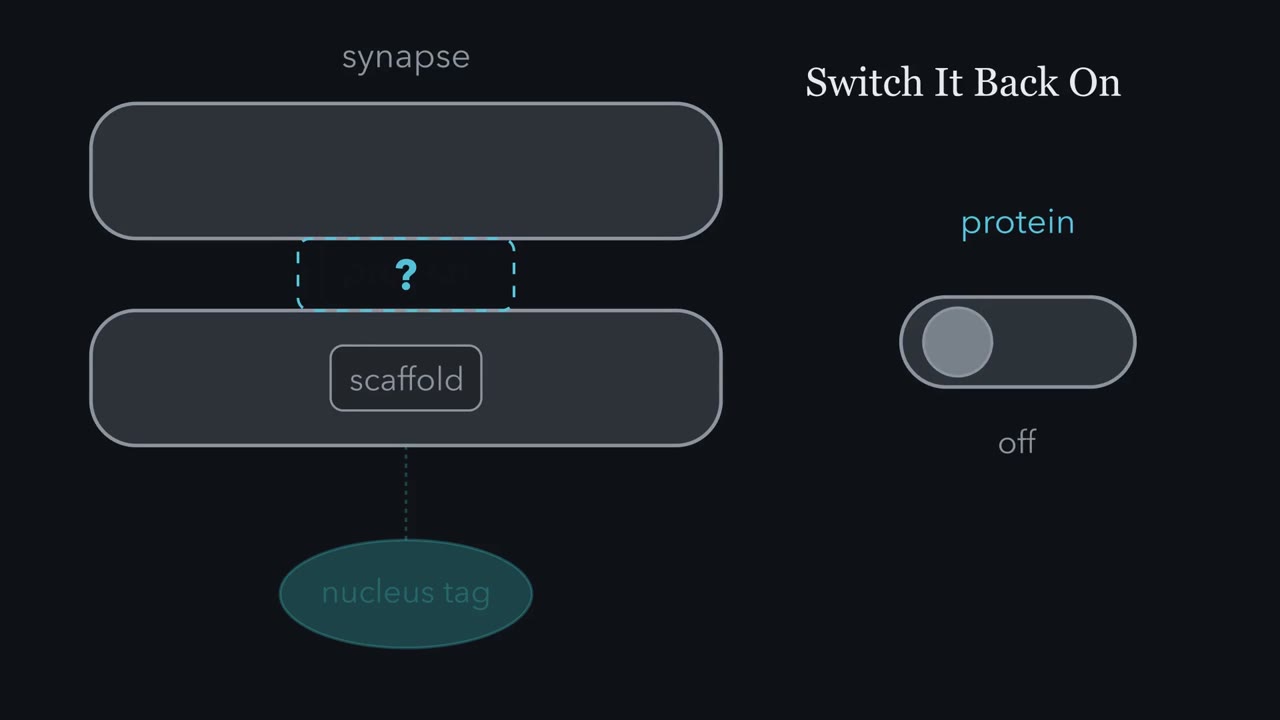
Switch a silenced gene back on in adult mice that already have symptoms, and many of the symptoms fade. If a circuit was built without a protein, is it wrong for good?
Continue in the lesson: Disorders of the Synapse: Built, Then Kept →
2:56 · Free, with captions and a transcript. The lesson has the full text, the questions and the sources.
More films from this lesson
How this film was made. Narration: an AI narrator voice (Kokoro, af_heart) reading narration written from this lesson's text. Animation: AI-generated in code (Manim) by Claude, a schematic with no drawn molecular structures. Captions come from the narration script. See something wrong? Report it.