Life Science · Skim version
Reproduction and Meiosis
Read the full lesson → Skim the whole course →
The guiding idea
Why does a strawberry runner grow into a copy of its parent, but brothers and sisters do not come out as copies of each other?
Sexual reproduction: meiosis halves chromosome number and makes mixes; fertilization restores pairs.
From the film: Copies, Halves, and Pairs
- Asexual reproduction has one parent and usually makes offspring with the same genetic information.
- Sexual reproduction joins two sex cells, usually one from each of two parents.
- Meiosis gives each sex cell one chromosome from each pair.
- Sexual reproduction: meiosis halves chromosome number and makes mixes; fertilization restores pairs.
From the film: How Chromosome Pairs Make Different Mixes
- Sexual reproduction: meiosis halves chromosome number and makes mixes; fertilization restores pairs.
- An allele is one version of a gene.
- Each chromosome pair sorts by chance, independently of the other pairs in this model.
- Different eggs and sperm usually carry different mixes of alleles.
- Mitosis makes matching body cells; meiosis makes sex cells with half the chromosomes.
-
Explore: sort chromosomes into sex cells
-
One parent or two sex cells
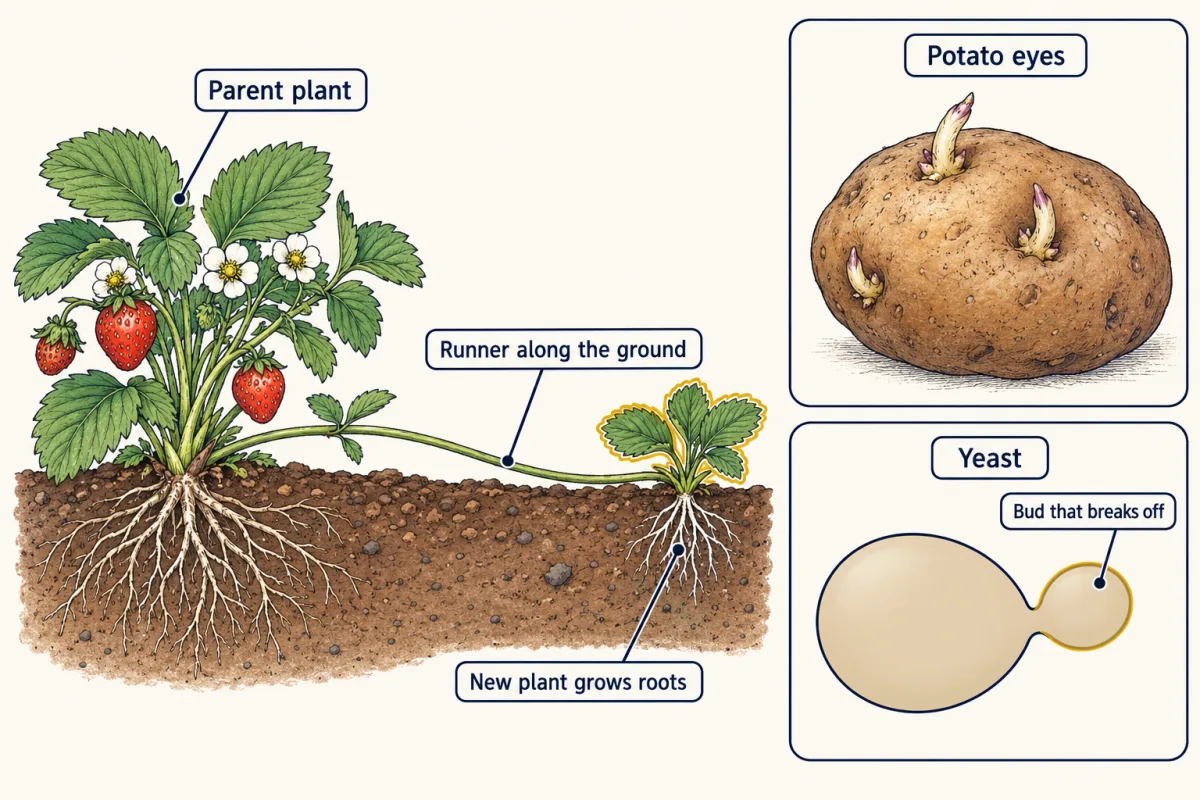
One-parent reproduction usually passes the same genetic information to each new plant or yeast cell. AI-generated illustration -
Halve, then restore: the human numbers
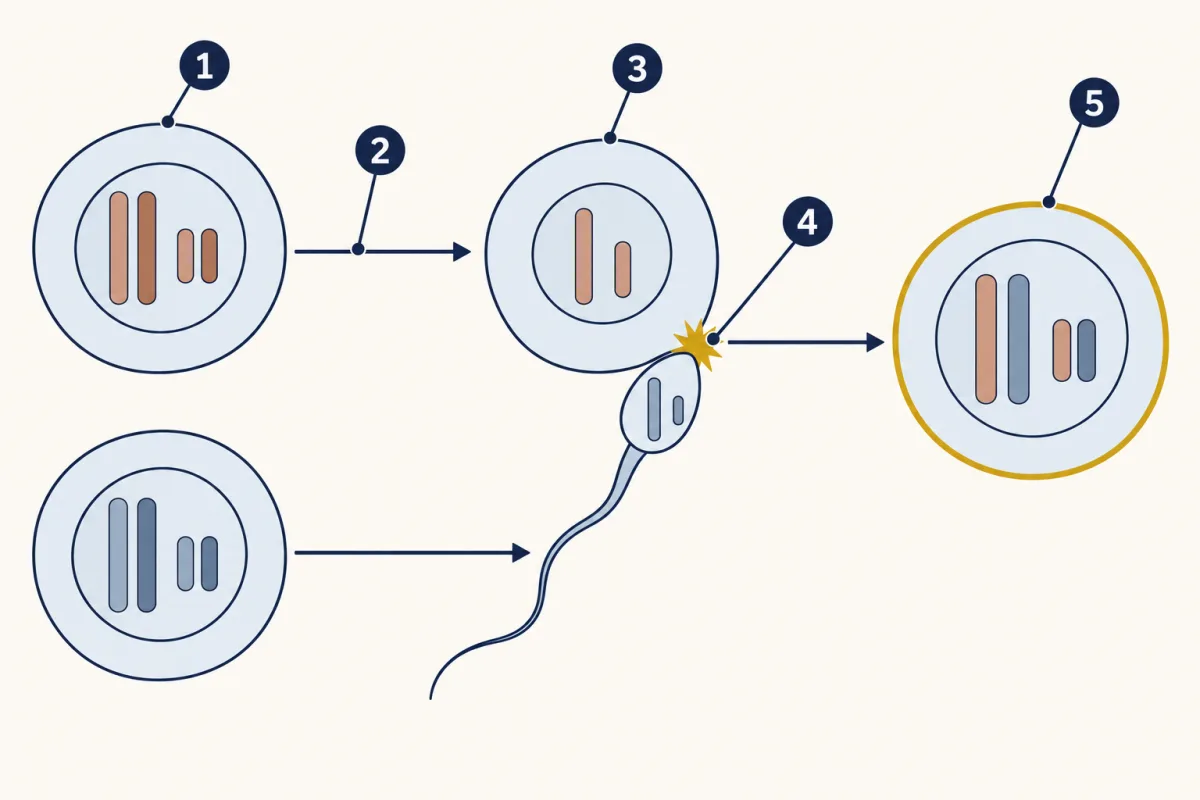
- parent cell
- meiosis
- sex cell
- fertilization
- fertilized egg
-
Count the mixes
-
Evidence: chromosome numbers across living things
-
Going deeper
-
Evaluate: check your thinking
Where this lesson fits
Before thisReview first
- How Cells DivideThis course · Lesson 4
You need mitosis from there to compare it with meiosis, which makes sex cells instead of matching body cells.
- DNA: The Code of LifeThis course · Lesson 27
You need to know that genes are stretches of DNA on chromosomes to follow how alleles are sorted.
After thisStudy next
- Predicting Traits with Punnett SquaresThis course · Lesson 29
It uses the chance sorting of alleles into sex cells to predict which traits offspring will show.
- Mutations and VariationThis course · Lesson 31
It builds on the mixes meiosis makes by asking where new variation in offspring comes from.
- Inherited or Acquired?This course · Lesson 30
It uses the idea that offspring get genes through sex cells to separate inherited traits from acquired ones.
Elsewhere on the siteFilms, simulations and method films in other courses
- Set Up: Like Their Parents, Not the SameFilm · Biology Together
A hands-on look at how offspring resemble their parents without being identical copies.
- How One Set Becomes TwoFilm · Biology
It shows how mitosis copies each chromosome so both new cells get a full set, the contrast to meiosis.
- Cross and countSimulation · Biology
You can cross parents and count offspring to see how separating alleles gives chances of each trait.
Suggested by an AI model from the lessons themselves, then checked. How we use AI