How One Set Becomes Two
Read the transcript of “How One Set Becomes Two”
Film transcript: How One Set Becomes Two
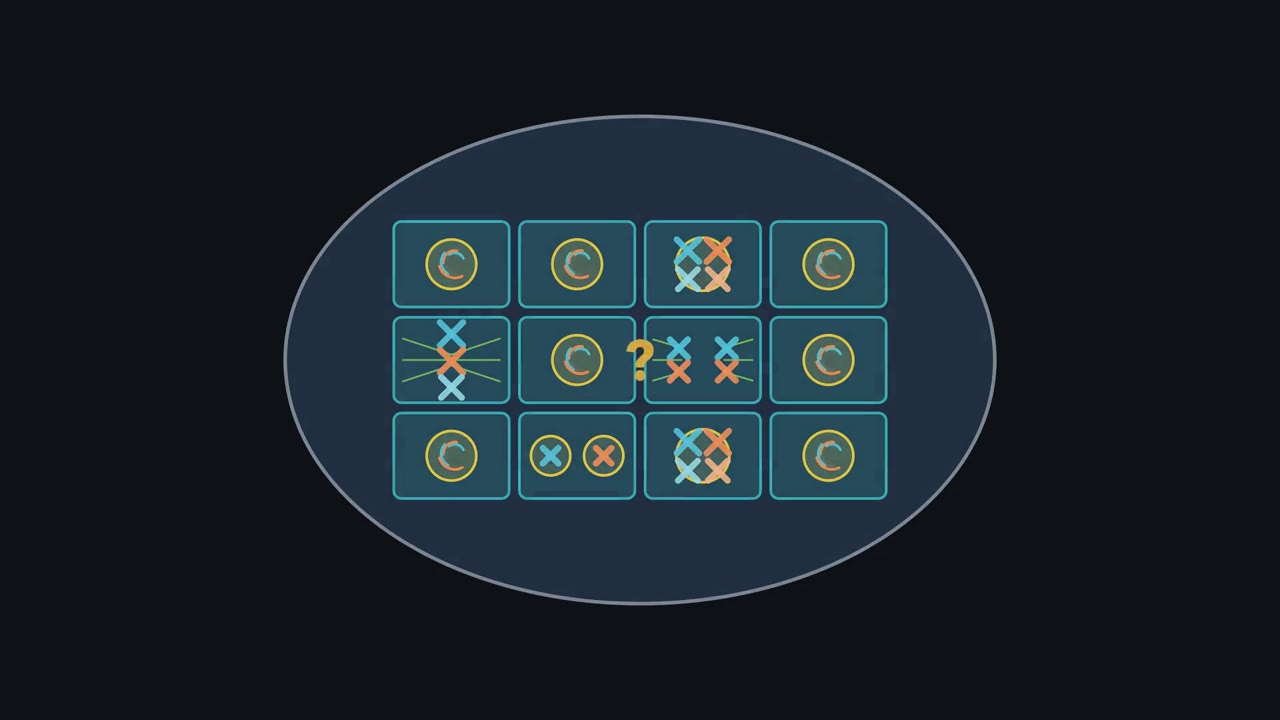
How can one cell become two without leaving either new cell with half a chromosome set? Watch one blue chromosome through the whole answer. Its partners will stay visible, but blue is our guide. A new cell enters G1, where it grows and does its everyday work. This busy stretch is interphase, not a rest. Next comes S phase, when the cell copies its DNA. G2 prepares the cell to divide. During S phase, every chromosome is copied. The blue rod becomes two matching blue sister chromatids joined at one centromere. Its partners copy too. The DNA amount doubles, but each joined pair still counts as one copied chromosome. Soon the copied chromosomes will line up across the cell's middle.
Where must the two blue sister chromatids go so both new nuclei receive a complete set? Hold your answer. The blue copies must move to opposite poles. The same is true for every copied chromosome. Copy each chromosome first; separate the copies so each nucleus gets one. That rule preserves the chromosome set through a typical mitotic division. M phase begins with mitosis, division of the nucleus. In prophase, the copied chromosomes coil into thick visible shapes. Green spindle fibers form. Near the end, the yellow nuclear envelope breaks down, opening access to the chromosomes. In metaphase, spindle fibers line the copied chromosomes across the middle.
Each sister chromatid faces a different pole. The row is not the goal. It is the setup that lets matching copies move in opposite directions. In anaphase, the sister chromatids separate at their centromeres. Spindle fibers pull one copy of every chromosome toward each pole.
Follow blue. One blue copy moves left, while its match moves right. Each separated chromatid now counts as a chromosome. In telophase, a complete set reaches each end. Yellow nuclear envelopes form, and the chromosomes loosen.
Mitosis has made two nuclei. Cytokinesis often begins in late anaphase or telophase. It divides the cytoplasm. An animal cell pinches inward; a plant cell builds a plate outward into a new wall. Notice what did not happen. The cell did not split its original chromosomes in half. It copied every chromosome before separation. That is why each finished nucleus can receive a complete set, not a random half.
When one cell becomes two, what keeps either new cell from receiving only half the chromosomes?
Continue in the lesson: The Cell Cycle and Mitosis →
3:15 · Free, with captions and a transcript. The lesson has the full text, the questions and the sources.
More films from this lesson
How this film was made. Narration: written from this lesson's text and read by an AI narrator voice (Kokoro, af_heart). Animation: AI-generated in code (Manim) by Claude, a schematic with no drawn molecular structures. Captions come from the narration script. See something wrong? Report it.