Physiology · Skim version
The Adrenal Cortex and Medulla
Read the full lesson → Skim the whole course →
The guiding idea
The kidney's aldosterone receptor binds cortisol just as tightly, and plasma carries far more cortisol. So why does aldosterone run sodium transport?
How does one small gland make a salt hormone, a fuel hormone, weak androgens and adrenaline, under different controls?
-
One trunk, three branches: the cortical zones
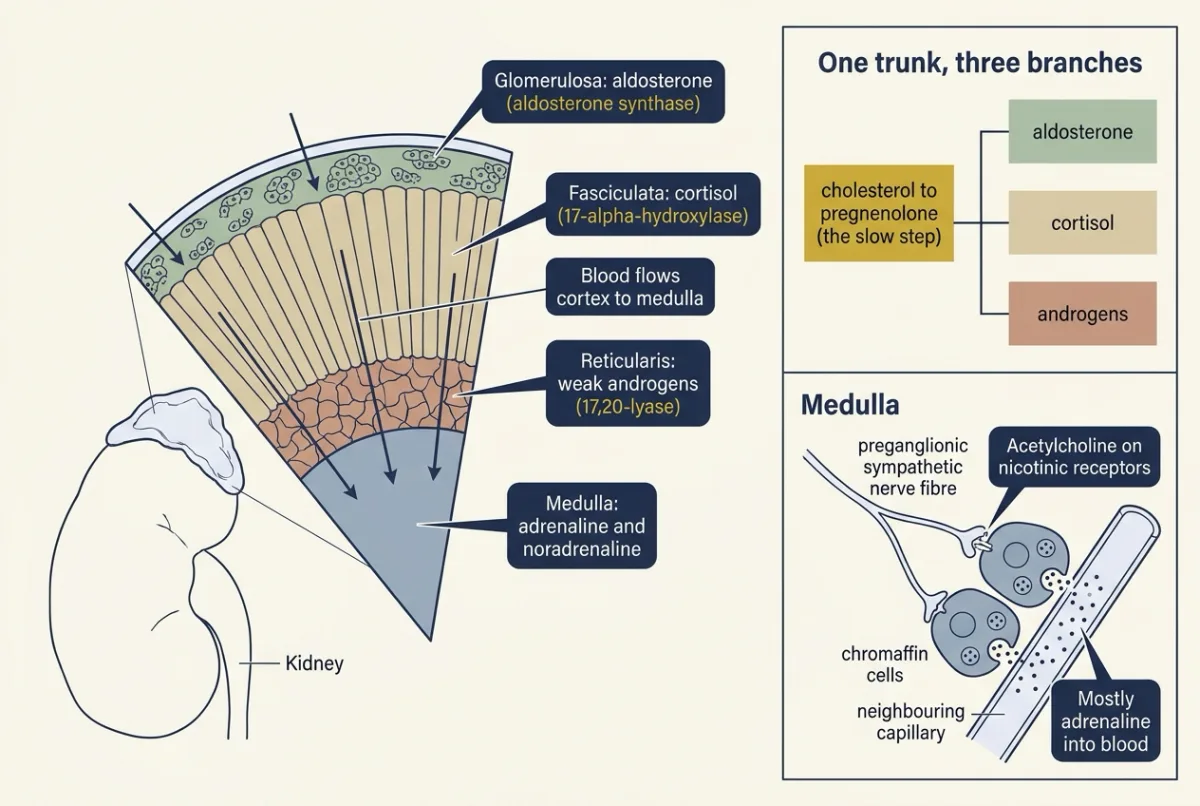
Each zone of the cortex makes its own steroid because of the enzymes it has; all three share one ACTH-driven trunk, and the medulla inside is a modified sympathetic ganglion that releases mostly adrenaline into blood that has already passed through the cortex. AI-generated illustration -
ACTH drives cortisol; angiotensin II and potassium drive aldosterone
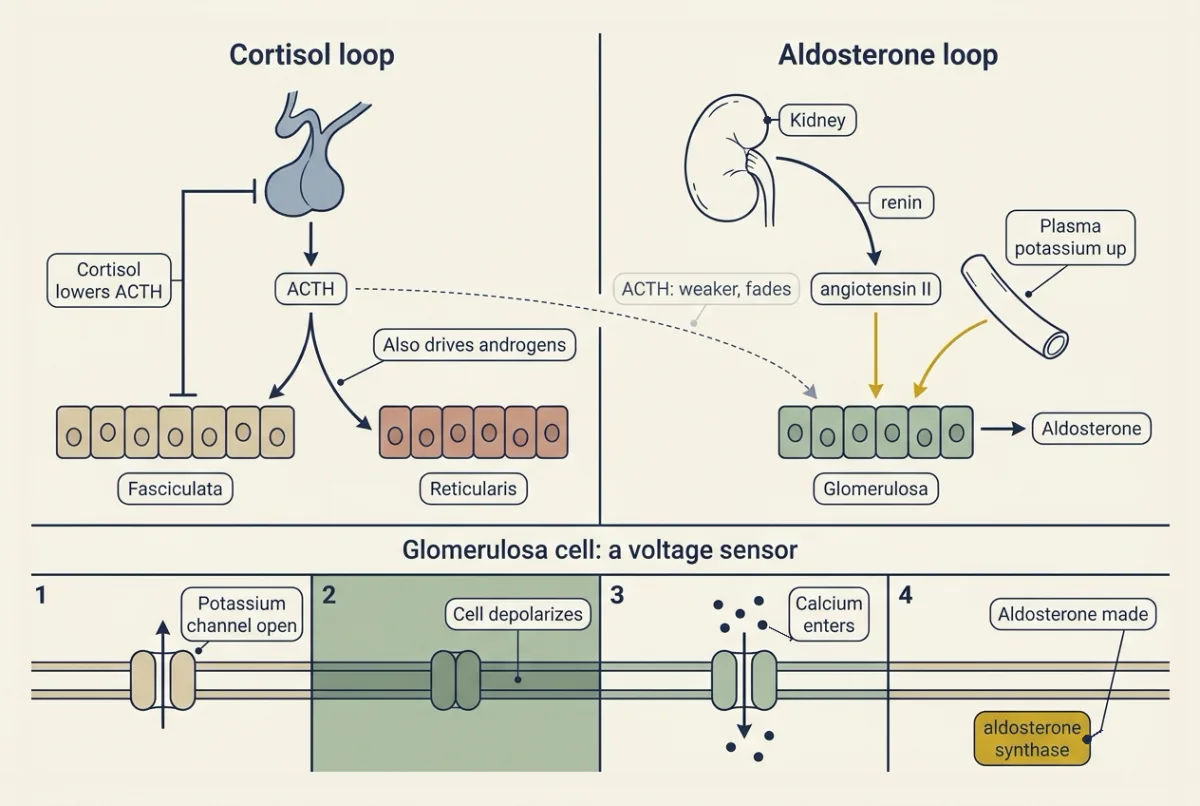
Two separate loops run the cortex: ACTH drives cortisol and the androgens and is held down by cortisol, while angiotensin II and a rise in plasma potassium depolarize the glomerulosa cell to make aldosterone; ACTH's effect on aldosterone is weaker and fades. AI-generated illustration -
Cortisol shifts fuel, restrains inflammation and supports pressure
-
Aldosterone acts on the epithelium itself, and an enzyme guards its receptor
-
Reading adrenal disease in three steps
-
Going deeper
Where this lesson fits
Before thisReview first
- Endocrine Axes and How to Test ThemThis course · Lesson 2
You need the ACTH-cortisol feedback loop and how it is tested there to read the adrenal disease table here.
- Regulating Arterial PressureThis course · Lesson 10
The renin-angiotensin cascade there is the loop that drives aldosterone and is read against renin here.
- Water, Sodium and Potassium BalanceThis course · Lesson 17
Aldosterone's action on sodium and potassium in the kidney is used here without being re-taught.
After thisStudy next
- Insulin, Glucagon and Blood GlucoseThis course · Lesson 21
Cortisol's opposition to insulin and its raising of glucose supply connects directly to how blood glucose is controlled.
- Sexual Differentiation and the TestisThis course · Lesson 27
Androgen excess from the adrenal in CAH virilizes affected children, which this lesson builds on.
- Exercise: The Whole Body at WorkThis course · Lesson 30
Adrenaline and cortisol release during exercise uses the adrenal medulla and cortex outputs learned here.
Elsewhere on the siteFilms, simulations and method films in other courses
- Half-life and plasma levelSimulation · Organismal Biology
This simulation shows how a hormone's half-life and plasma level behave, as with cortisol bound to its carrier.
- RadioimmunoassayMethod film
Measuring cortisol, ACTH and aldosterone levels to read disease relies on competitive hormone assays.
- The Receptor Is the Gene SwitchFilm · Cell Signaling
Cortisol and aldosterone act through receptors that are themselves gene switches.
Suggested by an AI model from the lessons themselves, then checked. How we use AI