Life Science · Skim version
Mutations and Variation
Read the full lesson → Skim the whole course →
The guiding idea
Ten leaves grew on one white oak and share rounded lobes. Why do their sizes and shapes still differ?
Genes and environments shape variation; chance mutations add new genetic differences.
From the film: Where Differences Begin
- Genes and environments shape variation; chance mutations add new genetic differences.
- Variation means the differences among members of a population.
- Sexual reproduction reshuffles existing alleles; mutation can make a new allele.
- In animals that reproduce with eggs and sperm, a sex-cell mutation can reach offspring, but a body-cell mutation cannot.
From the film: When a Mutation Matters
- A mutation's effect depends on the change and often on its environment.
- A mutation can help, harm or make no difference. Many make little difference, some harm, and a few help.
- A helpful effect in one setting may not be helpful in another.
- Whether a mutation helps does not decide whether it can be inherited.
-
Explore: test where a new difference goes
-
Two sources shape many traits
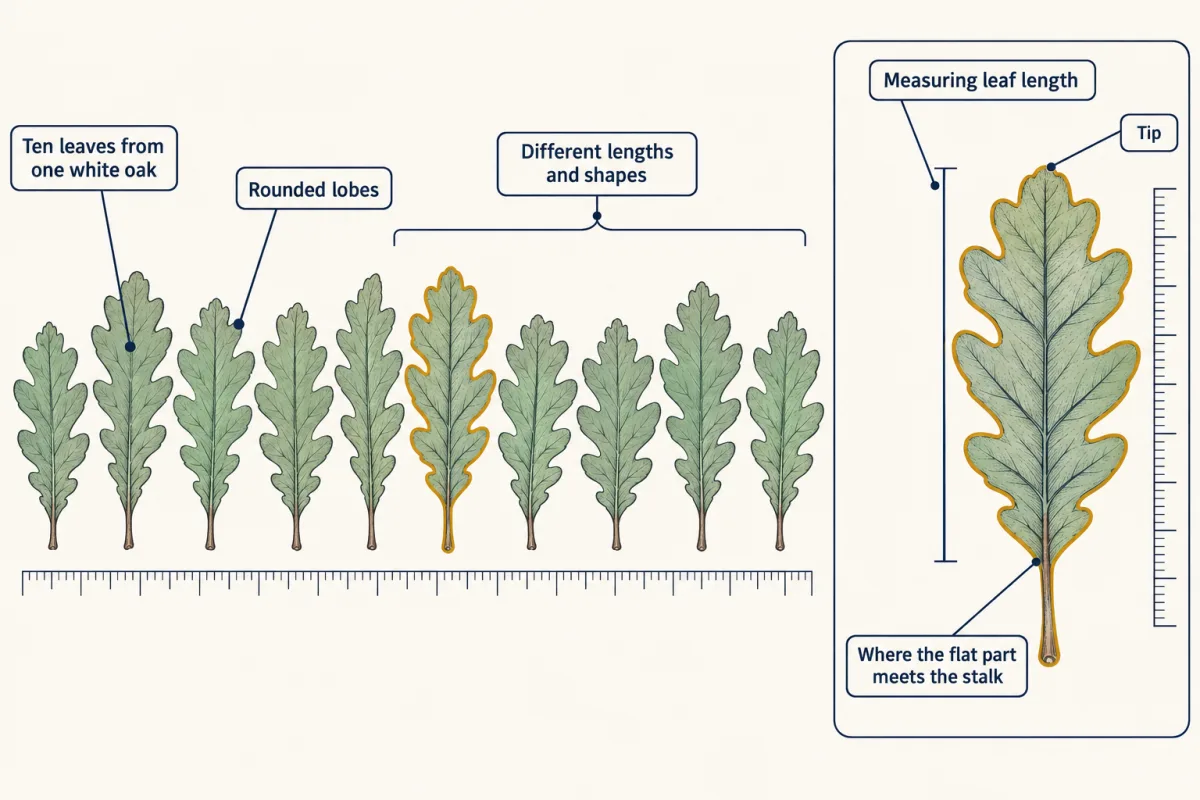
Ten leaves from one white oak share one tree's genes and rounded lobes, yet vary because each leaf grew in a slightly different spot and by chance during growth. AI-generated illustration -
Mutation adds a new genetic difference
-
In animals, location controls inheritance
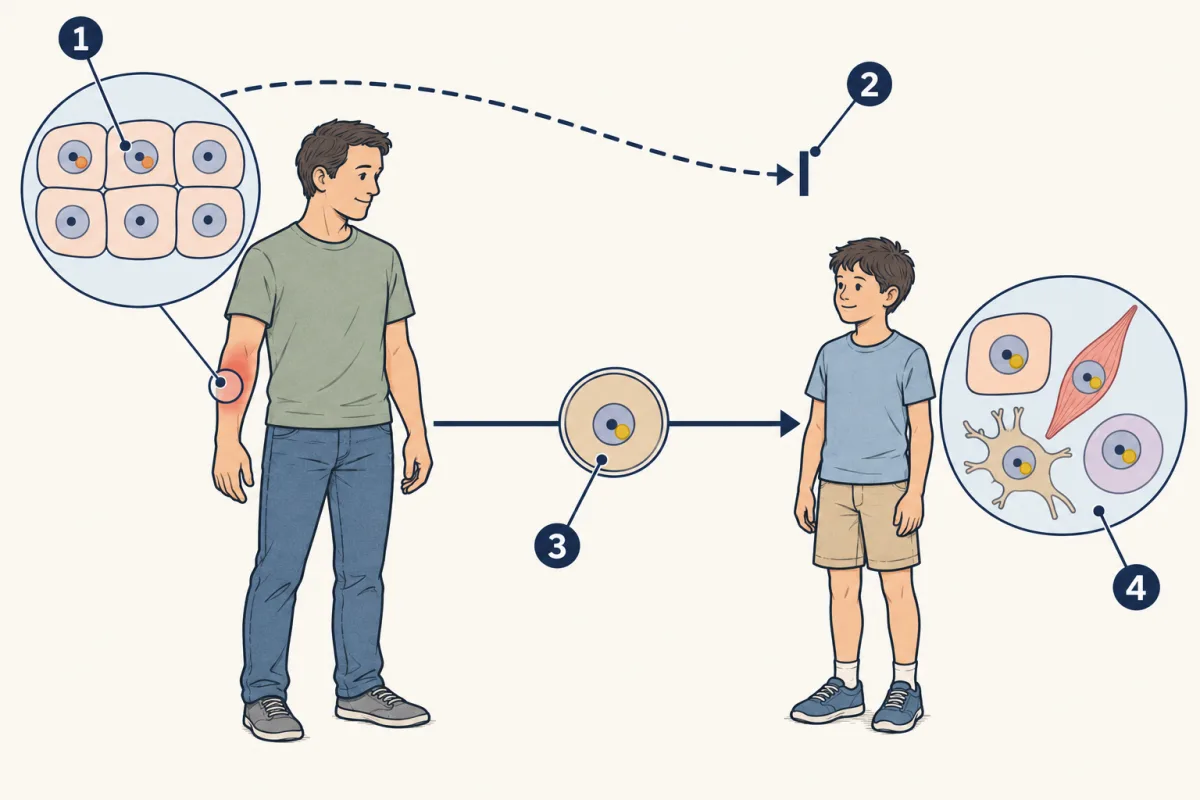
- skin cell with a mutation
- the mutation stays in the parent
- sex cell with a different mutation
- the child carries the sex-cell mutation in every cell
-
Helpful, harmful or neither: test the claim
-
Read the evidence: height
-
Read the evidence: mutation effects
-
Evaluate: check your thinking
-
Going deeper
Where this lesson fits
Before thisReview first
- DNA: The Code of LifeThis course · Lesson 27
You need to know that DNA's code makes proteins to see how a mutation can change one.
- Reproduction and MeiosisThis course · Lesson 28
Sex cells and reshuffled alleles from there show what mutation adds that reshuffling cannot.
- Inherited or Acquired?This course · Lesson 30
You use its sorting of traits into inherited and environmental routes to explain why height varies.
After thisStudy next
- Natural Selection in ActionThis course · Lesson 32
It shows how a helpful variation becomes more common when its carriers survive and reproduce more.
- Evidence for Change Over TimeThis course · Lesson 33
It uses new variation passed down over many generations to explain the change over time seen in fossils.
Elsewhere on the siteFilms, simulations and method films in other courses
- One Strand Is EnoughFilm · Biology
It shows how DNA is copied, which is where copying mistakes that cause mutations come from.
- From Gene Copy to Protein ChainFilm · Biology
It shows how changing one DNA letter can change a protein, as in the mutation table.
- Transcribe, translate, mutateSimulation · Biology
You can change a letter in a gene and see how the protein changes.
Suggested by an AI model from the lessons themselves, then checked. How we use AI