Biology · Skim version
Microbes in Bodies and Ecosystems
Read the full lesson → Skim the whole course →
The guiding idea
Why do the roots of a healthy soybean plant carry small bumps full of bacteria, and what would the plant lose without them?
Microbes that unlock matter feed life; pathogens cause disease in their hosts.
From the film: Who Unlocks the Matter?
- Air is mostly nitrogen gas, but plants and animals cannot use it; bacteria in soybean root nodules turn it into ammonium, which the plant can use.
- In return, the plant sends sugar made by photosynthesis to the nodules, and the bacteria get energy-rich food from it, a partnership called mutualism.
- Decomposers, mostly bacteria and fungi, break dead matter into smaller molecules, and gut bacteria ferment fiber your body cannot digest.
- A pathogen is a microbe or virus that causes disease in its host, the living thing it lives in or on.
- Microbes that unlock matter feed life; pathogens cause disease in their hosts. Whether a microbe helps, harms or does neither can depend on its strain and where it lives.
From the film: When the Killer Is a Recycler
- A virus that infects bacteria is called a bacteriophage; other ocean viruses infect algae.
- In a lab model ecosystem, a virus burst the alga Phaeocystis, bacteria broke down the remains, and the water gained nitrogen and phosphorus.
- Viruses that burst cells can recycle matter; pathogens can reshape ecosystems. When a virus bursts a cell, some of its matter can feed other living things.
- After rinderpest was wiped out in the Serengeti, wildebeest numbers rose, they ate more grass, fewer fires burned and more trees grew.
-
Explore: switch microbes off in an ecosystem
-
Explain: microbes that unlock matter
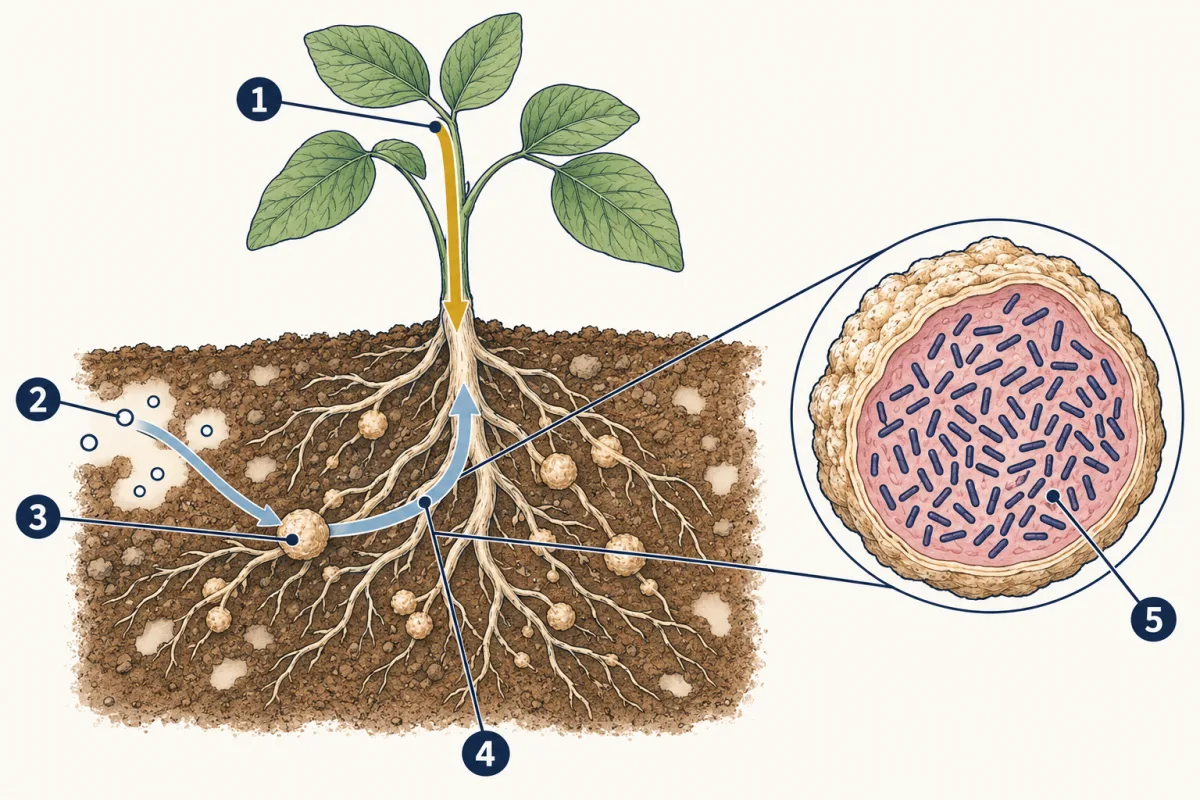
- energy-rich food
- nitrogen gas
- nodule
- ammonium
- bacteria
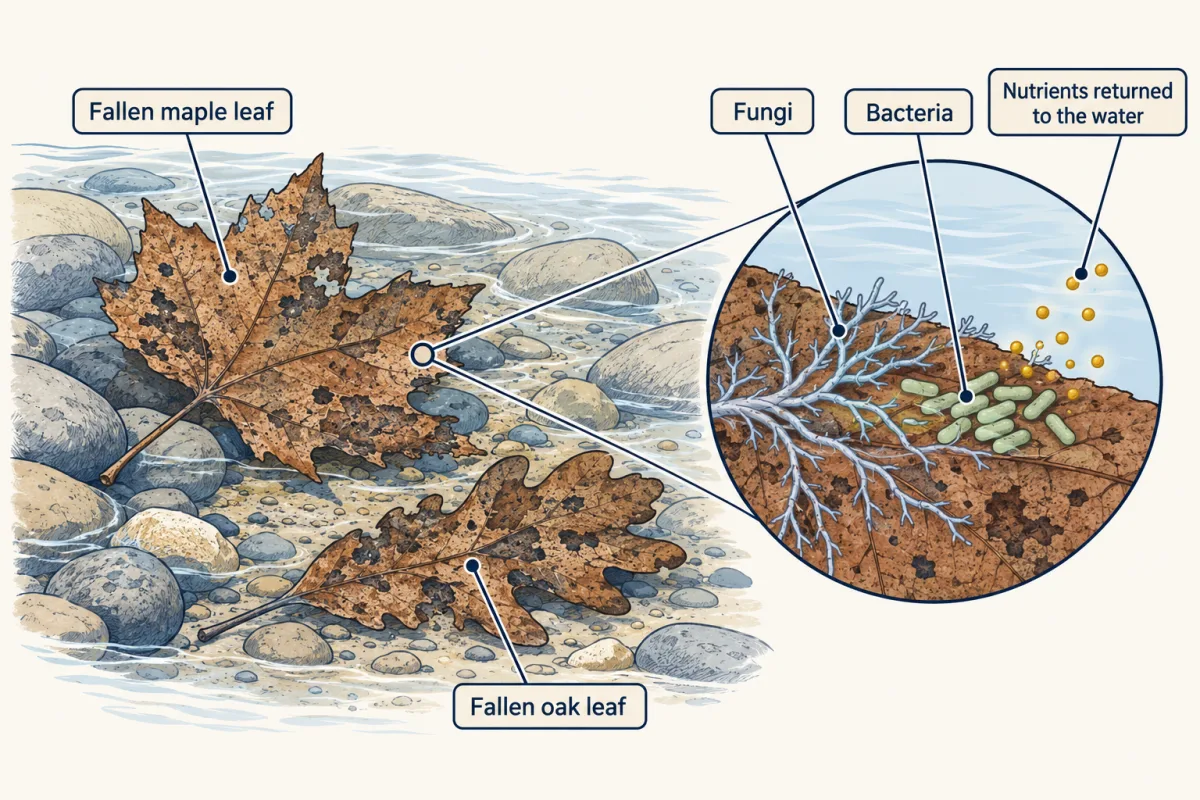
Fungi and bacteria grow on fallen leaves and break them down, returning nutrients to the water. On leaves in streams, fungi usually make up more of the microbial mass. AI-generated illustration -
Explain: partners in your body, and pathogens
-
Explain: viruses and diseases reshape ecosystems
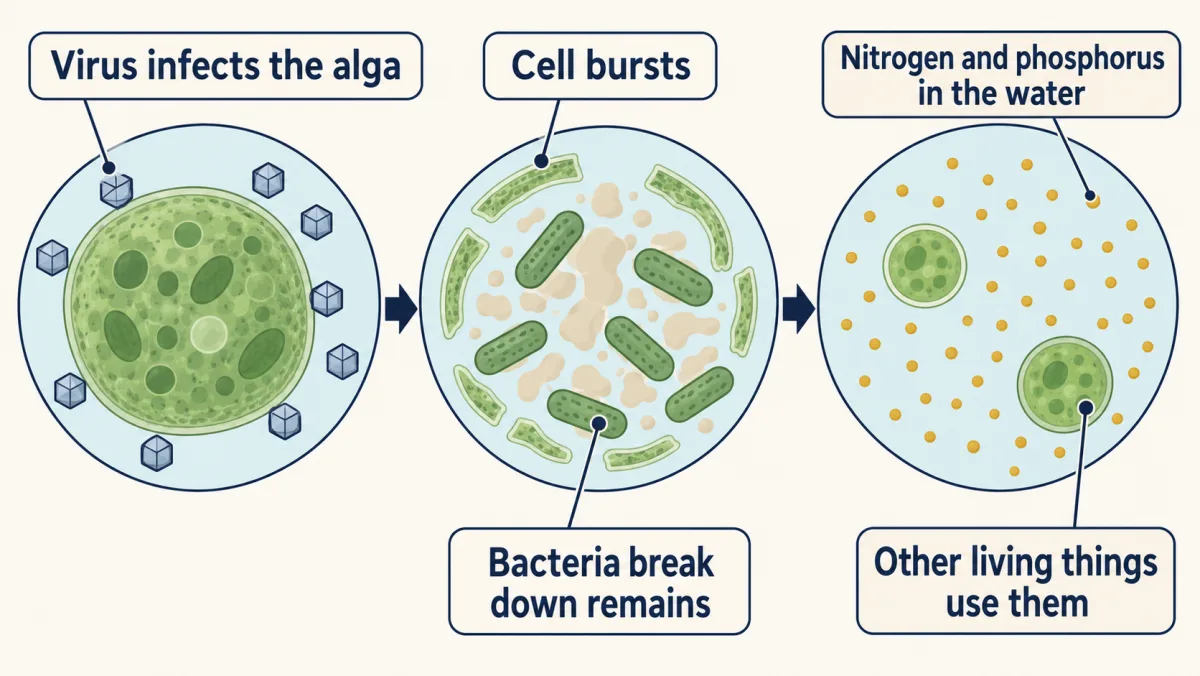
In a lab model ecosystem, a virus burst ocean algae and bacteria broke down the remains, releasing nitrogen and phosphorus into the water for other living things. The drawing's cube-shaped viruses are simplified; real ones have many flat faces and look nearly round. AI-generated illustration -
Elaborate: how much nitrogen do nodules add?
-
Evaluate: check your thinking
-
Going deeper
Where this lesson fits
Before thisReview first
- Respiration and ATPThis course · Lesson 5
You need to know how cells get energy from food to follow how bacteria ferment fiber and take in sugar.
- Living or Not? Viruses and BacteriaThis course · Lesson 12
You need to know what viruses and bacteria are, and why viruses need a host, before seeing their roles in ecosystems.
- How Microbes MultiplyThis course · Lesson 13
This lesson uses how bacteria multiply and how viruses burst their host cells when it follows phages and algae.
After thisStudy next
- Germs, Vaccines and AntibioticsThis course · Lesson 15
It takes the pathogen idea further, showing how disease-causing microbes are spotted, prevented and treated.
- Matter CyclesThis course · Lesson 31
It follows the nitrogen and carbon that fixers and decomposers release as they move through whole ecosystems.
- Engineering GenesThis course · Lesson 22
It explains how bacteria are given human genes to make insulin, which this lesson only mentions.
Elsewhere on the siteFilms, simulations and method films in other courses
- Hairs, hyphae and surfaceSimulation · Organismal Biology
Root nodules and fungal partners supply a plant with nutrients it cannot get alone.
- What a Root Has to ReachFilm · Organismal Biology
It shows how plant roots depend on partner microbes for nitrogen and other minerals.
- Why Order Matters in a GutFilm · Organismal Biology
It covers how gut microbes help animals digest food they cannot break down themselves.
Suggested by an AI model from the lessons themselves, then checked. How we use AI