Why Order Matters in a Gut
Read the transcript of “Why Order Matters in a Gut”
Film transcript: Why Order Matters in a Gut
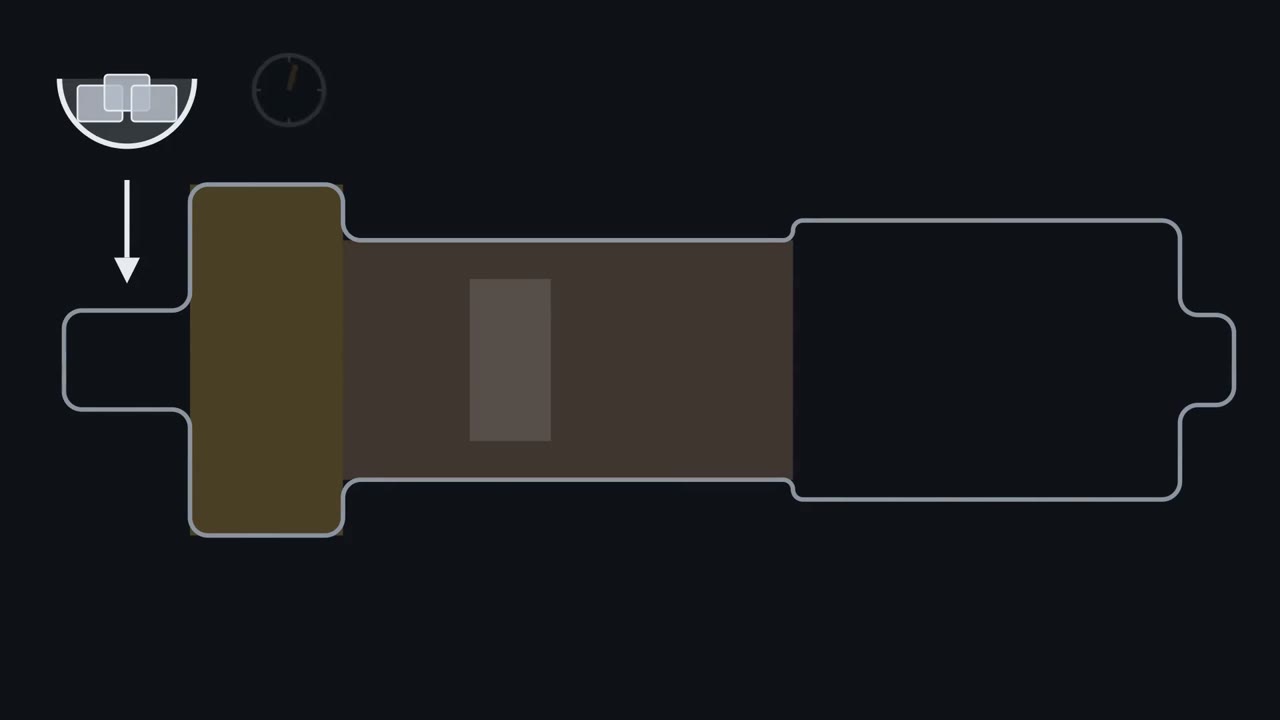
A rabbit eats some of its own droppings. Why would an animal do that? The answer lies in the shape of the gut itself. Many animals, from earthworms to us, have a complete gut. It is a tube, with a mouth at one end and an anus at the other. Food moves one way along it. So each stretch can do its own job, in order. The mouth and stomach break food up. At the duodenum, the first part of the small intestine, bile and pancreatic juice pour in. Digestion goes on along the small intestine, the main absorbing stretch. Enzymes there do most of the digesting. Transporters in the wall carry the small pieces across. Simple sugars and amino acids cross into blood capillaries.
Most fat is packed into tiny particles that enter the lacteal, a small lymph vessel. That is the first half of a rule. Large food molecules must be broken down before or within the stretch that can absorb them. Here is the second half. Whatever a stretch does not absorb moves on. Watch the water. The small intestine takes up most of it. The colon takes up most of what remains. Only a small leftover reaches the end, and it leaves in the feces. Now feed the tube grass. Its main fiber, cellulose, has bonds no vertebrate is known to break with enzymes of its own. Microbes do it, by fermenting the fiber without oxygen. Fermentation makes short-chain fatty acids.
The fermenting chamber's own wall absorbs them on the spot, wherever that chamber sits. But the microbes themselves are food, rich in protein. The acid stomach starts digesting protein. The small intestine finishes the job, and absorbs the amino acids. A cow ferments in front of its acid stomach. Its microbes wash onward, into the acid and then the small intestine. There they are digested. A horse ferments in its cecum and colon, after the small intestine. Its microbes are full of protein, and its small intestine is already behind them. Where does that protein go?
Most of it leaves in the droppings. The stretch that absorbs amino acids is already behind it. A rabbit ferments mainly in its cecum, after the small intestine too. So it makes soft pellets from its cecum, and eats them. The microbes go round again, through the stomach and small intestine. That is why a rabbit eats some of its droppings. Food must be broken down before or within the stretch that can absorb it.
Why would a rabbit eat some of its own droppings?
Continue in the lesson: Digestive Systems and Nutrition →
3:21 · Free, with captions and a transcript. The lesson has the full text, the questions and the sources.
More films from this lesson
How this film was made. Narration: written from this lesson's text and read by an AI narrator voice (Kokoro, af_heart). Animation: AI-generated in code (Manim) by Claude, a schematic with no drawn molecular structures. Captions come from the narration script. See something wrong? Report it.