What a Root Has to Reach
Read the transcript of “What a Root Has to Reach”
Film transcript: What a Root Has to Reach
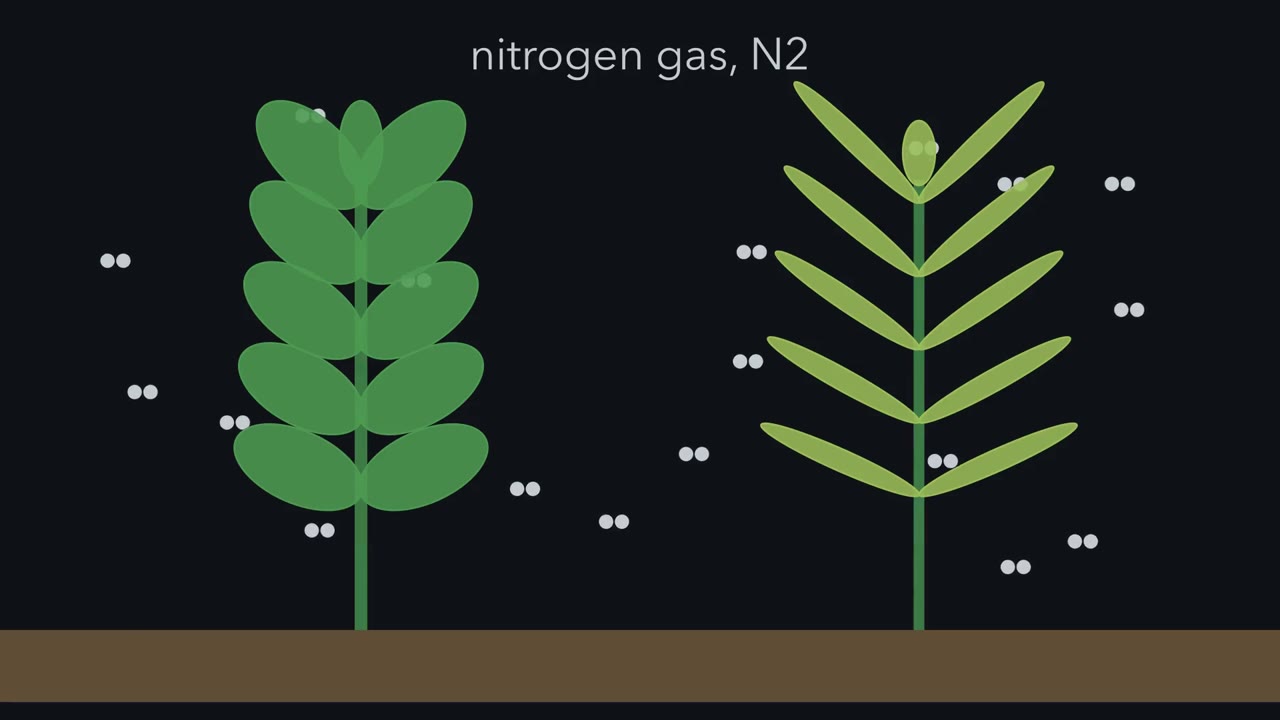
A green plant builds most of its body from carbon dioxide and water. But it also needs elements from the soil. Why can't it make those? A green plant can build all the organic molecules it needs. Every amino acid, every lipid, every nucleotide, it makes for itself. You cannot do that; you must eat some of yours. But no plant can make an element. Each element in its body has to come in from outside. That is the one thing it cannot do for itself. Seventeen elements are conventionally essential. Carbon, hydrogen and oxygen come from carbon dioxide and water. The other fourteen are mineral nutrients. Most plants take them chiefly from the soil. How the plant gets each one depends on three things.
The form the element is in. How far that form moves. And who can take it up. This film follows how far. Start with phosphate. Here is a young root, a little behind its growing tip, in soil dotted with phosphate. As the root takes phosphate in, the soil right around it runs low. Phosphate creeps through soil so slowly that little arrives from farther out. Root hairs help. Each is a tube grown out from a single surface cell. Hairs push into the spaces between soil particles, past the depleted zone. Many plants reach farther with a fungal partner, called a mycorrhiza. Its threads, called hyphae, are thinner still. They run far out into the soil and bring phosphate back.
Nitrate is a different story. It moves through soil far more readily, and water flowing toward the root carries it too. For nitrate, reach matters less. Inside the plant, elements can move again. The phloem, the tissue that carries sugar, can move some of them out of old leaves.
Nitrogen, phosphorus, potassium and magnesium are among them. Now suppose nitrogen runs short. Which leaves turn yellow first, the old ones or the young ones? The old ones. The plant pulls nitrogen out of its oldest leaves and sends it up to the growing tip. So the old leaves yellow first. Iron and calcium are different. Once laid down, they stay largely where they are. So a shortage of iron shows first in young leaves. Treat these patterns as clues to test, not a key for every species. Different shortages can look alike. So the plant faces one question again and again. It cannot make an element. How far does each nutrient move, and how will the plant reach it?
A green plant builds most of its body from carbon dioxide and water. What else does it need from the soil, and why can't it make it?
Continue in the lesson: Soil, Nutrients and Partners →
3:20 · Free, with captions and a transcript. The lesson has the full text, the questions and the sources.
More films from this lesson
How this film was made. Narration: written from this lesson's text and read by an AI narrator voice (Kokoro, af_heart). Animation: AI-generated in code (Manim) by Claude, a schematic with no drawn molecular structures. Captions come from the narration script. See something wrong? Report it.