The Size of a Packet and the Margin of Safety
Read the transcript of “The Size of a Packet and the Margin of Safety”
Film transcript: The Size of a Packet and the Margin of Safety
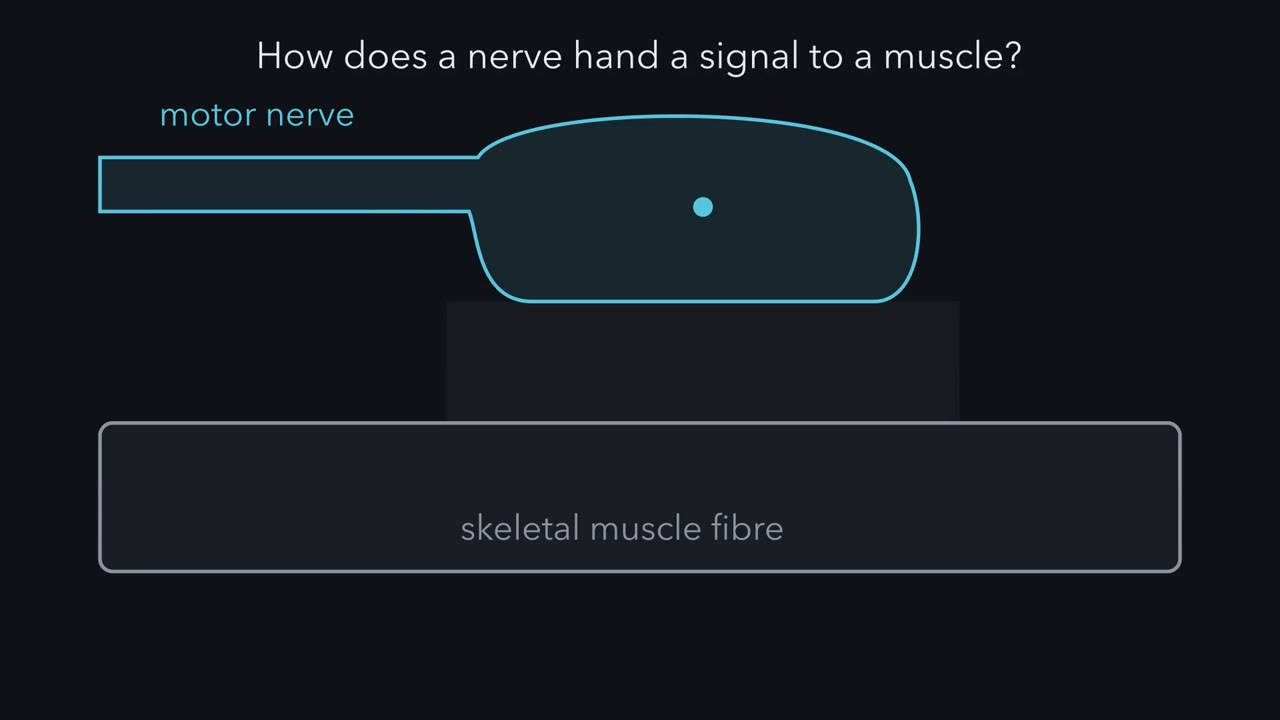
What sets the size of one packet? And how far above threshold does a normal response sit? With the muscle membrane and the recording held steady, the size depends on two things. How much transmitter the vesicle holds, and how many receptors face it. Acetylcholine crosses the gap and binds nicotinic receptors. A receptor normally needs two acetylcholine molecules bound to open. The channel passes both sodium and potassium. So its reversal potential, where its current changes direction, sits near 0 mV. Now recall the balance point from the action potential lesson. Treat the fibre as one compartment, with no current injected. Then the voltage moves toward a balance point, an average of reversal potentials, weighted by conductance.
Opening these channels adds a conductance that pulls toward 0 mV. The balance point moves from rest toward zero, and the voltage chases it. The endplate depolarizes. An enzyme, acetylcholinesterase, breaks down acetylcholine and ends each packet's action. One packet nudges the balance point by a fraction of a millivolt. Each further packet adds the same conductance. But it moves the voltage less than the one before. Why? As the voltage climbs toward zero, the driving force shrinks. That is the gap between the voltage and zero. So each newly opened channel pushes less hard. The same shrinking push helped stop the spike's peak short of sodium's equilibrium potential.
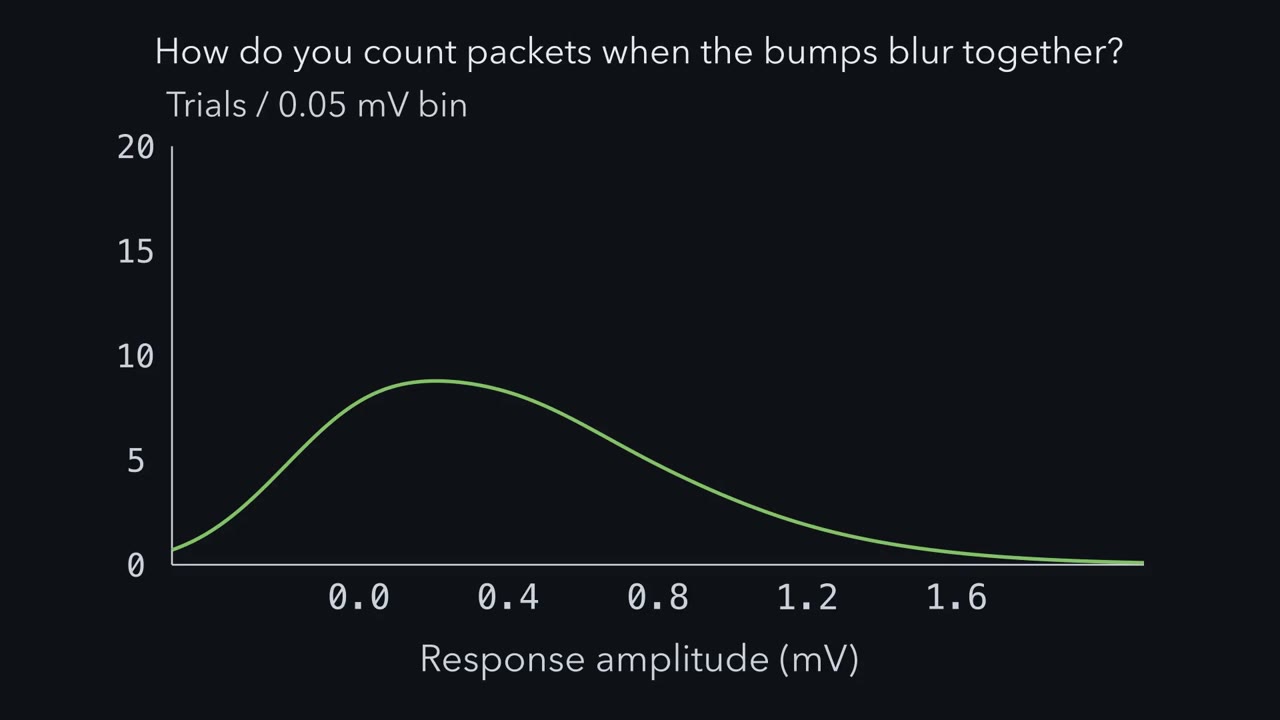
In this simple model, small responses fall short by almost nothing. Count × size works. For sixty packets, the model comes out about a fifth below simple multiplication. The numbers are on screen. Now the margin of safety. Suppose, as an illustration, the fibre fires at 12 mV. The safety factor is the response divided by what the fibre needs to fire. Simple multiplication gives a safety factor of 2. The balance point gives nearer 1.6. Smaller, but still comfortably above one. A normal junction fires with margin to spare. These round numbers are illustrations. A real junction releases more packets, and needs more to fire. Suppose antibodies remove some of the receptors.
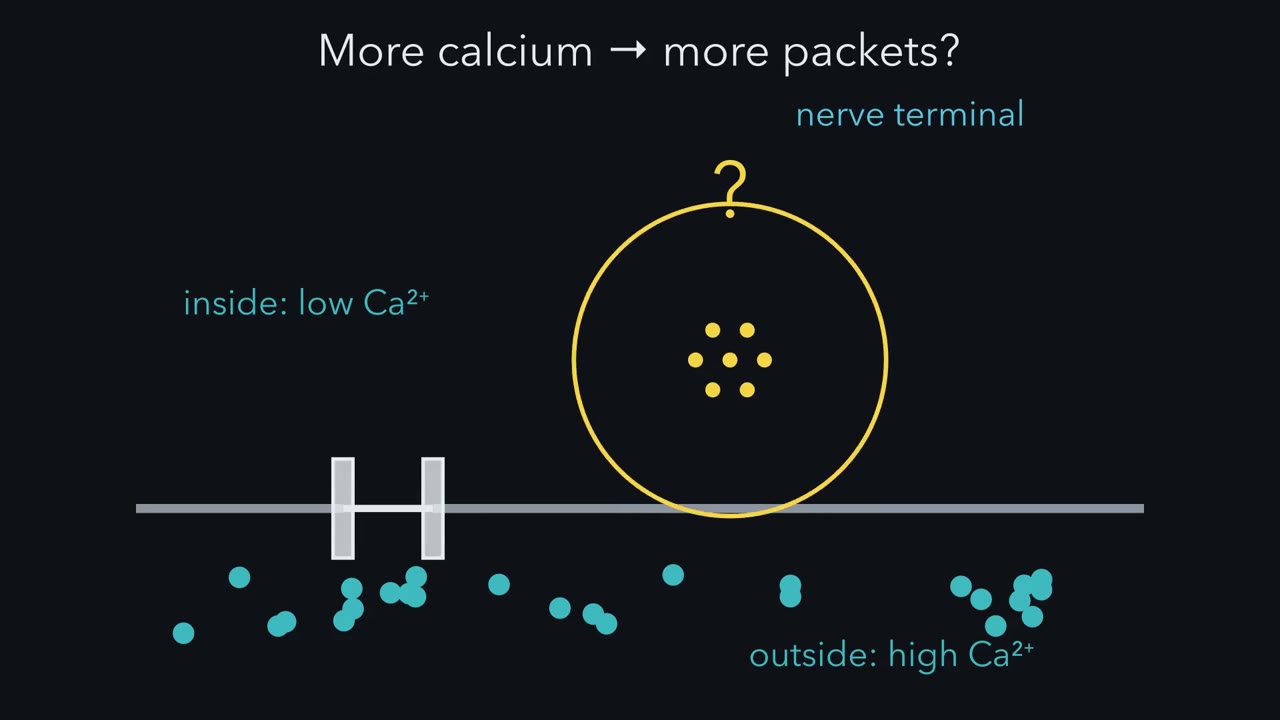
Which factor changes: the count or the size? The size falls. Each packet's acetylcholine finds fewer receptors to open. In this simple picture, the count stays the same. The terminal and calcium set it. So the size depends on vesicle filling and receptors. And big responses fall short of count × size.
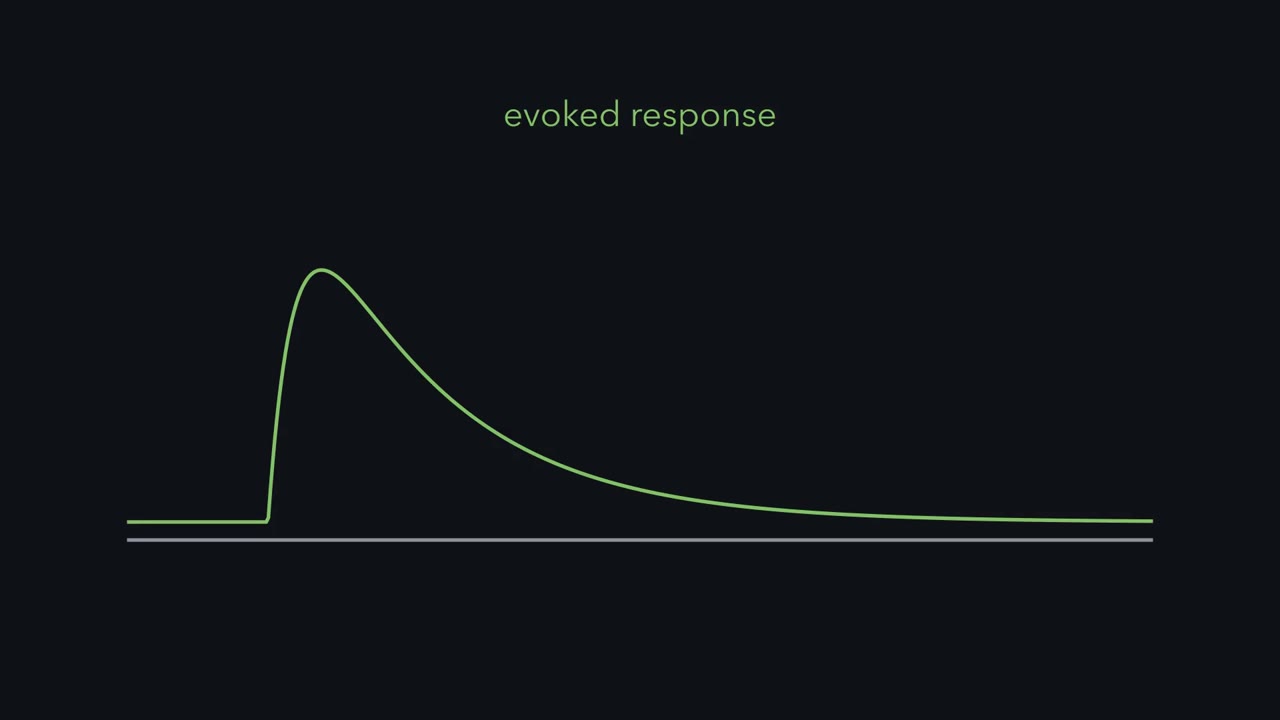
A resting frog muscle fibre shows small voltage blips at its endplate with no nerve impulse at all. Those blips are the units of the evoked response at this junction.
Continue in the lesson: Synaptic Transmission and Quantal Release →
3:10 · Free, with captions and a transcript. The lesson has the full text, the questions and the sources.
More films from this lesson
How this film was made. Narration: an AI narrator voice (Kokoro, af_heart) reading narration written from this lesson's text. Animation: AI-generated in code (Manim) by Claude, a schematic with no drawn molecular structures. Captions come from the narration script. See something wrong? Report it.