Count or Size? Two Weaknesses and a Synapse with No Packets
Read the transcript of “Count or Size? Two Weaknesses and a Synapse with No Packets”
Film transcript: Count or Size? Two Weaknesses and a Synapse with No Packets
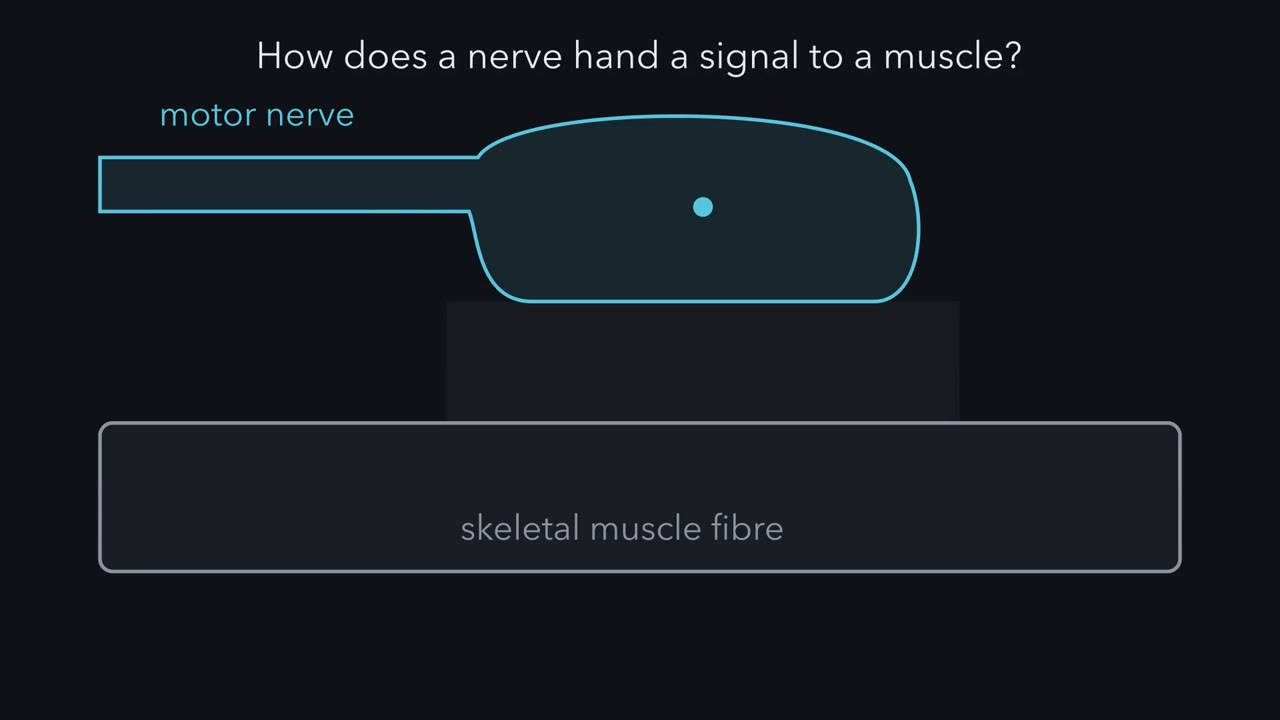
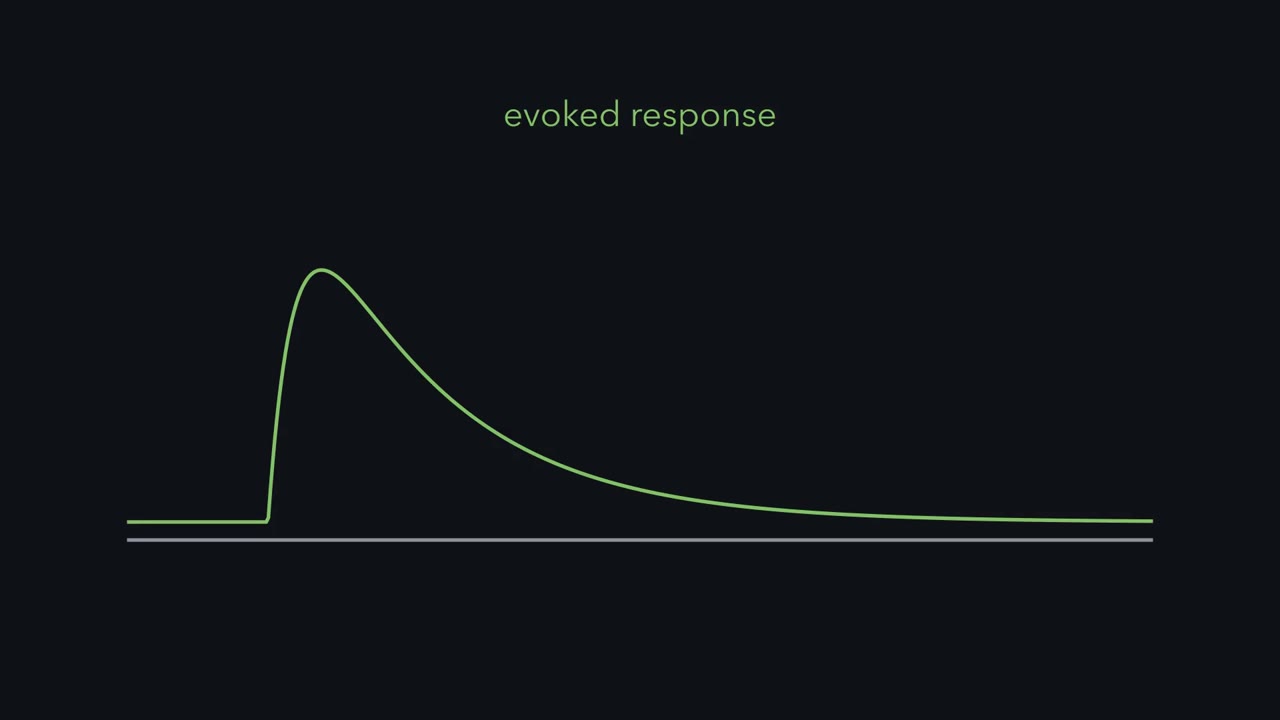
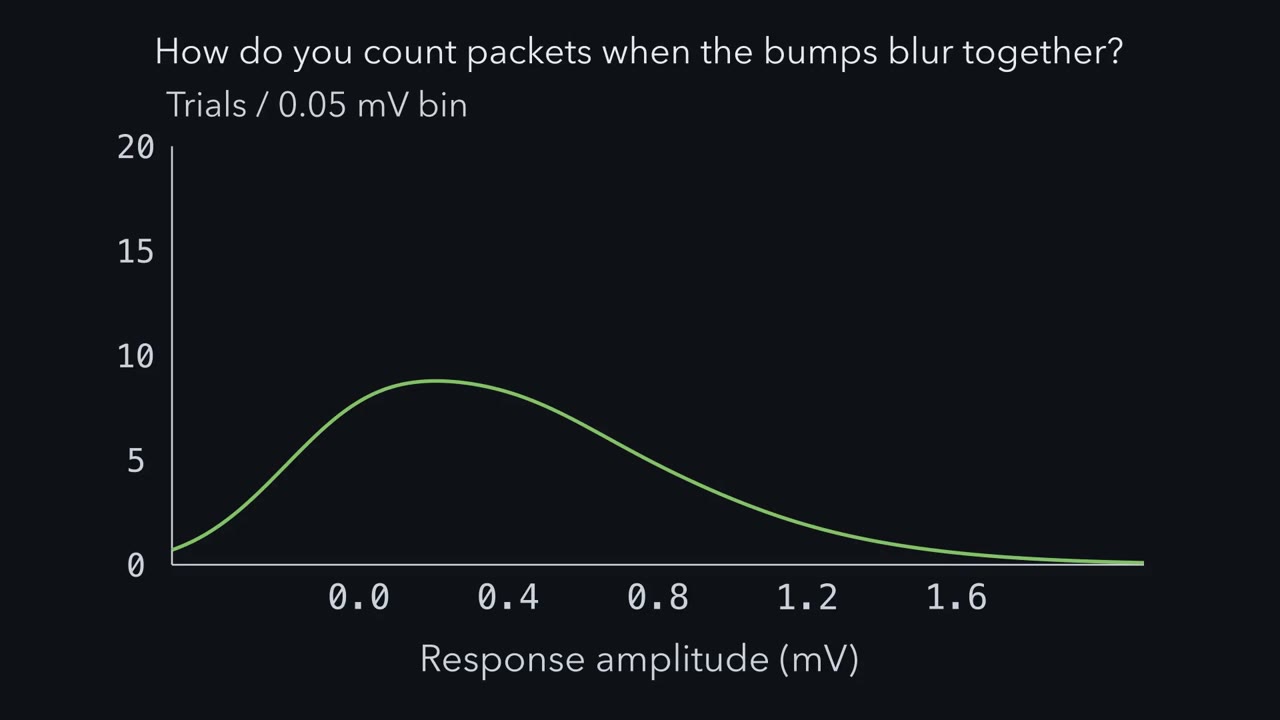
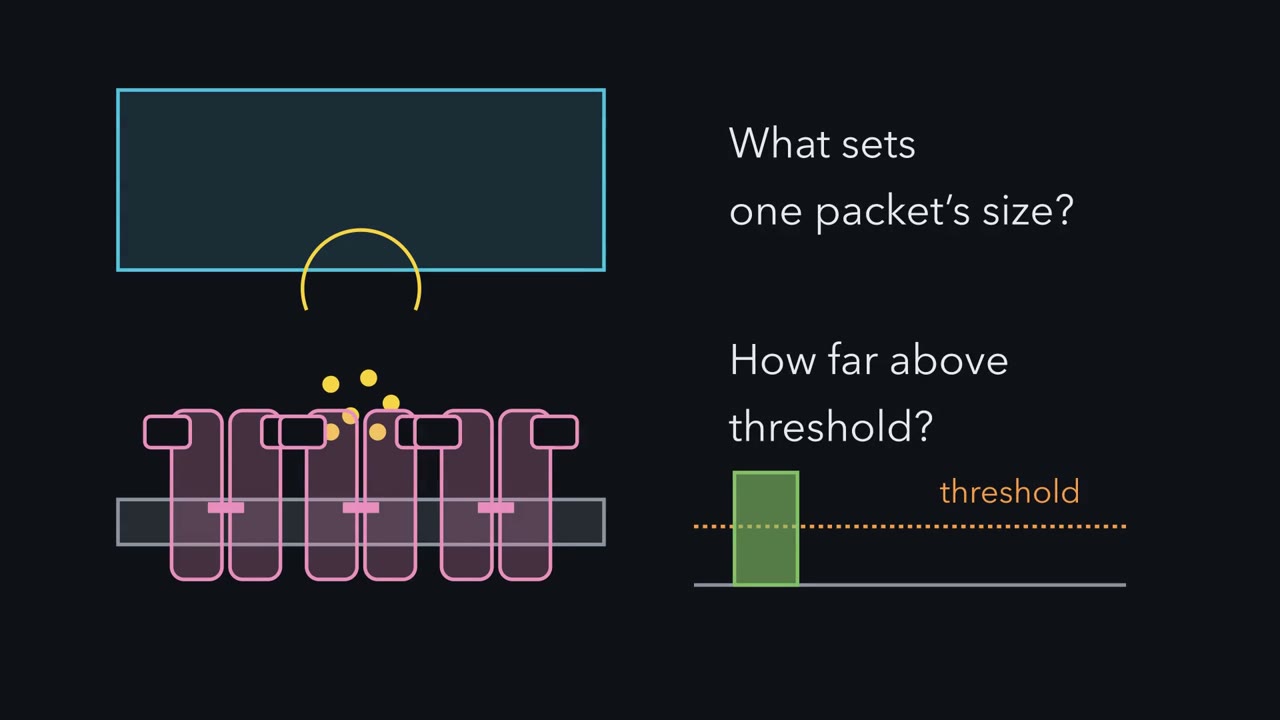
Two diseases both make muscles weak. How can a recording tell them apart? Return to the rule: The response ≈ count × size. A muscle weakens when the response falls below what the fibre needs to fire. In myasthenia gravis, antibodies in most patients target the muscle's acetylcholine receptors. Fewer receptors means a smaller packet size. An immunoglobulin fraction from patients' serum, moved into mice, gave them smaller miniatures and fewer receptors. Take the made-up junction, and suppose the first impulse releases exactly sixty packets. Cut the size, and that response still fires, but barely. But release runs down during repeated impulses, as ready vesicles get used up.
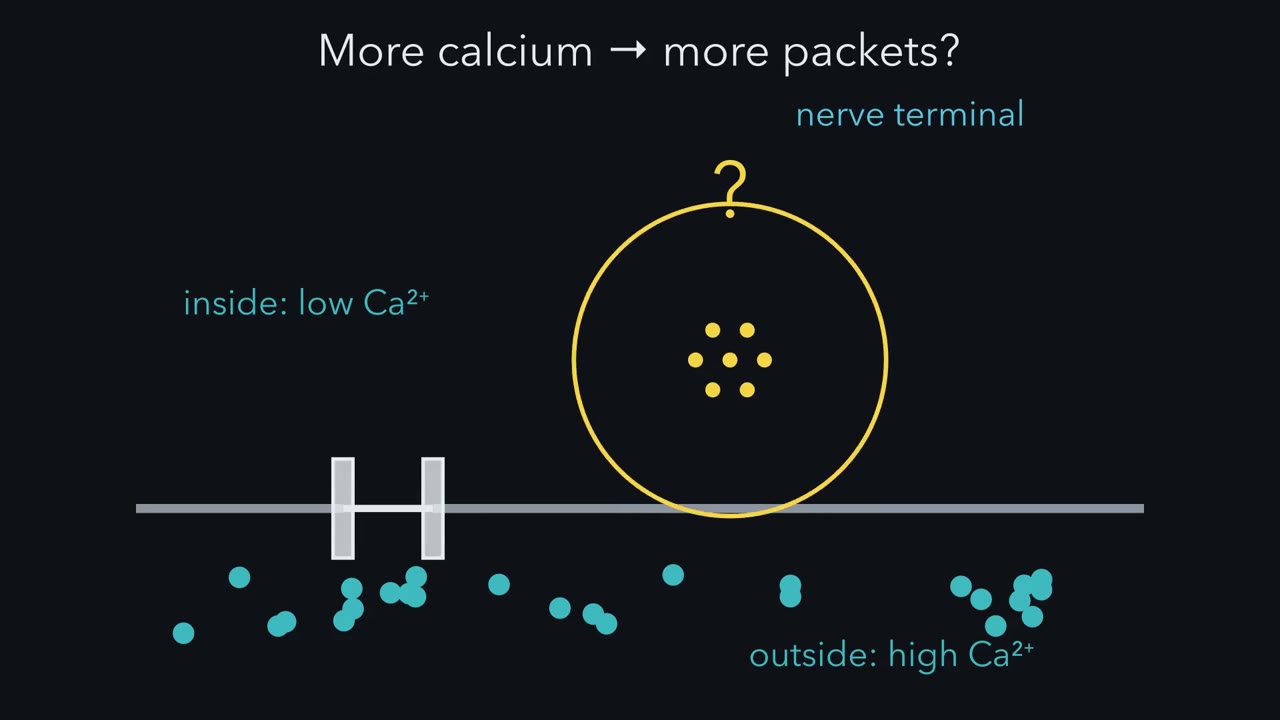
Suppose a later impulse releases a quarter fewer packets. The normal fibre still fires. The myasthenic fibre drops below threshold and fails. Real counts also vary from impulse to impulse, so a response near threshold can fail even earlier. This is fatigable weakness. Muscles work at first and weaken with use. Drugs that block acetylcholinesterase let each packet's acetylcholine last longer. It reaches more of the remaining receptors. That raises the size part of the way back toward normal. In Lambert-Eaton syndrome, the fault is in the terminal. Antibodies against its calcium channels cut calcium entry. So the count is low, while the size is normal.
Now stimulate rapidly, 20 Hz. What happens to the count during the train? It rises. Calcium left over from one impulse adds to the next. Because release rises steeply with calcium, a little extra calcium brings a large rise in the count. Slow stimulation can instead give a decrement, a shrinking response. Calcium clears between impulses, and run-down wins. So the two diseases leave opposite fingerprints. A smaller size with a normal count points to the size side. That means receptors, or vesicle filling. A lower count with a normal size points to release from the terminal. One caution. Poorly filled vesicles also shrink the size. So pair the recording with a receptor count.
Finally, a synapse with no packets at all. At an electrical synapse, gap junctions join the two cells. Current passes directly, with no vesicles. So there is no quantal count or size, and no release failures. The coupled response still has a size. It can be too small to fire the next cell. Most are very fast, and pass current both ways. Some rectify, passing current more easily one way. At this junction, response ≈ count × size. Ask which one moved, or both.
A resting frog muscle fibre shows small voltage blips at its endplate with no nerve impulse at all. Those blips are the units of the evoked response at this junction.
Continue in the lesson: Synaptic Transmission and Quantal Release →
3:20 · Free, with captions and a transcript. The lesson has the full text, the questions and the sources.
More films from this lesson
How this film was made. Narration: an AI narrator voice (Kokoro, af_heart) reading narration written from this lesson's text. Animation: AI-generated in code (Manim) by Claude, a schematic with no drawn molecular structures. Captions come from the narration script. See something wrong? Report it.