Calcium Sets the Count
Read the transcript of “Calcium Sets the Count”
Film transcript: Calcium Sets the Count
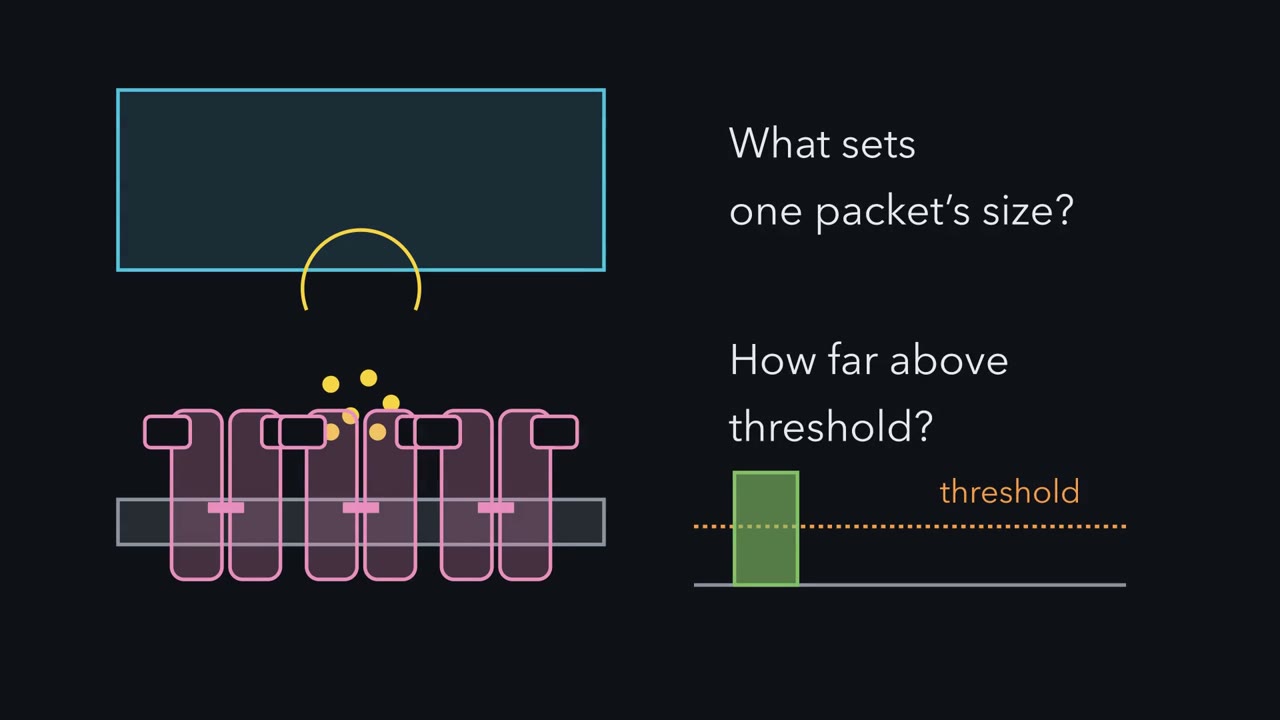
Why does a nerve terminal release more packets when there is more calcium? Start with the machinery. The action potential opens voltage-gated calcium channels in the terminal. Calcium flows in, down a steep gradient. Nearby vesicles are already docked and primed, ready to fuse. Calcium binds a sensor protein, synaptotagmin. That triggers the SNARE proteins to finish zipping. They pull the vesicle and the membrane into one. Release needs calcium outside the terminal. Magnesium opposes it. Dodge and Rahamimoff measured how strongly, at the frog junction, in 1967. They changed calcium step by step and plotted the response against calcium, both on log scales.
At low calcium, the points fall on a steep straight line. Its slope is near four. As calcium nears its normal level, the line bends over. A slope near four means release rises roughly as the fourth power of calcium. On the steep part, double the calcium. How much more transmitter comes out?
Far more than double. With their measured slope, about fourteen times more. That is why a modest loss of calcium entry can cut release sharply. Why so steep, and why does it bend? Picture four seats that must all be filled. In this picture, release at a site needs all four seats holding calcium at once. At low calcium, each seat is rarely filled. All four at once is rarer still. So release grows very steeply as calcium rises. On log scales, that is a straight line of slope four. As calcium rises further, the seats fill up. Adding more calcium cannot help much, so the line bends over. A model like this fits the slope. Adding magnesium lowered the response without changing the slope.
That fits magnesium competing with calcium for the same seats. But the slope does not count binding sites. Saturation and calcium spread in the terminal can shape it. Treat four calcium ions as a reading of one curve, not a molecular fact. So calcium is a steep dial on the count. Lose some calcium entry, and you lose many packets.
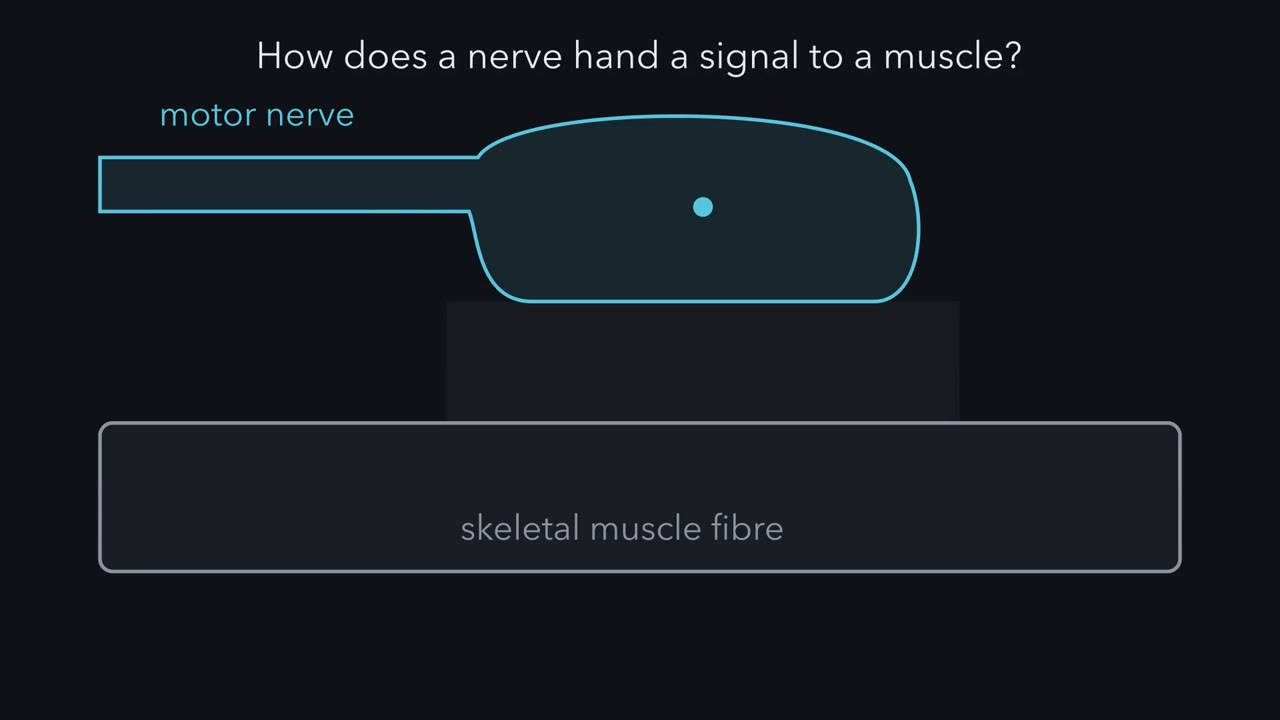
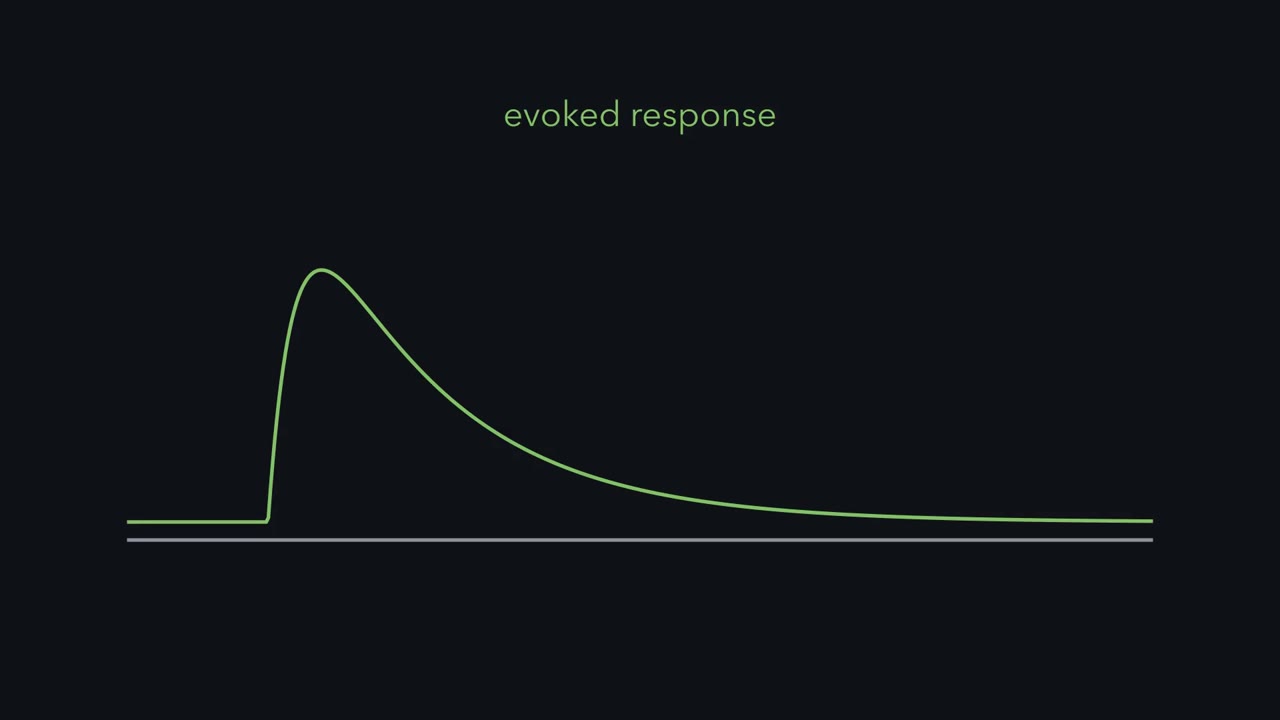
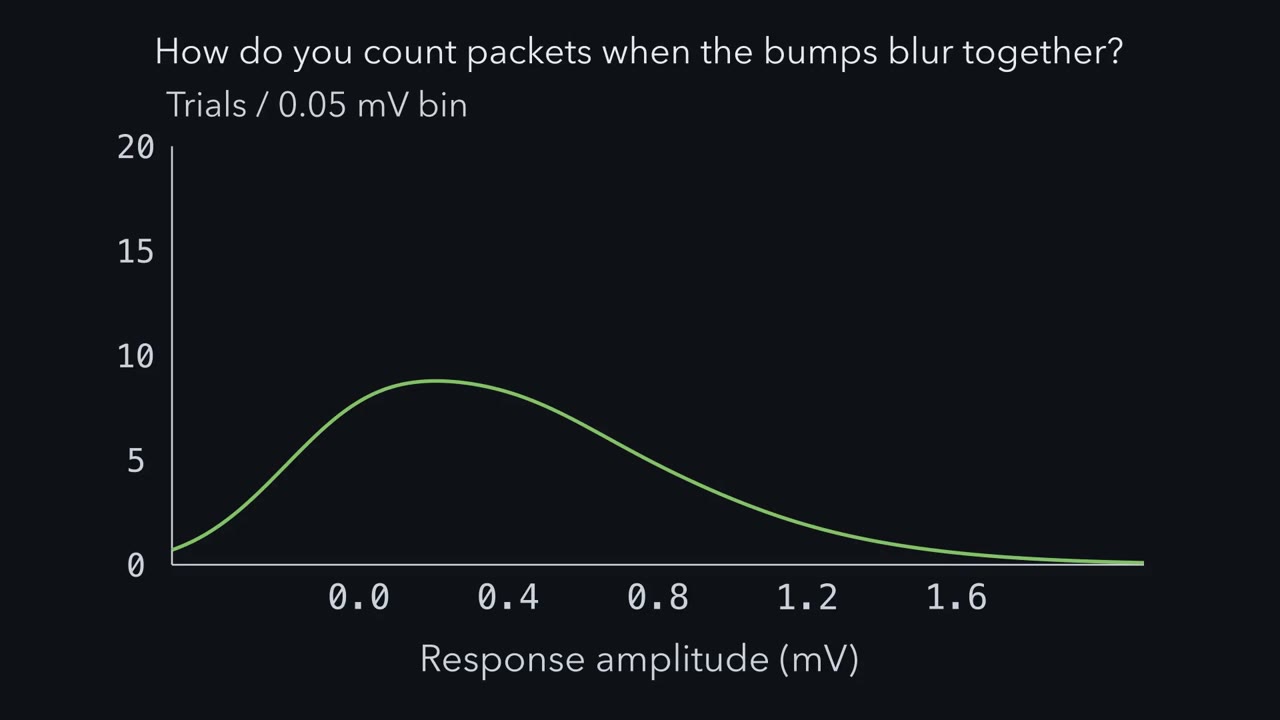
A resting frog muscle fibre shows small voltage blips at its endplate with no nerve impulse at all. Those blips are the units of the evoked response at this junction.
Continue in the lesson: Synaptic Transmission and Quantal Release →
2:30 · Free, with captions and a transcript. The lesson has the full text, the questions and the sources.
More films from this lesson
How this film was made. Narration: an AI narrator voice (Kokoro, af_heart) reading narration written from this lesson's text. Animation: AI-generated in code (Manim) by Claude, a schematic with no drawn molecular structures. Captions come from the narration script. See something wrong? Report it.