What the Rule Explains
Read the transcript of “What the Rule Explains”
Film transcript: What the Rule Explains
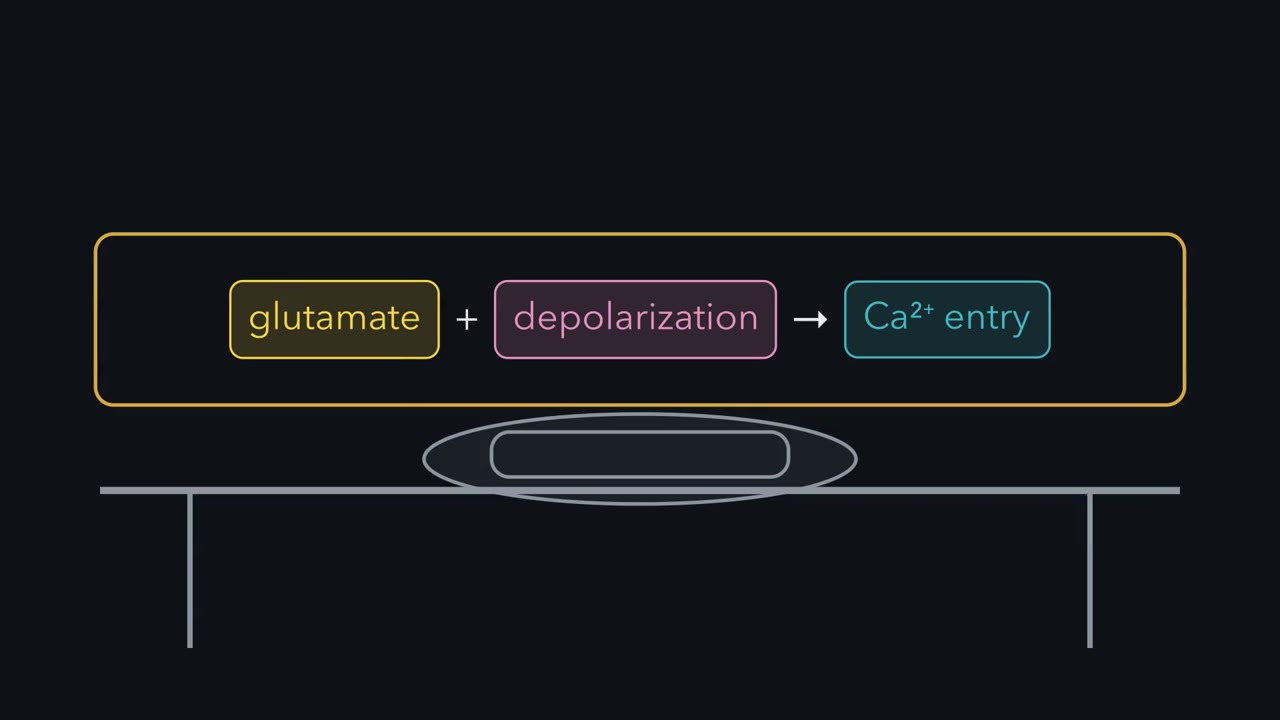
If calcium entry needs glutamate and depolarization together, what happens when several inputs reach one cell? Picture one CA1 cell receiving separate input pathways. You can stimulate each one on its own. Three properties were measured before the gate was known. Can the gate explain them? First, an input that stays silent during the train. Does it change? No. It released no glutamate, so its NMDA receptors let in no calcium, however depolarized the cell became. This mechanism does not potentiate it. That is input specificity. You saw it in the first recording, where the untrained control pathway stayed flat. Next, a train to just a few fibres.
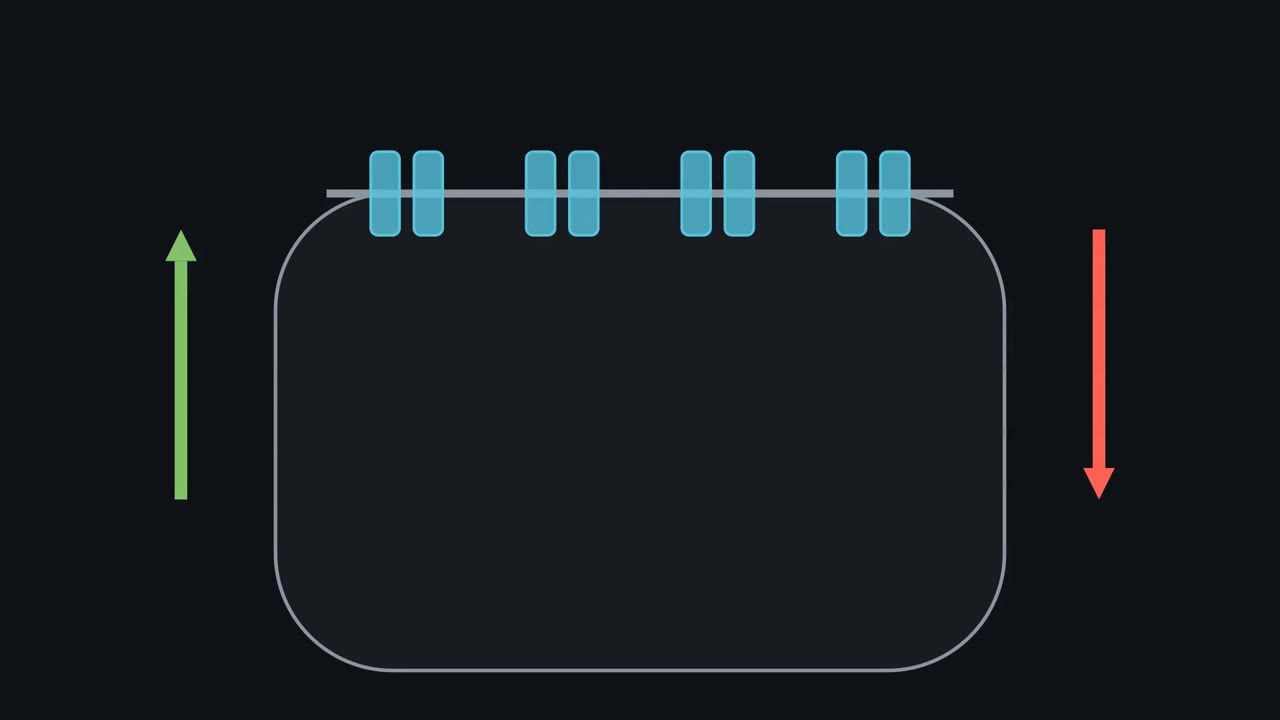
It can fail to induce LTP. The same train to many fibres succeeds. The balance point shows why. A few synapses barely move the local voltage, so the gate barely moves. Many synapses together pull the balance point up, close to where calcium entry is greatest. That is cooperativity. These voltages come from a single patch of membrane. Real dendrites differ, so read the direction, not the exact values. Now take two pathways, one weak and one strong. The strong one can potentiate on its own. Stimulated alone, the weak pathway fails. Its spines get glutamate, but too little depolarization to clear the block. Now stimulate the weak pathway during the strong pathway's train.
A third pathway gets no stimulation at all. Predict each pathway's slope an hour later. The strong pathway is potentiated, as before. The weak pathway is potentiated too. It supplied its own glutamate. The strong input supplied the depolarization that cleared the block.
The third pathway stays near baseline, because it released no glutamate. That is associativity, a Hebbian rule in a dish. A spike fired by the cell and spreading back into the dendrite can play the strong input's part. This is the shape an association needs. A weak input, like a cue, gains strength when active with a strong one, like an outcome. The takeaway: one gate, reading two signals, explains input specificity, cooperativity and associativity. That holds when the inputs depolarize the right spines enough.
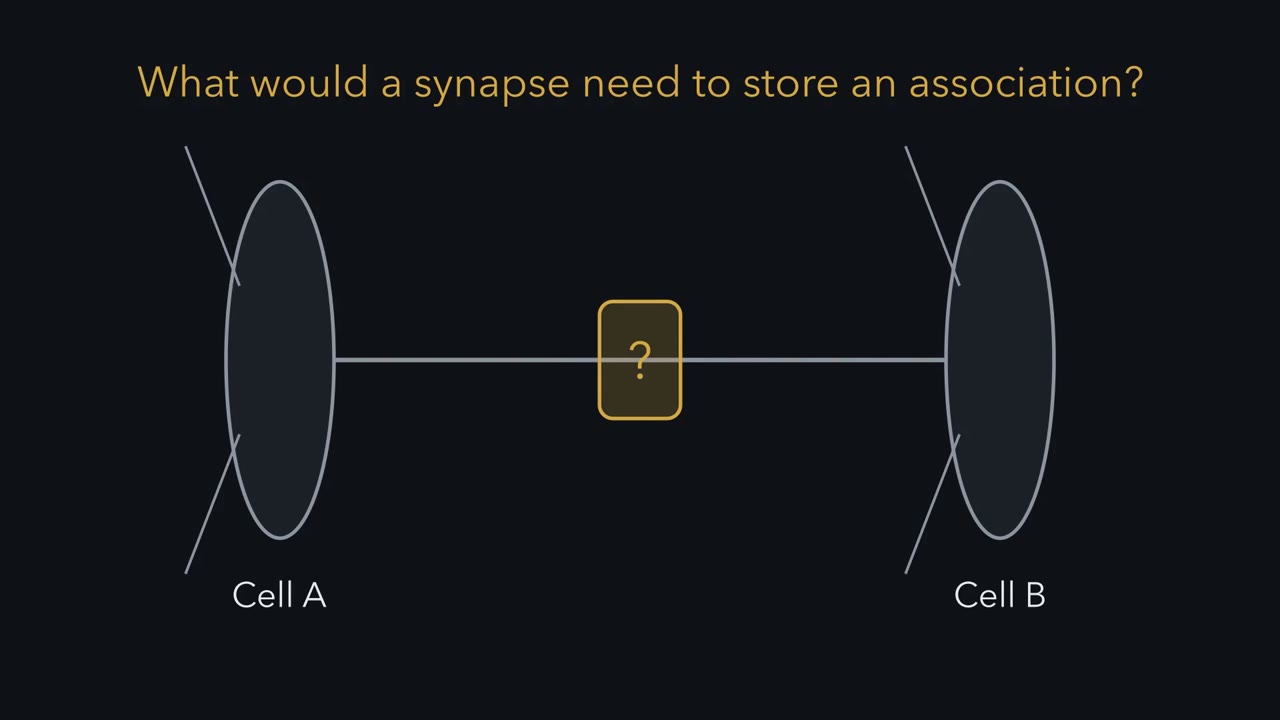
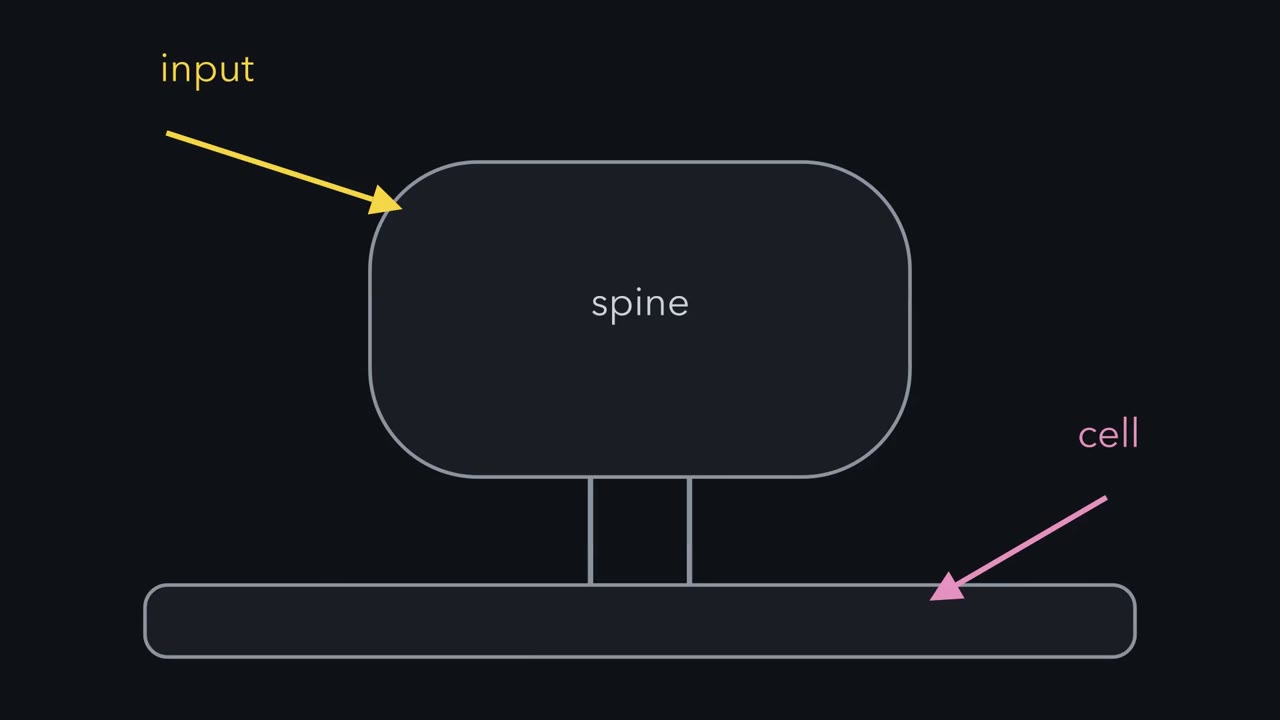
A synapse that stores an association should strengthen when its own input is active at the same moment as the cell it talks to. How could one synapse know what the whole cell is doing?
Continue in the lesson: Synaptic Plasticity →
2:49 · Free, with captions and a transcript. The lesson has the full text, the questions and the sources.
More films from this lesson
How this film was made. Narration: an AI narrator voice (Kokoro, af_heart) reading narration written from this lesson's text. Animation: AI-generated in code (Manim) by Claude, a schematic with no drawn molecular structures. Captions come from the narration script. See something wrong? Report it.