Fast Changes, and the Road to Memory
Read the transcript of “Fast Changes, and the Road to Memory”
Film transcript: Fast Changes, and the Road to Memory
Some changes last milliseconds, not hours. Do they follow the same rule? No. The facilitation and depression shown here are a different machine. They need no postsynaptic coincidence, and they work mainly in the presynaptic terminal. Short-term plasticity also includes other mechanisms. Give two pulses close together. Divide the second response by the first. That is the paired-pulse ratio. Above one is facilitation. Below one is depression. The classic explanation for facilitation is residual calcium, left in the terminal from the first spike. In 2016, Jackman, Regehr and colleagues deleted synaptotagmin 7 in mice. Facilitation was lost at the synapses tested, though residual calcium was unchanged.
So at those synapses, synaptotagmin 7 is a sensor that reads the leftover calcium. Depression has a simple candidate. The first spike uses up vesicles. In a simple depletion model, with no refilling and no facilitation, the first pulse releases 40% % of the pool. Will the second response be larger or smaller?
Smaller. 60% % of the pool is left, so the second response is 60% % of the first. But a ratio like that does not prove depletion. Other processes can give the same number. Now back to Hebb. Does memory actually use LTP? A correlation, learning alongside potentiation, is not proof. In 1986, Morris and colleagues infused an NMDA blocker into rats. Place learning was impaired, a visual task was spared, and hippocampal LTP was suppressed. But the drug reached many synapses. It showed the receptors were needed for both, not that the learning was LTP. In 2014, Nabavi, Malinow and colleagues used light on auditory inputs to the rat lateral amygdala, as a cue.
After light was paired with shock, the light suppressed lever pressing. Optical LTD of those inputs removed the response. Optical LTP afterwards restored it. Is LTP at these inputs enough, on its own, to create the memory?
No. In rats never given the pairing, LTP at these inputs produced no response. Something set up by the pairing had to be there. That holds for this pathway, in rats, in this task. The takeaway: fast changes are mostly a separate, presynaptic machine. And linking LTP to memory takes tests of necessity and sufficiency, not correlation alone.
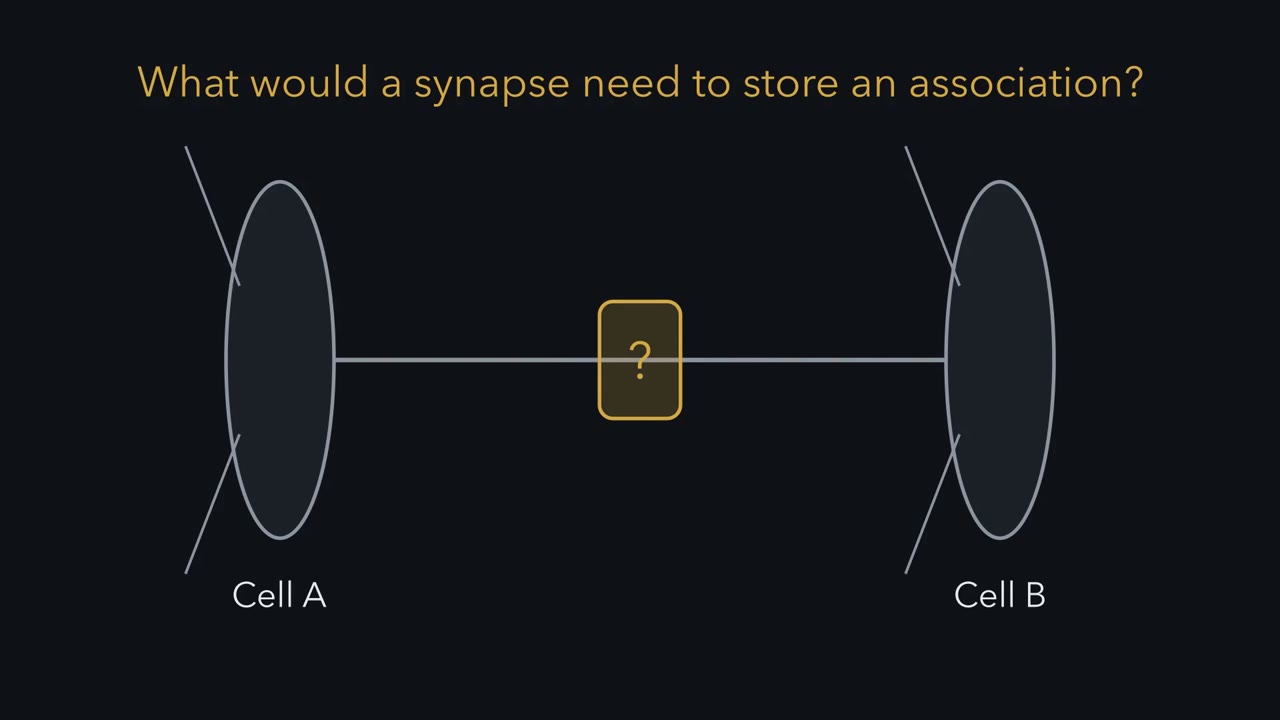
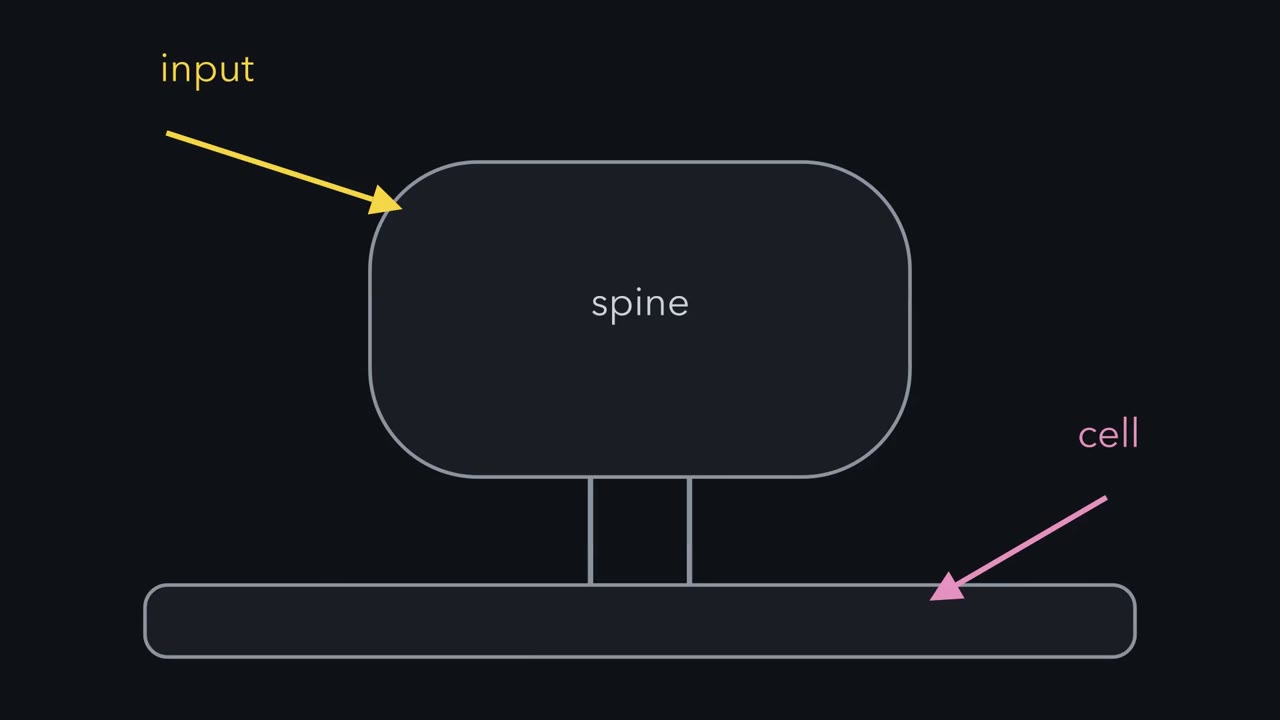
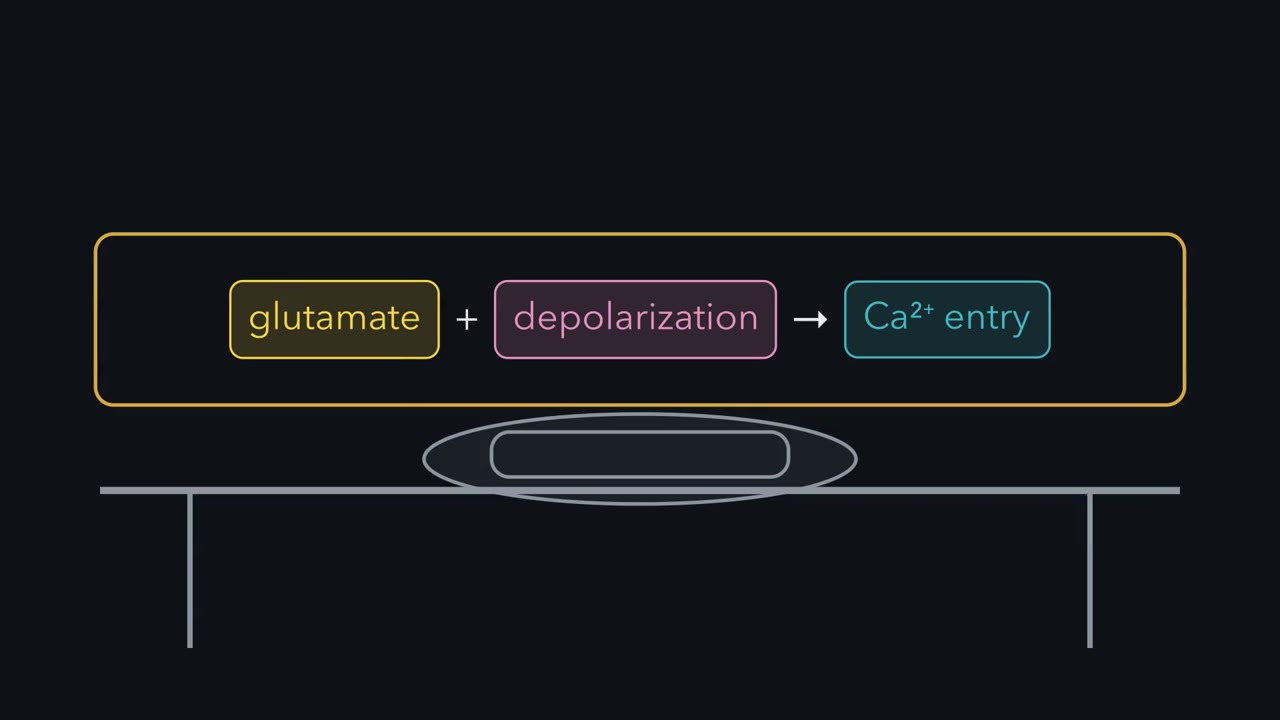
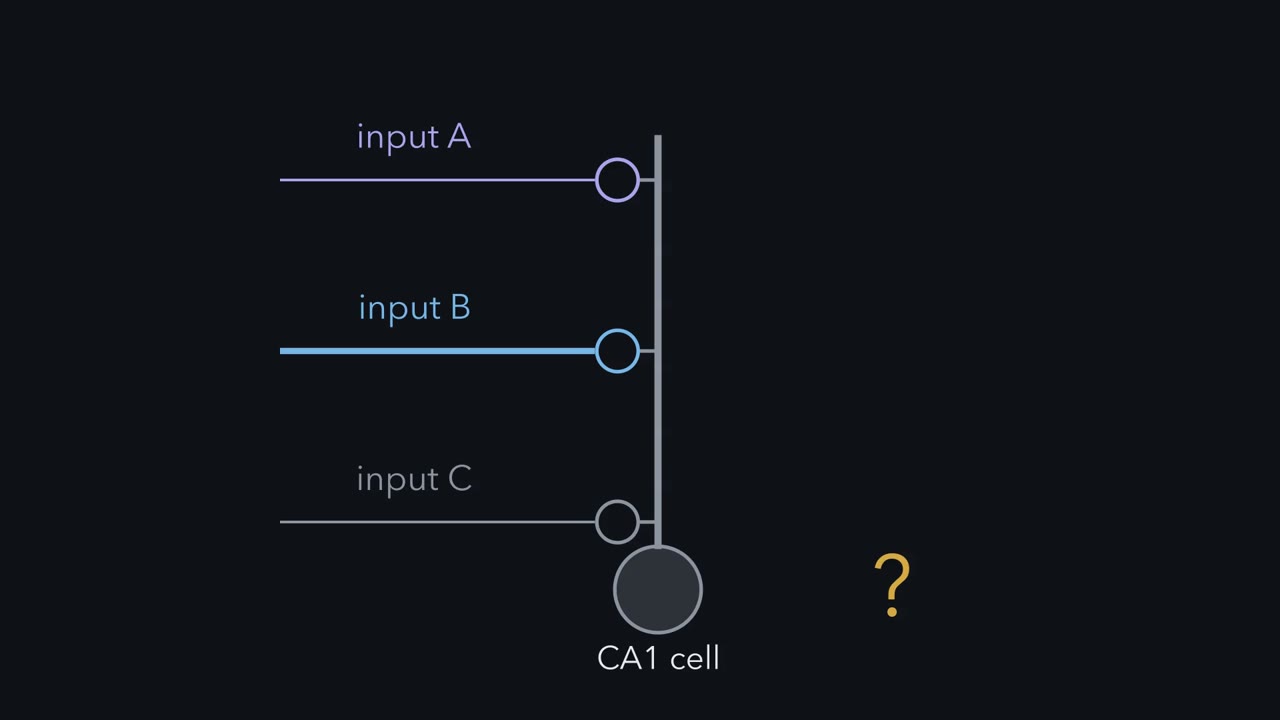
A synapse that stores an association should strengthen when its own input is active at the same moment as the cell it talks to. How could one synapse know what the whole cell is doing?
Continue in the lesson: Synaptic Plasticity →
3:11 · Free, with captions and a transcript. The lesson has the full text, the questions and the sources.
More films from this lesson
How this film was made. Narration: an AI narrator voice (Kokoro, af_heart) reading narration written from this lesson's text. Animation: AI-generated in code (Manim) by Claude, a schematic with no drawn molecular structures. Captions come from the narration script. See something wrong? Report it.