Turning It Up or Down
Read the transcript of “Turning It Up or Down”
Film transcript: Turning It Up or Down
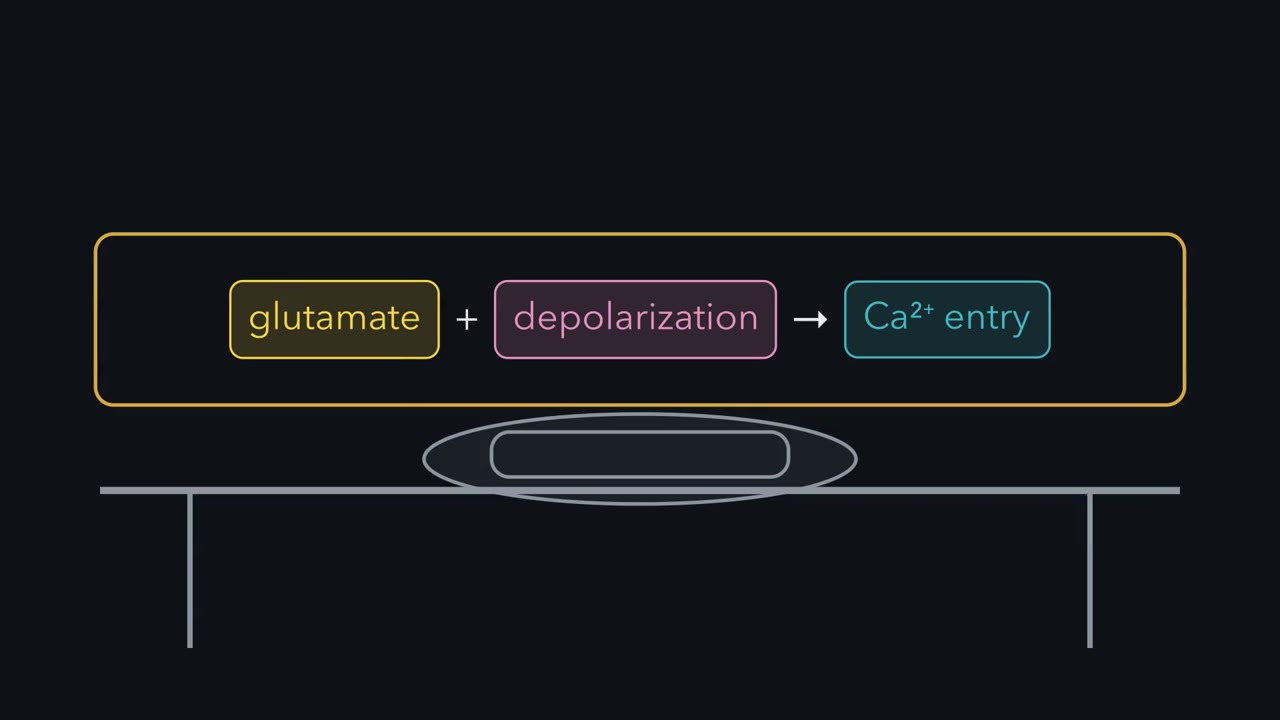
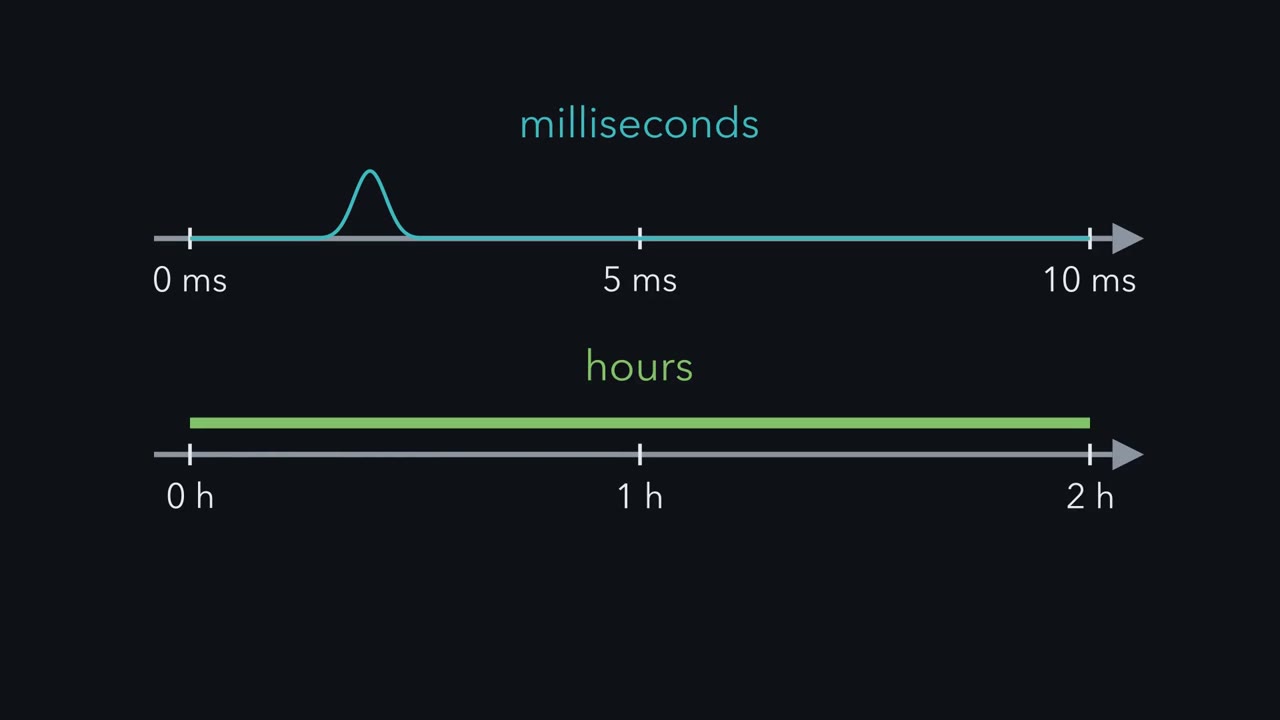
The same synapse can be turned up or turned down for hours. What decides which way it goes? Start with up. In the standard model, the large, fast calcium rise after a tetanus recruits a kinase, CaMKII. This kinase can stay active after calcium falls. So a brief calcium signal can leave a change that outlasts it. Expression includes more AMPA receptors at the synapse. In 2000, Hayashi, Malinow and colleagues saw tagged AMPA receptors driven into synapses. More AMPA receptors mean a bigger response to the same glutamate. LTP that lasts many hours often needs new protein synthesis. Now down. In 1992, Serena Dudek and Mark Bear gave the same input a long, slow train. It was 900 pulses, at 1 to 3 Hz.
The response fell and stayed down for more than an hour, only at the conditioned input. This is long-term depression, or LTD. Now repeat the slow train with the NMDA blocker APV. Does LTD develop? No. NMDA antagonists prevented it. The same receptor that gates LTP is needed for its opposite. So what decides the direction? In the standard model, how much calcium comes through, and how fast. A modest, prolonged rise preferentially recruits protein phosphatases, rather than CaMKII. The model's reason: the phosphatase pathway responds to smaller Ca2+/calmodulin signals than CaMKII does. So a small, long signal tips toward removing receptors. A large, fast one tips toward inserting them.
In 1993, Mulkey, Herron and Malenka found that phosphatase inhibitors blocked LTD induction in rat CA1. Expression of LTD includes removing AMPA receptors by endocytosis. Keep the hedge. This calcium rule is a model. No single calcium threshold between LTD and LTP is established. Whether LTD needs calcium flow through the receptor is still debated. The takeaway: in the standard model, a synapse turns up or down with how much calcium enters, and how fast.
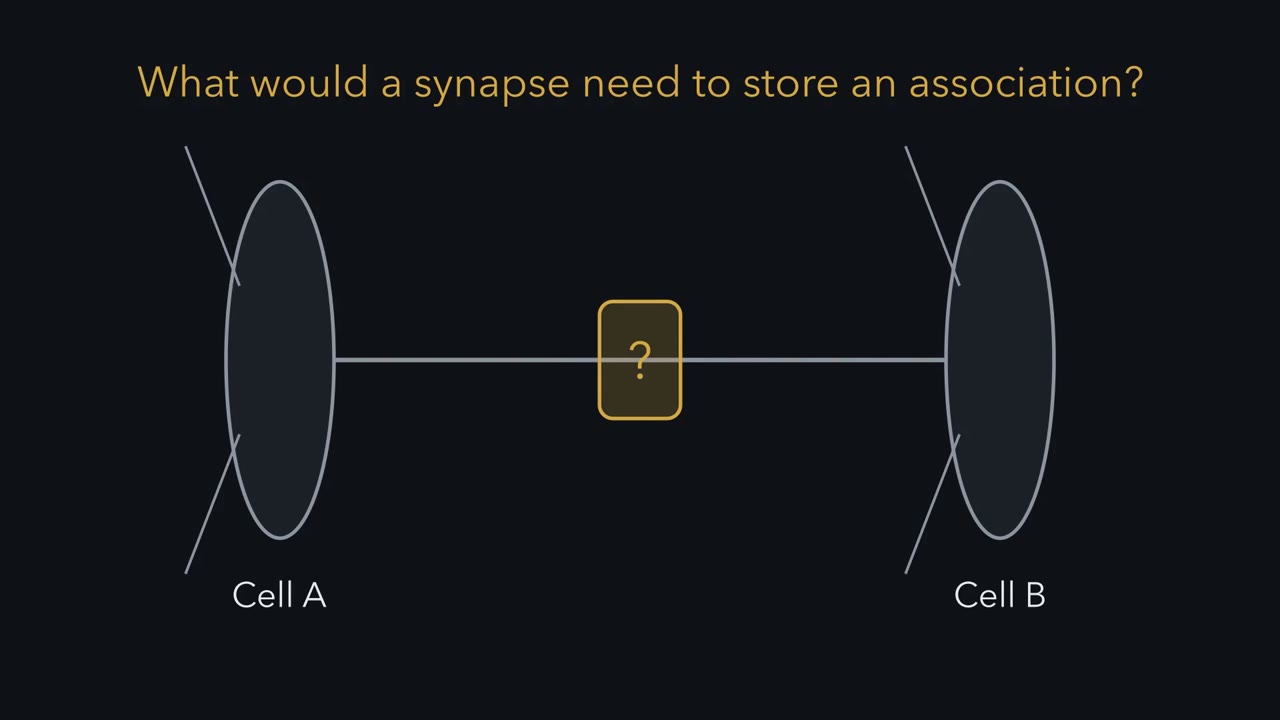
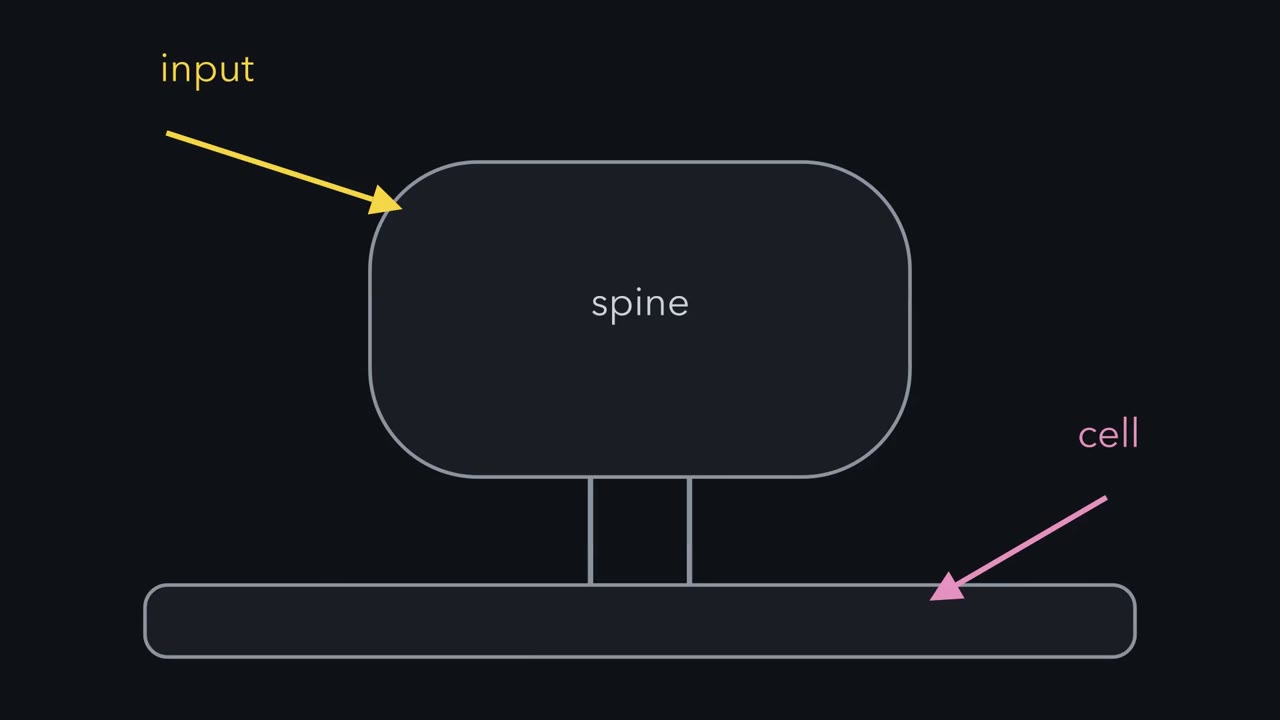
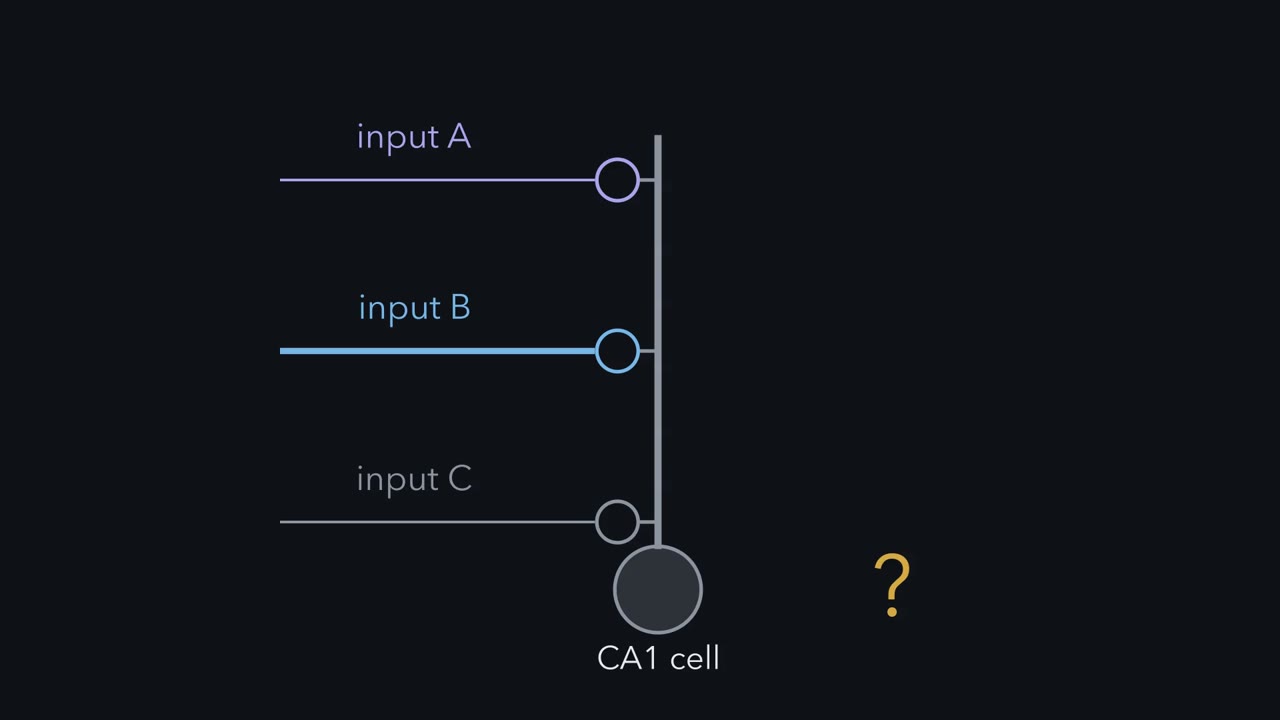
A synapse that stores an association should strengthen when its own input is active at the same moment as the cell it talks to. How could one synapse know what the whole cell is doing?
Continue in the lesson: Synaptic Plasticity →
2:44 · Free, with captions and a transcript. The lesson has the full text, the questions and the sources.
More films from this lesson
How this film was made. Narration: an AI narrator voice (Kokoro, af_heart) reading narration written from this lesson's text. Animation: AI-generated in code (Manim) by Claude, a schematic with no drawn molecular structures. Captions come from the narration script. See something wrong? Report it.