A Synapse That Could Learn
Read the transcript of “A Synapse That Could Learn”
Film transcript: A Synapse That Could Learn
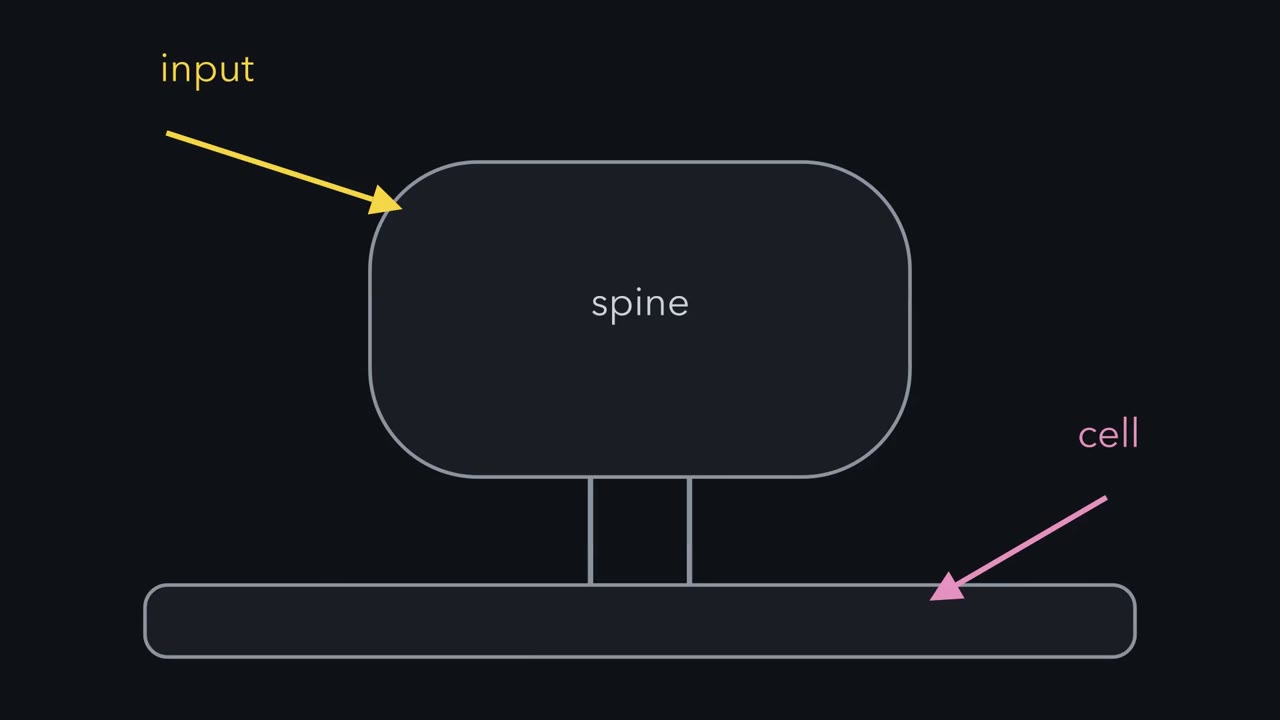
What would a synapse need, to store an association? In 1949, Donald Hebb proposed a rule. When one cell repeatedly helps fire another, the connection between them grows. Treat that as a design specification. The synapse should strengthen when two things happen together. Its own input is active. And the cell it talks to is active at the same moment. First, we need evidence that synapses change at all. Most of it comes from the hippocampus, so here is a map. Input arrives from the entorhinal cortex. Its axons, the perforant path, reach the dentate gyrus and its granule cells. The granule cells' axons, the mossy fibres, reach the pyramidal cells of CA3.
Their axons, the Schaffer collaterals, reach the pyramidal cells of CA1. Most of this story happens at that last relay. We will visit three synapses on this chain. The first is where lasting change was first measured. In 1973, Tim Bliss and Terje Lømo reported it, in anaesthetized rabbits. They stimulated the perforant path and recorded from the dentate gyrus, with an electrode outside the cells. That electrode records a field potential: an extracellular voltage made by the summed currents of many neurons. A test pulse gives two parts. A slow wave, the population EPSP, measures synaptic strength. A sharp spike riding on it shows how many cells fire, and how closely in time.
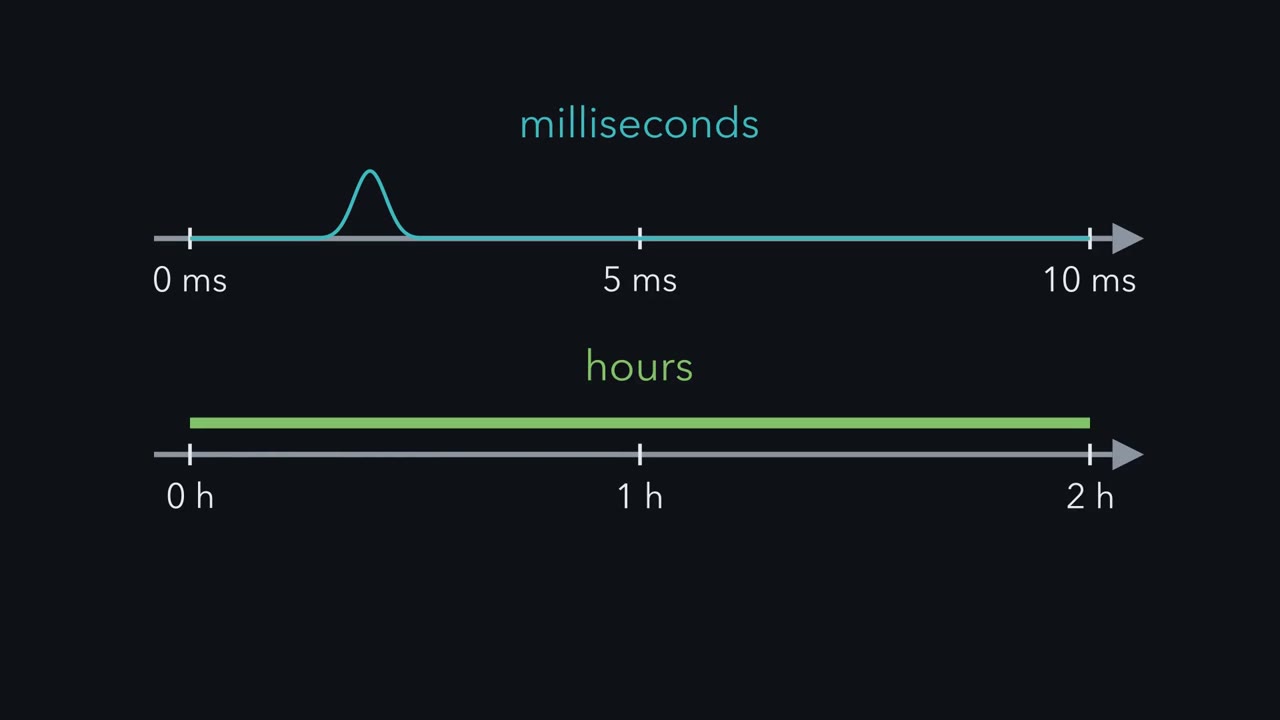
Between test pulses, they gave brief high-frequency trains, called a tetanus. One regimen was 100 pulses per second, for 3 to 4 seconds. Afterwards, the same test pulse gave a larger response, in 15 of 18 rabbits. It lasted from 30 minutes to 10 hours. This lasting rise is long-term potentiation, or LTP. How do you know the change belongs to that input? Record a second pathway to the same cells, and leave it untrained. If the preparation were drifting, that pathway would drift too. If it stays flat while the trained one rises, the change is input specific. In a made-up recording, the slope rose to 160% % of baseline. The spike rose to 250%. Is the synapse two and a half times stronger?
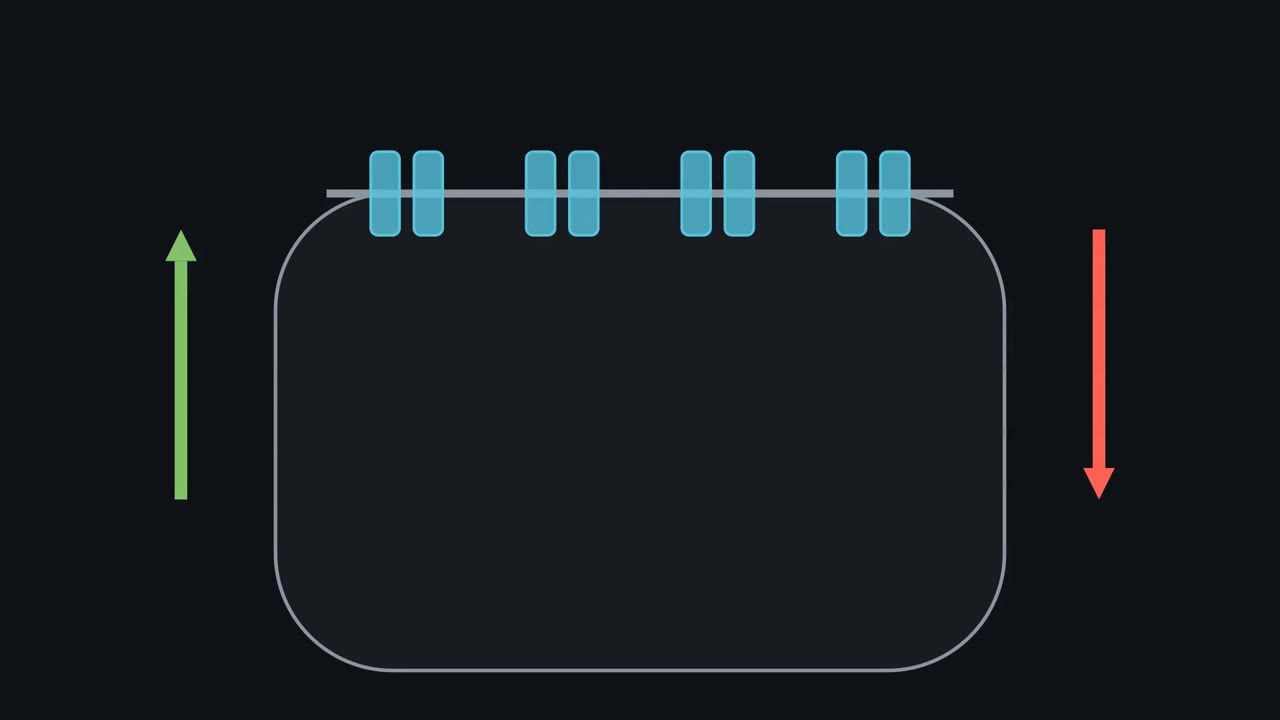
No. Synaptic strength is read from the slope, and it rose much less. Firing has a threshold. A modest rise in the EPSP pushes many more cells past it. So the spike grows out of proportion. To test whether the cells became more excitable, compare spike size at matched EPSP size. The record leaves three puzzles. How can a synapse detect that both cells were active together? What decides whether it goes up or down? And does memory use it?
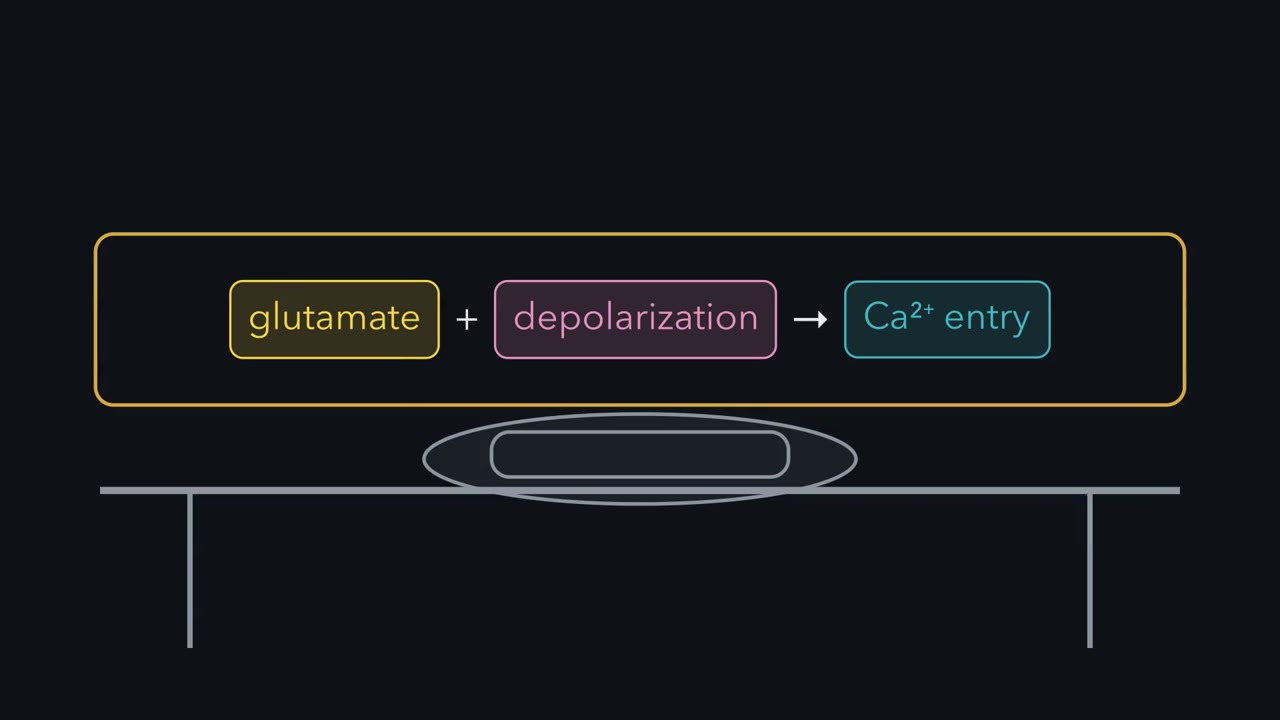
One receptor answers the first puzzle, and offers a model for the second. At Schaffer collateral–CA1 synapses, with normal magnesium outside the cell, LTP is triggered by calcium entering through NMDA receptors. Substantial entry needs glutamate and enough local depolarization together.
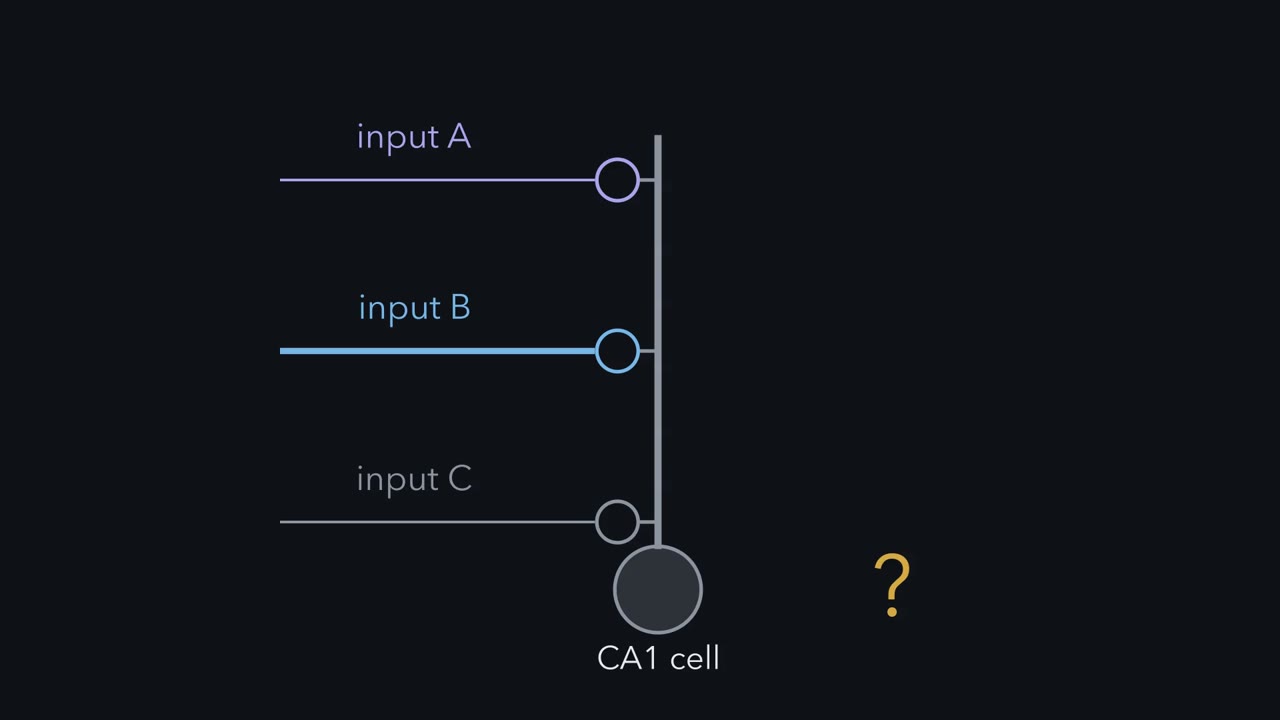
A synapse that stores an association should strengthen when its own input is active at the same moment as the cell it talks to. How could one synapse know what the whole cell is doing?
Continue in the lesson: Synaptic Plasticity →
3:43 · Free, with captions and a transcript. The lesson has the full text, the questions and the sources.
More films from this lesson
How this film was made. Narration: an AI narrator voice (Kokoro, af_heart) reading narration written from this lesson's text. Animation: AI-generated in code (Manim) by Claude, a schematic with no drawn molecular structures. Captions come from the narration script. See something wrong? Report it.