Testing the Gate
Read the transcript of “Testing the Gate”
Film transcript: Testing the Gate
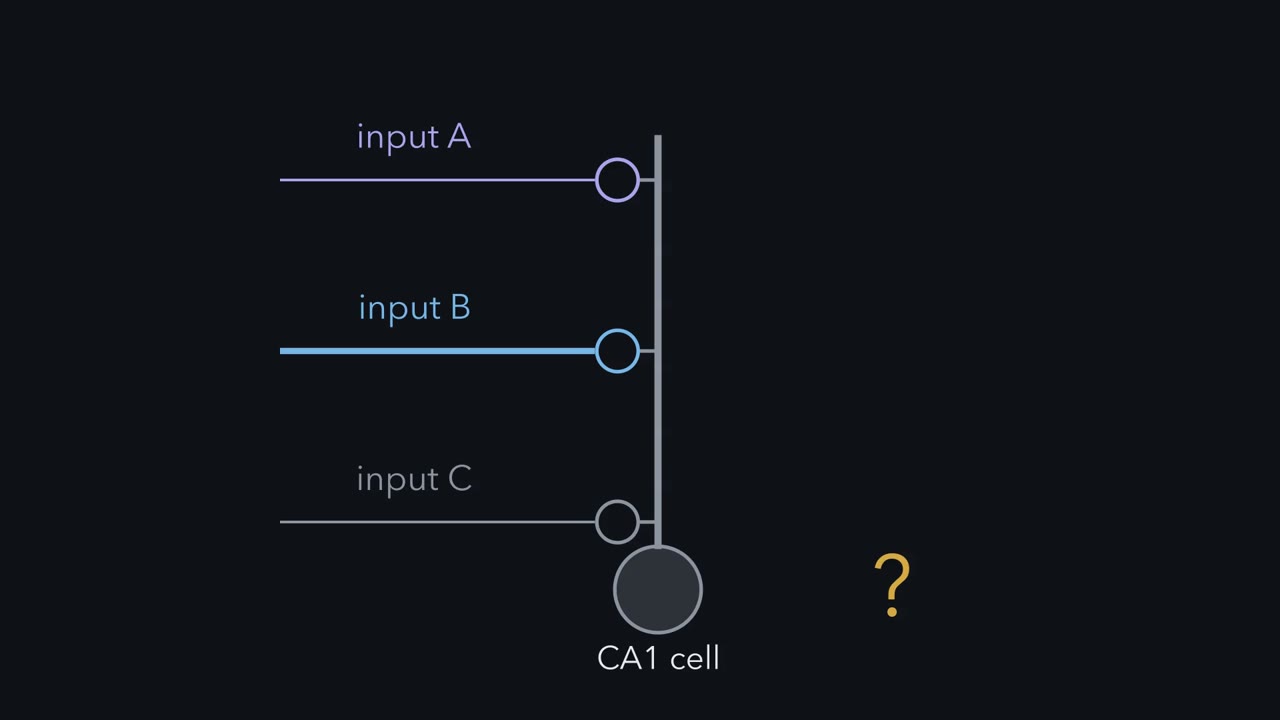
A rule earns trust when it predicts experiments. How would you test the two-signal gate? Work in a slice of rat hippocampus. Stimulate the Schaffer collaterals, and record from CA1. Give the input its usual fast train, 100 pulses per second. But hold one CA1 cell very negative, near minus −90 mV. Will that cell's input potentiate?
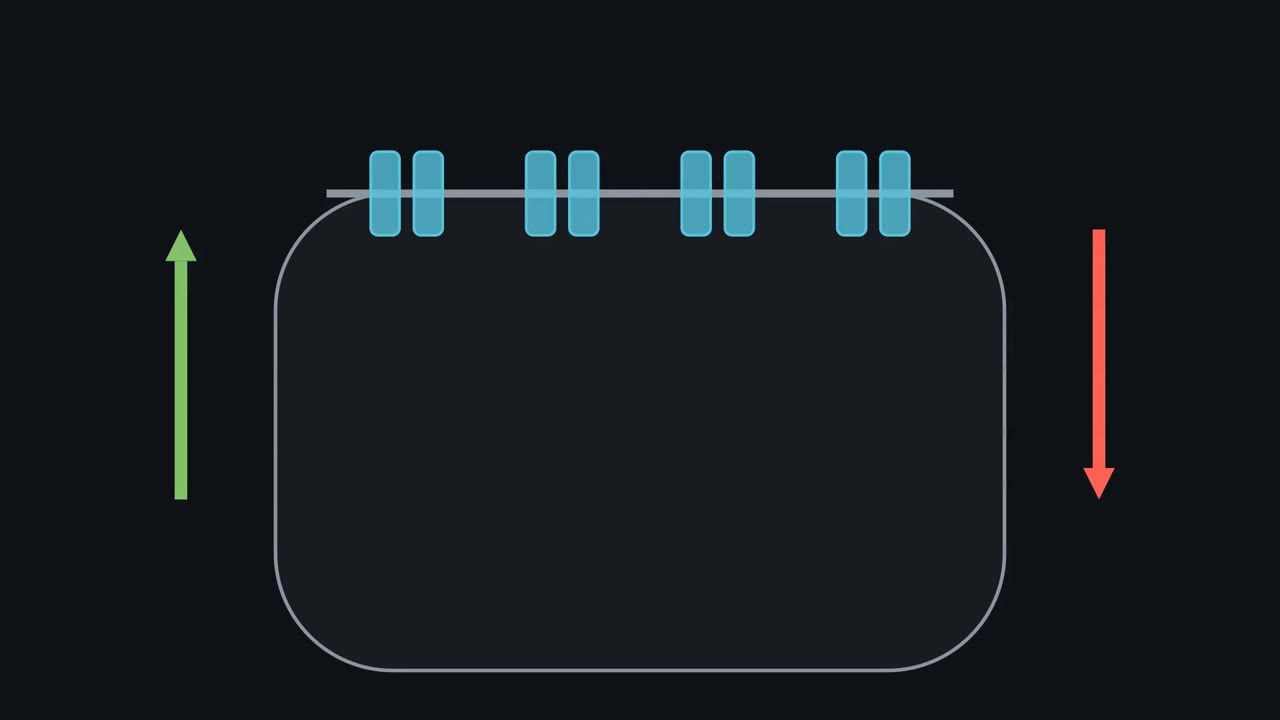
No, if the current keeps the active spines negative. Then the magnesium block stays strong, and glutamate arrives without the second signal. In 1986, Malinow and Miller found that hyperpolarizing the cell during the train prevented LTP, under their conditions. The reverse also works. Slow input, too weak to potentiate by itself, was paired with current that depolarized the cell. That pairing produced LTP. Two groups reported it in 1986. So which matters: how fast the input fires, or whether the cell is depolarized when it does?
Coincidence. High frequency is not required. A fast train is one way to make the cell supply its own depolarization. Three experiments tested the gate directly. You have just seen one. First, block the receptor. In 1983, Collingridge, Kehl and McLennan applied the NMDA antagonist APV. They used doses that abolished responses to an NMDA agonist. The baseline EPSP was unaffected. But a fast train no longer produced LTP. NMDA receptors were needed to start the change, not to carry the everyday response. Second, block the calcium. The same year, Lynch and colleagues injected the calcium buffer EGTA into CA1 cells. LTP failed at those cells. So induction needs a calcium rise inside the postsynaptic cell.
With the APV result, that points to calcium entering through NMDA receptors in active spines. One caution about scope. Not every LTP uses this gate. Mossy-fibre LTP, in guinea-pig CA3, needed no NMDA receptors. The takeaway: block the NMDA receptor, the calcium, or the depolarization, and LTP fails. Pair glutamate with enough depolarization, and it appears.
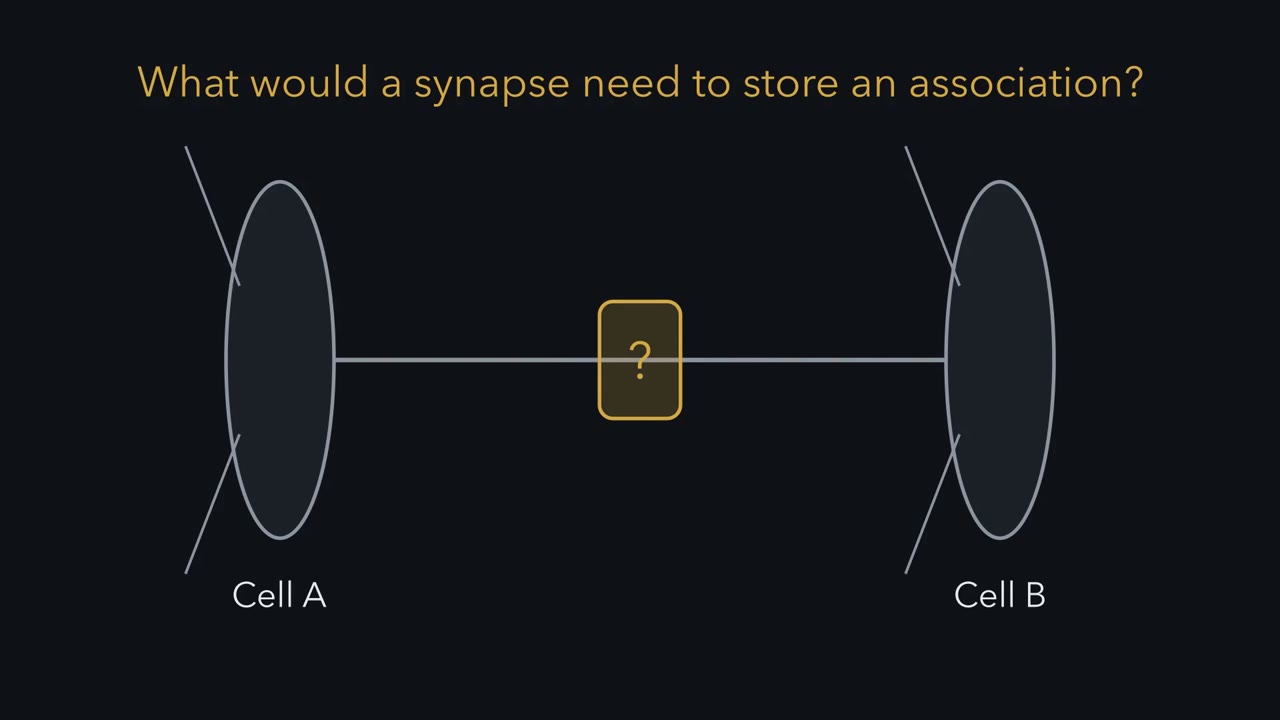
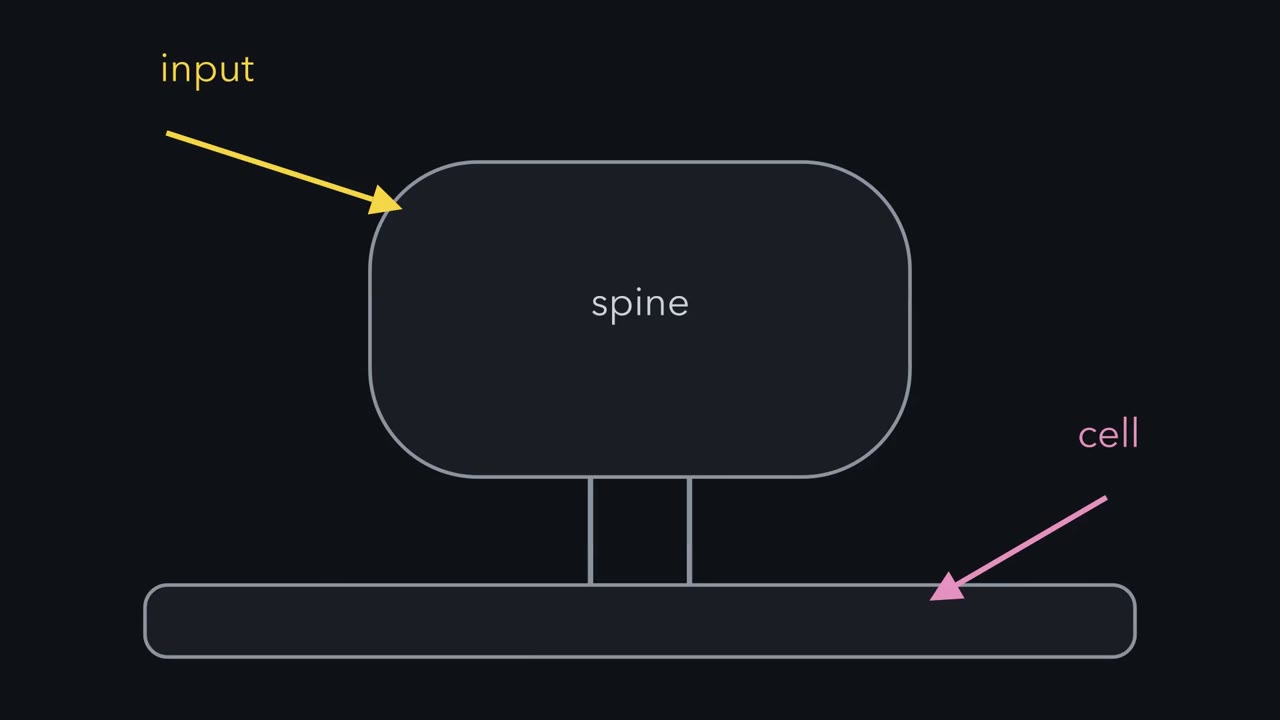
A synapse that stores an association should strengthen when its own input is active at the same moment as the cell it talks to. How could one synapse know what the whole cell is doing?
Continue in the lesson: Synaptic Plasticity →
2:44 · Free, with captions and a transcript. The lesson has the full text, the questions and the sources.
More films from this lesson
How this film was made. Narration: an AI narrator voice (Kokoro, af_heart) reading narration written from this lesson's text. Animation: AI-generated in code (Manim) by Claude, a schematic with no drawn molecular structures. Captions come from the narration script. See something wrong? Report it.