Two Shapes Make the S
Read the transcript of “Two Shapes Make the S”
Film transcript: Two Shapes Make the S
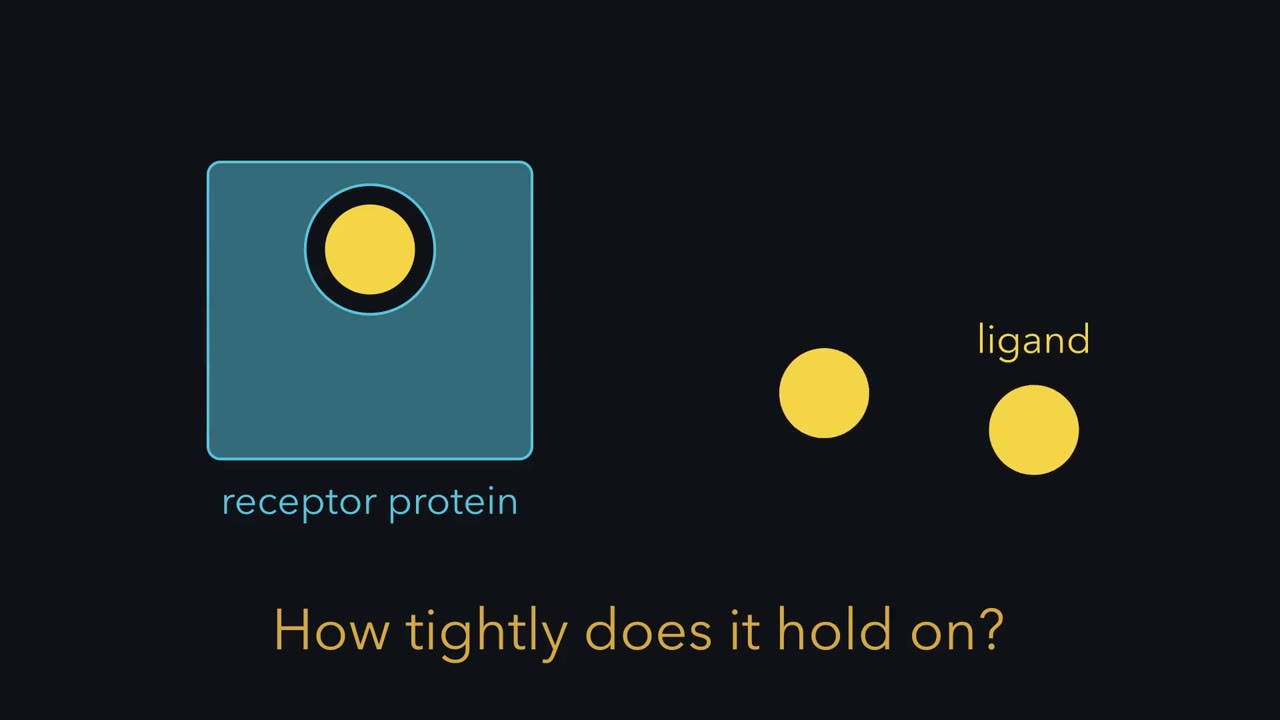
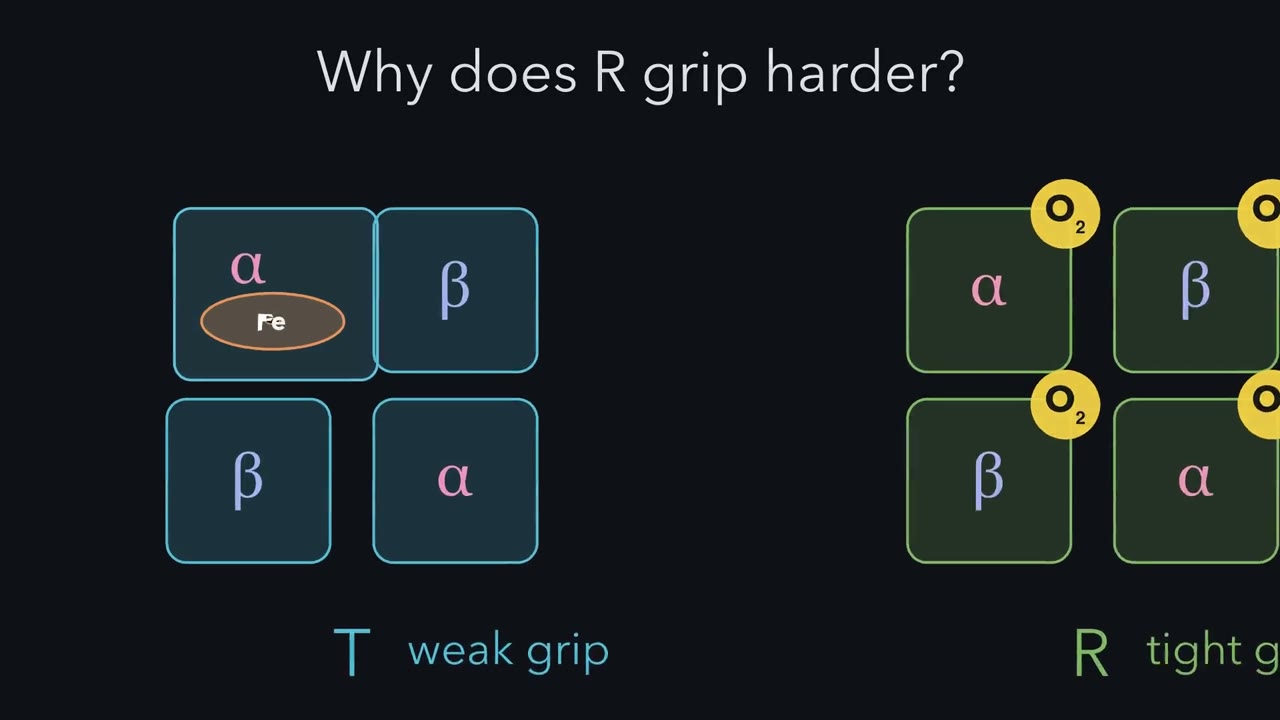
Myoglobin draws a hyperbola. Hemoglobin draws an S. Where does the S come from? Hemoglobin has four sites. And the whole molecule can take either of two overall shapes. T, for tense, is held by extra salt bridges between the subunits. Each heme in T holds oxygen weakly. R, for relaxed, has fewer of those bridges. Each heme in R holds oxygen tightly. In one illustrative fit, a T site is half full only near 110 torr. An R site is half full below 1 torr. A molecule does not wait for oxygen to change shape. Even empty, it flickers between T and R. But with no oxygen, T is far more stable. R molecules are almost absent. So a sample is a mix. Its fullness is the average of each shape's fullness, weighted by how much of each is present.
At 20 torr, about a fifth of the molecules are R. Together the mix is about one-third full. At 100 torr, nearly all the molecules are R. The mix is about 98% % full. Between those two points, about two-thirds is delivered. But notice what changed. The fraction of R climbed with oxygen. Why? R holds oxygen far better than T. So each oxygen bound makes R a little more favorable. Oxygen is a reactant that only R uses well. Adding oxygen pulls the balance from T toward R. Follow one molecule as it fills. Each oxygen multiplies the odds of R by the same large factor. That factor is how much more tightly R holds oxygen than T does. At low pressure, nearly everything is T. The curve follows T's weak curve and barely rises.
Through the middle, each oxygen tips more molecules into R. Their empty sites fill easily. This is the steep part. At high pressure, nearly everything is R. The curve flattens onto R's curve near full. Predict. Suppose T and R held oxygen equally well. What shape would the curve have?
A plain hyperbola. Oxygen would favor neither shape, so the mix would never shift. So cooperativity is oxygen shifting the mix toward the shape that binds oxygen best. The four sites share one shape, so a shift changes all four at once. The Hill coefficient scores how steep the S is at half full. Identical, independent sites score 1. Hemoglobin scores about 2.8. The score can be no larger than the number of sites. It measures steepness. It does not count anything. Predict. A carrier as steep as hemoglobin, but with myoglobin's P50. How much would it deliver?
Almost none. Its steep part sits far below 20 torr, so it is still full in the muscle. A hyperbola with hemoglobin's P50 delivers only about a third. Hemoglobin needs both: an S, and an S in the right place. The S comes from two shapes that differ in grip, and oxygen shifting the mix between them.
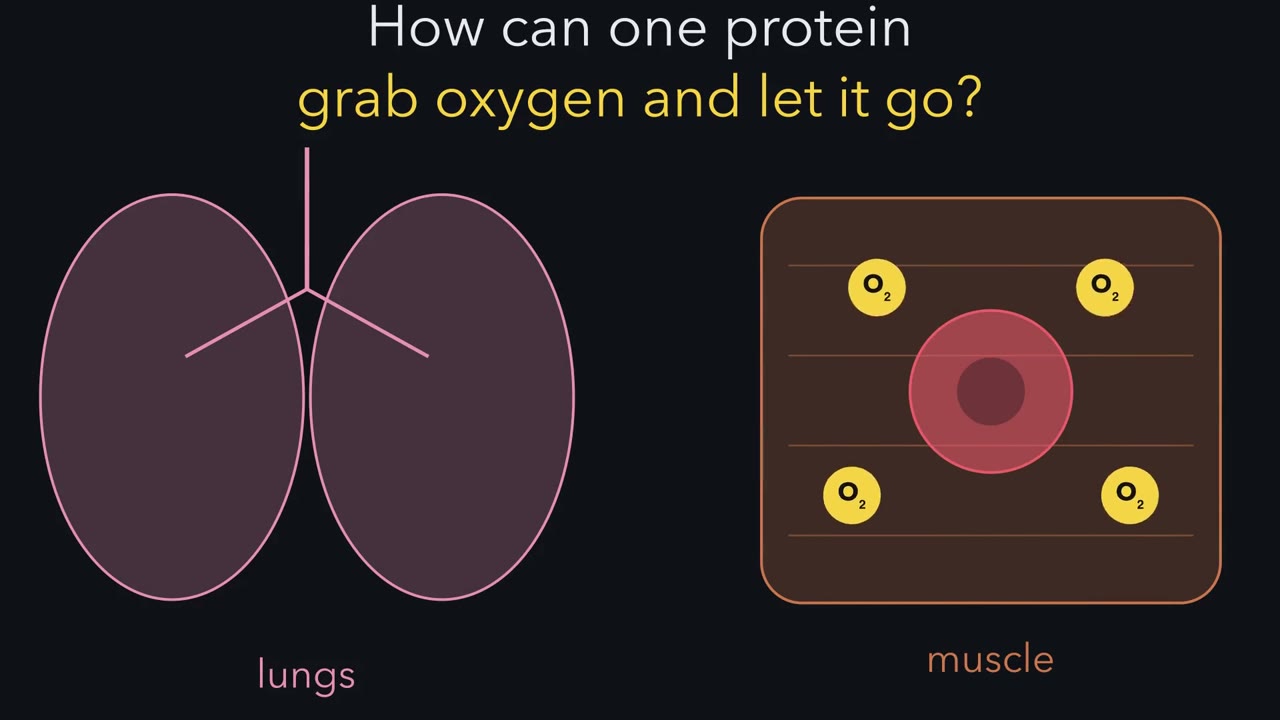
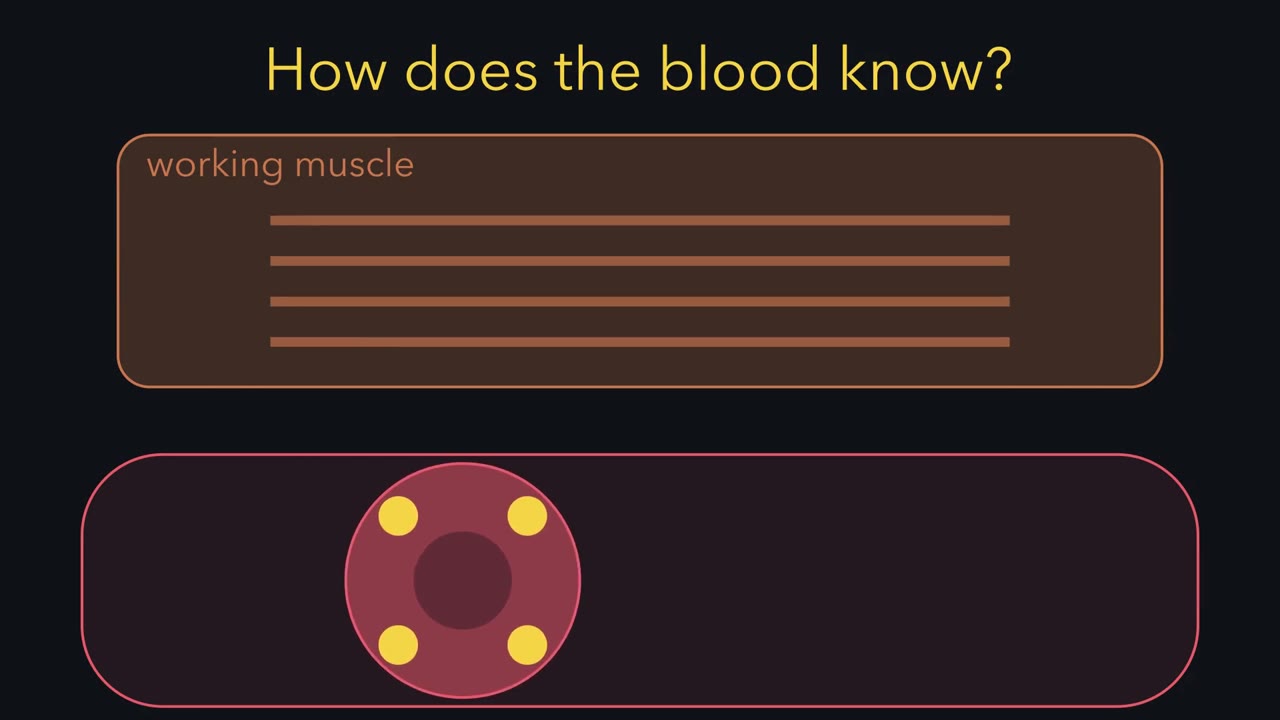
Your blood has to grab oxygen in the lungs and let go of about two-thirds of it in hard-working muscle. A tighter grip than hemoglobin's would make it worse. What does hemoglobin do instead?
Continue in the lesson: Protein Binding and Allostery: How Hemoglobin Loads and Delivers Oxygen →
3:41 · Free, with captions and a transcript. The lesson has the full text, the questions and the sources.
More films from this lesson
How this film was made. Narration: an AI narrator voice (Kokoro, af_heart) reading narration written from this lesson's text. Animation: AI-generated in code (Manim) by Claude, a schematic with no drawn molecular structures. Captions come from the narration script. See something wrong? Report it.