When the Shapes Betray You
Read the transcript of “When the Shapes Betray You”
Film transcript: When the Shapes Betray You
What happens when something holds hemoglobin in the wrong shape, or makes one shape dangerous? Carbon monoxide binds the heme about 250 times more tightly than oxygen does. Like oxygen, it favors R. So it shifts the mix toward R. Predict. One subunit carries carbon monoxide. Is the oxygen on the other three held more or less tightly?
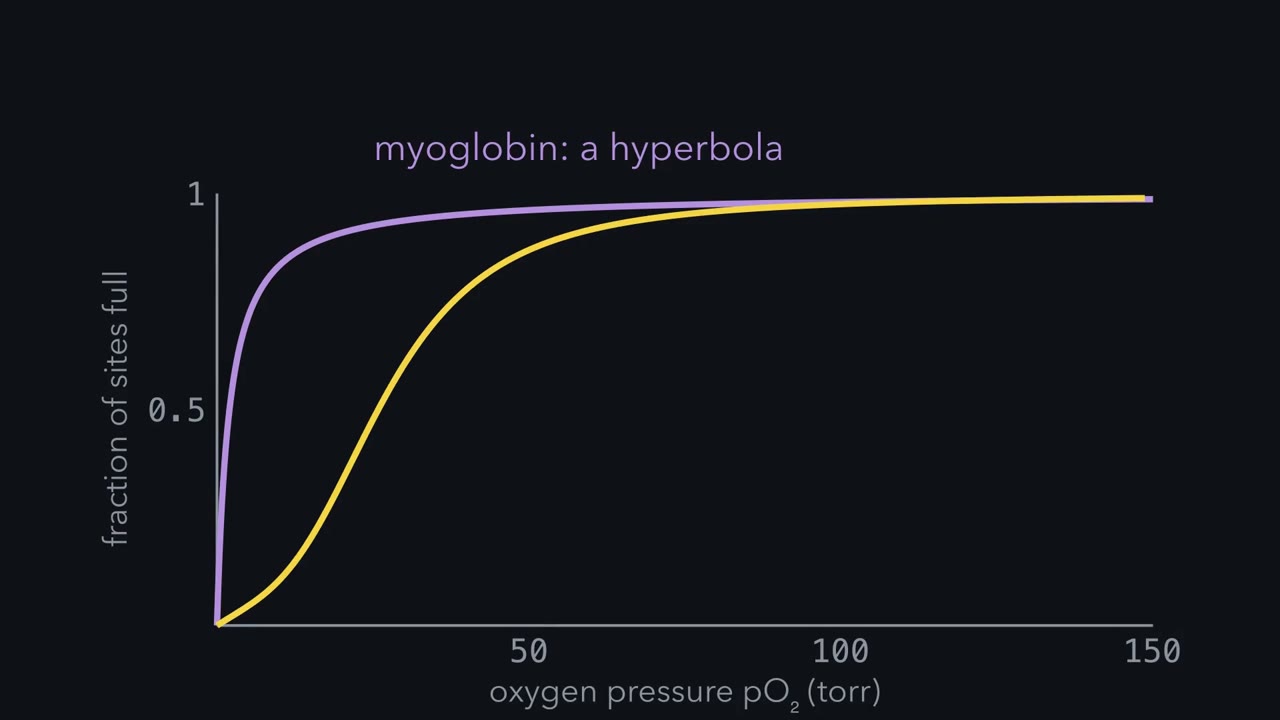
More tightly. The molecule is held in R, so its oxygen is released far less readily. The curve shifts left. So carbon monoxide takes sites away from oxygen, and it makes the oxygen still aboard stay put. Carbon monoxide hemoglobin is bright red. But the classic cherry-red skin is rarely seen in living patients. A pulse oximeter cannot tell it from oxygen hemoglobin. It reads falsely normal while tissues suffocate. The fix is high-concentration oxygen, to compete the carbon monoxide back off. Sickle-cell disease is a different failure. Here the T shape itself turns sticky. One amino acid changes. Glutamate becomes valine at position 6 of the β chain.
That valine sits on the surface in every state. But in T, a neighbor's hydrophobic pocket opens, and the valine plugs in. That neighbor sticks to the next. The molecules polymerize into stiff fibers that deform the red cell into a crescent. So the trigger is losing oxygen. Exertion raises oxygen use. Cold slows blood through small vessels. Both leave more hemoglobin in T for longer. Dehydration concentrates sickle hemoglobin, so fibers form faster. Carriers with one copy are usually healthy. They are partly protected against severe falciparum malaria. One newer treatment uses gene editing to switch fetal hemoglobin back on. Fetal hemoglobin does not join the sickle polymer.
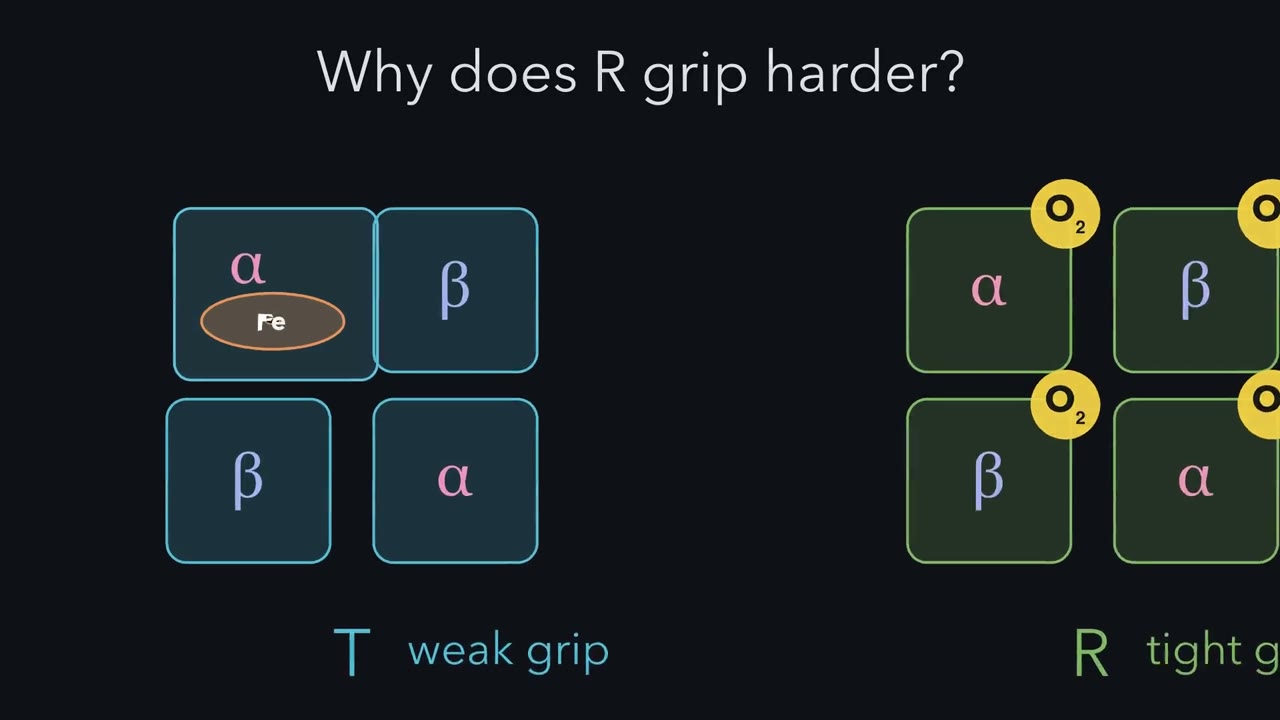
It dilutes the sickle hemoglobin around it, so cells sickle far less. Almost everything in this story follows one rule. Hemoglobin is a mix of a weak shape and a tight shape. Oxygen shifting that mix is how blood delivers. Locking the mix, or making T sticky, is how it fails.
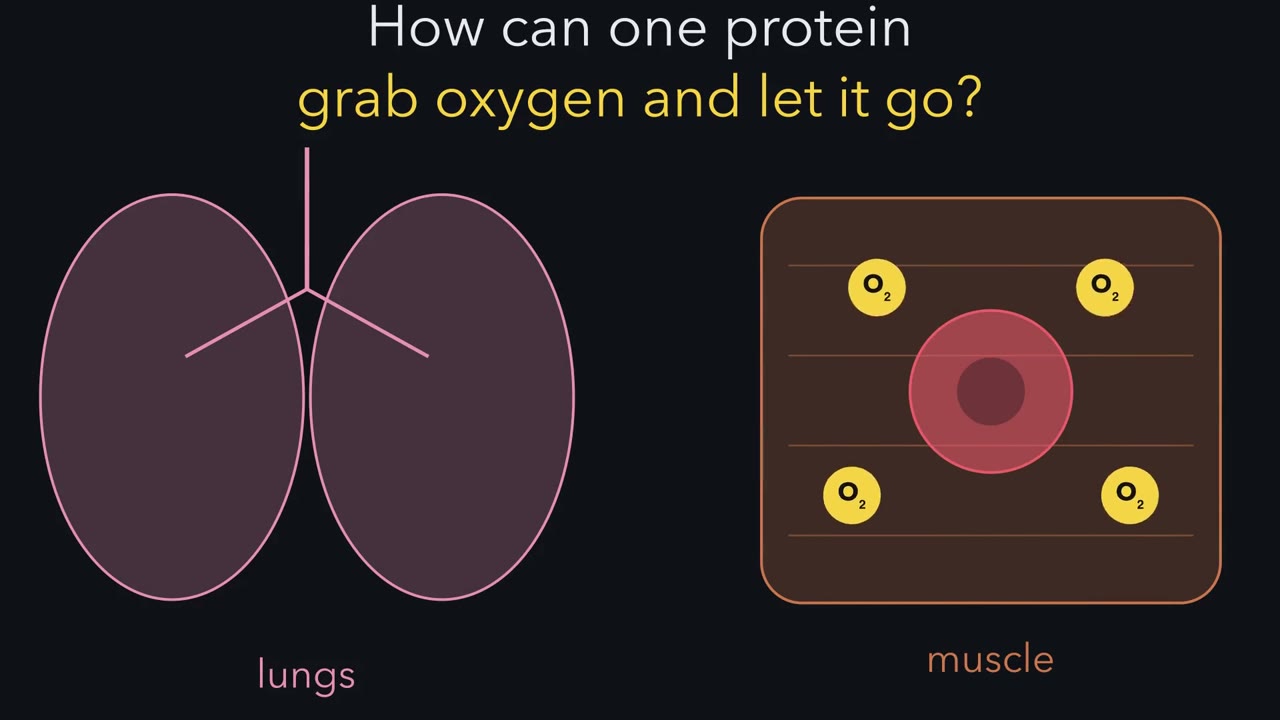
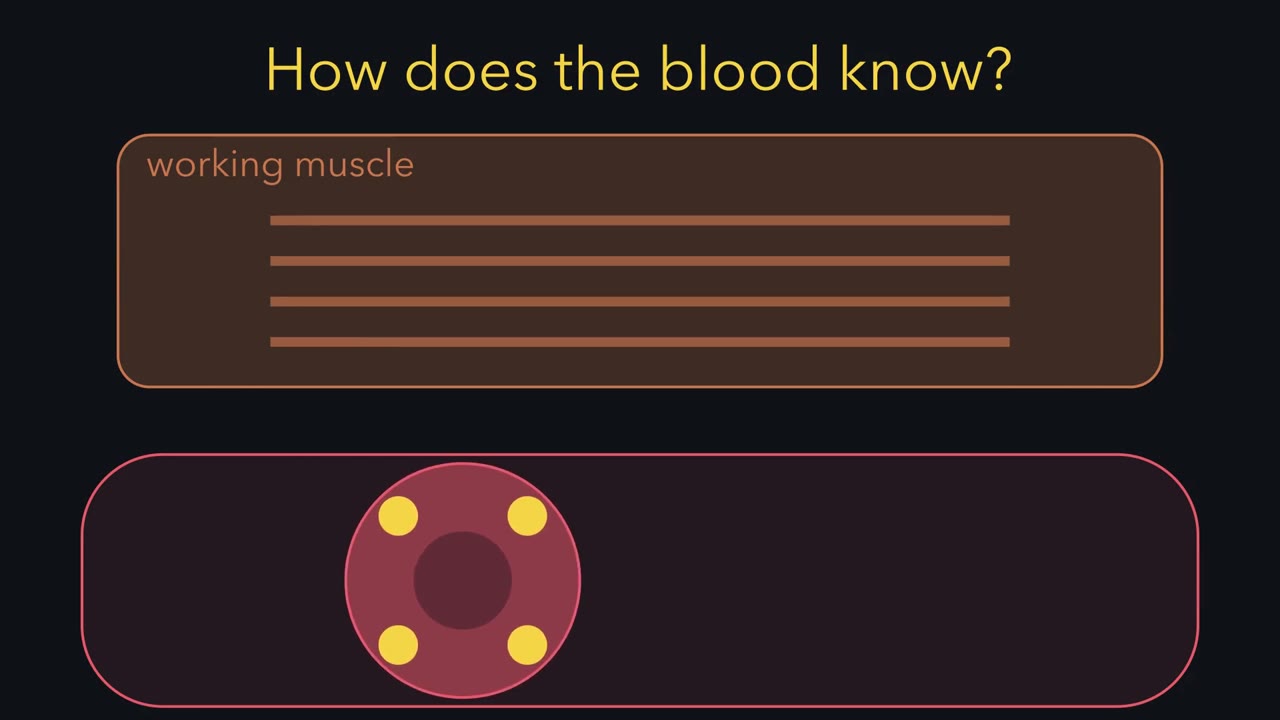
Your blood has to grab oxygen in the lungs and let go of about two-thirds of it in hard-working muscle. A tighter grip than hemoglobin's would make it worse. What does hemoglobin do instead?
Continue in the lesson: Protein Binding and Allostery: How Hemoglobin Loads and Delivers Oxygen →
2:40 · Free, with captions and a transcript. The lesson has the full text, the questions and the sources.
More films from this lesson
How this film was made. Narration: an AI narrator voice (Kokoro, af_heart) reading narration written from this lesson's text. Animation: AI-generated in code (Manim) by Claude, a schematic with no drawn molecular structures. Captions come from the narration script. See something wrong? Report it.