The Delivery Problem
Read the transcript of “The Delivery Problem”
Film transcript: The Delivery Problem
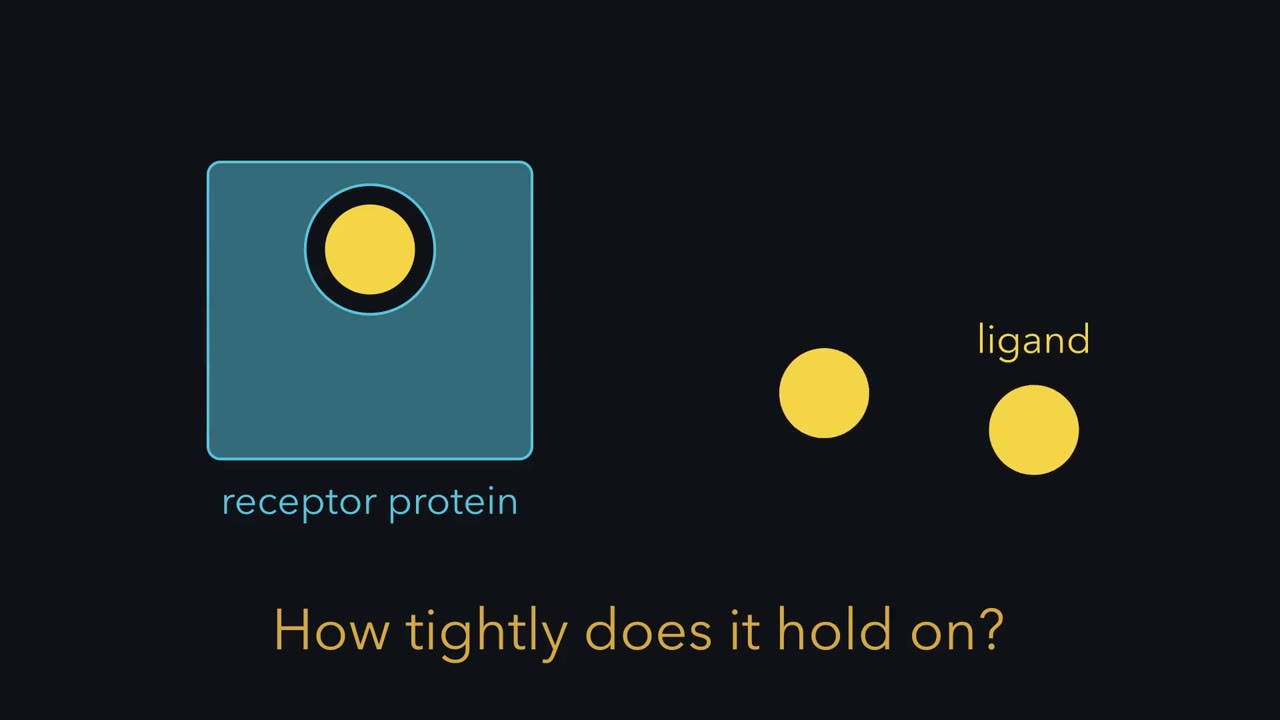
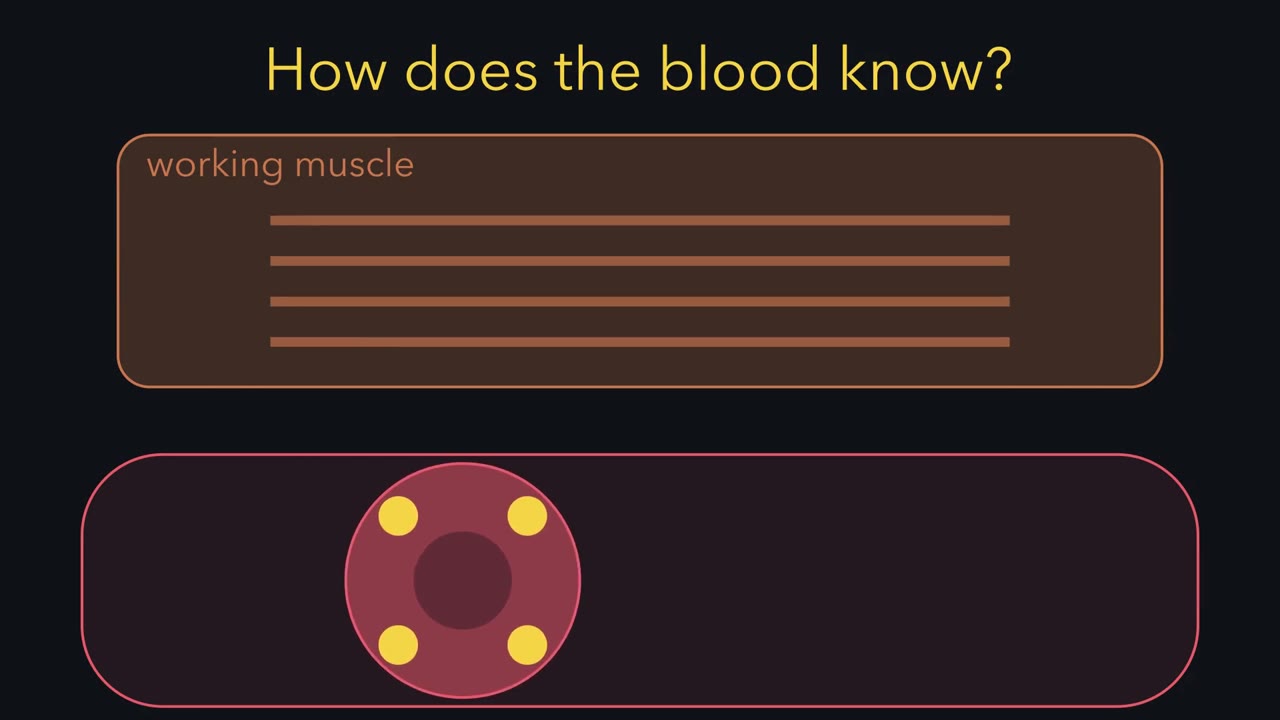
Your blood must grab oxygen in the lungs and let it go in working muscle. How can one protein do both? In the lungs, the oxygen pressure is about 100 torr. Oxygen is plentiful there. Blood leaving resting tissue sits near 40 torr. Blood leaving hard-working muscle sits near 20. So blood has two opposite jobs. Load oxygen where it is plentiful. Unload it where it is scarce. A protein that binds tightly is good at the first job. It is bad at the second. Predict. Would a protein that binds oxygen more tightly make a better carrier?
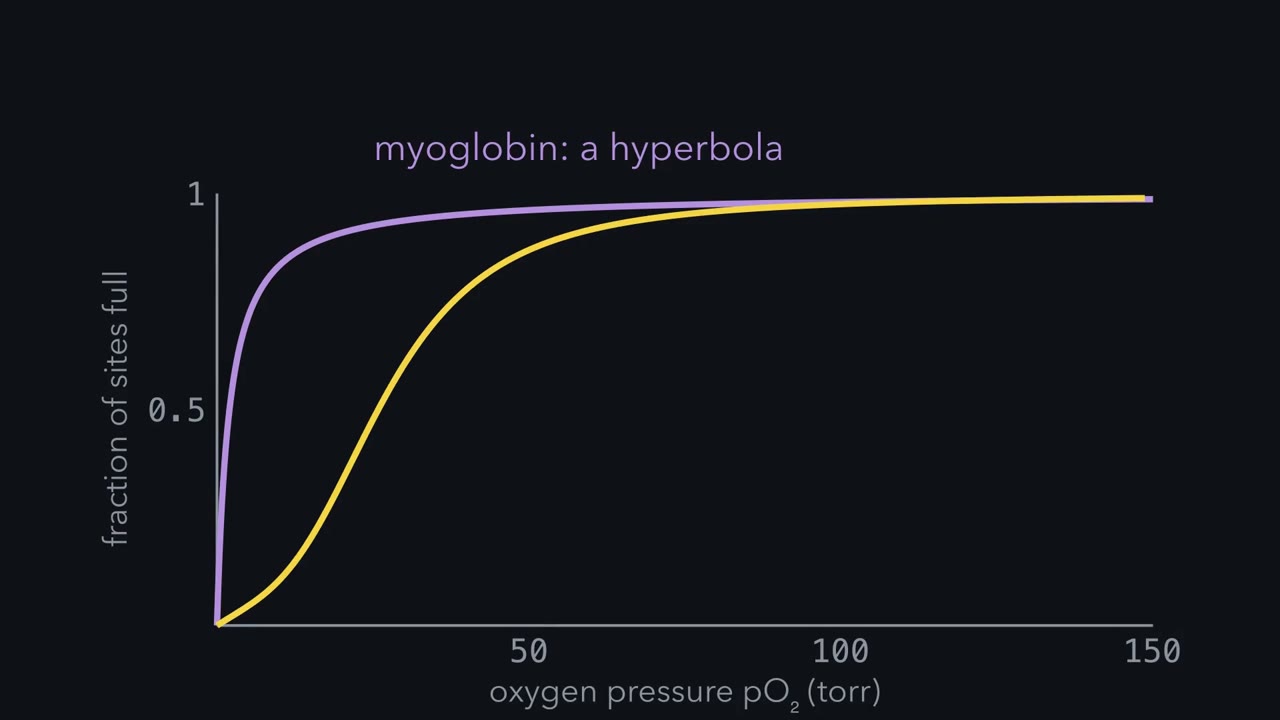
No. A tight binder fills in the lungs, but it stays nearly full in the muscle. Oxygen that stays aboard is not delivered. Myoglobin, the muscle's storage protein, is that kind of tight binder. Across the same gap it would unload only about seven percent. Hemoglobin gives up about two-thirds of its oxygen between the lungs and hard-working muscle. At resting tissue it gives up much less, about a fifth. Blood leaving resting tissue is still mostly full. Hard work drains far more. The harder the muscle works, the more oxygen the blood hands over. Both proteins use the same heme and the same iron. So what is hemoglobin doing differently? Myoglobin has one binding site.
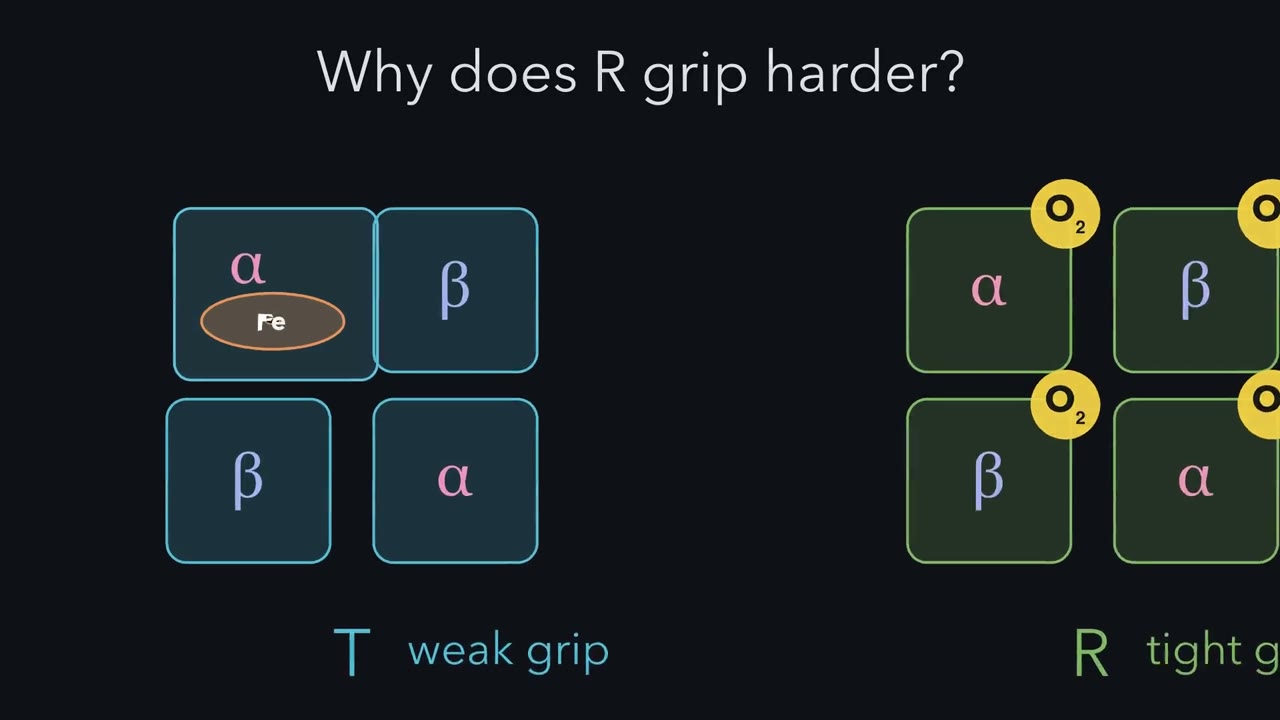
Hemoglobin has four that cooperate, and its grip is set for the pressures between lung and muscle. Here is the idea for this whole series. Hemoglobin is always a mix of two shapes. One shape, called T, holds oxygen weakly. The other, called R, holds it tightly. How full hemoglobin is depends on how full each shape would be, and how much of each is present.
Anything that binds one shape better shifts the mix toward that shape. Oxygen itself favors R. So oxygen pushes hemoglobin toward the shape that grabs oxygen best. That is cooperativity, and it is why blood delivers.
Your blood has to grab oxygen in the lungs and let go of about two-thirds of it in hard-working muscle. A tighter grip than hemoglobin's would make it worse. What does hemoglobin do instead?
Continue in the lesson: Protein Binding and Allostery: How Hemoglobin Loads and Delivers Oxygen →
2:30 · Free, with captions and a transcript. The lesson has the full text, the questions and the sources.
More films from this lesson
How this film was made. Narration: an AI narrator voice (Kokoro, af_heart) reading narration written from this lesson's text. Animation: AI-generated in code (Manim) by Claude, a schematic with no drawn molecular structures. Captions come from the narration script. See something wrong? Report it.