The Switch Inside the Molecule
Read the transcript of “The Switch Inside the Molecule”
Film transcript: The Switch Inside the Molecule
Why does the R shape hold oxygen better than T? The answer starts with a movement smaller than an atom. Hemoglobin is four chains, two α and two β. They pair up as two αβ dimers. Each chain cradles one heme. Heme is a ring, protoporphyrin IX, with an iron at its center. The iron makes four bonds to the ring's nitrogens. A fifth bond goes to a histidine below, the proximal histidine. The sixth site is saved for oxygen. Across the pocket sits the distal histidine, which hydrogen-bonds to bound oxygen. The iron must stay in its plus-two form. Oxidized, it becomes methemoglobin, which cannot carry oxygen at all. Step one. In T, the iron is high-spin and slightly too big for the ring's hole.
It sits about 0.4 Å below the ring, toward the histidine. That is about a seventh of the width of a water molecule. When oxygen binds, the iron turns low-spin, shrinks, and rises into the plane. Step two. The iron is bonded to the proximal histidine, so the histidine follows it. Step three. That histidine sits on a helix, the F helix. The helix shifts and presses on the neighboring subunit. Step four. In Max Perutz's classic account, this is levered into a rotation of one dimer against the other, about 15°. degrees. The salt bridges that held T break, and the molecule moves toward R. In T, those salt bridges resist this chain of movements. That is why heme in T binds oxygen weakly.
Later work shows the coupling is looser than a gear train. Each iron shift raises the odds of the switch rather than forcing it. That fits the two-shape picture. Each oxygen bound makes R more likely, not certain. Perutz saw the two end points by solving deoxy and oxy hemoglobin side by side. Do all four subunits switch together, or one at a time? Real hemoglobin fits neither textbook model perfectly. Its overall switch looks concerted. But each subunit's own shape also shifts as it binds. A tiny shift at one iron, levered through a helix, raises the odds that the whole molecule turns to R.
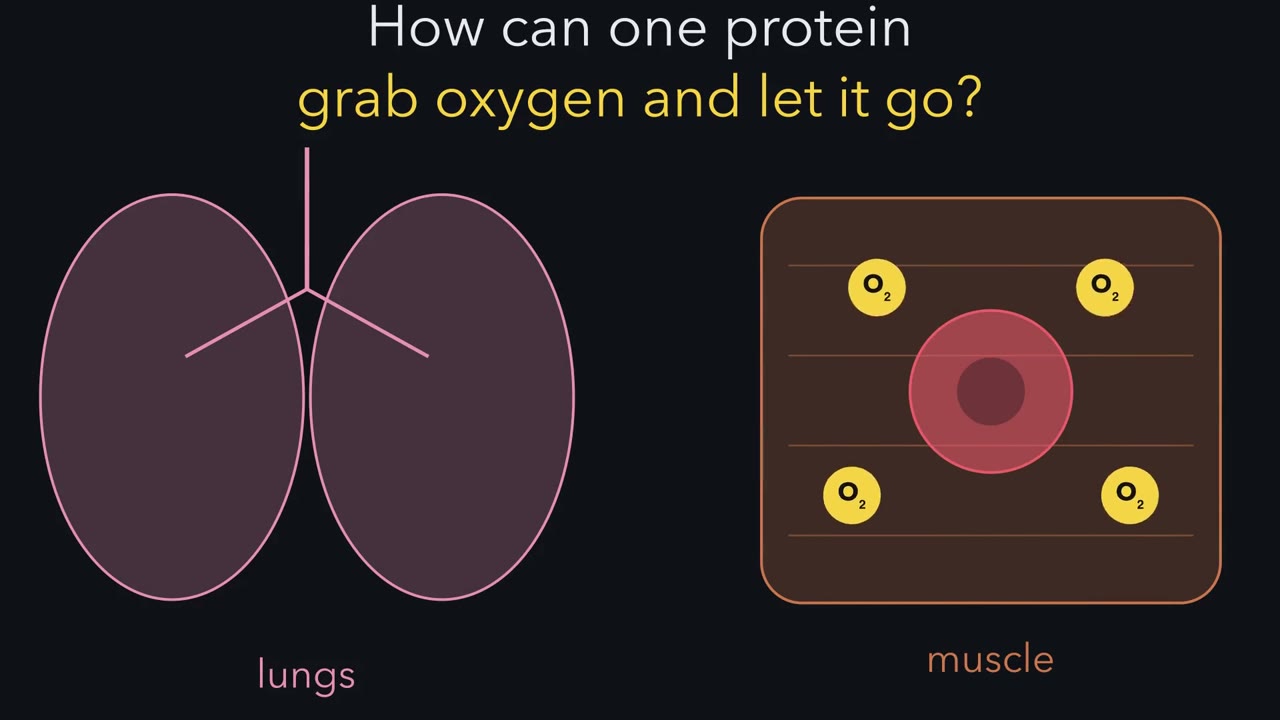
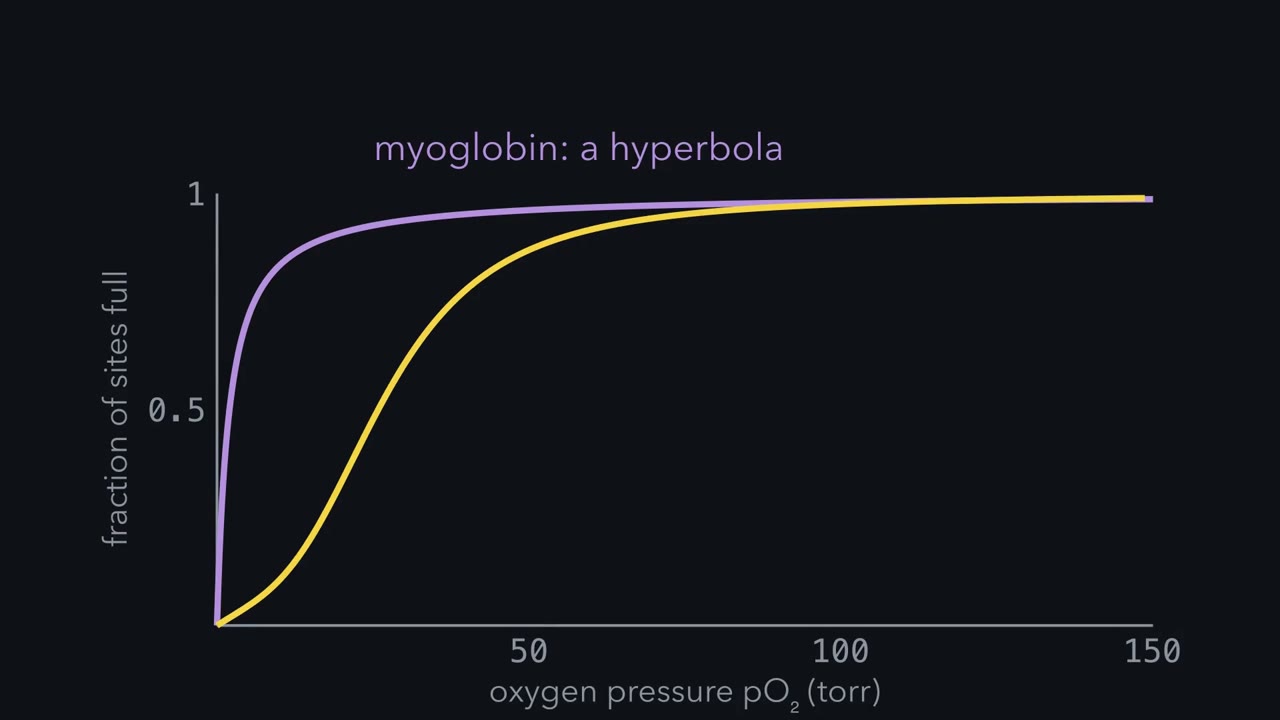
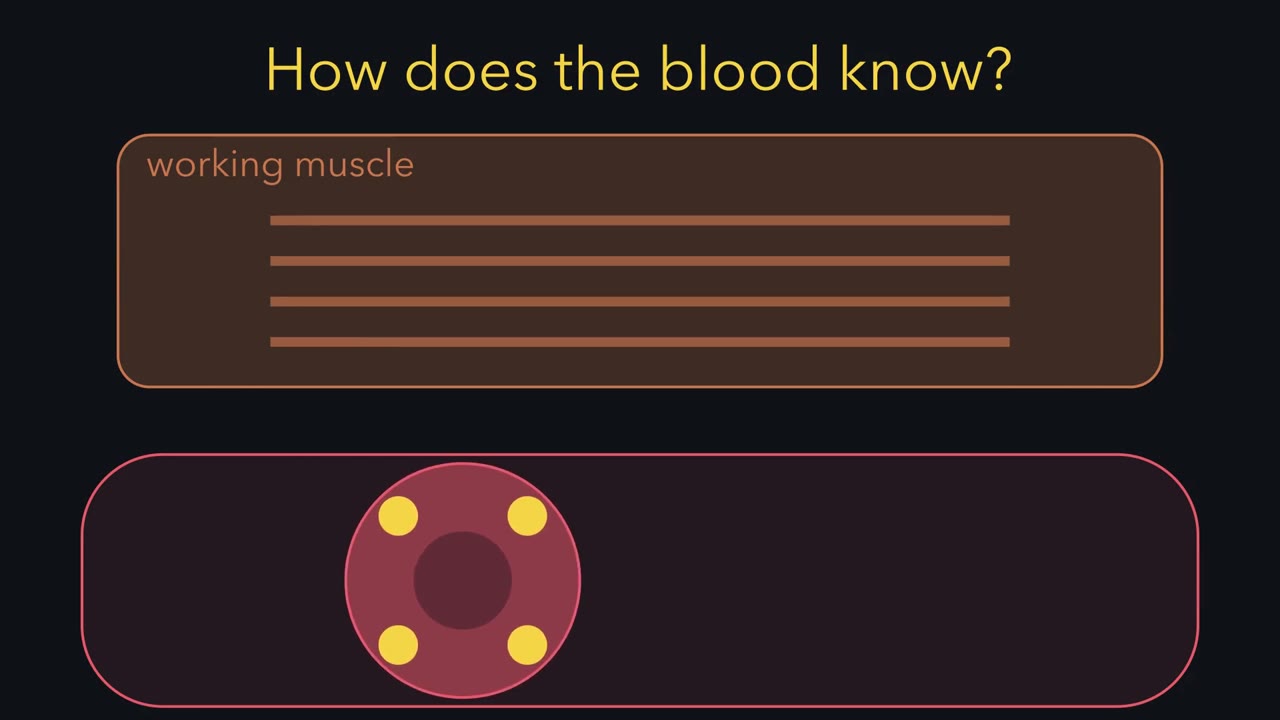
Your blood has to grab oxygen in the lungs and let go of about two-thirds of it in hard-working muscle. A tighter grip than hemoglobin's would make it worse. What does hemoglobin do instead?
Continue in the lesson: Protein Binding and Allostery: How Hemoglobin Loads and Delivers Oxygen →
2:37 · Free, with captions and a transcript. The lesson has the full text, the questions and the sources.
More films from this lesson
How this film was made. Narration: an AI narrator voice (Kokoro, af_heart) reading narration written from this lesson's text. Animation: AI-generated in code (Manim) by Claude, a schematic with no drawn molecular structures. Captions come from the narration script. See something wrong? Report it.